
The Best Professional Lawn Mowers: Buying Guide and Top Picks
Disclosure: We may earn a commission when you buy through links on this page, at no extra cost to you. As an Amazon Associate I earn from qualifying purchases. Learn more

Three professional grade mowers, from a commercial walk behind to gas and battery zero turns.
Professional mowers are built to run for hours every day: heavier decks, stronger engines or batteries, tougher transmissions and parts that can be serviced instead of replaced. Homeowners with large properties buy them for the same reasons landscapers do. The best professional lawn mowers match the property size and terrain, keep a clean cut at speed and hold up to frequent use.
Below are three picks, from a commercial walk behind to gas and battery zero turns, followed by a buying guide, mower types, care tips and answers to common questions. Specs come from manufacturer listings.



Our Top 3 Picks at a Glance
Prices change often, so treat these figures as approximate.
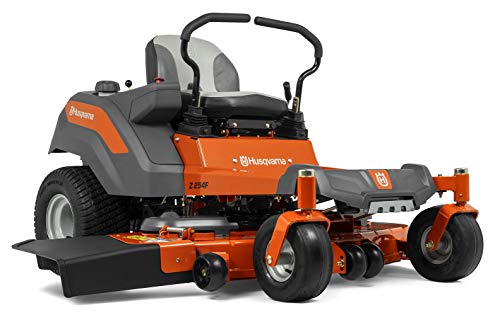
Best Overall: Husqvarna Z254F Zero Turn
The Husqvarna Z254F suits large properties and small landscaping jobs where speed matters. It costs around $3,899.
Husqvarna lists a 23 HP Kawasaki engine, a hydrostatic transmission it describes as no maintenance, a 54 inch ClearCut deck with a deep design for airflow and bagging, and top speed of 6.5 MPH. Clippings can be discharged, mulched or bagged, with kits sold separately. The trade off is that it is a residential and light commercial zero turn rather than a full commercial unit with a fabricated deck.
Best Value: Makita XML08Z Commercial Self Propelled Mower
The Makita XML08Z suits crews and homeowners who trim, mow small areas or work where noise matters. It costs around $799, tool only.
Makita lists a 21 inch commercial grade steel deck, variable self propelled speed from 1.5 to 3 MPH and a four bay battery system that runs on two 18V LXT batteries with room for two more for extended runtime. It needs no gas, oil or pull starts. The trade off is that batteries and charger are sold separately, so total cost depends on whether you already own LXT batteries.

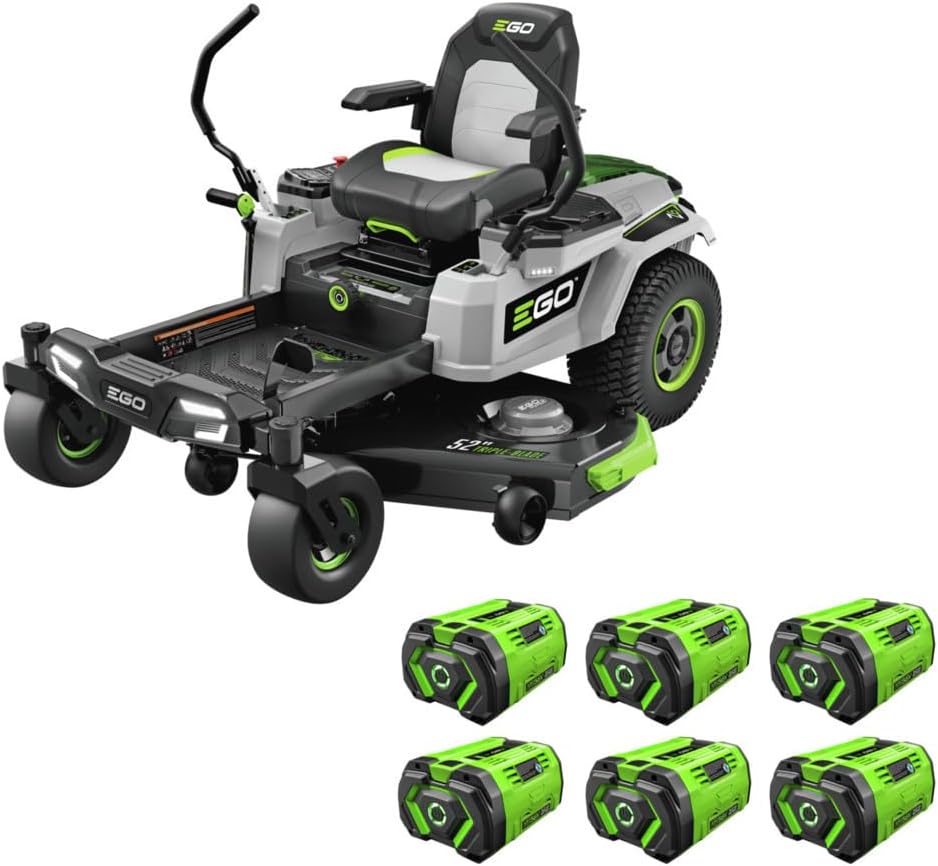
Best Premium Pick: EGO Power+ ZT5207L 52 Inch Zero Turn
The EGO ZT5207L suits large properties that want quiet, emission free mowing. It costs around $6,999 with six 56V 12.0Ah batteries and charger.
EGO lists a 52 inch deck, power equivalent to a 25 HP gas engine, up to 4 acres per charge and 4 to 8 MPH speeds. It runs on any EGO 56V ARC Lithium batteries, which also power EGO's handheld tools. The trade off is the high upfront price and recharge time between big jobs.

How to Choose the Best Professional Lawn Mowers: Buying Guide
Professional grade means different things for a landscaper and a homeowner with five acres. Start with how many hours you mow per week, the terrain and the size of the gates and trailers you use.
Power Source: Gas, Battery, or Corded Electric
Gas still dominates commercial mowing because refueling is fast. Battery mowers, like the Makita and EGO models, cut noise and emissions, which matters in neighborhoods with noise rules. Corded mowers are not practical for professional use.
Slopes and Terrain
Zero turns are fast on flat ground but can lose traction on steep slopes. Walk behind mowers handle slopes and tight areas better. Check the maker's slope limits and avoid mowing across steep grades on riders.
Yard Size and Cutting Width
21 inch walk behinds suit trimming and small yards, 30 to 36 inch wide area walk behinds suit mid size lots and 48 to 60 inch zero turns suit large properties. Wider decks finish faster but need bigger trailers and gates.
Noise, Storage, and Maintenance
Gas engines need oil, filters and fuel care, while battery mowers need little more than blade service and battery storage. Storage space and trailer size often decide deck width. Battery mowers are quieter, which helps early morning jobs.
Cutting Height Adjustment
Professional mowers offer wide height ranges and solid lever or pin adjustment that holds under vibration. Match height to grass type and season, and keep heights consistent across properties for a uniform look.
Drive Type (Push, Self Propelled, Riding, Zero Turn, Robotic)
Self propelled walk behinds like the Makita reduce effort on hills. Zero turns maximize speed on open lawns. Riding tractors suit homeowners who also tow carts. Robotic mowers are rarely used commercially but suit small, simple lawns.
Safety Gear and Practices
Professional mowing means long hours around spinning blades and thrown debris. Wear hearing protection with gas engines, safety glasses, sturdy boots and long pants. Walk the property first to pick up rocks, sticks and toys, keep bystanders well away and never disable operator presence controls. On riders, use the rollover protection bar where fitted and follow the maker's slope guidance; walk behind mowers are usually run across slopes rather than up and down.
Types of Professional Lawn Mowers
Most professional fleets combine several mower types, each suited to a different part of a property.
Self Propelled Mowers
Self propelled walk behinds, like the Makita XML08Z, drive their own wheels at a set or variable speed. They handle hills, fenced yards and trimming areas where riders cannot fit.
Battery Powered Mowers
Battery mowers range from 21 inch walk behinds to zero turns like the EGO ZT5207L. They run quietly with low maintenance, though runtime and battery cost need planning.
Push Mowers
Push mowers are light and simple. They suit small areas and trimming but tire operators on large or sloped lawns.
Commercial vs Residential Grade: What Changes
True commercial mowers use fabricated steel decks welded from thick plate instead of stamped decks, cast iron spindle housings, heavier frames and commercial engines rated for long daily use. Transmissions are larger and serviceable, and seats often have suspension for operator comfort over long shifts. Warranties are usually measured in hours as well as years.
Residential and light commercial models, like the Husqvarna Z254F, use stamped decks and smaller transmissions that keep weight and price down. They are a strong match for homeowners with a few acres who mow once or twice a week. Landscaping businesses mowing every day usually move up to full commercial lines sold through dealers, where service support matters as much as the machine.
When comparing, look at deck construction, engine displacement, transmission model, warranty terms and dealer availability near you. A mower that can be serviced quickly in peak season is worth more to a professional than a slightly lower price.
Professional Mowers Compared
| Mower | Type | Deck | Power | Approx Price |
|---|---|---|---|---|
| Makita XML08Z | Self propelled walk behind | 21 in steel | 2 to 4 x 18V LXT | About $799, tool only |
| EGO LM2135SP | Self propelled walk behind | 21 in | 56V, extra battery bundle | About $1,078 |
| Husqvarna Z254F | Zero turn | 54 in | 23 HP Kawasaki | About $3,899 |
| EGO ZT5207L | Zero turn | 52 in | Six 56V 12.0Ah batteries | About $6,999 |
How to Make Your Professional Lawn Mower Last Longer
Sharpen blades often, clean the deck after each job and check belts, tires and bolts weekly. On gas mowers, change oil and filters on schedule and use stabilized fuel. On battery mowers, store batteries indoors at moderate temperatures. Grease zero turn fittings and check hydrostatic fluid as the manual directs.
Frequently Asked Questions
What size mower do I need for my yard?
Up to half an acre suits a 21 inch walk behind, half to two acres suits a 42 to 48 inch rider and larger properties suit 50 to 60 inch zero turns. Gates and storage often decide the final size.
Is a zero turn worth it for one acre?
Yes, if the acre has many trees and beds; a zero turn trims faster. On an open acre, a lawn tractor or wide walk behind may cost less.
Are battery mowers as good as gas?
Battery mowers now match gas on cut quality for many jobs and are quieter with less maintenance. Gas still wins for long, continuous commercial days unless you carry spare batteries.
How long does a professional lawn mower last?
Commercial mowers can last thousands of engine hours with regular service. Residential grade zero turns typically last 10 to 15 years with care.
How often should I sharpen mower blades?
Professionals sharpen blades weekly or even daily during peak season. Homeowners should sharpen about every 20 to 25 hours of use.
The Bottom Line
The best professional lawn mowers match property size, terrain and hours of use. The Husqvarna Z254F is a strong all round zero turn, the Makita XML08Z is a quiet commercial walk behind for battery users and the EGO ZT5207L brings battery power to large properties. For more options, see our guides to 42 inch riding lawn mowers and mulching riding lawn mowers.


