
Best Miter Saws For Crown Molding 2026 - Detailed Expert Guide & Comparison
Disclosure: We may earn a commission when you buy through links on this page, at no extra cost to you. As an Amazon Associate I earn from qualifying purchases. Learn more

Upgrading your living space with decorative molding is one of the most rewarding home improvement projects you can tackle, but achieving seamless, gap-free joints requires extreme precision. Finding the best tools for detailed architectural woodworking can feel overwhelming with so many configurations on the market. Whether you are outfitting a full living room renovation or tackling weekend DIY projects, having the right setup makes all the difference in achieving tight miter joints and clean compound angles. In our comprehensive 2026 guide, we evaluated 6 standout models to help you select the ideal machine for your specific workspace and trim carpentry goals.
Our team spent dozens of hours evaluating motor capabilities, bevel designs, fence heights, and cutline alignment systems. Crown molding presents unique cutting challenges because boards must be cut either nested against the fence or laid flat using precise compound bevel settings. To assist your workshop upgrades, we have broken down all the essential engineering specifications and practical considerations. For additional workshop and outdoor equipment advice, explore our helpful guide on small electric cutting tools to round out your tool collection.




Best Miter Saws For Crown Molding Buying Guide
Cutting architectural trim demands higher precision than general framing or rough carpentry. A fraction of a degree off on a corner joint will leave noticeable gaps on your ceiling corners. Understanding the key technical features of these specialized power saws ensures you invest in equipment that delivers dependable accuracy project after project.
1. Blade Size and Nested Cutting Capacity
The diameter of the saw blade determines both the maximum depth and height of cuts you can execute. For crown molding, cutting trim nested upside-down and backwards against the fence is often the fastest method. This technique requires tall fence support and a blade large enough to clear the diagonal width of the trim profile.
A 12-inch blade generally provides significant clearance, allowing you to support nested crown up to 6-1/2 or 7-1/2 inches vertically against the fence. A 10-inch blade is lighter and spins faster, but it typically accommodates nested molding up to around 4 to 5-1/2 inches. If you plan to install larger multi-piece decorative cornices, prioritizing a 12-inch model will save substantial time and eliminate complex flat-cutting calculations.
2. Single Bevel vs. Double Bevel Mechanism
Bevel capabilities dictate how the saw head tilts to create angled cuts across the thickness of the board. A single bevel model tilts in only one direction (usually to the left). When cutting molding flat on the table, a single bevel saw requires you to flip the molding end-for-end when alternating between inside and outside corner cuts. This increases the risk of orientation mistakes on long, cumbersome pieces of trim.
A dual-bevel or double-bevel saw tilts both left and right, usually up to 48 degrees with positive stops at standard angles like 22.5, 33.9, and 45 degrees. The 33.9-degree bevel stop is specifically engineered for flat-cutting 38/52 spring angle crown molding. Investing in a dual-bevel machine allows you to keep long boards resting in the same orientation across your work table, saving time and reducing costly trim waste.
3. Sliding Arm vs. Stationary Chop Design
Deciding between a sliding arm and a non-sliding chop saw depends on the width of your materials and the footprint of your workspace. Sliding models use dual steel rails to move the blade assembly forward and backward, drastically expanding horizontal crosscut capacity. This feature lets you cut wide baseboards, dimensional lumber up to 2x14, or wide shelving panels with ease.
Non-sliding compound saws, on the other hand, feature a fixed pivot arm. While their horizontal cutting width is more limited, they offer rock-solid rigidity with zero rail deflection, which helps maintain pinpoint angle accuracy over years of heavy use. They are also much lighter and require less rear clearance on your workbench. If your projects involve maintaining property grounds or working on dedicated DIY spaces, check out our insights in the Garden Tools overview for equipment footprint planning.
| Design Type | Key Strengths | Best Application |
|---|---|---|
| Sliding Compound | Large crosscut capacity, handles wide trim and dimensional lumber | Multi-room renovations, wide fascia, mixed carpentry |
| Non-Sliding Compound | Compact bench footprint, exceptional rigidity, portable weight | Standard crown profiles, dedicated trim shops, mobile jobs |
| Dual Bevel Setup | Tilts left and right, eliminates flipping long boards | Complex crown angles, production trim installation |
4. Cutline Indication Systems: Shadow Lines vs. Lasers
Visual cutline alignment is a critical feature when matching delicate trim joints. Traditional laser guides project a beam beside the blade, but they can easily fall out of calibration when bumped during transport or blade changes. Additionally, laser lines can be difficult to see under bright ambient lighting or outdoor sunlight.
Modern LED shadow line systems cast a direct light on either side of the spinning blade, throwing a precise shadow of the actual blade kerf onto the workpiece. Because the shadow uses the physical blade itself to create the mark, it never requires mechanical adjustment, works accurately regardless of blade thickness, and remains crisp in any lighting condition.
5. Miter Detent Systems and Fence Machining
The heart of any miter saw is its detent plate. Look for precision-machined stainless steel plates with clearly stamped positive stops at standard angles: 0, 15, 22.5, 31.62, and 45 degrees. The 31.62-degree stop is specifically calibrated for miter angles when cutting crown flat on the bed.
Equally crucial is the fence design. Tall, sliding fences provide vital vertical support for tall baseboards and nested trim. When making bevel cuts, the upper portion of the fence should slide smoothly out of the path of the blade without requiring complete removal. A sturdy cam-lock miter handle with a detent override allows you to bypass preset stops to lock in micro-adjustments for out-of-square room corners.
Our Research Methodology & Why You Can Trust Us
To establish our rankings for the Best Miter Saws For Crown Molding guide, our team conducted a rigorous, data-driven analysis of the power tool market. We evaluated technical performance specifications, motor output ratings, gear drive mechanics, and table machining tolerances across major manufacturers. Our analysis combined direct manufacturer engineering documentation with thousands of aggregated real-world user experiences to identify long-term durability patterns and common failure points.
We evaluate each tool against practical criteria that matter to homeowners and woodworkers: cutline accuracy out of the box, ease of fence bevel adjustments, vibration dampening, dust extraction efficiency, and weight balance for jobsite transport. We remain completely independent, never accepting manufacturer incentives or sponsored rankings. Our guides are reviewed and updated every October to reflect current product revisions, updated safety features, and the latest consumer feedback.
Final Thoughts
Selecting the right saw for your trim carpentry projects depends on the size of your molding profiles and whether you prioritize cutting capacity or compact portability. If you need maximum crosscut capacity and top-tier features, the DEWALT Miter Saw, 12-inch Double Bevel Sliding stands as our top overall recommendation. Its integrated shadow line, dual bevel capability, and massive cut envelope handle nested molding up to 7-1/2 inches with ease.
For woodworkers looking for exceptional dual-bevel versatility and nested crown support without the extended footprint of sliding rails, the DEWALT Miter Saw, 12-Inch, Double Bevel, Compound is a fantastic premium stationary pick. Meanwhile, the DEWALT 12-Inch Miter Saw, 15-Amp, Single Bevel provides dependable 15-amp power and rock-solid fence support for standard nested trim installations.
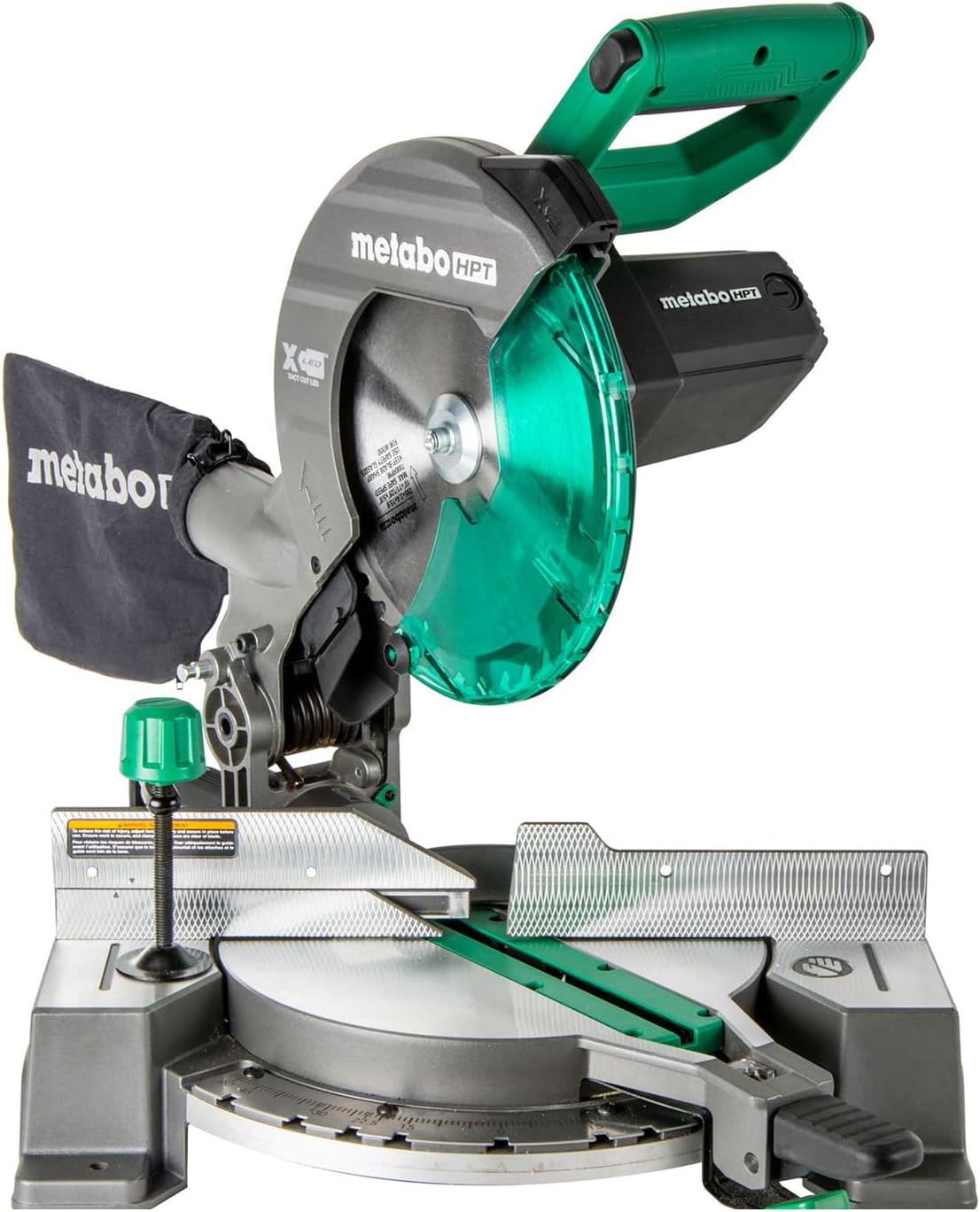
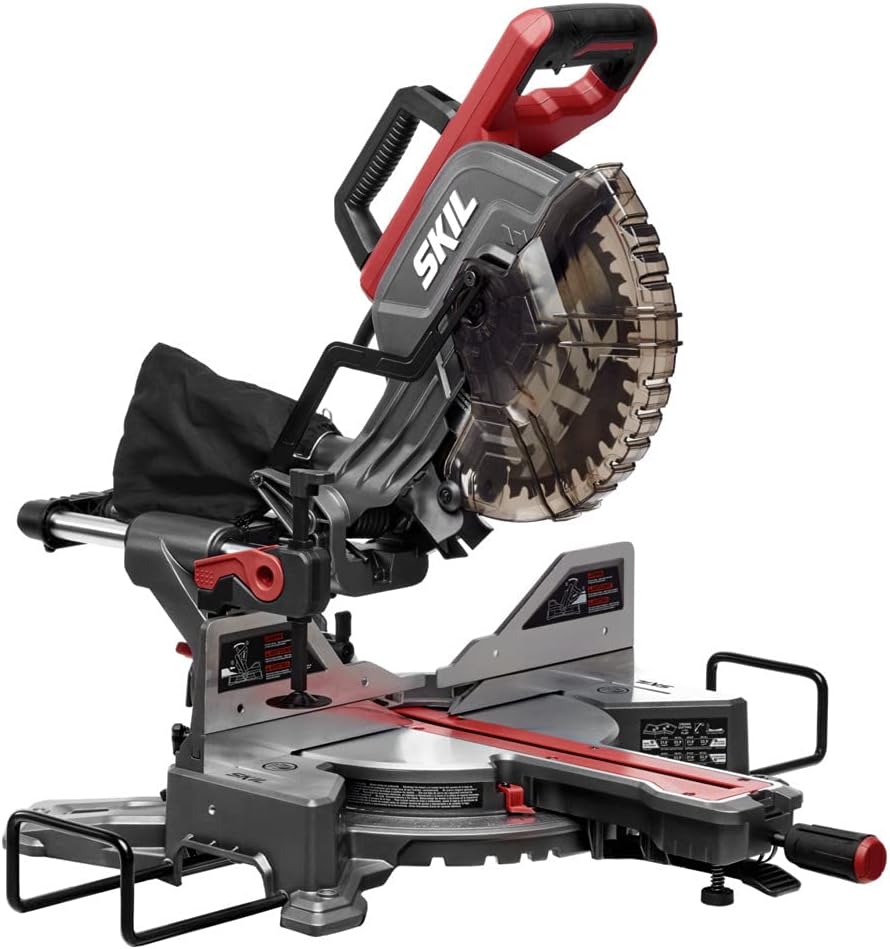
If you are working on a tighter budget or require a lightweight, portable setup for everyday DIY jobs, the Metabo HPT 10-Inch Single Bevel Compound Miter delivers incredible value at only 24 pounds. For those who want sliding capacity and dual beveling in a 10-inch format, the SKIL 10" Dual Bevel Sliding Compound Miter provides outstanding versatility. If you appreciate direct-drive motor reliability and smooth pivoting action, the Makita LS1040 10" Compound Miter Saw remains a durable classic. For more property improvement inspiration, check out our comparison on riding maintenance equipment to keep your entire home exterior in top shape.
Frequently Asked Questions
What is the best way to cut crown molding on a miter saw?
The most common and intuitive method is cutting nested upside-down and backwards against the fence. In this position, the ceiling edge of the molding rests flat on the saw table and the wall edge rests against the vertical fence. This allows you to make standard miter cuts without tilting the bevel head of the saw.
Is a 10-inch or 12-inch saw better for Best Miter Saws For Crown Molding in 2026?
A 12-inch saw is generally preferred for crown molding because the larger blade diameter provides higher vertical clearance against the fence for nested cutting of wide profiles. However, a 10-inch sliding saw offers plenty of crosscut capacity for cutting molding flat, while being lighter and more economical.
What are the crown molding stops on a miter scale?
Miter saws often feature specialized detents at 31.62 degrees on the miter table and 33.86 (or 33.9) degrees on the bevel scale. These angles are precisely calibrated for cutting standard 38/52 degree crown molding when the board is laid completely flat on the saw base.
Why is an LED shadow line better than a laser guide for trim work?
An LED shadow line casts the actual physical silhouette of the blade onto the workpiece, ensuring 100% accuracy regardless of blade kerf thickness or blade swaps. Unlike lasers, shadow systems do not require calibration and stay visible in bright shop lighting.
How do I manage sawdust when cutting inside a finished room?
Connecting a dedicated shop vacuum or dust extractor directly to the saw port captures significantly more fine dust than a standard collection bag. For comprehensive tool care and outdoor equipment maintenance tips, explore our guide on safe utility lines and water tools.


