
Best Adjustable Height Workbenches in 2026: A Complete Buying Guide
Disclosure: We may earn a commission when you buy through links on this page, at no extra cost to you. As an Amazon Associate I earn from qualifying purchases. Learn more

Crank, electric or pin leg: compare the best adjustable height workbench by lift type, height range and load rating.
A fixed height bench forces your body to adapt to it, and after a few hours of sanding, assembly, or wiring your shoulders and lower back pay for that mismatch. The best adjustable height workbench flips the equation, because the surface moves to elbow height for each task and each person. You can sit for detail work in the morning, raise the top for standing assembly after lunch, and drop it again so a bench tool sits at a comfortable feed height.
This guide explains the three lift styles, the height range that actually matters, and the stability trade offs that spec sheets gloss over. Use it with the comparison table below to match a bench to your height, your projects, and the way your shop is laid out.
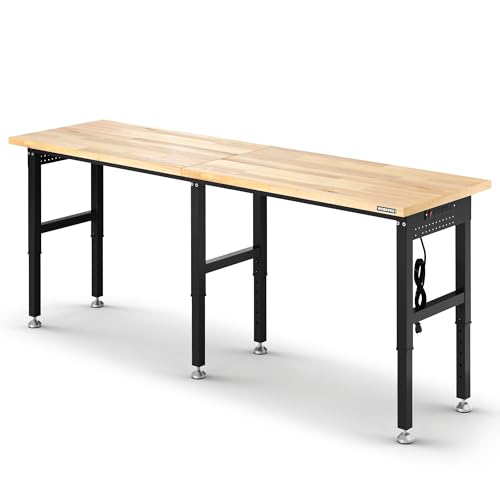
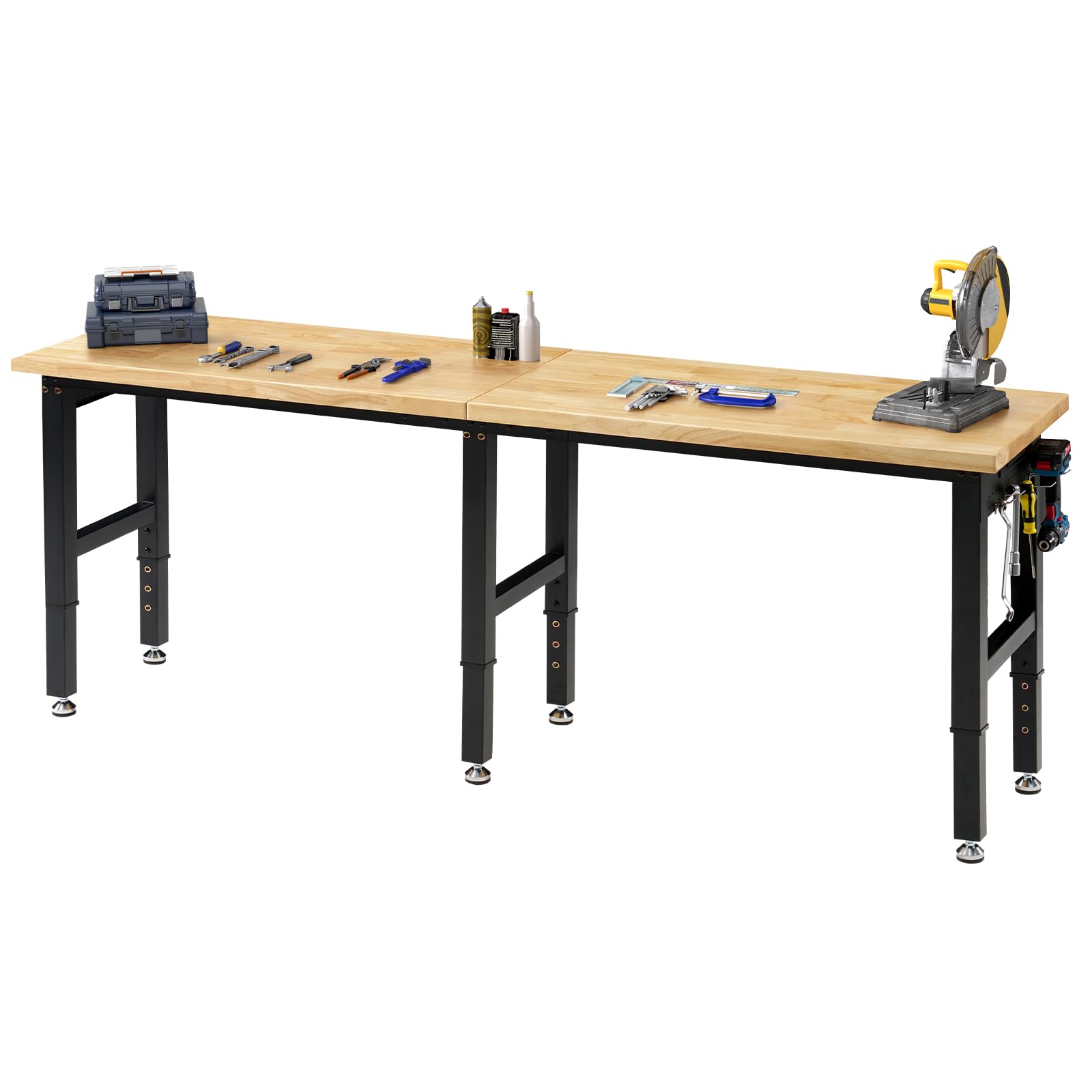
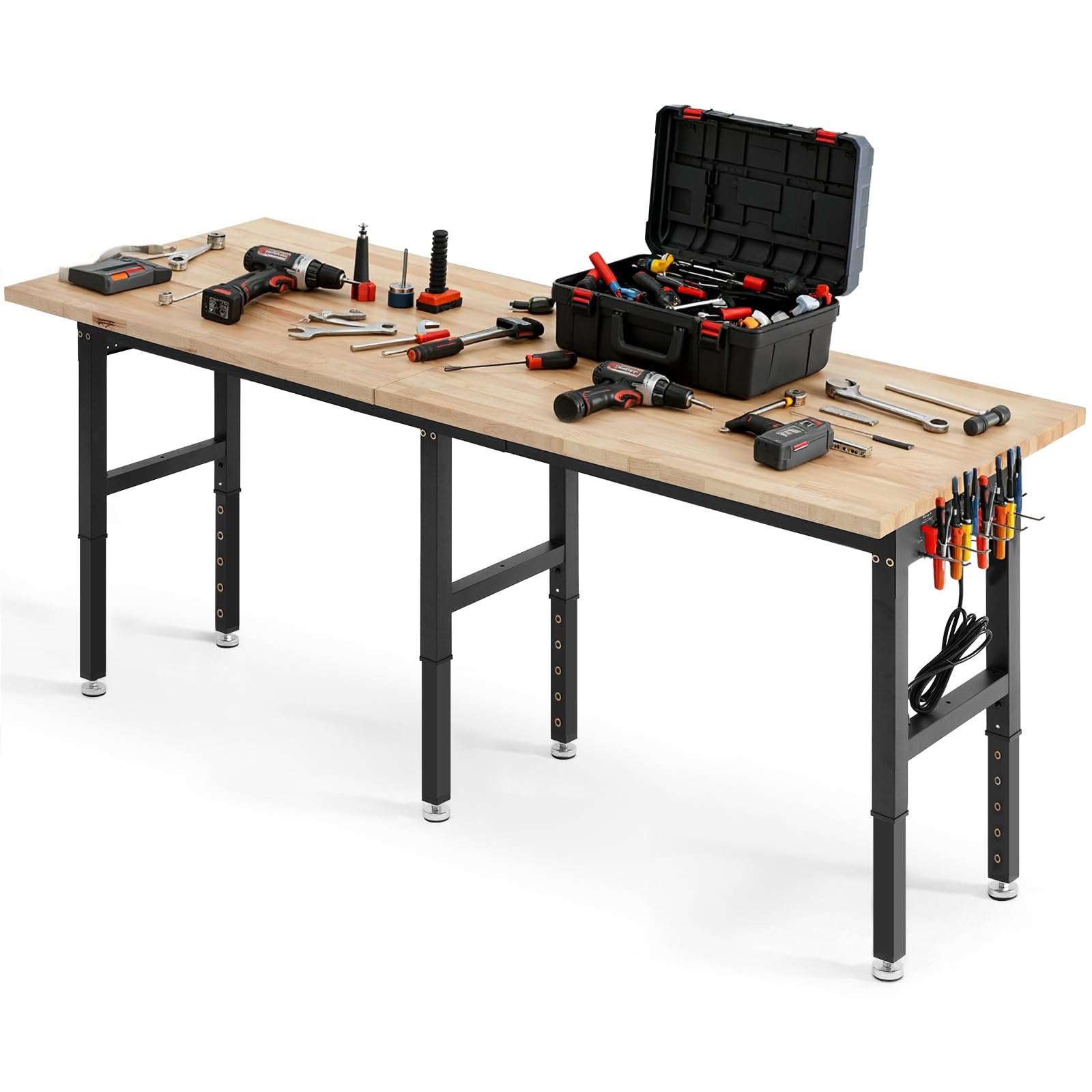


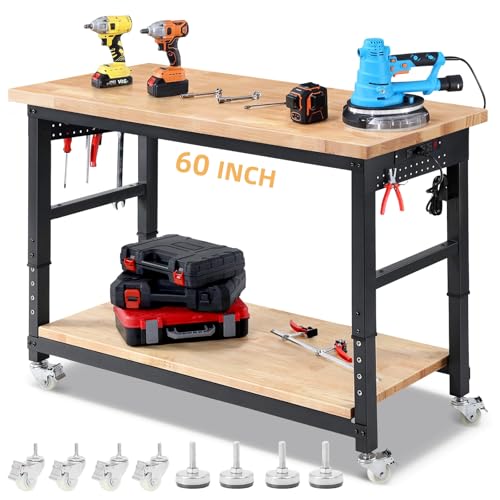
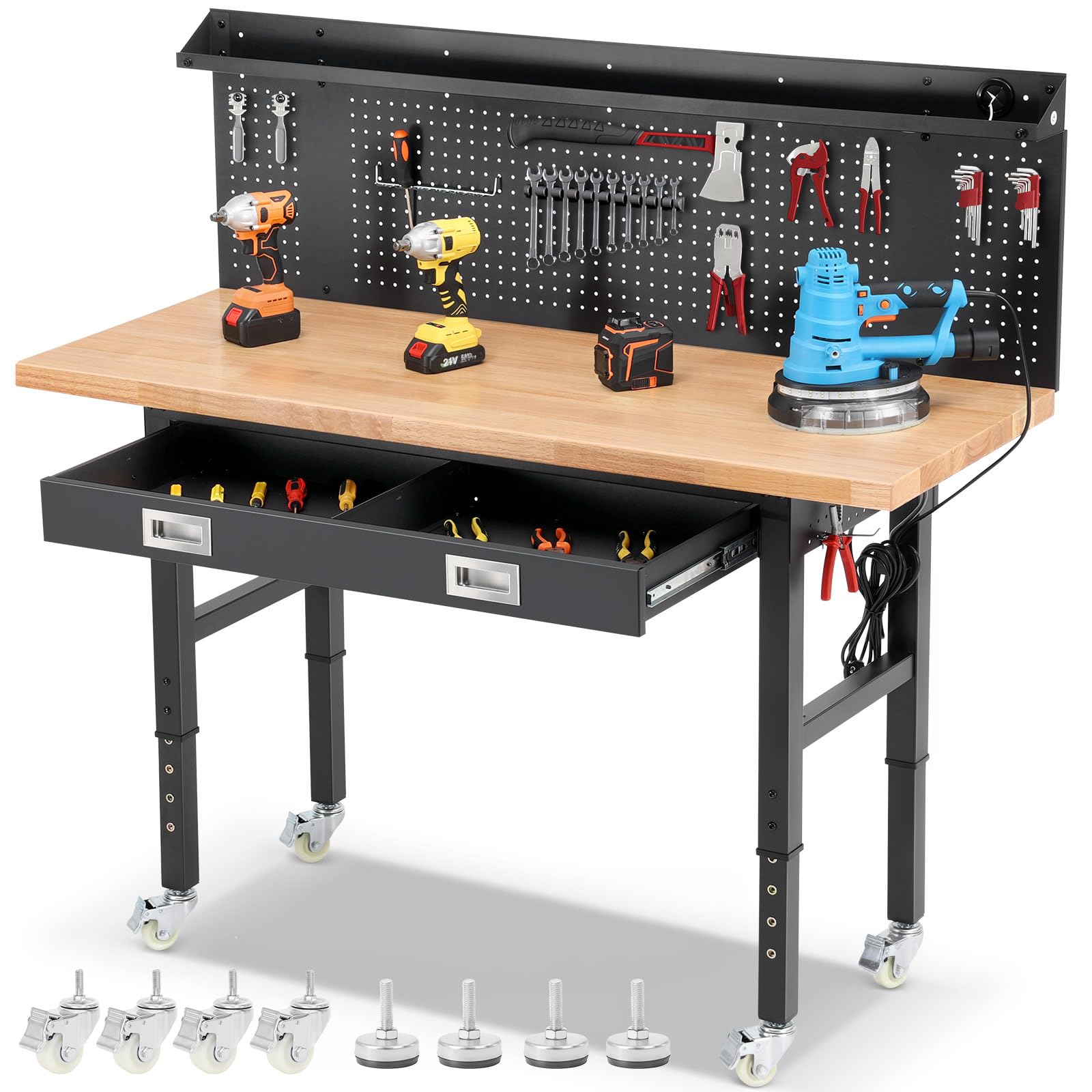
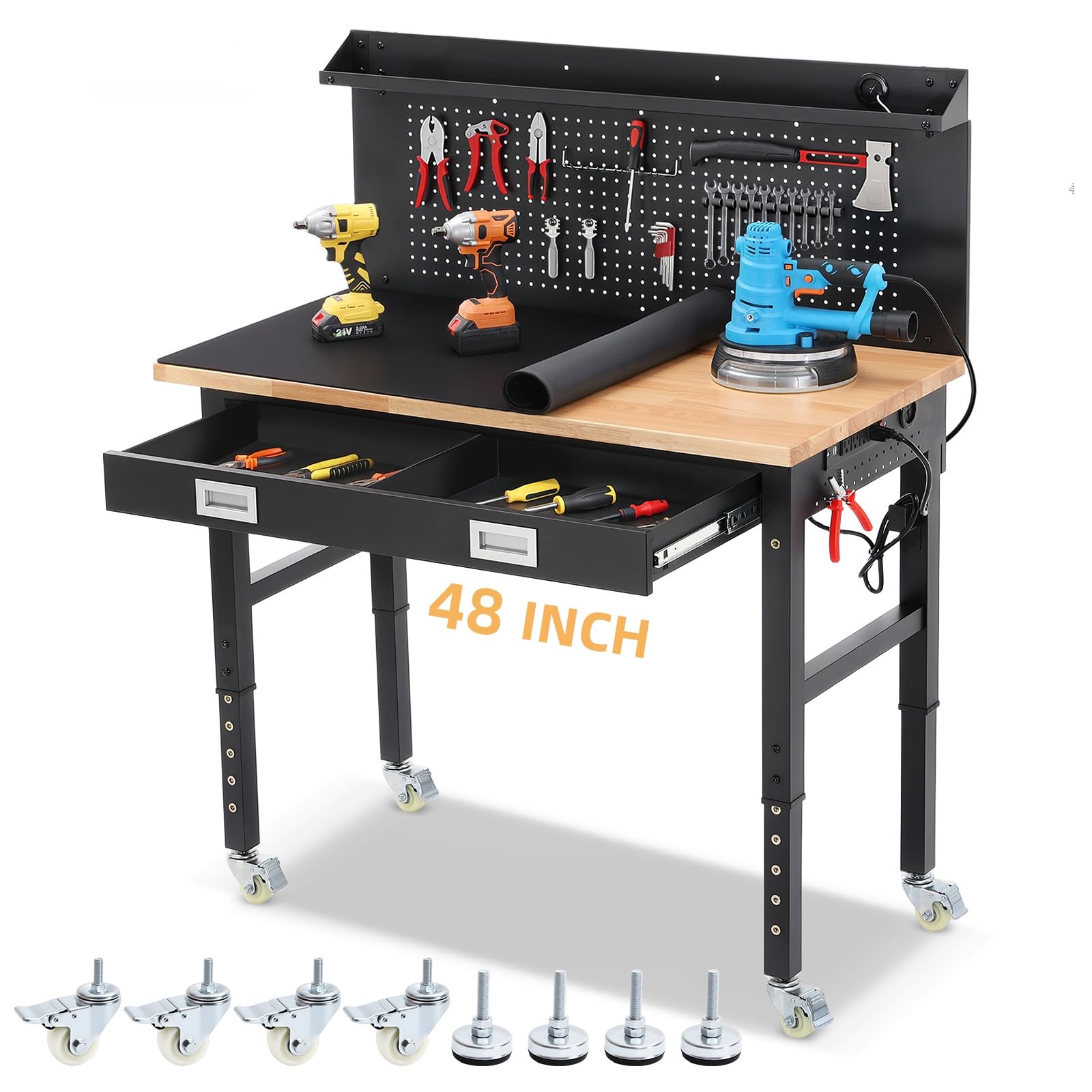
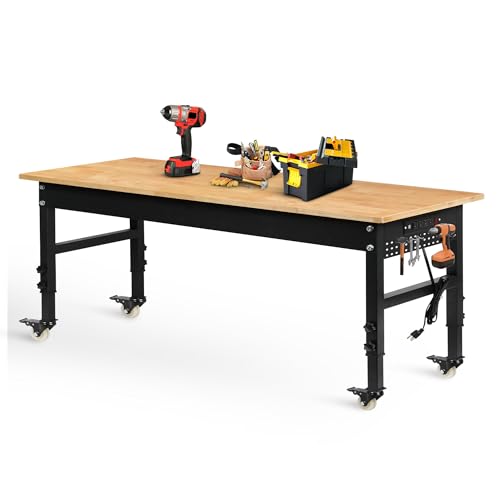
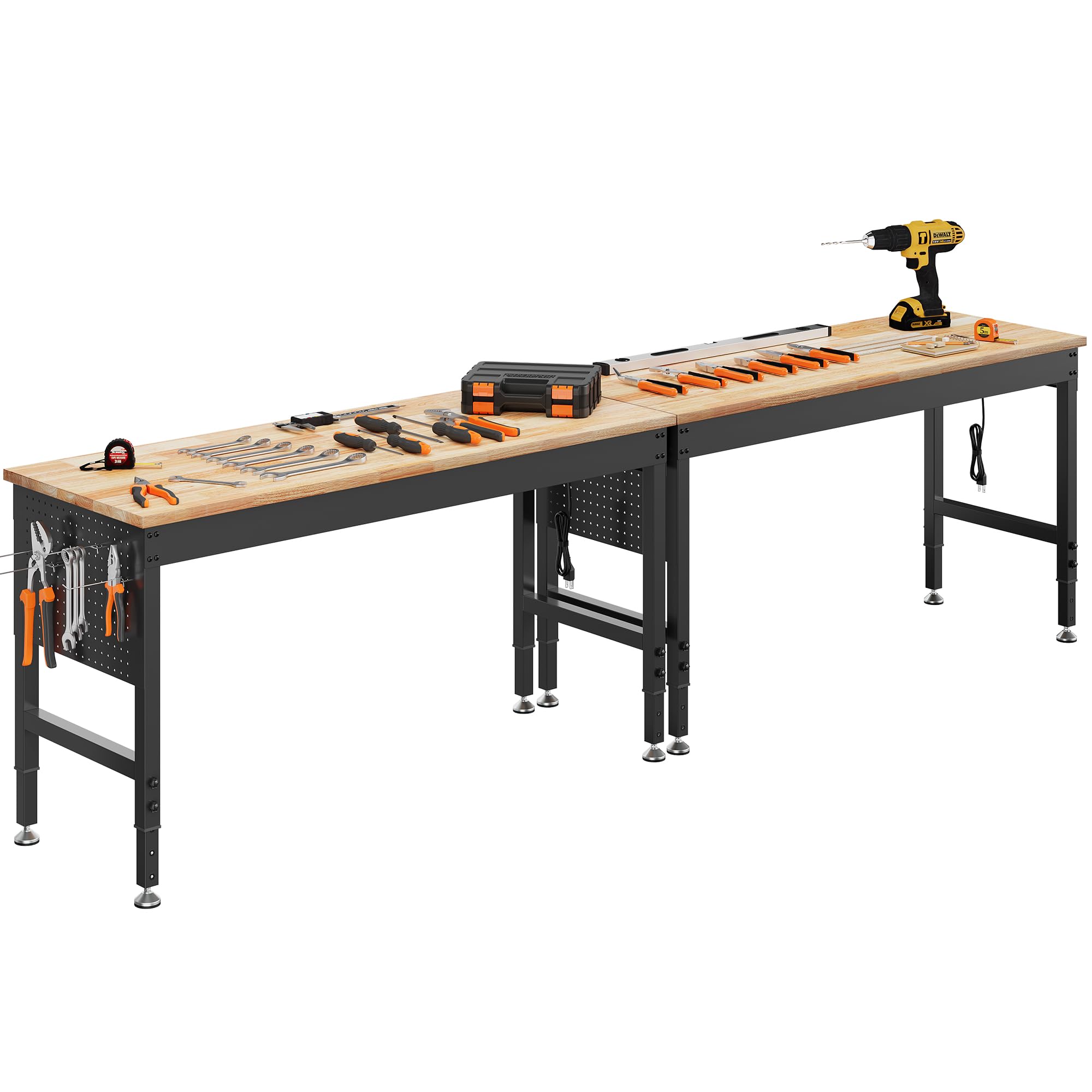
Who Should Buy Which Adjustable Height Workbench?
Woodworkers Who Switch Between Sitting and Standing Tasks
If you alternate between hand planing at a lower surface and standing joinery work, a crank adjusted bench is usually the sweet spot. A hand crank raises the top slowly and precisely, holds its setting without power, and costs less than a motorized frame. Look for a range that starts low enough for planing leverage, since planing feels best when the surface sits a few inches below standard counter height.
Taller or Shorter Makers Sharing One Bench
When two people of different heights share a shop, an electric lift earns its price because each user saves a preset and returns to it in seconds. Memory buttons remove the daily friction of resetting the bench, so people actually adjust it instead of tolerating a bad height. If the bench will be shared in a garage, our guide to the best workbench for garage use covers layout and storage questions to settle first.
Bench Tool Owners Who Need Matching Feed Heights
A bench that lines up with a table saw or router table can act as outfeed support, and that only works when the height adjusts in small steps. Telescoping pin legs are the budget option here, but they change height in fixed increments and need two people to reset safely. Choose this group a crank or electric model if you plan to match tool heights often.
Key Features to Compare
Lift Mechanism: Crank, Electric, or Pin Legs
The mechanism decides how often you will really change the height. A hand crank is simple, repairable, and accurate to a fraction of an inch, which suits woodworking and assembly. Electric dual motor frames lift heavy loads evenly and add memory presets, but they need an outlet and cost more. Pin and hole telescoping legs are cheapest and hold plenty of weight once set, yet adjusting them means clearing the top and lifting each corner, so the height tends to stay wherever it was first set.
Height Range and Your Working Elbow Height
Most frames adjust across roughly 28 to 42 inches from floor to top surface, and that span covers seated work, standard counter height tasks, and standing work for tall users. To find your target, stand relaxed with your upper arms hanging and forearms level, then measure from the floor to just below your elbows. Fine detail work feels best at or slightly above that line, while heavy downward force tasks like planing feel better two to four inches below it.
Load Capacity While Lifting Versus Standing Still
Manufacturers quote two different numbers and the smaller one matters more. Dynamic capacity is what the lift can raise without straining the motor or crank gears, and it is often half the static rating the bench can hold once parked. Add up your heaviest realistic load, including the vise, the workpiece, and you leaning on the edge, then keep it under the dynamic figure if you plan to adjust the bench while it is loaded.
Stability at Full Extension
Every adjustable frame wobbles more at maximum height because the legs telescope and the leverage grows. Cross bracing, wide feet, and thick column walls reduce that sway, and a heavier top damps it further. If most of your work happens near the top of the range, test reviews for side to side movement at full height rather than at the lowest setting, and favor frames with a connecting stretcher bar between the legs.
Top Size, Material, and Thickness
The moving frame is only half the purchase, because many models ship without a top or with a thin one. A laminated wood or solid wood top around 1 to 1.5 inches thick resists flex when you clamp work at the edge, and a depth of 24 to 30 inches suits most benches without crowding a garage bay. Shallower tops around 20 inches deep work for electronics and repair benches where reach matters more than assembly space.
How to Set the Right Height for Each Task
Start from the elbow rule above, then fine tune by task. Set the surface at elbow height for general assembly and power tool feeding, two to four inches lower for planing, chiseling, and other work where your body weight drives the tool, and two to three inches higher for close inspection, soldering, and small parts work so you are not hunched over the piece. Mark your three favorite settings with tape on the leg columns, and you can return to them without measuring again. If the bench shares space with a vehicle, a best portable workbench on locking casters can roll out of the way, while a fixed adjustable frame suits a dedicated shop corner.
Common Mistakes to Avoid
- Buying by static load rating alone, then discovering the lift cannot raise your loaded bench without straining.
- Choosing a range that stops at 36 inches when you are tall, so standing work still leaves you stooped.
- Adjusting a pin leg bench by yourself, which lets one corner drop and racks the frame.
- Skipping floor leveling, so wobble gets blamed on the frame when the real problem is an uneven slab.
- Mounting a heavy vise at the far corner, where leverage makes flex worst at full height.
- Running the power cord of an electric frame across a walkway, where it becomes a trip hazard mid project.
How to Make Your Adjustable Height Workbench Last Longer
Keep the lifting columns clean, because sawdust packed into telescoping tubes adds friction and wears the sliding surfaces. Wipe the columns with a dry cloth monthly and apply only the lubricant the manual allows, since wet oil collects grit. Cycle the bench through its full range every few weeks even if you rarely adjust it, which keeps crank gears and motor parts from sitting in one spot. Tighten frame bolts twice a year, keep the top sealed with the finish it came with, and store heavy items low or off the bench so the lift is not parked under maximum load for months. If floor space is tight and the bench must move daily, compare a best folding workbench for the tasks that do not need a powered lift.
FAQ
Are adjustable height workbenches worth it?
Yes, if you work at a bench for more than short sessions or share it with someone of a different height. The value shows up as less shoulder and back strain and as better control during fine work, because the surface meets your hands instead of the other way around. If you only park a miter saw on a bench twice a year, a fixed bench and a riser block will serve you just as well for less money.
What height should I set my adjustable workbench to?
Start with the top just below your standing elbow height, then adjust by task. Lower it a few inches for planing and heavy sanding so your weight helps the stroke, and raise it slightly for wiring, model work, and inspection so the piece sits closer to your eyes. Most people land between 34 and 40 inches for standing work, with taller users at the top of that band.
Can an adjustable height workbench handle heavy loads like an engine block?
Only the heaviest frames should carry that kind of concentrated weight, and never while moving. Park the bench at its lowest setting, where the columns overlap most and flex least, and spread the load on a board so the top is not dented. For regular engine work, compare the broader options in our best workbench guide, where fixed heavy frames are covered in depth.
Do electric lift workbenches use much power or fail often?
The motors draw power only while the top is moving, and standby draw is minimal, though unplugging the control box is smart during lightning storms. Failures are uncommon, and most frames include a manual reset procedure if a leg loses sync. The more common issue is a pinched cable, so route cords through the cable tray and leave slack for the full travel of the frame.
How long does an adjustable height workbench last?
A steel frame with a sound lift mechanism easily lasts ten years or more of home shop use, and the top usually wears out first from cuts, glue, and stains. Tops can be sanded, refinished, or replaced without touching the frame. Crank gears and electric actuators are the long term wear items, so favor brands that sell replacement parts rather than treating the frame as disposable.
Final Thoughts
The right bench is the one whose range brackets your elbow height with room to spare and whose lift you will actually use every session. Match the mechanism to your habits, respect the dynamic load rating, and check stability at full height before you commit. Cross check the sizes and ratings in the product table above, and the best adjustable height workbench for your shop should pick itself. If you work around vehicles or solvents, take proper safety precautions and keep heavy lifting within the limits your body and your doctor recommend.


