
Best Battery Chargers for Cars in 2026: A Buying Guide
Disclosure: We may earn a commission when you buy through links on this page, at no extra cost to you. As an Amazon Associate I earn from qualifying purchases. Learn more

Choose the best battery charger for cars by amp rating, smart charging stages, AGM and lithium support, maintainer modes and safety features.
A car that sits for two weeks and then refuses to start is usually suffering from a flat battery, not a dead one. The best battery charger for cars brings that battery back safely and keeps it ready, but chargers vary hugely in speed, smarts and the battery types they can handle. This guide explains amp ratings, charging stages and chemistry support so you can pick a charger that fits your car and your parking situation.
We will start with the three kinds of owners who shop for these, then compare the features that separate a careful smart charger from a blunt old transformer box. The product table lines up the essentials, and the final sections cover safe setup, common errors and the simple habits that make both charger and battery last.


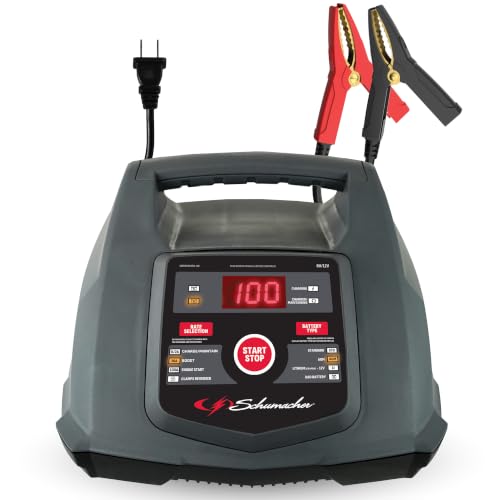

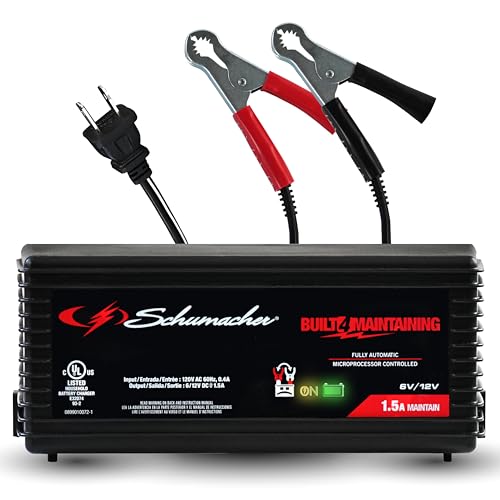
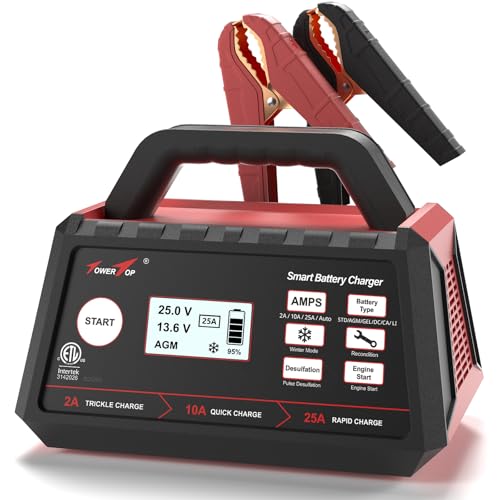


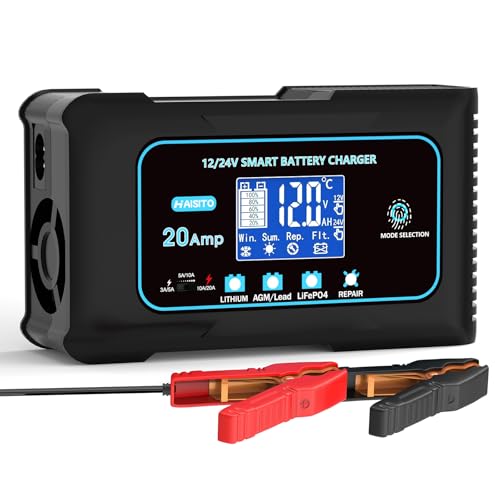
Who Should Buy Which Battery Charger for Cars?
Owners of Cars That Sit Between Drives
Short trips and long gaps between drives slowly drain a battery until one cold morning finishes it. If that is your pattern, a smart maintainer in the 1 to 2 amp range is your charger, connected whenever the car is parked at home. For the wider category view, our guide to the best battery charger options covers chargers for every vehicle type, and the dedicated best trickle battery charger roundup focuses on these low and slow units.
Drivers Who Need a Flat Battery Revived Fast
If the battery is already flat and the car must move today or tomorrow, charge rate is what matters. A smart charger rated around 5 to 10 amps can return a typical car battery to a startable state in a few hours and to full overnight. Models with an engine start assist mode add a burst of cranking help. Choose clamps and cables long enough to reach the battery without the charger dangling from the fender.
Owners of AGM, Stop Start and Stored Vehicles
Many modern cars use AGM batteries for stop start systems, and they need a charger with a proper AGM mode that respects different voltage limits. Classic cars and seasonal vehicles in storage benefit from repair or recondition modes that fight sulfation. If your battery is AGM, start with our guide to the best battery charger for agm batteries before buying, because the wrong profile quietly shortens battery life.
Key Features to Compare
Charge Rate: Amps Decide Speed
Amperage is the flow rate of charging, and it maps directly to time. Maintainers at 0.75 to 2 amps are meant to top up and hold a charged battery, taking a day or more to fill a flat one. General purpose chargers at 4 to 10 amps refill a typical 60 amp hour car battery overnight or faster. Very high amp shop chargers trade gentleness for speed and suit professionals. A useful rule is to charge at roughly a tenth of the battery capacity in amp hours, so most home users land happily in the 4 to 10 amp band.
Smart Charging Stages and Float Mode
Modern smart chargers do more than push current. They test the battery, charge in stages such as bulk, absorption and float, then hold a safe maintenance voltage without overcooking the cells. That float stage is what lets you leave a maintainer connected for a whole winter. Older manual chargers lack this logic and will overcharge a battery left attached, boiling off electrolyte. If you plan to connect and forget, a multi stage automatic charger is not a luxury; it is the whole point.
Battery Chemistry Support
Flooded lead acid, AGM, gel and lithium batteries each want slightly different charging voltages and behavior. A charger with selectable modes handles a mixed household fleet safely, from the daily driver to the mower battery in spring. Lithium support matters more each year as retrofits spread, but never charge a lithium battery on a lead acid profile. Check the label on your battery first, then confirm the charger lists that exact chemistry. Getting this match right protects the most expensive part of the system, the battery itself.
Safety Protections
Good chargers protect you from the two classic mistakes. Reverse polarity protection prevents damage if the clamps touch the wrong terminals, and spark proof clamps avoid a startling arc near battery gases. Overheat and short circuit shutoffs add another layer. These features cost little and matter most in dark garages with awkward battery locations. Whatever model you choose, connect the clamps in the right order, red to positive first and black to a ground point, then switch the charger on.
Repair and Desulfation Modes
Batteries that sit discharged grow sulfate crystals that steal capacity, and many smart chargers include a repair or recondition mode that pulses or cycles the charge to break some of that buildup down. It is not magic: a truly worn out battery stays worn out. Still, on a battery that is merely neglected, a repair cycle can restore useful capacity and postpone a replacement by a season or more. Treat it as a bonus feature that sometimes pays off, not a promise.
Clamps, Cables and Off Grid Options
Small details decide daily usability. Longer cables, around 6 feet or more, let the charger sit safely on the floor or a shelf instead of hanging from the battery. Sturdy clamps with strong springs grip corroded terminals better than flimsy clips. Some owners without a garage outlet look at a best solar battery charger panel maintainer instead, which trades speed for the freedom to keep a stored car topped up anywhere the sun reaches.
Charging a Car Battery Safely, Step by Step
Charge in a ventilated space, because batteries release a small amount of hydrogen gas, and keep flames and cigarettes well away. With the charger unplugged and switched off, connect the red clamp to the positive terminal and the black clamp to the negative terminal or a solid engine ground away from the battery. Then plug in, select the correct chemistry and amp mode, and let the charger work undisturbed until it reports full or switches to float.
Removal reverses the order: unplug first, then take off the black clamp, then the red. If a battery repeatedly goes flat within days, the charger is not the cure; have the battery load tested and check the car for a parasitic drain or a failing alternator. A charger maintains a healthy battery beautifully, but it cannot fix a vehicle that is draining or never charging it in the first place.
Common Mistakes to Avoid
- Charging on the wrong chemistry mode, so an AGM battery gets flooded voltages and loses capacity quietly over months.
- Leaving an old manual charger connected for days, which overcharges the battery and boils off electrolyte it cannot replace.
- Connecting clamps with the charger plugged in, creating sparks right where the battery vents flammable gas.
- Using a maintainer to revive a fully flat battery in a hurry, then blaming the charger when the car still will not start.
- Jump starting repeatedly instead of charging, which stresses the alternator and never refills the battery properly.
- Ignoring corroded terminals, because poor contact makes even a good charger read the battery wrong and undercharge it.
How to Make Your Battery Charger Last Longer
Chargers are simple devices that mostly die from environment and abuse. Store yours indoors, dry and off a cold concrete floor, and coil the cables loosely instead of wrapping them tight around the case, which cracks insulation at the strain relief. Keep the clamps clean; a quick brush to bright metal now and then keeps contact strong and readings honest.
Let the cooling fan, if fitted, run clear of dust by blowing out the vents occasionally, and never cover a working charger with a rag or box. If output becomes erratic, check the fuse and the clamp connections before assuming failure. Treated this way, a quality smart charger easily lasts a decade, usually outliving the first two batteries it maintains.
Frequently Asked Questions
How long does it take to charge a car battery with a battery charger?
It depends on the battery size and how flat it is. A typical 60 amp hour battery at half charge refills in about four to six hours on a 5 amp smart charger, and overnight on a 2 amp maintainer. A completely flat battery can take ten hours or more. Starting is possible much earlier, often after an hour or two, but a full charge is what protects battery life, so let the cycle finish when you can.
Can a battery charger be left connected to a car battery all winter?
Yes, if it is an automatic smart charger or maintainer with a float stage, which holds the battery at a safe voltage and tops up only as needed. That is exactly how stored cars, boats and classics are kept ready. The exception is an old manual charger with no automatic shutoff, which will overcharge and damage the battery over weeks. Check the battery water level on flooded types once during a long storage season.
What amp rating should the best battery charger for cars have?
For most households, a smart charger in the 4 to 10 amp range is the sweet spot: fast enough to recover a flat battery overnight, gentle enough for regular use. Add a small 1 to 2 amp maintainer only if a vehicle sits for weeks at a time. Very high amp units suit workshops that cycle many batteries. Matching the rate to roughly a tenth of the battery capacity in amp hours keeps charging both timely and kind.
How long does a battery charger for cars last?
A well kept smart charger commonly lasts eight to ten years or longer, because it has few moving parts beyond a cooling fan. Failures usually start with damaged cables, corroded clamps or a fan choked with dust, all of which are preventable or cheap to fix. Battery technology changes slowly, so a charger with flooded, AGM and lithium modes bought today should stay relevant through your next two or three cars.
Is a battery charger worth it if my car sits for weeks?
Very much so. Every deep discharge shortens a battery life noticeably, and a single winter of sitting flat can kill a mid age battery outright. A maintainer costing less than a tank of fuel prevents that, and it also saves the jump starts, clock resets and warning lights that follow a flat battery. For a second car, a stored classic or a vehicle at a vacation home, it is one of the cheapest forms of insurance you can buy.
Final Thoughts
Decide by how your car lives: parked for weeks, driven daily, or already showing a tired battery. Match the amp rating and chemistry modes to that picture, line the candidates up in the product table, and the best battery charger for cars for your garage becomes clear. Connect it correctly, let the smart stages do their work, and starting worries quietly disappear from your routine.


