
Best Battery Chargers for AGM Batteries in 2026: A Buying Guide
Disclosure: We may earn a commission when you buy through links on this page, at no extra cost to you. As an Amazon Associate I earn from qualifying purchases. Learn more

Choose the best battery charger for AGM batteries with guidance on AGM charge modes, amp sizing, temperature compensation, and safe maintenance charging.
An AGM battery costs two to three times what a flooded battery costs, and the wrong charger quietly eats that investment. Absorbed glass mat batteries are sealed, so charging voltage that a flooded battery tolerates can push an AGM past its venting point, drying it out for good. The best battery charger for agm batteries is simply a smart charger with a true AGM mode, the right amp size for your battery, and a float stage that can stay connected without cooking anything.
This guide explains what an AGM profile actually changes, how to size amps to amp hours, and which convenience features matter for cars, boats, and backup systems. The product table groups chargers by type, and the sections here walk through the details in plain language.
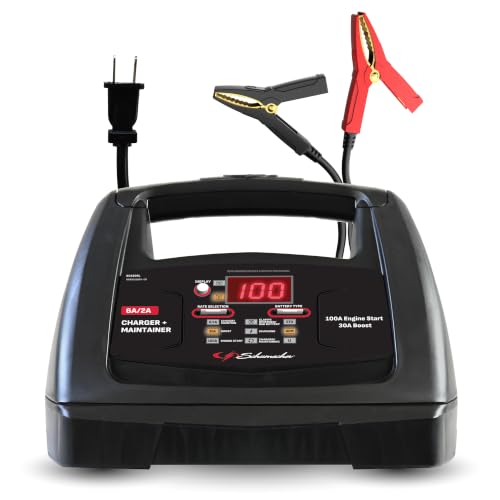




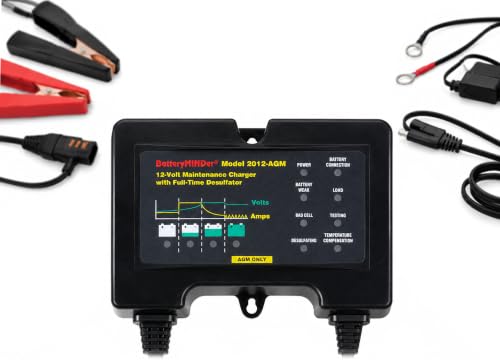


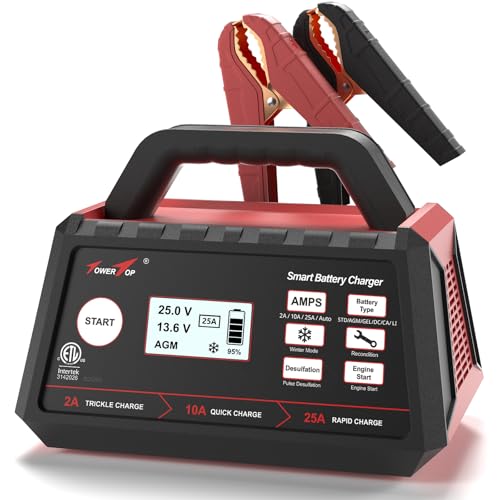
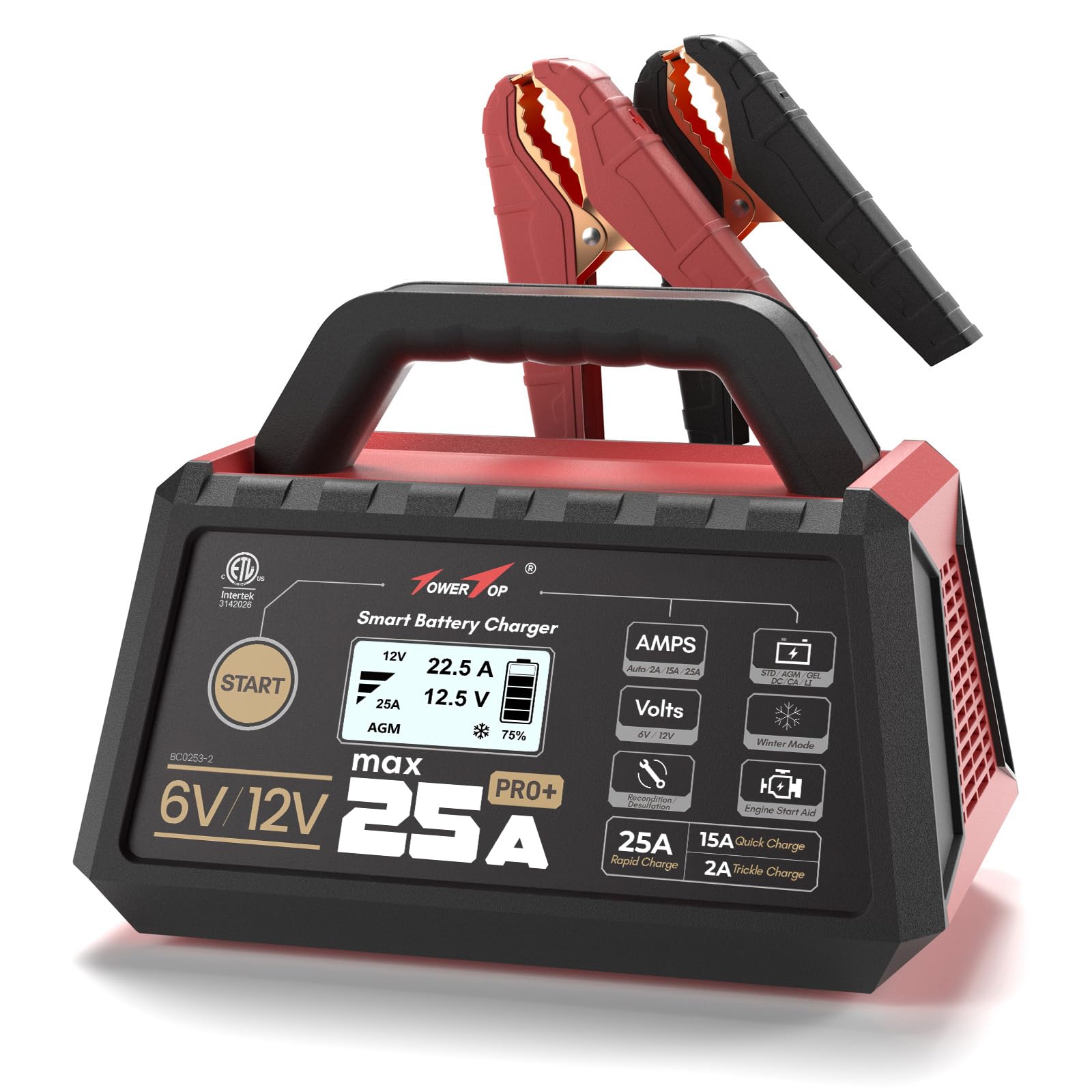

Who Should Buy Which AGM Charger?
Drivers With an AGM Battery in a Daily Vehicle
Many newer cars, especially those with stop start systems, ship with AGM batteries that dislike old fashioned chargers. If your battery lives under the hood and mostly needs seasonal top ups or recovery after a lights left on incident, a 3 to 5 amp smart charger with a labeled AGM mode covers you. Ring terminal leads left in place make each session a ten second connection.
Boat and RV Owners With Deep Cycle AGM Banks
Deep cycle AGM batteries in boats and RVs are larger, often 75 to 200 amp hours, and they cycle deeper than a starting battery. These banks want more muscle: chargers in the 10 to 25 amp range with temperature compensation, since a battery in a hot engine space needs a different voltage than the same battery in a cold garage. Multi bank outputs help if you charge a house bank and a starting battery together. For vehicles parked off grid, our guide to the best solar battery charger shows how to maintain the same banks with sunlight.
Backup Power and Mobility Users
AGM batteries also run sump pumps, home backup systems, mobility scooters, and solar storage, where the charger may stay connected for months. Here the float behavior is the whole product: a stable float around 13.5 to 13.8 volts, silent or near silent operation, and a charger that restarts its cycle after a power outage. Spark proof connections matter too, because these batteries often sit in living spaces rather than garages.
Key Features to Compare
A True AGM Charge Mode
An AGM mode adjusts the absorption voltage, typically to about 14.4 to 14.7 volts, and then settles to a gentle float. Just as important is what the mode leaves out: equalization. Flooded batteries sometimes get a deliberate high voltage equalizing charge to stir the electrolyte, but on a sealed AGM that pressure vents gas through the safety valve, and vented water never comes back. If a charger offers desulfation or recondition pulses, confirm they can be switched off or are excluded from the AGM profile, because aggressive pulse modes are a common cause of swollen AGM cases.
Amp Rating Matched to Battery Size
Charging amps should scale with the battery. A widely used guide is a charge rate around 10 to 25 percent of the battery amp hour capacity for routine charging: a 70 amp hour car battery suits roughly 4 to 10 amps, while a 200 amp hour bank wants 15 to 25 amps. Too small a charger is not dangerous, just slow, and it may never quite finish on a big bank because surface loads eat its output. Too large is rarely harmful on a smart charger, since the battery limits what it accepts, but giant chargers cost more and their fans annoy in quiet spaces.
Charging Stages and Float Behavior
Good smart chargers run through bulk, absorption, and float stages automatically, with some adding analysis and soft start steps for deeply drained batteries. The stage that defines ownership is float: a steady low voltage that offsets self discharge without gassing. If you plan to leave the charger connected all winter, float quality matters more than peak amps. Chargers that cycle off and restart in pulses can also work, but check that the restart threshold is low enough that the battery does not hover half charged. Our general guide to the best battery charger types explains stage terminology across brands.
Temperature Compensation
Charging voltage should fall as the battery warms and rise as it cools, roughly a few millivolts per degree per cell. Without compensation, a charger set for a mild garage overcharges a battery sitting in a hot boat bilge, and undercharges one in a freezing shed. Chargers handle this with a sensor in the unit, a probe on a cable, or a manual cold weather setting. For AGM batteries, which cannot be topped up with water, this protection is worth real money, because every overcharge event permanently removes capacity you cannot restore.
Safety Protections and Connection Quality
Reverse polarity protection, spark proof clamps, and short circuit shutoff should be standard at any price. Beyond the electronics, look at the hardware: thick cables that stay flexible in the cold, clamps with strong springs and full jaw contact, and an eyelet harness in the box for permanent mounting. Cheap clamps that touch only at the tooth tips create heat and voltage drop, which fools the charger into ending the cycle early. If the battery lives in a car you drive weekly, compare connection styles with our guide to the best battery charger for cars before choosing.
Recovery Modes and Their Limits
Many chargers advertise recovery for dead batteries, and within limits it works: a soft start stage can coax a battery that fell to 8 or 10 volts back into normal charging. Set expectations correctly, though. A charger cannot restore an AGM battery with a shorted cell or one that sat flat for a year, and repeated deep discharges permanently shrink capacity even when voltage recovers. Treat recovery as a rescue for recent mistakes, then use a best trickle battery charger style maintainer afterward so the battery never falls that far again.
Charging an AGM Battery Step by Step
Connect the charger with its power unplugged: positive clamp to the positive post, negative to the negative post or a chassis ground away from the battery. Select the AGM mode before plugging in, and confirm the charger agrees with the battery voltage, since most units handle 12 volt systems and some add 6 volt for classic vehicles and lawn equipment. A full charge on a half drained car battery takes roughly 4 to 8 hours at moderate amps; the charger will taper and drop to float on its own. Avoid opening the battery or checking caps, because AGM batteries are sealed by design and any venting you hear or smell means stop and reassess.
How Much Should You Spend?
Basic smart chargers with an AGM mode sell for around $35 and suit one car battery maintained in a garage. The versatile middle, about $60 to $120, adds higher amps, temperature compensation, and better clamps. Multi bank marine style chargers run about $150 to $350 and earn it through waterproof builds and independent outputs. Since a replacement AGM battery often costs $200 or more, the charger that treats it gently is rarely the place to save twenty dollars.
Common Mistakes to Avoid
- Using an old manual charger with no voltage regulation, which can hold an AGM battery at gassing voltage for hours.
- Running an equalize or recondition cycle on a sealed AGM battery and venting water it can never regain.
- Selecting the lithium or flooded profile by habit, leaving the AGM mode unused in the menu.
- Judging a finished charge by voltage alone right after unplugging, when surface charge still inflates the reading.
- Charging a hot battery straight after a drive at full rate, instead of letting it cool so voltages stay honest.
- Assuming a swollen case is cosmetic, when swelling signals venting and the battery is near the end.
Care and Maintenance for Charger and Battery
Keep charger vents clear and the housing dry, and coil cables loosely so the insulation does not crack at the strain relief. Wipe battery terminals clean and snug the connections, because a resistive clamp wastes charger output as heat. If the battery sits stored, check its resting voltage monthly; a healthy AGM resting near 12.7 to 12.9 volts is full, and anything drifting toward 12.4 volts wants the maintainer reconnected. Store the charger itself indoors, since damp garages corrode its board and fan long before the electronics wear out.
FAQ
Can you charge an AGM battery with a regular charger?
Only if that charger is a regulated smart model with an AGM setting. A modern automatic charger set to its standard mode often charges at voltages an AGM can tolerate briefly, but repeated use shortens life, and unregulated manual chargers are a genuine risk because their voltage climbs as the battery fills. Given that AGM batteries cost far more than the charger upgrade, matching the tool to the battery is the economical choice, not an upsell.
How many amps should a charger use for an AGM battery?
Aim for roughly 10 to 25 percent of the battery amp hour rating for routine charging. A typical 70 amp hour car battery pairs well with 4 to 10 amps, and a 100 amp hour deep cycle with 10 to 20 amps. Lower amps are safe but slow, mostly a problem on big banks. Maintenance charging is different: once the battery is full, a 1 to 2 amp float holds it indefinitely without stress.
What happens if an AGM battery is overcharged?
Overcharging forces the sealed case to vent gas through its pressure valve, and the water lost in that gas cannot be replaced. The battery dries out gradually, capacity falls, and in severe cases the case swells or the valve sticks open. Early on there may be no visible sign, which is why voltage discipline matters more with AGM than with flooded batteries you can top up. If a battery feels hot or hisses during charging, disconnect it and let it cool.
Can a charger revive a deeply discharged AGM battery?
Sometimes, if the discharge was recent and no cell has shorted. Many smart chargers refuse to start below a threshold voltage, a safety feature you can work around only with care, and some offer a soft recovery stage for exactly this case. Even when voltage comes back, expect lost capacity: an AGM battery taken to near zero and left there may keep half its rating. Test under load after charging, and replace the battery if it sags fast, before it strands you.
How long does it take to charge an AGM battery?
Divide the amp hours you need to replace by the charger amp rate, then add time for the slow absorption stage. Replacing 35 amp hours in a car battery with a 5 amp charger takes about 7 hours of bulk charging plus an hour or two of tapering. Doubling the amps does not halve the total, because the final fifth of capacity always arrives slowly. Overnight is the realistic plan for a battery that ran flat, not a lunch break.
Final Thoughts
AGM ownership is simple once the charger matches the chemistry: a real AGM mode, amps scaled to the battery, temperature compensation where the battery lives, and a float stage you trust for months. Choose with those four in mind and the best battery charger for agm batteries will pay for itself in battery life. Compare charger types in the product table, and check your battery label for its amp hour rating before you pick a size.


