
8 Best Airless Paint Sprayers For Lacquer Paint 2026 - Detailed Buyer Guide & Top Rated Reviews
Disclosure: We may earn a commission when you buy through links on this page, at no extra cost to you. As an Amazon Associate I earn from qualifying purchases. Learn more

Achieving a mirror-like, ultra-smooth finish on custom cabinetry, furniture, and millwork requires precision atomization that ordinary brushes or rollers simply cannot deliver. When working with fast-drying solvent or waterborne lacquers, selecting the Best Airless Paint Sprayers For Lacquer Paint is essential for avoiding frustrating surface defects such as orange peel, pinholing, and micro-bubbles. In 2026, modern paint delivery systems have evolved to combine fine-finish pressure management with high-efficiency output, making premium workshop results accessible for both dedicated DIY remodelers and professional woodworkers.
To help you navigate the wide spectrum of machinery on the market, our team analyzed 8 standout models ranging across $187–$1,222. By examining pump mechanics, fine-finish tip compatibility, solvent seal integrity, and cleaning ergonomics, we established practical benchmarks for every workshop size. If you are also weighing options between compressed-air setups and hydraulic piston systems, be sure to explore our related guide on air sprayers for homeowners to match your exact workshop workflow.




Best Airless Paint Sprayers For Lacquer Paint Buying Guide
Spraying lacquer presents unique mechanical challenges compared to standard latex wall paints. Because lacquer features a fast evaporation rate, thin viscosity, and volatile solvents, your choice of equipment directly dictates your surface sheen, overspray volume, and cleanup safety. Below are the critical engineering factors you must consider before selecting an airless setup for your finishing projects in 2026.
1. Precise Pressure Regulation and Low-Pressure Atomization
Standard architectural spraying often relies on maximum fluid pressure reaching upwards of 3000 PSI to shear heavy exterior emulsions. However, running clear or pigmented lacquer at excessive pressure results in turbulent clouding, severe bounce-back, and dry spray where droplets dry mid-air before leveling on the workpiece. A top-tier machine must provide continuous, micro-adjustable pressure dials that allow stable operation at lower thresholds, often between 800 and 1500 PSI.
Units equipped with fine-finish low-pressure capabilities allow lacquer to break into uniform 50 to 100 micron droplets without generating massive clouds of overspray. Look for digital pressure controls or stepless mechanical valves that prevent pressure pulsing, which ensures the spray fan remains perfectly uniform from the initial trigger pull to the end of each pass across delicate cabinet doors.
2. Reversible Fine-Finish Tip Sizing and Fan Width
The spray tip is the heart of your finishing quality. While heavy latex typically calls for orifice sizes between 0.015 and 0.019 inches, lacquer demands precision fine-finish tips ranging from 0.008 to 0.013 inches. Using an oversized tip will inevitably flood horizontal surfaces, creating runs, sags, and prolonged drying times that ruin fine woodworking.
Modern switch tips featuring dual-orifice pre-atomizers produce softer edges, allowing consecutive spray passes to blend seamlessly without visible overlap lines. Reversible tips are particularly valuable when working with fast-setting lacquers, as any flash-cured material at the nozzle can be cleared in seconds simply by twisting the tip 180 degrees and pulling the trigger into a waste bucket.
3. Material Delivery: Small Hoppers vs. Direct Siphon Tubes
Material management is a major consideration when tailoring your setup for lacquer. Siphon-tube systems that draw directly from 1-gallon or 5-gallon pails are outstanding for large-scale trim installations or whole-room renovations, minimizing time spent refilling containers. However, filling long hose lines with expensive lacquer can lead to substantial material waste during initial priming and end-of-day flushing.
For dedicated fine-finish cabinetry or boutique furniture builds, gravity-fed hoppers holding 1.2 to 1.5 gallons are significantly more efficient. Gravity hoppers allow the pump to prime instantly with zero leftover fluid clinging to large container walls, reducing solvent usage during system purges. If your work encompasses broader structural surfaces alongside woodwork, reviewing dedicated airless paint sprayers for metal can provide additional perspective on high-viscosity suction systems.
4. Pump Build Quality, Motor Power, and Solvent Resistance
Solvent-based lacquers, catalyzed conversion varnishes, and lacquer thinners can rapidly degrade cheap rubber O-rings, plastic housings, and low-grade packings. Premium sprayers utilize stainless steel fluid sections, hardened chrome piston rods, and solvent-resistant seals that withstand aggressive chemical flushes without swelling or leaking.
Motor construction also impacts longevity. Sprayers featuring high-torque brushless or pure copper motors maintain consistent fluid delivery under variable load conditions. Rapid-replacement pump assemblies, such as drop-in piston cartridges, allow you to service wear components on the jobsite without sending the entire machine to a service center.
| Feature | Compact / DIY Sprayers | Dedicated Fine-Finish Units | High-Capacity Pro Sprayers |
|---|---|---|---|
| Operating Pressure Range | 1500 to 2900 PSI | 500 to 2200 PSI (Low-Pressure) | 1000 to 3300 PSI |
| Typical Tip Orifice Compatibility | 0.011" to 0.015" | 0.008" to 0.014" (Fine Finish) | 0.013" to 0.021" |
| Feed Configuration | Siphon Tube / Small Hopper | Integrated 1.5 Gal Hopper | Flexible 1 to 5 Gal Siphon Tube |
| Best Application | Small furniture, craft trim | Kitchen cabinets, fine millwork | Multi-room trim, large renovations |
5. Hose Ergonomics, Swivel Joints, and Mobility
Spraying intricate cabinet face frames, spindle railings, and interior shelving requires exceptional gun dexterity. Stiff, heavy fluid lines cause severe wrist fatigue and pull on the spray gun, leading to uneven spray angles and patchy coverage. Utilizing flexible, smaller-diameter whip hoses between your main fluid line and the gun body significantly improves maneuverability.
Guns fitted with 360-degree fluid inlet swivels allow you to rotate your spray angle effortlessly without fighting hose torque. When working across elevated workshops or multi-room interiors, ensure your setup is paired with durable airless sprayer hoses that resist kinking while maintaining pressure stability over long runs.
6. Cleaning Protocols, Solvent Safety, and Jobsite Maintenance
Lacquer dries via solvent evaporation within minutes of application, meaning thorough cleaning immediately after use is non-negotiable. Sprayers equipped with rapid flush valves, garden hose adapters for waterborne lacquers, and fully detachable fluid sections make teardown straightforward. Never allow solvent-based lacquer to sit stagnant inside high-pressure fluid lines overnight.
Safety is paramount when working with flammable solvents. Proper ventilation, explosion-proof exhaust fans, static grounding clamps, and organic vapor respirators must always accompany any lacquer spraying session. Ensure that any electrical switches or motor housings on your equipment are sealed against vapor intrusion to minimize fire hazards.
Our Research Methodology & Why You Can Trust Us
Our evaluation process for identifying the Best Airless Paint Sprayers For Lacquer Paint is built upon rigorous engineering analysis, manufacturer documentation reviews, and aggregated feedback from experienced woodworking professionals and DIY specialists. We examined 8 models representing leading manufacturers such as ENWEGEY, InoKraft, and VEVOR to determine real-world reliability, pressure consistency, and finish atomization across varied project types.
Rather than relying on marketing claims, our scoring methodology cross-examines key technical data: continuous motor wattage, minimum stable operating pressures, solvent seal compositions, tip sizing tolerances, and flow rates in gallons per minute. We place significant emphasis on how well each system controls overspray and whether fluid pathways can withstand frequent solvent flushing without premature packing failure.
To keep our guides relevant, reliable, and up to date, our editorial team continuously monitors emerging tool releases, user-reported durability trends, and warranty support performance, updating our insights every October 2026. This objective, data-driven approach ensures you receive unbiased, practical recommendations tailored specifically to your home renovation and workshop projects.
Final Thoughts
Selecting the ideal spray equipment transforms lacquer application from an intimidating chore into a fast, highly rewarding craft. If your goal is dedicated cabinetry refinishing and uncompromising fine-finish atomization, the Graco Finishpro Gx 19 Electric Airless Sprayer represents the pinnacle of specialized performance with its integrated 1.5-gallon hopper, RAC X fine-finish low-pressure tip system, and rapid-swap piston pump.
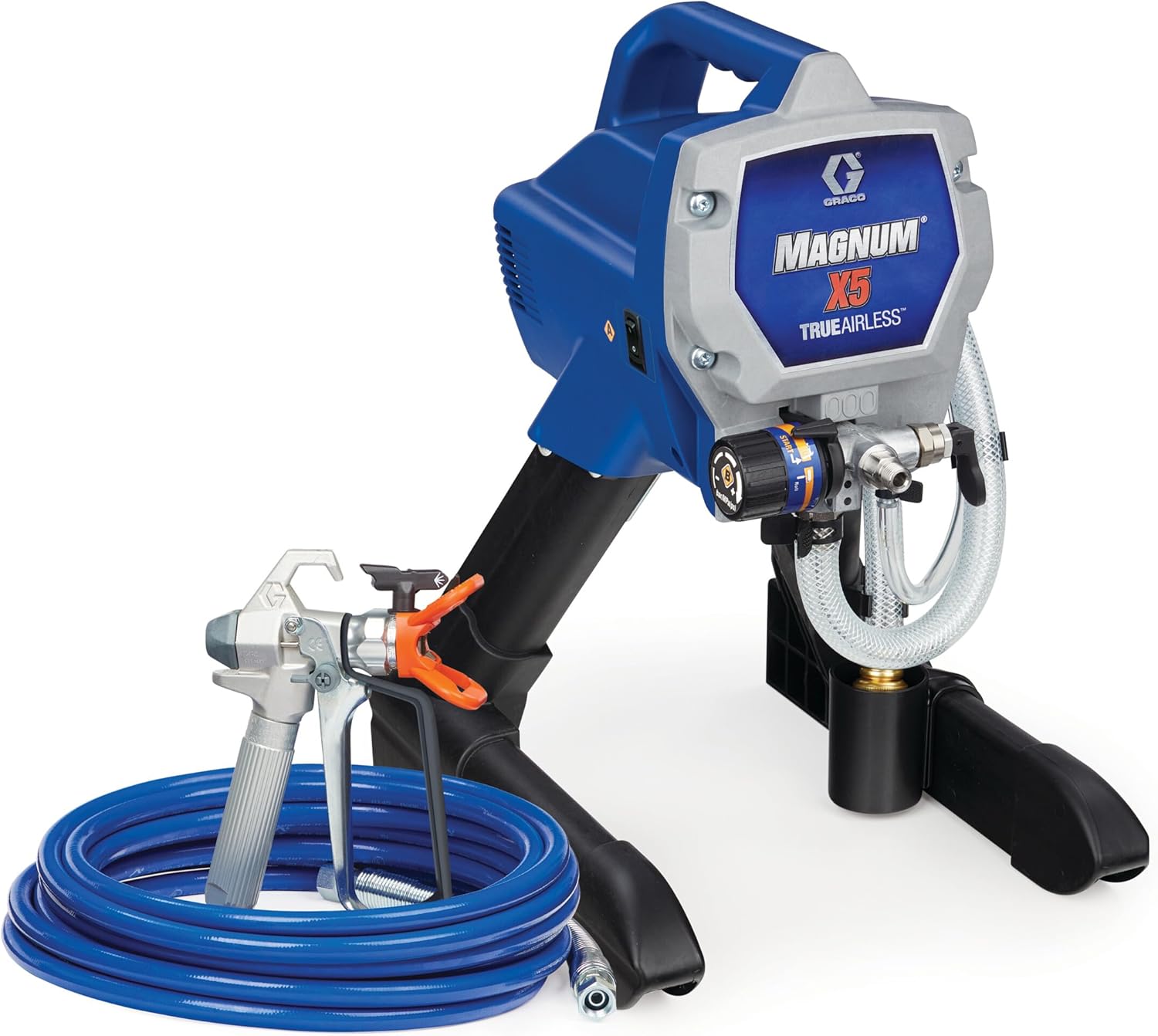
For versatile home remodelers who want strong performance on a budget, the VEVOR Stand Airless Paint Sprayer, 650W delivers exceptional value, solid 3000 PSI power, and direct bucket drawing. Meanwhile, the Graco Magnum X7 Cart Airless Paint Sprayer and Graco Magnum X5 Airless Paint Sprayer remain top-rated multi-purpose workhorses for handling both interior woodworking trim and large residential painting tasks.
If portability and touch-up speed are your primary needs, the Cordless Airless Paint Sprayer Gun, 1.2L Capacity offers impressive cordless flexibility with multi-speed fine adjustment. No matter your choice, pairing your machine with correct fine-finish tips and strict solvent cleaning routines will ensure flawless woodworking finishes for years to come. For additional equipment maintenance insights, take a look at our guide on air hoses for nail guns to keep your workshop pneumatics equally optimized.
Frequently Asked Questions
Can I spray lacquer through a standard airless paint sprayer?
Yes, standard airless paint sprayers can spray lacquer, provided they feature adjustable pressure controls and solvent-resistant internal packings. To achieve a smooth finish without excessive overspray, you must swap out standard wall tips for fine-finish low-pressure tips sized between 0.008 and 0.012 inches.
What tip size is best for spraying lacquer with an airless sprayer in 2026?
For waterborne and solvent-based clear lacquers, an orifice size between 0.008 and 0.011 inches is ideal. For thicker pigmented lacquers or lacquer primers, an orifice size of 0.011 to 0.013 inches provides smooth atomization while preventing tip clogging.
Do I need to thin lacquer before running it through an airless system?
Most modern airless paint sprayers possess ample hydraulic pressure to atomize unthinned lacquer directly. However, adding 5% to 10% recommended lacquer thinner or retarder can improve flow-out and self-leveling in warm or dry workshop conditions to eliminate orange peel.
How do I safely flush and clean an airless sprayer after using lacquer?
Immediately after spraying, run clean lacquer thinner or manufacturer-approved solvent flush through the suction tube, pump, and hose until the fluid runs completely clear. Always ground the metal bucket and spray gun tip against static electricity during solvent flushing to prevent ignition hazards, and check our review on air sprayers for homeowners for alternative cleaning practices.
What is the advantage of using a dedicated hopper over a suction tube for lacquer?
A dedicated top-mounted hopper allows you to work with smaller fluid batches (1 to 2 gallons) without leaving valuable lacquer stranded in long pickup hoses. Hoppers prime instantly with less solvent waste during priming and cleanup cycles, making them ideal for furniture builders.
How does an airless sprayer compare to an HVLP turbine for lacquer finishes?
Airless sprayers apply lacquer significantly faster than HVLP systems and can handle larger surface areas like whole kitchen cabinet runs in a fraction of the time. While HVLP provides maximum transfer efficiency for small crafts, modern airless units with fine-finish low-pressure tips now achieve comparable surface smoothness with vastly superior application speed.


