
Best Allen Wrench Sets at Every Price in 2026: What Your Money Really Gets You
Disclosure: We may earn a commission when you buy through links on this page, at no extra cost to you. As an Amazon Associate I earn from qualifying purchases. Learn more

Compare the best allen wrench sets at every price point. Learn what you get at budget, midrange, and premium levels and where spending more pays off.
Hex keys are the cheapest tools in most workshops, yet the spread between a $6 folding set and a $45 premium set is larger than it looks. Cheap keys are cut from soft steel with loose tolerances, so they rock in the bolt head, round the socket, and turn a ten minute job into an extraction project. Better sets cost more because of steel grade and fit, not decoration. This guide explains the best allen wrench sets tier by tier, so you know exactly what each step up in price buys.
We will cover the three formats, the sizes that matter, and the details that decide whether a key grips or slips. The comparison table below gives a fast overview of the field.




Who Should Buy Which Allen Wrench Set?
Cyclists Keeping a Bike Adjusted at Home
Bikes concentrate nearly all of their bolts in a tight metric band, most often 4, 5, and 6 mm, with 2.5 and 3 mm appearing on accessories and 8 mm on some pedals and cranks. A long arm L key set in metric sizes gives the leverage and reach that stem, seat post, and brake work demand, and ball ends speed up the angled turns inside bottle cage and rack mounts. Cyclists can skip SAE entirely and put the whole budget into steel quality in the sizes they use weekly.
Furniture Assemblers and Flat Pack Regulars
Flat pack furniture runs on 4 and 5 mm socket head bolts, and the tiny key in the box is slow, soft, and painful on the fingers. A mid priced set with a holder that keeps sizes sorted turns assembly day into a quick job, and a T handle in 5 mm is worth owning for long runs of identical bolts. This group rarely needs premium steel, because furniture bolts are not torqued hard, but fit still matters: a loose key chews the shallow heads that flat pack hardware uses.
Mechanics and Machinery Users
Industrial machinery, 3D printers, and older American equipment mix metric and SAE socket heads, often recessed in deep counterbores. This group needs both measurement systems, long arm keys for reach, and steel that survives real torque without twisting. For daily users, premium tier fit and a case with every size visible at a glance pay for themselves in saved bolts alone.
What Your Money Gets You at Each Price Tier
Budget Sets Around $10
Budget sets are usually folding tools or simple L keys in a plastic holder, cut from basic chrome vanadium with noticeable play in the bolt head. Size markings may be printed rather than stamped, and the smallest keys bend under modest force. That is acceptable for furniture, toys, and the occasional bike tweak, where torque stays low and a rounded bolt is an annoyance rather than a disaster. Buy this tier as a household spare or a glove box set, not as your main workshop kit.
Midrange Sets About $15 to $30
The midrange is where the best allen wrench sets for most people live. Steel improves, tips are chamfered so keys seat with a positive click, and holders upgrade to hinged cases that present every size in order. Ball ends appear on the long arm, both metric and SAE sets are offered, and stamped markings survive years of use. For bikes, printers, and general machinery, this tier covers the work with little compromise.
Premium Sets Around $35 and Up
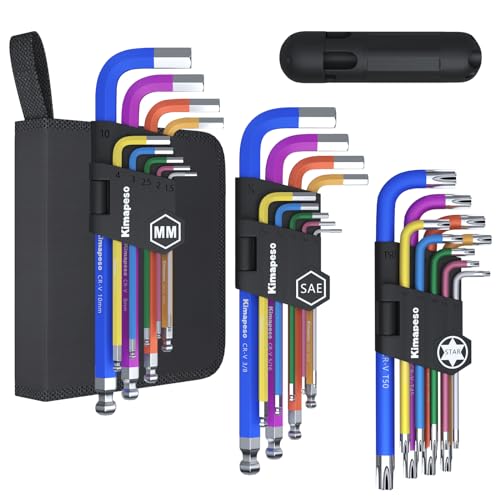
Premium sets spend the money on tolerance and steel: S2 tool steel or high grade chrome vanadium, machined to fit the socket with minimal rock, and hardened so the corners stay sharp through years of torque. Holders become labeled cases with each key in a marked slot, and some lines add color coding by size that speeds up grabbing the right key. Daily mechanics feel the difference in fewer rounded bolts; occasional users mostly pay for insurance they will rarely claim.
Key Features to Compare
Format: L Keys, Folding Tools, and T Handles
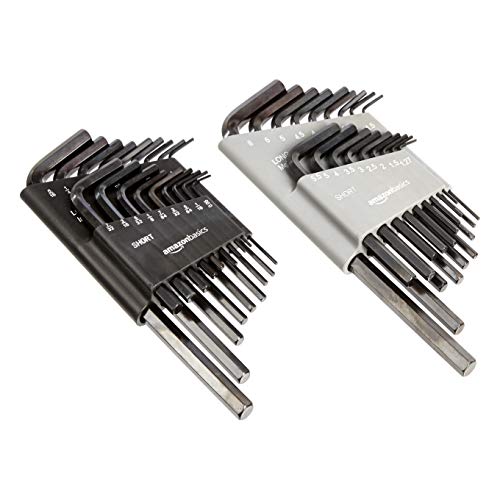
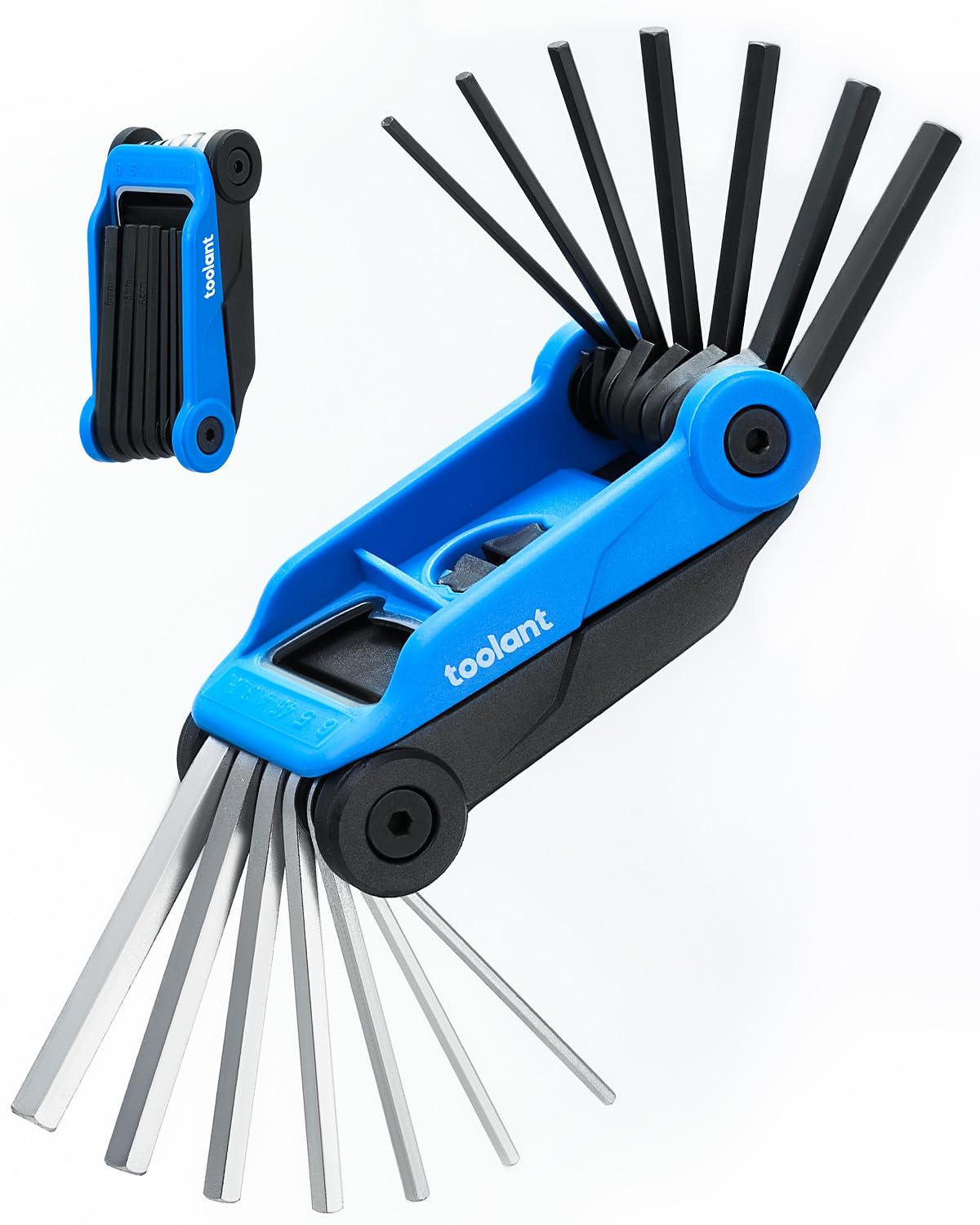
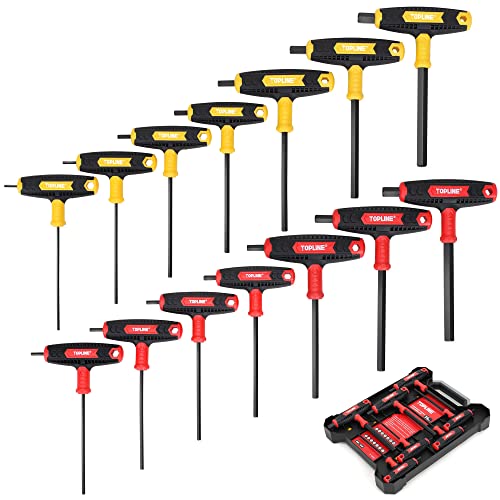
The L key is the standard: a short arm for speed in open space and a long arm for leverage and reach. Folding sets package the keys like a pocket knife, which travels well and never loses a size, but the handle limits torque and the pivot wears loose. T handles give the best grip and spin fasteners quickly, at the cost of bulk and price per size. Most users keep L keys as the core set and add a T handle or two in their most used sizes.
Size Coverage in Metric and SAE
A complete metric set runs from 1.5 to 10 mm, and an SAE set from 1/16 to 3/8 inch. Gaps hurt more than small counts: missing the 2.5 or 7 mm size strands real jobs on bikes and machinery. Check whether the small end of the range is truly included, because some sets quietly start at 2 mm and skip the tiny sizes that electronics and optics mounts use. Buying metric and SAE as a matched pair from one maker keeps holders and markings consistent across your drawer.
Steel Grade and Tip Tolerance
Fit is the whole ballgame with hex keys. A key that is even slightly undersized rocks in the socket, concentrates force on the corners, and rounds the bolt head a little more with every turn. S2 tool steel and quality chrome vanadium hold their dimensions and edge sharpness far longer than the soft steel in bargain sets. Chamfered tip edges help the key slide into dirty or painted sockets without shaving the corners. When a listing hides the steel grade entirely, treat that silence as your answer about quality.
Ball End vs Flat End
A ball end lets the long arm enter a bolt at an angle of up to about 25 degrees, which is a lifesaver when a straight path is blocked by a frame tube or housing. The trade off is contact area: the ball grips less of the socket wall, so it should spin bolts in and out rather than apply final torque. The correct habit is ball end for access and speed, flat short arm for breaking loose and final tightening. Sets that put the ball on the long arm and keep the short arm flat give you both in one key.
Holder Design and Size Markings
A hinged holder that fans the keys out beats a tight ring that forces you to pry each key free with a fingernail. Markings should be stamped or laser etched on every key, not just printed on the holder, because keys spend their lives out of the holder during a job. Color coded holders look like a gimmick until you are grabbing the 5 mm for the tenth time in an afternoon. The test is simple: you should find a size by touch, in seconds, mid job.
Choosing Allen Wrench Sets for Your Situation
Folding Sets for Camera Gear
Photographers need small sizes above all, since tripod plates, cages, and quick release clamps use tiny hex bolts, often 2.5, 3, and 4 mm, plus the standard 1/4 inch hardware screw. A folding format rides in a camera bag without stabbing the lining, and it keeps every size captive on location shoots. Prioritize smooth pivot action and stamped sizes; a folding set that omits the smallest keys is useless for this job, however nice the steel is.
Long Term Costs to Factor In
Hex keys have almost no running costs, so the real expense is replacement and damage. A soft key that rounds a bolt creates costs elsewhere: extractor tools, drilled out hardware, or a shop bill for a seized seat post or stripped brake bolt. Premium keys also stay in the family longer, because a complete labeled case is harder to lose than loose keys in a junk drawer. Count the main set as a buy once purchase when the steel is right.
Common Mistakes to Avoid
- Using a ball end for final torque, because the reduced contact rounds the socket head under full load.
- Grabbing the closest SAE key for a metric bolt, because the near fit feels fine until it strips the corners.
- Cheating extra leverage with a pipe on a small key, because keys under 3 mm snap instead of bending.
- Storing loose keys in a toolbox tray, because the small sizes vanish first and the set stops being complete.
- Buying a folding set as your only set, because the handle caps torque and the pivot loosens with heavy use.
How to Make Your Allen Wrench Set Last Longer
Wipe keys dry after use and store the holder somewhere that stays dry, since surface rust roughens the faces and ruins the precise fit these tools depend on. Inspect the small keys most often, because they wear and twist first; a key that has started to spiral or whose corners look polished should be replaced before it damages a bolt. Seat every key fully before pulling, and keep grit out of bolt sockets with a pick or a blast of air, because a key riding on packed dirt behaves like an undersized key. Used correctly and kept dry, a good set serves for decades.
Frequently Asked Questions
How do I maintain an allen wrench set?
Wipe the keys clean and dry, return them to the holder in size order, and check the small sizes for twist or polished corners a few times a year. One overlooked step is cleaning the bolt sockets themselves before work; a key seated on packed grit wears fast and slips. If a holder hinge cracks, transfer the keys to a labeled pouch rather than letting them loose in a drawer.
How much should I spend on an allen wrench set?
Most users should spend about $15 to $30 for a midrange set with real steel and a good holder. Cyclists and mechanics who turn hex bolts weekly can justify $35 and up for premium tolerance, while furniture only households can start around $10.
Are expensive allen wrench sets worth it?
They are worth it in proportion to torque and frequency. Premium fit prevents rounded bolts, and one saved extraction on a bike or machine can repay the price gap. The gain is invisible on loose furniture bolts, which is why casual users rarely notice a difference. A practical middle path is a premium set in your main system and a midrange set in the other, since the second system usually sees lighter work.
What features matter most when buying allen wrench sets?
Tip tolerance and steel grade matter most, followed by complete size coverage and a holder that keeps sizes visible. Ball ends add real convenience for angled access, and stamped markings outlast printed ones. Buyers who find themselves fighting recessed bolts weekly should also look at socket driven hex bits paired with a ratchet from the best socket wrench sets, which give more control than any hand key.
How long does an allen wrench set last?
A quality set lasts decades, and the larger keys may never wear out in home use. The small sizes live harder lives: 2, 2.5, and 3 mm keys twist and round after years of real torque, and professionals replace them individually. That is another argument for brands that sell single keys, because a set you can replenish piece by piece effectively never dies.
Final Thoughts
Spend on fit and steel first, format second, and let your fasteners decide the size system: L keys in the midrange cover most households, cyclists, and furniture, while premium tolerance earns its price in daily or high torque work. For most readers, the best allen wrench sets are the $15 to $30 sets with chamfered tips, ball ends on the long arm, and a holder that keeps every size visible. When hex keys cannot reach a fastener at all, full size tools from the best wrench sets take over, so compare your finalists in the product table above and order with confidence.


