
Best Auto Ranging Multimeter in 2026: A Buying Guide
Disclosure: We may earn a commission when you buy through links on this page, at no extra cost to you. As an Amazon Associate I earn from qualifying purchases. Learn more

The best auto ranging multimeter picks the right range for you, but speed, true RMS and safety ratings still matter. Here is how to compare models.
A manual range multimeter makes you guess the scale before you measure, and guessing wrong wastes time or pegs the display. An auto ranging meter removes that step: you pick the function, touch the probes, and the meter chooses the range and shows the value with the right resolution. Finding the best auto ranging multimeter is about what auto ranging does not decide for you, namely ranging speed, waveform accuracy and the safety rating that protects you on household circuits.
This guide explains how auto ranging behaves in practice, which specifications separate a careful meter from a careless one, and the habits that keep readings honest. Compare the options in the table below, then read the sections that match the work on your bench.

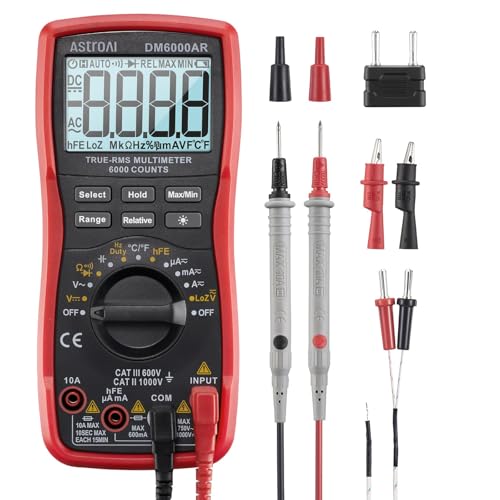
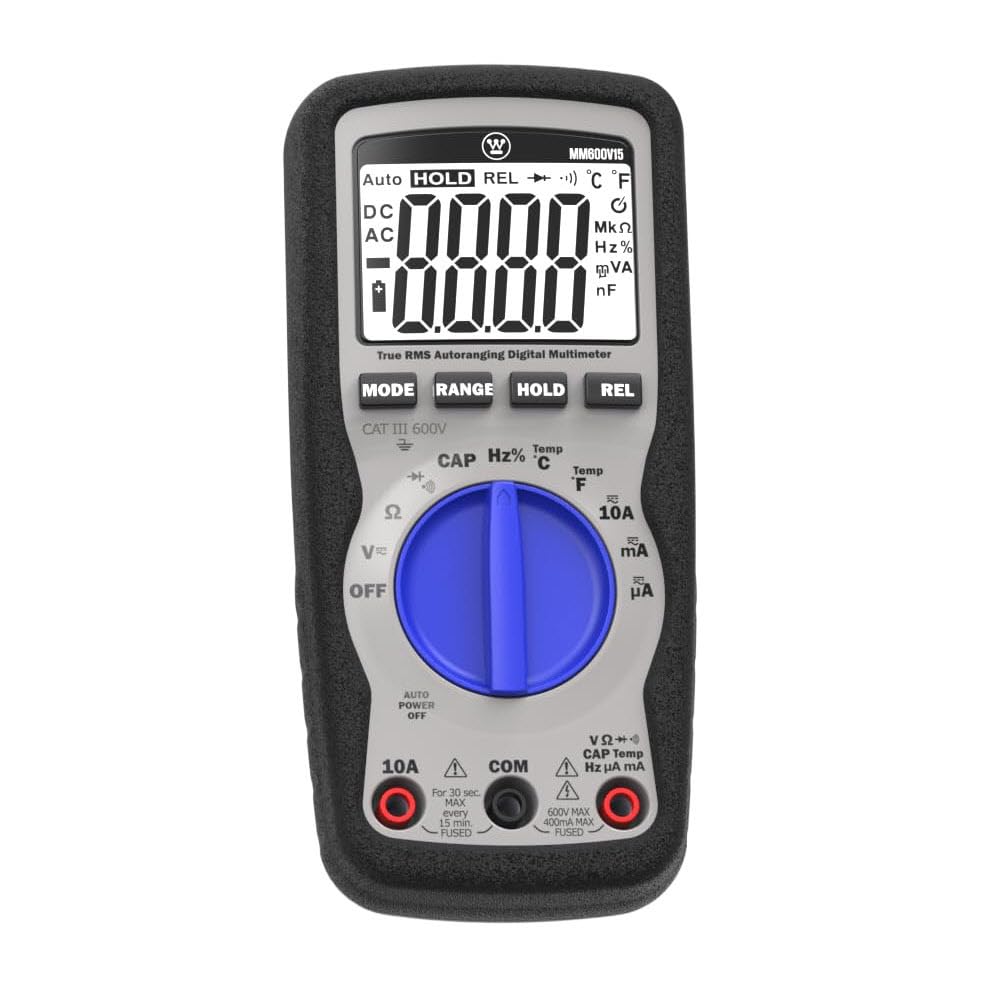
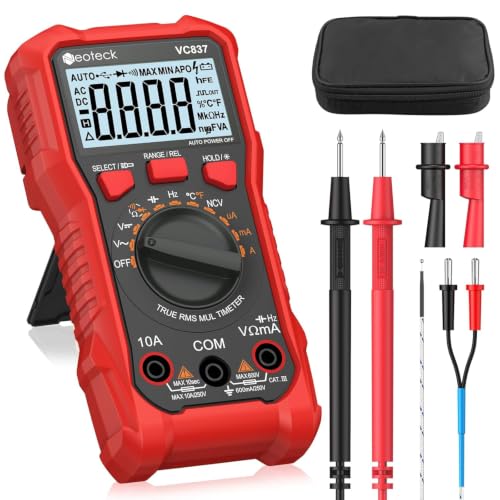


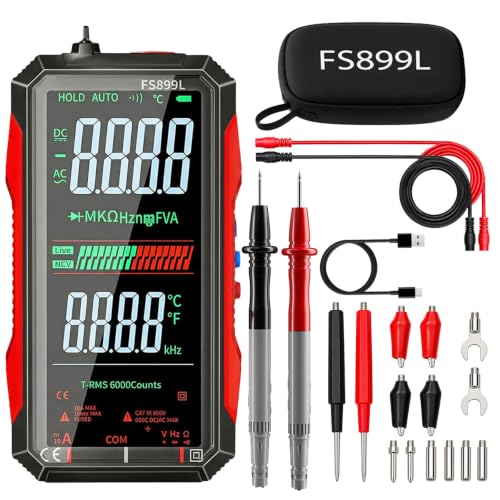
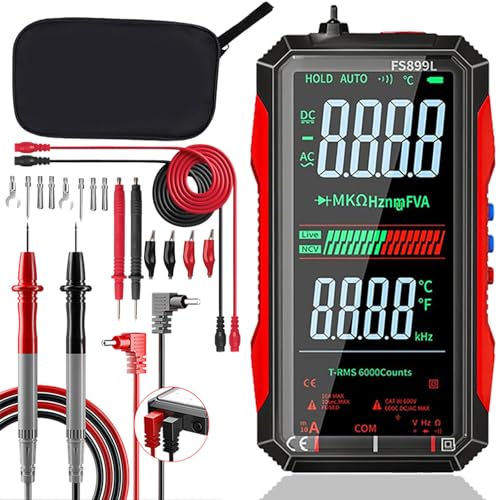
Who Should Buy Which Auto Ranging Multimeter?
Auto ranging suits almost everyone, but the rest of the meter should follow your most serious job, not your easiest one.
Homeowners Checking Outlets, Batteries and Appliances
Home work mixes dead outlets, tired batteries, tripped breakers and the occasional appliance fault. A mid priced auto ranging meter with a non contact voltage sensor and a CAT III safety rating covers that list comfortably. You will use the auto ranging constantly, because household jobs jump between millivolts and full line voltage in the same afternoon. Our best multimeter for home use guide compares meters chosen for exactly this mix of tasks.
DIYers Troubleshooting Cars and HVAC Equipment
Vehicle and heating work add two demands: measuring current draw and testing capacitors. Look for a meter with a proper fused current range for parasitic draw tests on cars, plus capacitance measurement for HVAC capacitors. Duty cycle and frequency readings help with sensors and controls. The automotive focused options in our best multimeter for automotive guide go further into vehicle specific features like dwell and tach readings on supported models.
Electronics Hobbyists Who Measure Small Signals Often
Bench electronics work lives at low voltage and cares about resolution: the difference between 4.98 and 5.02 volts matters when a rail is out of spec. A higher display count gives you that resolution, and fast auto ranging keeps up as you probe around a board. Continuity with a fast beeper and a relative mode for comparing values are daily use features here. Spend on counts and speed rather than on rugged casing you do not need at a desk.
Key Features to Compare
How Auto Ranging Picks a Range, and How Fast
When you connect the probes, the meter starts at a high range and steps down until the reading lands in the most precise part of a range, then shows the value with a decimal point that moves accordingly. Cheap meters do this slowly, hunting for a second or more on every touch, which becomes maddening when you probe twenty test points. Better meters settle in a fraction of a second and hold steady. Almost all auto ranging meters also offer a range hold or manual override, and that button matters more than most buyers realize, as the section on locking a range explains.
True RMS Versus Average Responding
Basic meters assume household current is a clean sine wave and calculate voltage from the average. Modern homes are full of loads that distort that wave: variable speed drives, LED lighting, dimmers and switching power supplies. A true RMS meter measures the actual heating value of the waveform, so it reads those circuits correctly where an average responding meter can read noticeably low. If you only measure wall outlets and car batteries, either type agrees. If you measure anything driven by electronics, true RMS is the honest choice.
Display Counts, Resolution and Stated Accuracy
Counts describe how much the display can show: a 6000 count meter displays up to 5999, which means finer steps at a given voltage than a 4000 count meter. Finer steps mean you see small changes instead of a rounded guess. Accuracy is printed as a percentage plus a number of counts, such as plus or minus 0.5 percent plus two counts, and it is the number that decides whether a reading is trustworthy. Compare accuracy on the DC voltage range first, since that is the range most users live on, and treat headline accuracy claims that hide the counts part with suspicion.
Safety Category Ratings and Fused Inputs
This is the feature that protects you rather than the measurement. Category ratings describe where a meter may safely be used: CAT III covers distribution wiring such as outlets and breaker panels in a home, while CAT IV covers the service entrance and outdoor lines, and each rating pairs with a voltage limit. The professional meters in our best multimeter for electricians guide carry high category ratings with high rupturing capacity fuses that can safely interrupt a fault. A meter with no printed category rating does not belong on household wiring at any price. Stop and call a licensed electrician if you find scorch marks, a buzzing panel or a breaker that trips again instantly, because those are faults, not measuring jobs.
Extra Functions Worth Paying For
Beyond volts, ohms and continuity, the useful extras depend on your work. Capacitance measurement tests HVAC and appliance capacitors. A non contact voltage sensor sniffs for live wires through insulation before you touch anything, which is a genuine safety habit builder. Temperature input with a probe suits HVAC and cooking alike, frequency helps with generators and variable speed drives, and a low impedance mode drains the ghost voltages that confuse readings on open circuits. Buy the extras your jobs need and ignore the rest, because every added dial position is one more chance to select the wrong function.
Leads, Display and the Analog Bar Graph
Test leads are half the instrument. Silicone leads stay flexible in a cold garage, resist melting when they brush a hot exhaust, and their insulation rating should match the meter category. The display earns its keep with a backlight for panel work and large digits you can read at arm length. Many good meters add an analog bar graph under the digits, which updates far faster than the numbers and shows a fluctuating signal as movement instead of a blur of changing digits. For a wider view of the category, our best multimeter guide compares auto and manual range models together.
When to Lock a Range Manually
Auto ranging has one honest weakness: a signal that jumps around makes the meter hunt between ranges, and each hunt costs time and blurs the reading. Measuring across a noisy circuit, checking many similar points in a row, or watching a value drift near a range boundary all go faster with the range locked. Press the range button, park the meter on the scale your values live in, and take the readings at digital speed. The readings are no less accurate, because accuracy follows the range you are on, and you regain the decimal place that fits your work.
Locking a range also teaches you what the meter was doing for you, which makes the OL display make sense: it simply means the value exceeds the current range. Let the meter step back to auto when you move to a different kind of job. And one firm boundary for home users: measurements inside a breaker panel, beyond simply checking an outlet or a breaker output with the cover on, belong to a licensed electrician. A good meter informs that call rather than replacing it.
Common Mistakes to Avoid
- Measuring resistance or continuity on a live circuit, which gives false readings and can destroy the meter.
- Leaving the leads plugged into the current jack and then probing a voltage source, which dead shorts the circuit through the meter fuse or worse.
- Probing household wiring with an unrated bargain meter, whose inputs have no real protection behind the dial.
- Measuring current in parallel like voltage, instead of in series with the load, which blows the fuse instantly.
- Trusting readings taken with cracked or chewed test leads, which can expose live metal at your fingertips.
- Assuming a zero reading means a circuit is safe, without first proving the meter works on a known live source.
How to Make Your Multimeter Last Longer
Store the meter in its case with the dial set to off or to a voltage range, never left on a current function where a hurried grab becomes a short circuit. Wrap the leads loosely in large loops, because tight wrapping breaks the fine strands inside the insulation and creates intermittent readings that mimic faulty equipment. Replace the battery at the first low battery warning rather than nursing it, since a fading battery can quietly skew readings before it kills the display.
Inspect the leads against the light every few months, flexing them along their length while watching for cracks, and replace them as a set with leads rated for your meter category. Keep spare fuses of the exact specified type in the case, because a meter with a blown current fuse reads zero and can send you chasing a draw problem that does not exist. Finally, prove the meter on a known outlet before and after any safety check, a habit professionals call live dead live.
FAQ
Why do the digits keep changing on an auto ranging multimeter?
Two causes cover most cases. If the probes are open to the air, the meter picks up stray voltage from nearby wiring and shows wandering millivolts, which is normal and stops when you touch a real circuit. If the signal itself varies near a range boundary, the meter keeps stepping between ranges, and locking the range with the range button settles it. A steady reading that still jitters by a digit or two is simply the meter showing its full resolution.
What does OL mean on a multimeter display?
OL means overload for the range in use: the value is higher than that range can display. On an auto ranging meter it should appear only briefly while the meter steps up, or stay if the value exceeds the meter maximum, which is a clear instruction to stop and rethink the setup. On resistance it also appears with open probes or a broken conductor, since infinite resistance is beyond any range. Never ignore a persistent OL on voltage; it may mean the circuit carries more than you expected.
Is true RMS worth it for home use?
For outlets, batteries and simple appliances, an average responding meter reads the same numbers and costs less. True RMS earns its price when you measure circuits fed by dimmers, variable speed drives, modern HVAC equipment or dense LED lighting, where the waveform is distorted and an averaging meter reads low. If your home has a variable speed pool pump, an inverter driven HVAC system or a workshop full of electronic speed controls, true RMS is the safer default.
Can an auto ranging multimeter test a car battery?
It can read the battery voltage accurately, which tells you the state of charge: about 12.6 volts resting means a charged conventional battery, while readings near 12.2 volts suggest roughly half charge. What a multimeter cannot do is load test, which is how weak batteries that show fine voltage still fail to start the car. Use the voltage reading as a first screen, then have a parts store load test any battery that reads low or is more than a few years old.
How often should test leads be replaced?
Replace them when you find cracked insulation, loose probe tips, stiff or kinked wire, or readings that change when you wiggle the leads. There is no calendar rule, because a careful bench user may get a decade from silicone leads while a field set may be done in two years. Give each lead a gentle tug at the strain reliefs during inspection, since internal breaks hide there. Always match the replacement leads to the meter safety category.
Final Thoughts
Auto ranging removes the fiddliest step in measuring, but it does not choose your safety rating, your waveform accuracy or your lead quality. Weigh those three first, then let ranging speed and display counts break the tie. The product table above shows how current models divide, and the best auto ranging multimeter for your work is the one whose ratings cover your most serious circuit, not your easiest. Buy that meter, learn the range lock button, and your readings will be numbers you can act on.


