
Best Cordless Air Compressor in 2026: Power Without the Outlet
Disclosure: We may earn a commission when you buy through links on this page, at no extra cost to you. As an Amazon Associate I earn from qualifying purchases. Learn more

The best cordless air compressor trades raw airflow for freedom from outlets. Compare battery platforms, tank sizes and runtime before you buy.
A cordless compressor answers a specific frustration: the nearest outlet is never where the nailer work is. Punch list trim on the third floor, a low tire in a parking lot, a gate hinge across the yard. The best cordless air compressor is the one whose battery platform you already own, whose small tank matches burst style tools, and whose limits you understand before the first job depends on it.
This guide separates two tools that share a name: true tank compressors that happen to run on batteries, and compact inflators with no tank at all. It covers realistic airflow, runtime math, and the jobs where cordless wins or loses against a plug in unit. For the wider field, our guide to the best air compressor covers every power source. Below, the comparison table shows the finalists; the sections after it explain the trade offs.
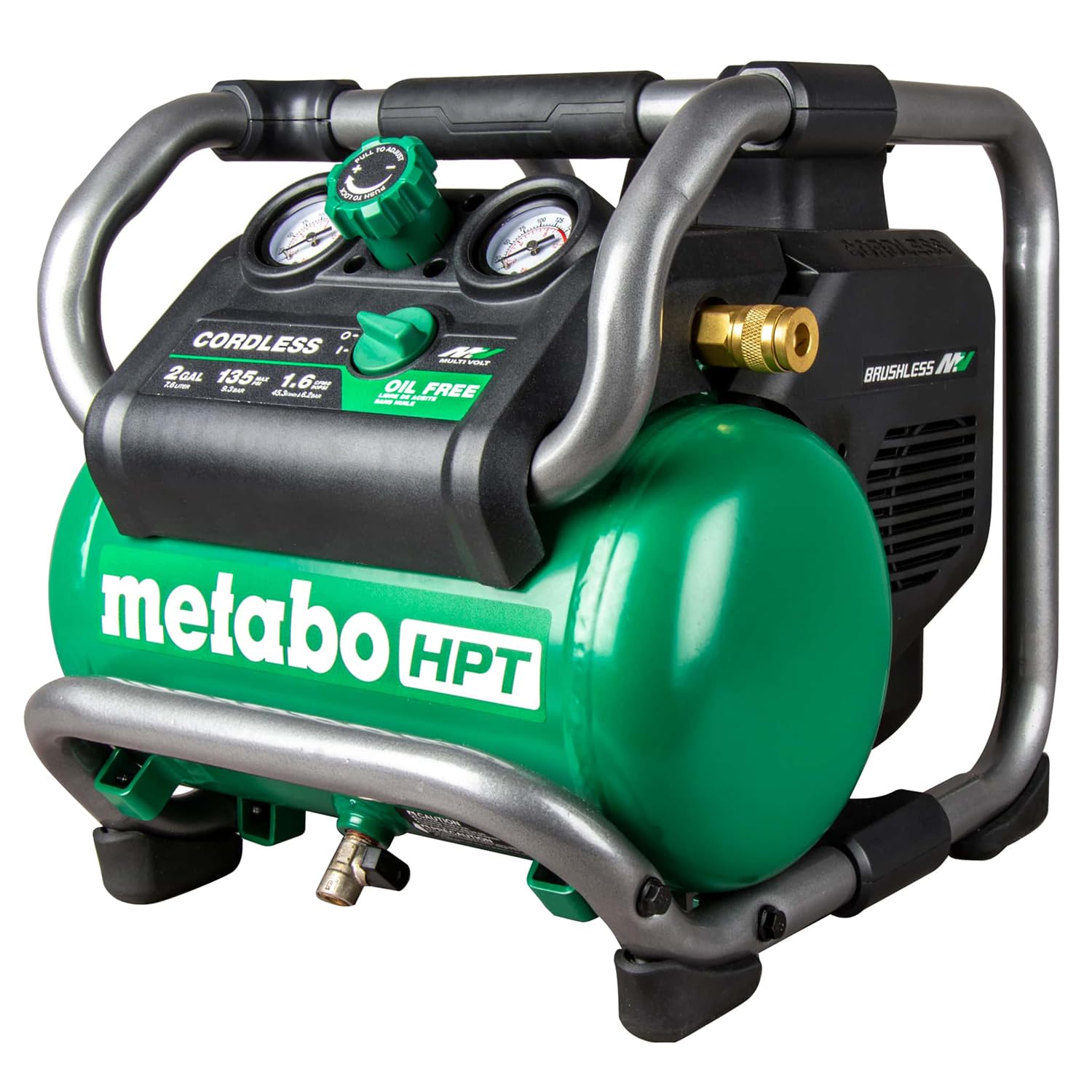
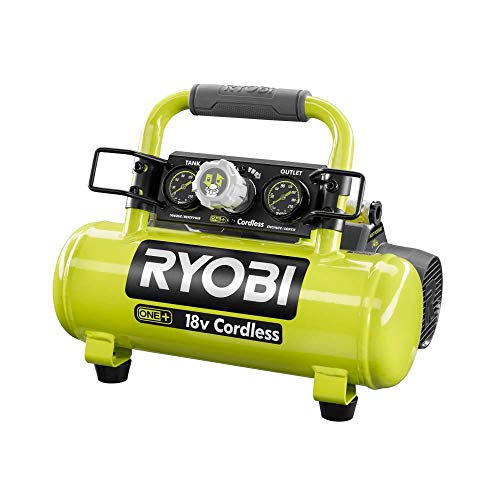
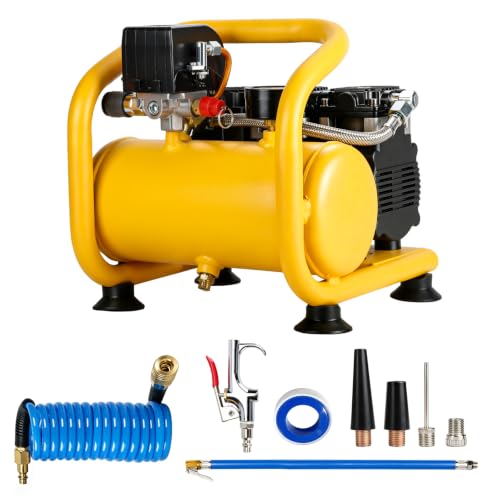
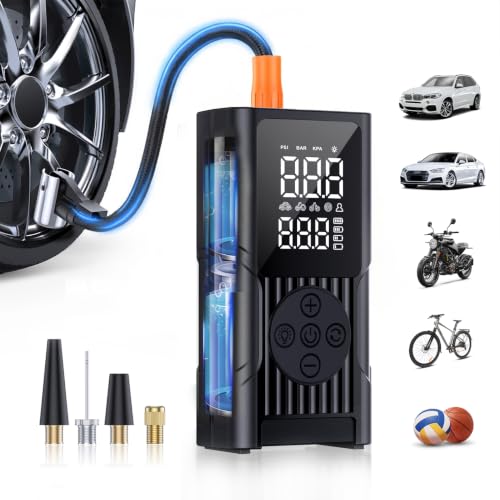
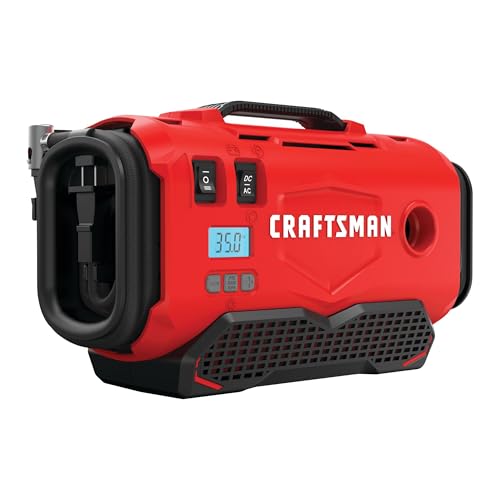
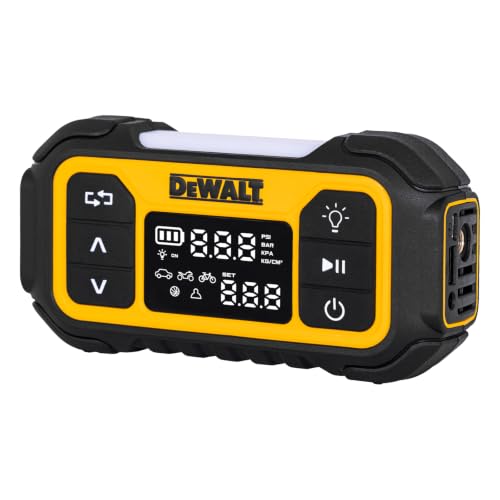
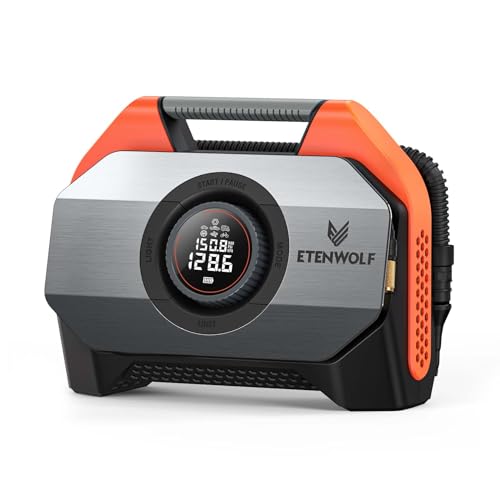

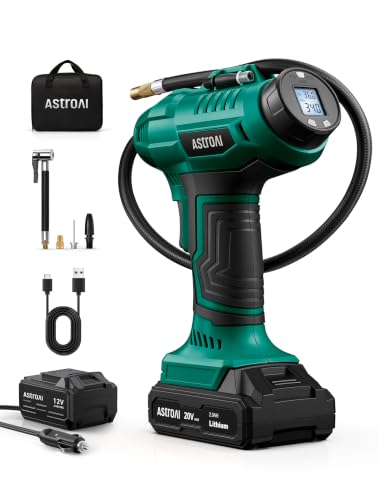
Who Should Buy Which Cordless Air Compressor?
Finish Carpenters Doing Punch List and Install Work
Your compressor rides in the truck for small, scattered jobs: a room of baseboard, a door casing, a cabinet scribe strip. A battery compressor with a 1 to 2.5 gallon tank fires brad and finish nailers happily, sets up in seconds, and leaves no cord across a finished floor. This is the user group the format serves best, and runtime per charge comfortably covers a typical punch list without a spare battery, though carrying one is cheap insurance.
Homeowners Without a Garage Outlet to Spare
Apartment balconies, storage unit workshops, and older homes with one outdoor outlet all make cords a negotiation. A cordless unit inflates tires, runs a staple gun for upholstery, and stores on a shelf with its battery. If your other jobs live in a real garage, the sizing advice in our best air compressor for home garage guide helps you decide whether one cordless unit covers the home base too, or whether a corded partner should handle the heavy days.
RV, Farm, and Roadside Users
You need air where extension cords cannot follow: tire top ups at a campsite, a trailer tire on the shoulder, an air mattress, a fence line staple job. A cordless compressor or inflator lives in the truck box and works off the same battery as your drill. Weight and weather tolerance matter more than tank size here. Choose a unit with a sturdy handle and a gauge you can read in bright sun, because roadside work rarely happens in kind light.
Key Features to Compare
Battery Platform and Voltage
Platform is the first filter, because the compressor is only cheap if its batteries already live in your kit. Mainstream units run on the same 18 or 20 volt packs as drills and impact drivers, and a few larger models use dual packs or higher voltage systems for more airflow. Bare tool pricing looks attractive until you add two batteries and a charger. Also note the chemistry advantage: quality packs include fuel gauges, so you can see a low battery coming instead of discovering it mid seam with a nailer in hand.
Tank Size and the Inflator Distinction
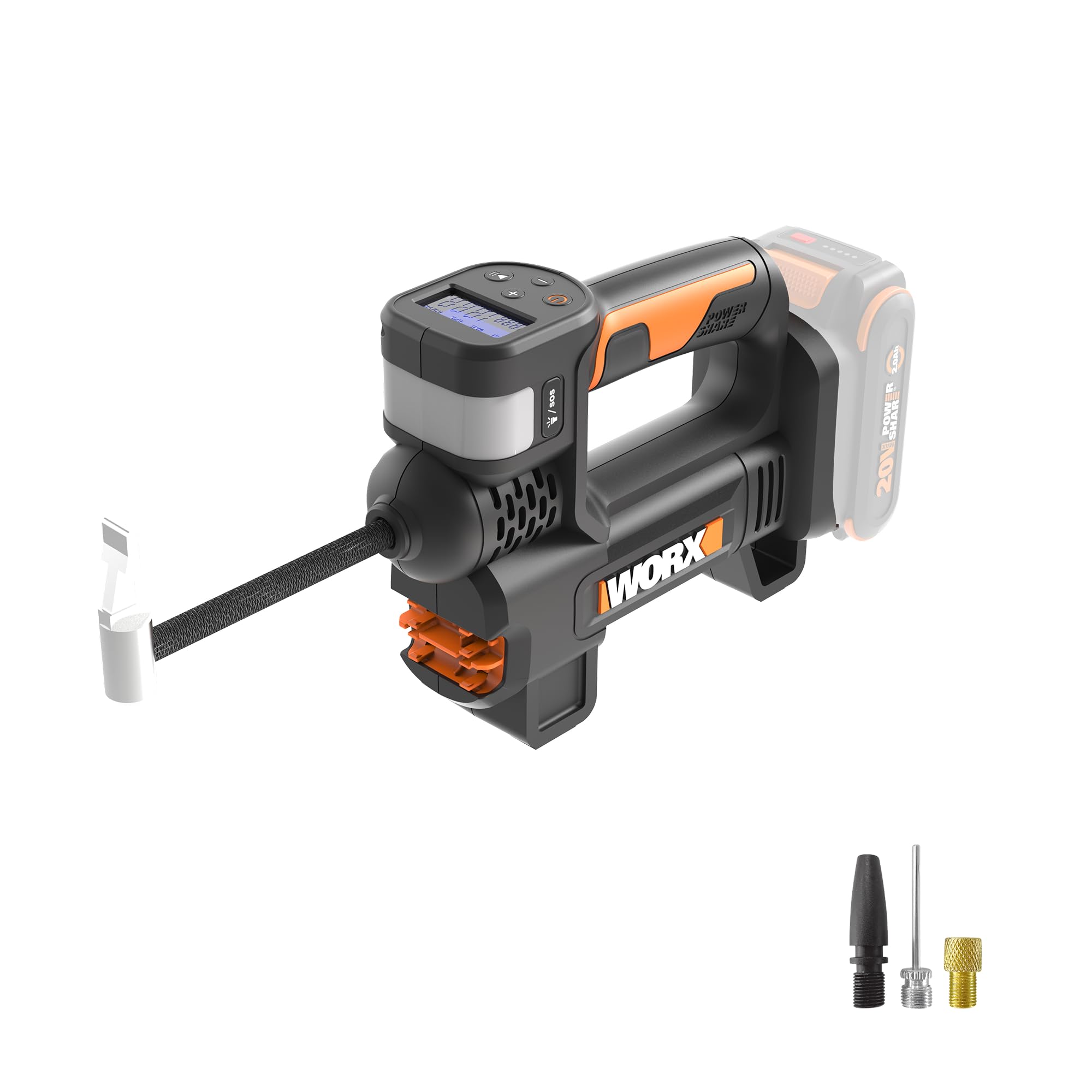
Tank models, usually 1 to 2.5 gallons, store a reserve that smooths nailer bursts and lets the motor rest between cycles, and they regulate pressure like a normal compressor. Inflators skip the tank and pump directly into the tire or tool, which makes them smaller and cheaper but pulsed and slow, and most cannot run a nailer at all. Read the product type carefully: if your goal is trim nailing, you need the tank. If your goal is tires and sports gear, the inflator is the smarter, lighter buy.
Airflow and Max Pressure, Read Honestly
Cordless compressors deliver modest airflow, commonly about 1 to 1.5 CFM at 90 PSI, with max pressure around 120 to 135 PSI. That feeds pin, brad, and finish nailers and light stapling, and it tops off vehicle tires without drama. It does not feed framing nailers at speed, spray guns, or any continuous tool. Compare CFM at 90 PSI, not the free air number some listings headline. If a listing hides the at pressure figure, assume the tool is an inflator in disguise and shop on.
Runtime and Duty Behavior
Runtime depends on the battery size and how often the tool cycles. A mid size pack might drive a few hundred brad nails or fill several car tires from low, while a small pack fades during a single room of trim. Heat is the second limit: small pumps cool between bursts, and forcing continuous runs on a hot day triggers thermal shutdowns that feel like failures. Smart buyers carry one spare pack and rotate, which keeps both batteries in a healthy charge band and the work moving without pauses.
Noise, Weight, and Hybrid Power
Battery compressors are usually quieter than corded pancakes, since the pumps are smaller and often better shrouded, and that matters for indoor finish work in occupied homes. Weight lands around 10 to 20 pounds with battery, genuinely one handed. The feature worth hunting for is hybrid power: a few models accept a wall adapter as well as a battery, so the same unit covers the shop bench and the field. In a quiet focused shortlist, compare these against the low noise corded designs in our best quiet air compressor guide before deciding which silence you prefer.
Cordless Versus Corded: Where Each One Wins
Corded wins on sustained output, purchase price, and simplicity: a plug in pancake delivers roughly double the airflow per dollar and runs all day without battery management. Cordless wins on setup speed, reach, and indoor manners, and it removes the trip hazard of cords across finished spaces. The deciding question is your duty pattern. Burst work in scattered locations favors cordless; stationary work near an outlet favors corded, every time.
Many pros end up owning both, and the pairing logic is simple. The corded unit lives in the shop as the default, and the cordless rides in the vehicle for service calls. Homeowners with one purchase to make should count their outlet free jobs honestly. If they are weekly, cordless earns its premium. If they are hypothetical, the classic shape in our best pancake air compressor guide will serve longer and cost less, and a long extension cord solves the occasional reach problem.
Common Mistakes to Avoid
- Buying an inflator for nailer work, then discovering it has no tank and no regulator for tools.
- Ignoring platform cost, so the bare tool price hides two batteries and a charger you still need.
- Expecting framing nailer or spray gun performance from about 1 CFM of airflow.
- Running the pump continuously to fill a big tank or a truck tire from flat, which overheats small motors.
- Storing batteries fully charged in a hot vehicle for months, which quietly shortens their working life.
- Trusting the headline free air CFM instead of the CFM at 90 PSI your tools actually see.
How to Make Your Cordless Air Compressor Last Longer
Battery care dominates cordless ownership. Store packs indoors at partial charge, rotate two packs instead of draining one to empty daily, and keep contacts clean so voltage sag does not fake a weak pump. Drain the small tank after use, just like a corded unit, because the same condensation rust applies at every size. Keep the intake filter dust free, since these little pumps have no airflow to spare. A minute of care protects both the pump and the expensive part of the system, the batteries.
Mechanical care is light but real. Coil the hose loosely, check coupler O rings when connections hiss, and avoid dropping the unit onto its regulator knob, the most fragile point on compact compressors. If fills slow noticeably, test with a fresh, fully charged pack before blaming the pump, because a tired battery mimics pump wear almost perfectly. Kept this way, the compressor body will likely outlast its first set of batteries, which is the right order of events.
FAQ
Are cordless air compressors worth it?
For burst style work away from outlets, yes: brad nailing, finish trim, inflation, and stapling all suit the format, and setup takes seconds. The worth fades when your work is stationary or continuous, because corded units deliver more airflow for less money with no batteries to manage. Judge by your last ten jobs, not your imagined ones. If most happened within reach of an outlet, save the premium and buy corded airflow instead.
What can a cordless air compressor actually run?
Pin nailers, brad nailers, finish nailers at a moderate pace, narrow crown staplers, and inflation of tires, balls, and mattresses are all realistic. A light framing session is possible in short bursts but drains packs and patience quickly. Spray guns, sanders, grinders, and impact wrenches are outside the format: their continuous draw exceeds what a small battery pump can replace. Matching the tool list to the airflow number on the box prevents nearly every disappointment with these units.
How long does a battery last in a cordless air compressor?
Expect a mid size battery to handle a room or two of trim nailing, several tire top ups, or one vehicle tire from nearly flat, with wide variation by pack size and pressure target. High pressure fills cost the most energy per minute. Two rotating packs make runtime a non issue for most field days. Cold weather trims capacity noticeably, so keep the spare pack in the cab rather than the truck bed in winter.
How long does a cordless air compressor last?
The pump and tank commonly serve many years of light duty, while the batteries set the real system lifespan, typically several years before capacity fades. Choosing a major platform protects you, because replacement packs stay available long after off brand packs vanish. Units with hybrid wall power age even better, since bench days stop consuming battery cycles. If a platform gets discontinued, the compressor becomes an inflator with a short future, so platform stability is a durability spec.
How do you maintain a cordless air compressor?
Drain the tank after each use, clean the intake filter monthly under regular use, and inspect the hose and couplers for hiss leaks each season. Store batteries indoors at partial charge and rotate them so neither sits empty or full for months. Wipe dust off cooling vents, and run the unit briefly every month or two in storage so seals stay supple. That small routine keeps a compact compressor ready for the unplanned jobs it was bought for.
Final Thoughts
Choose the platform first, the tank second, and the airflow number third, in that order, and a cordless compressor stops being a gamble. It will not replace a shop compressor, and it is not meant to. The best cordless air compressor is the one that turns a fifteen minute cord hunt into a two minute job, battery after battery. Compare the finalists in the product table above against your own job list, and buy the freedom only where you will actually use it.


