
Best Air Compressors for Home Garage (2026): A Buying Guide Built for Real Projects
Disclosure: We may earn a commission when you buy through links on this page, at no extra cost to you. As an Amazon Associate I earn from qualifying purchases. Learn more

The best air compressor for home garage projects is sized by airflow at 90 PSI, tank volume and noise level. Learn how to match all three to your tools.
A Saturday brake job stalls fast when an impact wrench starves for air halfway through a lug nut. The right compressor keeps tires topped up, drives brad nails into trim, and blows dust off a workbench without drama. This guide explains how to choose the best air compressor for home garage use by matching airflow to your tools first, then weighing tank size, noise, and the circuit you can actually plug the machine into.
Below you get the specs that separate a handy machine from a frustrating one, plus the simple sizing math most buyers skip. The comparison table below pulls the key numbers together so you can see how the main compressor types stack up before you spend anything.


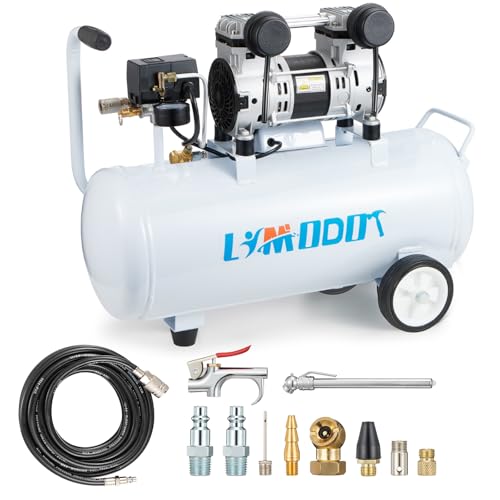

Who Should Buy Which Air Compressor?
Most people shopping for the best air compressor for home garage setups fall into one of three camps, and each camp needs a very different machine. Our broader guide to the best air compressor category covers bigger shop and job site units, but the three groups below describe what actually works inside a typical two car garage.
Tire Top Ups and Light Maintenance Households
If your air use means inflating tires, blowing leaves off the driveway edge, and firing the occasional staple, a compact two to six gallon unit is plenty. These machines fill fast, store on a shelf, and cost the least to own. A best pancake air compressor design suits this group well because the flat tank sits stable on the floor and the handle makes it easy to carry out to the driveway. Drivers who only ever inflate tires can even skip the tank entirely and look at a best cordless air compressor inflator that runs off a tool battery.
Woodworkers Running Nailers and Staplers
Trim carpenters and hobby woodworkers run nail guns in short bursts, so they need steady pressure more than raw volume. A six to ten gallon tank with a healthy duty cycle keeps a brad or finish nailer fed through a full run of baseboard without the motor cycling every few shots. Look for a regulator that holds its setting, because a nailer that sinks one nail flush and leaves the next one proud usually points to pressure sag, not a faulty gun. A quieter pump also matters here, since this group often works with the garage door closed in winter.
Car Tinkerers With Ratchets and Impact Wrenches
Air ratchets, die grinders, and impact wrenches are the hungriest tools in a home garage, and they expose undersized compressors within minutes. This group should shop by airflow first, aiming for a pump that delivers around five CFM at 90 PSI or better, paired with a tank of twenty gallons or more. The larger reserve lets an impact wrench break loose a rusted bolt in one pull instead of pausing while the tank refills. If your project list includes sanding or spray painting, plan on stepping up again, because those tools run almost continuously.
Key Features to Compare
Airflow in CFM at 90 PSI
CFM, or cubic feet per minute, is the single most important number on the box, and it must be read at 90 PSI because that is the working pressure most air tools are rated for. Add up the CFM demand of the hungriest tool you own, then choose a compressor that delivers about a third more than that figure, since pumps lose a little output as filters load and seals age. A nailer sips air at under two CFM, while an impact wrench can gulp five or more in bursts. Ignore any rating quoted at 40 PSI when comparing machines, because it flatters small pumps.
Tank Size and Recovery Time
The tank is a reserve, not a power source. A bigger tank lets a tool run longer before the motor kicks in, and it smooths out the pressure swings that make nail depth inconsistent. What matters just as much is recovery time, meaning how fast the pump refills the tank from its cut in pressure to full. Two compressors can share a six gallon tank yet behave very differently if one refills in forty seconds and the other needs two minutes. In a home garage, six to ten gallons covers nailers and inflation happily, while twenty to thirty gallons suits regular wrench work.
Max PSI and Duty Cycle
Maximum pressure, usually 125 to 200 PSI, decides how much usable air the tank stores between cycles, because a higher ceiling means more air packed into the same steel. Duty cycle describes how long the pump can run within a ten minute window without overheating, and it is often quoted as a percentage. A fifty percent duty cycle means five minutes of pumping followed by five minutes of rest. Nailers forgive a low duty cycle, but a die grinder or sander will cook a light duty pump in a single session, so match this rating to your longest continuous task.
Oil Lubricated vs Oil Free Pumps
Oil free pumps use coated cylinders and sealed bearings, so they need no oil changes, start easily in a cold garage, and can sit on an angle without starving the pump. They are the default choice for most homeowners. Oil lubricated pumps run cooler and quieter, and they typically last far longer under daily use, but they ask for periodic oil checks and level storage. If you run air tools every weekend for hours, the oil bath design earns its upkeep. If the compressor comes out twice a month, oil free convenience wins and you will never miss the extra lifespan.
Noise Level and Garage Placement
Compressor noise is rated in decibels, and the spread is wide: a loud direct drive unit can shout at 90 decibels while a quiet model hums near 60, which is close to conversation level. In an attached garage, that gap decides whether you can run the machine early on a Saturday without waking the house. Shoppers who work at odd hours should study the best quiet air compressor designs, which use slower, larger pumps and better intake muffling. Placement helps too, since a rubber mat under the tank and a few feet of distance from the wall noticeably soften the sound that carries indoors.
Matching a Compressor to Your Tools and Your Circuit
Start the sizing job on paper. Write down every air tool you own or plan to buy, note the CFM each one lists at 90 PSI, and circle the largest number, because the compressor only has to satisfy the greediest tool you run at one time. Then check your electrical reality. Most home garage compressors run on a standard 120 volt, 15 amp circuit, and a larger motor that draws close to that limit will trip the breaker if a space heater, freezer, or bright work lights share the same run. A dedicated circuit is the clean fix, and it is far cheaper than returning an oversized machine.
Hose choice quietly steals performance. A long, narrow hose drops pressure between the tank and the tool, so a wrench at the end of fifty feet of quarter inch hose may see far less than the 90 PSI showing on the tank gauge. For most garages, a three eighths inch hose of twenty five feet keeps pressure loss small while still reaching around a car. Finish the setup with matching quick connect couplers, since mixing industrial and automotive style plugs causes the slow leaks that make a compressor cycle at midnight for no obvious reason.
Common Mistakes to Avoid
- Buying by tank size alone, because a big tank on a weak pump still starves an impact wrench once the reserve runs out.
- Plugging a large compressor into a shared circuit, so the breaker trips mid job whenever the freezer or heater kicks on.
- Never opening the drain valve, which lets condensed water rust the tank from the inside until it fails early.
- Running a long, thin hose, because pressure drop at the tool end makes strong tools feel weak and sluggish.
- Choosing the loudest budget unit for an attached garage, so every early morning tire top up wakes the whole house.
- Skipping the regulator check, since unregulated tank pressure can overdrive a nailer and split delicate trim pieces.
How to Make Your Air Compressor Last Longer
Drain the tank after every working day by opening the valve at the bottom and letting the water out, because that moisture is the main reason home compressors die young. Check the intake filter monthly and rinse or replace it when it grays, since a clogged filter makes the pump work harder and run hotter. On oil lubricated models, peek at the sight glass before big jobs and top up with proper compressor oil rather than motor oil. Keep the unit under cover indoors, inspect the hose for cracks each season, and pull the ring on the safety valve a few times a year to confirm it still pops freely. Stored dry and drained, a decent machine serves a garage for a decade or more.
FAQ
What should I look for in an air compressor for a home garage?
Start with CFM at 90 PSI that beats your hungriest tool by about a third, then check tank size, duty cycle, and noise. One detail buyers overlook is drain valve placement: a valve you can reach without tipping the machine gets used, and a hidden one gets ignored until rust starts. Also confirm the regulator dial is large and readable, because you will adjust it in dim light with gloves on more often than you expect.
How long does a home garage air compressor last?
A well kept oil free unit commonly lasts five to ten years of weekend use, while an oil lubricated pump can run well past fifteen. The part that usually ends the story is the tank, not the motor, because internal rust thins the steel from the inside where you cannot see it. Draining after each use adds more years than any premium badge, and a tank that shows rusty water at every drain deserves a close inspection.
Is an air compressor worth it for a home garage?
For most DIY households, yes, because one machine covers tire inflation, nailers, blow guns, and light wrench work that would otherwise need several separate tools. Compare the price against what you already spend on coin operated air at gas stations and on renting a nailer twice a year, and the payback window is usually short. The honest exception is the driver who only inflates tires, where a small cordless inflator does the same job for less money and zero maintenance.
How do you clean an air compressor?
Unplug the unit, pull the safety valve ring to release all pressure, then wipe the pump fins and tank with a dry or slightly damp cloth. Wash the foam intake filter in warm soapy water, let it dry fully, and refit it before the next session. Never aim a pressure washer or garden hose at the motor, because water forced into the windings and bearings causes exactly the corrosion you are trying to prevent. Finish by draining the tank so the machine sits dry.
What is the most reliable air compressor brand?
Reliability tracks pump design and your maintenance habits more than the badge on the tank. Cast iron cylinder sleeves, metal intake filters, and standard fittings you can replace at any hardware store all predict a long life better than a famous name does. Before buying, check that the maker sells replacement filters, drain valves, and pressure switches for your model, because a compressor you can service cheaply at year six beats a sealed unit you must replace whole.
Final Thoughts
Size the pump to your greediest tool, give the machine a circuit it can breathe on, and drain the tank like you mean it, and a home garage compressor becomes one of the least troublesome tools you own. Use the product table above to compare CFM, tank size, and noise side by side, and let your actual project list, not the biggest number on the box, point you to the best air compressor for home garage setup for the way you work.


