
Best Air Compressors of 2026: A Buying Guide for DIYers and Pros
Disclosure: We may earn a commission when you buy through links on this page, at no extra cost to you. As an Amazon Associate I earn from qualifying purchases. Learn more

Choose the best air compressor with this guide to tank size, CFM and PSI ratings, pump types, noise levels and prices for garage, workshop and jobsite use.
An air compressor is really a power supply: it runs the nailers, inflators, blow guns and spray equipment that make shop and site work faster. Pick one too small and the motor cycles constantly while your tools starve; pick one too large and you have bought noise, weight and cost you never use. This guide explains how to choose the best air compressor by matching tank size and airflow to your tools, and the comparison table below lines up the common styles side by side.
The sections below decode the numbers that matter, CFM, PSI, duty cycle and decibels, so the ratings on the box translate into behavior in your garage.

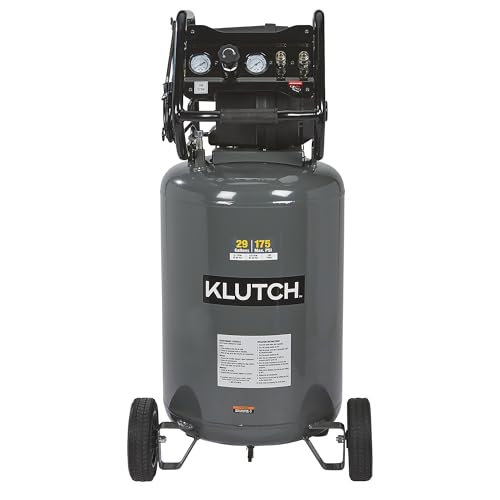

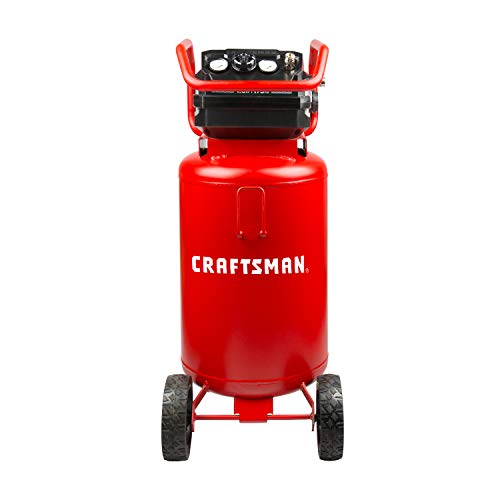


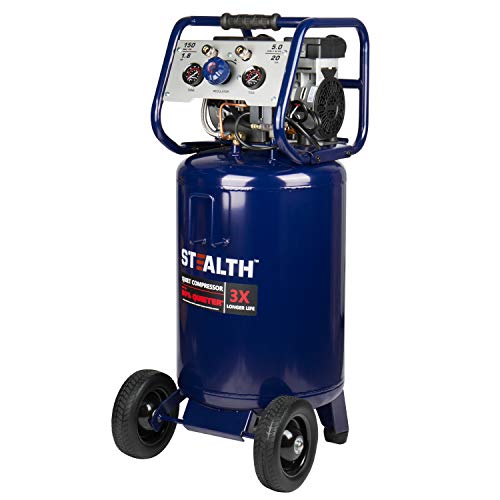


Who Should Buy Which Air Compressor?
Home Garage Users Inflating Tires and Running Small Nailers
Most home garages ask a compressor to inflate tires and bicycle tubes, blow dust off benches and fire a brad or finish nailer through a weekend project. A quiet 1 to 6 gallon unit with about 90 to 120 PSI covers all of it while storing on a shelf. Our guide to the best air compressor for home garage use matches tank sizes to the tool lists garages actually own.
Woodworkers Running Nailers, Sanders and Spray Guns
Shop work is hungrier. Air sanders and HVLP spray guns drink air continuously, so tank size and recovery rate decide whether you work steadily or wait between passes. A twin stack or 20 gallon class compressor with 4 to 5 CFM at 90 PSI keeps up with spraying and sanding in a home shop. Duty cycle becomes the honest limit here: a compressor rated at 50 percent needs equal rest time, no matter how large the tank looks.
Contractors and Frequent Users on Job Sites
Framing and roofing crews run several nailers off one machine, often all day. That calls for a wheelbarrow style or large twin stack compressor with a roll cage, cold weather starting and a pump built for continuous service. Weight still matters, because the compressor rides in a truck and climbs stairs. Pros should favor oil lubed pumps for longevity at this workload, or budget oil free units as replaceable consumables rather than lifetime tools.
Key Features to Compare
Tank Size and Recovery Time
The tank is a buffer, not a power source. A 1 to 2 gallon tank suits inflation and brad nailing, 6 gallons handles finish nailers and light stapling, and 20 gallons or more smooths out demand from spray guns and air tools that run in bursts. Recovery time, how fast the pump refills the tank from its cut in pressure, matters as much as size. A small tank with a fast pump can outperform a big tank with a slow one on intermittent tools. Match the pair to your hungriest tool, not your average one.
CFM and PSI: Matching Airflow to Your Tools
CFM, cubic feet per minute at a stated pressure, usually 90 PSI, is the single most important number on the box. Every air tool lists its CFM appetite: brad nailers sip about 0.3 CFM per burst pattern, impact wrenches want about 4 to 5 CFM, and HVLP spray guns demand 6 CFM or more. Add the tools you will run at once, then add about 30 percent headroom, and shop for that CFM figure. PSI is simpler: 90 PSI runs most tools, and a max rating of 120 to 150 PSI mainly buys reserve in the tank. Ignore peak horsepower claims entirely.
Pump Type: Oil Free or Oil Lubed, Single or Two Stage
Oil free pumps use coated cylinders and sealed bearings, so they need no oil changes, start easily in cold weather and can sit at any angle, at the cost of more noise and a shorter service life. Oil lubed pumps run quieter and cooler and last far longer under daily use, but they need level storage and periodic oil changes. Two stage pumps compress air twice for higher pressures on industrial machines; home and site compressors are almost all single stage. For occasional use, oil free convenience wins. For daily use, oil lubed durability wins.
Noise Level and Tank Shape
Compressor noise ranges from a conversational 60 dBA on quiet models to a shout over it 85 dBA on bargain units, and the difference decides whether the tool can live in an attached garage. The classic flat best pancake air compressor shape is stable and compact for trim work, hot dog tanks stretch longer and lower, and twin stacks add capacity without much footprint. Shoppers who work early mornings or share walls should start with our guide to the best quiet air compressor models and check the dBA rating before anything else.
Cordless and Portable Options
Battery powered compressors are really high volume inflators with small tanks or tankless designs, built for tires, sports gear and the odd brad nailer far from an outlet. Our guide to the best cordless air compressor options explains where the category stops and real compressors begin. They cannot run framing nailers or spray guns, but for roadside kits and inflatables they replace a trip to the gas station. Wheeled portable electric models fill the middle ground, trading some capacity for a handle and a single trip from the truck.
Sizing an Air Compressor for Your Tools
Start from the tools, not the tank. List every tool you plan to run, note the CFM each maker specifies at 90 PSI, and take the largest single figure for solo work or the sum for crew work. Multiply by about 1.3 so the pump is not redlining all day, then choose a compressor whose CFM rating at 90 PSI clears that number. Tank size follows from how bursty the work is: nailers fire in bursts and forgive small tanks, while sanders, grinders and spray guns run continuously and expose an undersized pump within a minute. Finally, check the electrical side, since a 15 amp compressor on a shared garage circuit with lights and a saw will trip breakers at startup.
Common Mistakes to Avoid
- Shopping by horsepower or tank gallons alone, which says nothing about the airflow your tools will actually receive.
- Pairing a small compressor with an HVLP spray gun, which starves the gun and ruins finishes with pulsing pressure.
- Never draining the tank, which lets condensed water rust the tank from the inside until it fails.
- Using a long, thin hose to reach the work, which drops pressure so tools feel weak despite a healthy compressor.
- Running a compressor on a long household extension cord, which starves the motor of voltage and overheats it.
- Ignoring the duty cycle rating, which cooks pumps that are run continuously beyond their design.
How to Make Your Air Compressor Last Longer
Drain the tank after each day of use by opening the drain valve until only air escapes; this single habit prevents most tank failures. Keep the intake filter clean and replace it when it darkens, because a starved pump runs hot. On oil lubed models, check the oil sight glass monthly and change oil at the maker interval with compressor oil, not motor oil. Check the safety relief valve each season by pulling its ring briefly, store the unit with the tank valve left open in dry storage, and keep cords and hoses out of walkways where they get crushed.
FAQ
How much should you spend on an air compressor?
Quiet home units run about $100 to $200, general purpose garage compressors about $200 to $400, and contractor grade machines about $400 to $800. The money buys airflow, lower noise and pump life rather than extra features. Very cheap compressors often quote inflated CFM at low pressure, so compare ratings at 90 PSI only. If your tools are nailers and an inflator, the honest middle of the range is plenty for a decade of weekends.
What size air compressor do you need for home use?
A 6 gallon compressor delivering about 2.5 to 3 CFM at 90 PSI covers tires, blow guns, brad and finish nailers and most staple guns in a home garage. Step up to 20 gallons and about 4 to 5 CFM if you add an impact wrench for wheel work or plan to spray finishes. Size by the greediest tool you own or realistically plan to buy within a year, because outgrowing a compressor means replacing it whole.
Is an oil free air compressor louder than an oil lubed one?
Usually yes, often by 5 to 10 decibels, because the dry piston design transmits more vibration and runs at higher speed. Quiet oil free models close much of the gap with slower pumps and better isolation mounts, so read the dBA rating rather than assuming. Oil lubed compressors remain the quietest per CFM delivered. Placement helps too: a compressor on a rubber mat in a corner sounds far tamer than the same unit on bare concrete mid room.
How often should you drain an air compressor tank?
Drain it after every day of use, and more often in humid weather or when running spray equipment, because compressing air wrings moisture out of it continuously. Shops that run daily often fit an auto drain, but a manual valve opened for ten seconds does the same job. Water left sitting also sprays through tools and into finishes. If the drained water comes out rusty orange, the inside of the tank is already corroding and deserves a closer inspection.
Can an air compressor run a paint sprayer?
Yes, if the airflow matches. HVLP guns typically need about 6 to 14 CFM depending on design, which puts them beyond pancake and small garage compressors and into 20 to 30 gallon territory with a strong pump. Turbine HVLP systems skip the compressor entirely with their own blower. Undersizing shows up as orange peel texture and pressure that sags mid panel. Check the gun maker CFM figure at the cap, not just at the gun inlet, before assuming your compressor qualifies.
Final Thoughts
Let your greediest tool set the CFM, let your work pattern set the tank, and let your living situation set the noise limit. Those three decisions narrow the field to a handful of honest candidates. Use the product table above to compare styles at a glance, drain whatever you buy from day one, and the best air compressor for your garage will quietly power a decade of projects.


