
Best Champion Generators: Which Model Fits Your Projects? (2026)
Disclosure: We may earn a commission when you buy through links on this page, at no extra cost to you. As an Amazon Associate I earn from qualifying purchases. Learn more

Learn how to choose the best champion generator for home backup, RV trips or job sites, with clear guidance on wattage, fuel, noise and safe setup.
Champion sells one of the widest generator lineups in its price class, from small inverter units you can carry with one hand to dual fuel machines that can carry a house through a long outage. That range is exactly why picking the best champion generator takes a little homework, since two units with similar watt numbers can behave very differently in noise, runtime and power quality.
This guide walks through the choices that actually separate the lineup: wattage, inverter versus conventional power, fuel type, noise and outlets. If you are still comparing across brands, our overview of the best generator types is a helpful starting point, and the comparison table below lines up the main Champion classes side by side so you can match one to your own load list.


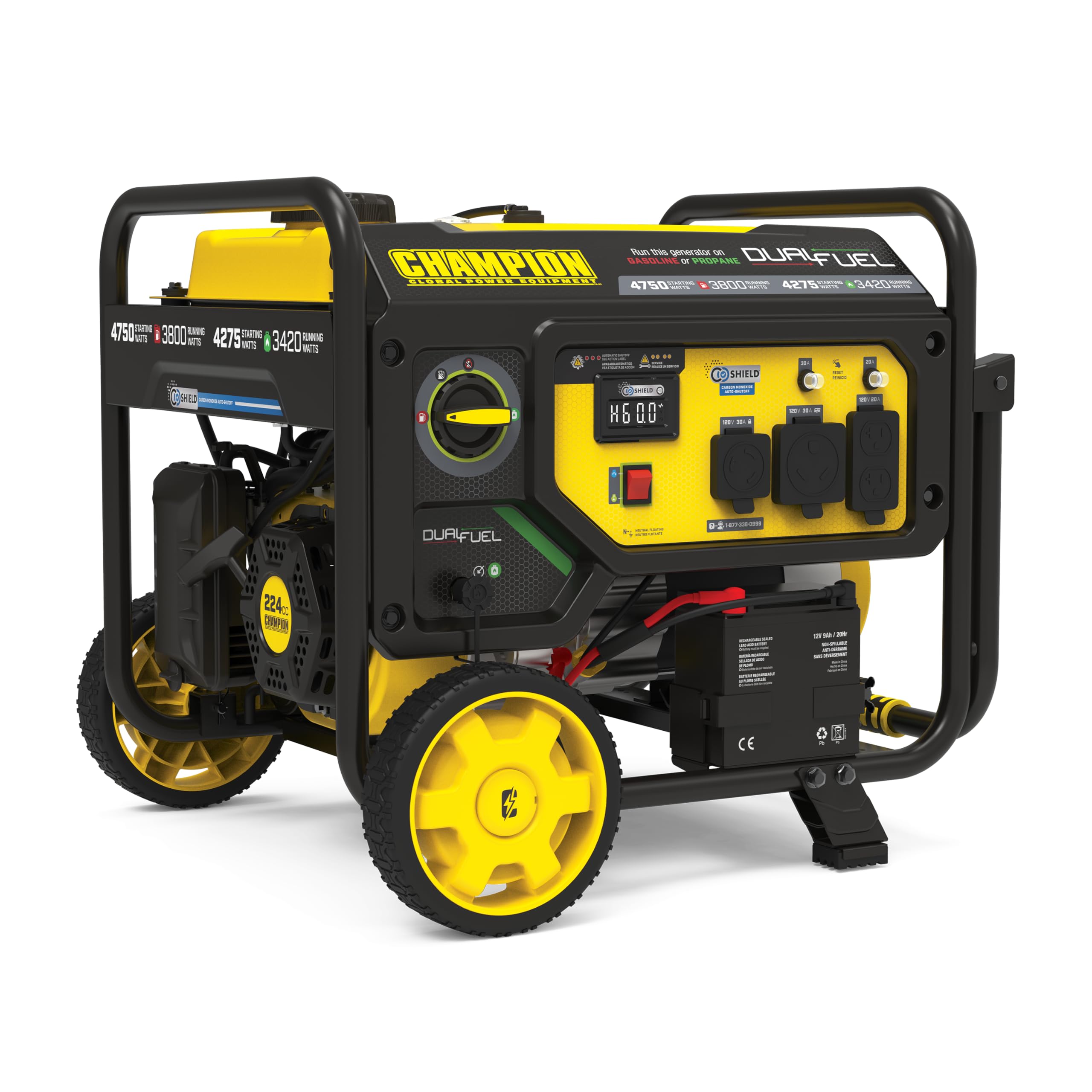
Who Should Buy Which Champion Generator?
Homeowners Planning for Storm Outages
You need enough running watts for a refrigerator, a furnace blower, lights and a few outlets, plus a safe way to connect to the house through a transfer switch or an interlock kit installed by an electrician. A midsize dual fuel or conventional unit in the 7,000 to 9,500 running watt range usually covers that list. If you want automatic standby power instead, compare this class with a best whole house generator system before you commit.
RV Owners and Campers
Your priorities are low noise, clean power for electronics and an RV ready outlet that accepts your shore power cord without adapters. A compact inverter in the 2,000 to 4,500 watt range with a TT 30R outlet fits most travel trailers, and parallel ports let you link two small units later if you add a bigger air conditioner.
Contractors and Serious DIY Builders
On a job site you care about starting watts for saws and compressors, a steel frame that survives loading, and long runtime so the crew is not refueling every few hours. A conventional open frame unit around 6,250 to 9,500 running watts with a large tank and 240 volt output is the practical pick, and noise matters less than durability and service access.
Key Features to Compare
Running Watts and Starting Watts
Every generator lists two numbers, and the smaller one is the one that matters most. Running watts are what the unit can supply hour after hour, while starting watts are a short surge for motors in fridges, pumps and air conditioners as they kick on. Add up the running watts of everything you plan to power at once, then add the largest single starting surge on top. Buy with about 20 percent headroom so the engine is not straining at full load all day, which also keeps noise and fuel use down.
Inverter or Conventional Power
Inverter models clean up their output so the total harmonic distortion stays low, often under 3 percent, which is what laptops, TVs and modern furnace controls expect. They are also quieter and sip fuel because the engine slows down at light loads. Our guide to the best inverter generator designs explains the trade offs in depth. Conventional units cost less per watt and tolerate rough job site loads well, but their rougher power and fixed engine speed make them a poor match for sensitive electronics.
Fuel Choice and Dual Fuel Flexibility
Most Champion units run on gasoline, and many add propane as a second fuel. Propane stores for years without going stale, burns cleaner and extends runtime when you swap in a larger tank, though it delivers roughly 10 percent fewer watts than gasoline. Gasoline is easier to find during an outage and gives full rated output. If your home already has a propane supply for heating or cooking, dual fuel is worth the small price step because one fuel source is already sitting in your yard.
Noise, Runtime and Tank Size
Noise ratings are given in decibels at a set distance, usually 23 feet, and at partial load, so compare like with like. Enclosed inverter models can run near 53 to 64 dBA, quiet enough for a campground conversation, while open frame units often sit at 68 to 78 dBA. Runtime claims are usually quoted at 25 or 50 percent load, so a unit rated for 11 hours at half load may only run about 7 hours when it is working hard. A larger tank stretches runtime but adds weight you feel every time you move the machine.
Outlets, Panels and Connection Options
Count the outlets you will actually use: standard household receptacles, a 30 amp twist lock for a transfer switch, an RV ready outlet, and 12 volt DC ports on some inverters. A voltmeter or an hour meter on the panel helps you track maintenance and spot a struggling load. Electric start with a battery included saves real effort on bigger units, and a CO sensor that shuts the engine down if carbon monoxide builds up is a safety feature worth insisting on for any unit used near a home.
How to Size a Champion Generator for Your Loads
Start by listing every device you truly need during an outage, then find the running watts on each nameplate or in its manual. Well pumps, sump pumps and air conditioners dominate most lists because their motors draw a heavy starting surge, sometimes two to three times their running watts. Work through the list honestly, since many families discover that lights, refrigeration, phones and a furnace blower total under 4,000 running watts, which a midsize unit handles comfortably. Readers in apartments or condos where engines are banned outright should look at a best solar generator battery station instead, which trades runtime for silent indoor use.
Common Mistakes to Avoid
- Buying on starting watts alone, so the generator runs overloaded and trips its breaker mid outage.
- Running a generator in a garage or near open windows, which lets carbon monoxide drift indoors and can be fatal.
- Plugging the unit into a wall outlet with a cord made for the purpose, called backfeeding, which endangers line workers and can destroy the generator.
- Letting gasoline sit in the tank for a year, so varnish clogs the carburetor and the engine refuses to start when a storm arrives.
- Skipping the break in oil change on a new engine, which shortens engine life because early wear particles stay in the oil.
How to Make Your Champion Generator Last Longer
Change the oil after the first few hours of break in use, then follow the interval in the manual, since small air cooled engines depend on clean oil more than car engines do. Run the unit under a real load for about 20 minutes every month or two so seals stay lubricated and the battery on electric start models stays charged. For storage, either drain the fuel system or add stabilizer and run the engine long enough to pull treated fuel through the carburetor. Keep the air filter clean, store the machine dry and off bare concrete, and keep a spare spark plug and a quart of the correct oil with it so small problems never become outage night failures.
FAQ
Is Champion a good generator brand?
Yes, Champion is a solid value brand with a large dealer and parts network in the US and support lines staffed in North America. Its units compete on features per dollar rather than premium finish, so you often get dual fuel, electric start or a CO sensor at a price where rivals charge extra. Warranty coverage is typically three years for residential use on many models, longer than most budget rivals offer.
How long can a Champion generator run on one tank of fuel?
Runtime depends on load more than tank size alone. Many midsize units run about 10 to 14 hours at a quarter load and roughly half that near full load. Propane stretches the clock because you can swap bottles without shutting down, and a 20 pound tank often outlasts the gasoline tank it replaces. Check the rating at 50 percent load for the fairest comparison between models.
Can a Champion generator power a whole house?
A large portable in the 9,500 to 12,000 running watt range can carry most essential circuits through a transfer switch, including a well pump and furnace, but usually not central air conditioning plus an electric range at the same time. Portable units also need manual setup and refueling during a long outage. Homes that want automatic, everything on power should look at standby units instead.
Are Champion inverter generators safe for laptops and phones?
Yes. Champion inverter models produce low distortion power, generally under 3 percent total harmonic distortion, which is the same clean sine wave profile your wall outlets supply. That makes them suitable for laptops, phone chargers, TVs and CPAP machines. Conventional open frame models are the ones to avoid for electronics, since their distortion can run much higher and their voltage swings with engine speed.
How far from the house should a generator be placed?
Place it at least 20 feet from the house with the exhaust pointed away from doors, windows and vents, and never run it in a garage, porch or carport. Carbon monoxide is colorless and odorless, and wind can push exhaust back toward openings even at a distance. Working CO alarms on every floor of the home are the backup that catches what placement misses.
Final Thoughts
Champion rewards buyers who shop by load list instead of by the biggest watt number on the box. Decide whether clean inverter power, dual fuel storage or raw job site output matters most to you, then size with honest headroom. When you narrow the field that way, the best champion generator for your home or crew becomes an easy call, and the product table above keeps the main classes in one view while you decide.


