
Best Cordless Paint Sprayers: A Buying Guide for 2026
Disclosure: We may earn a commission when you buy through links on this page, at no extra cost to you. As an Amazon Associate I earn from qualifying purchases. Learn more

Battery runtime, tip size and cup capacity decide the best cordless paint sprayers for cabinets, fences and rooms. Compare the types before you buy.
No hose to drag, no cord to trip over, and no compressor humming in the corner: that freedom is the whole case for a battery powered sprayer. The trade is runtime and flow, since a battery can only push so much paint before it fades. Choosing among the best cordless paint sprayers means matching the sprayer type and the battery platform to the size of your jobs, whether that is a set of cabinet doors, a fence line, or one bedroom at a time.
This guide compares the two cordless families, handheld airless units and HVLP cup guns, on the specs that decide real projects. The comparison table below shows the classes, and the sections after it cover tips, thinning, and the cleanup routine that makes or breaks ownership.
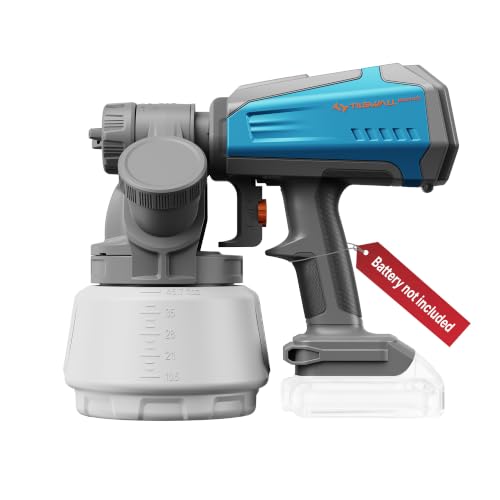
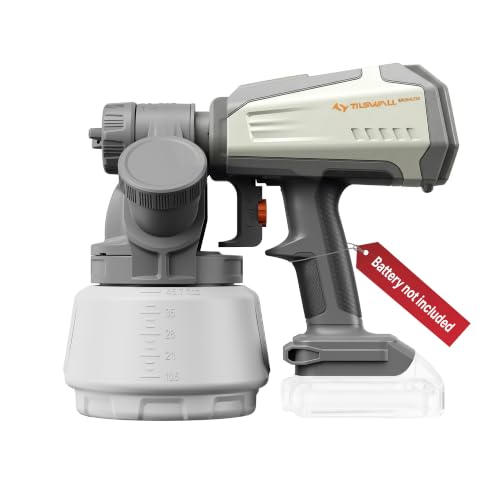
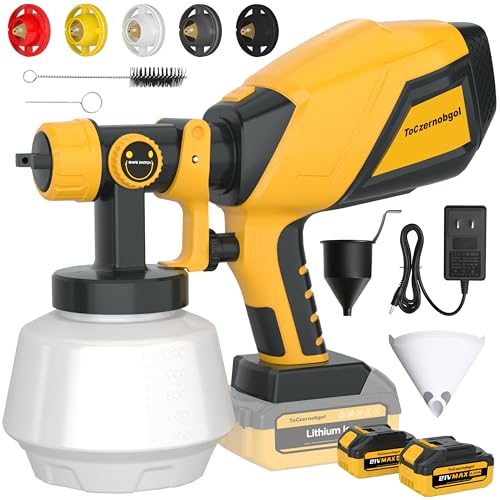
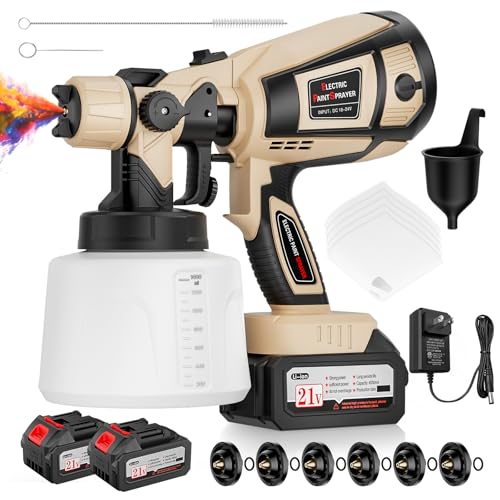
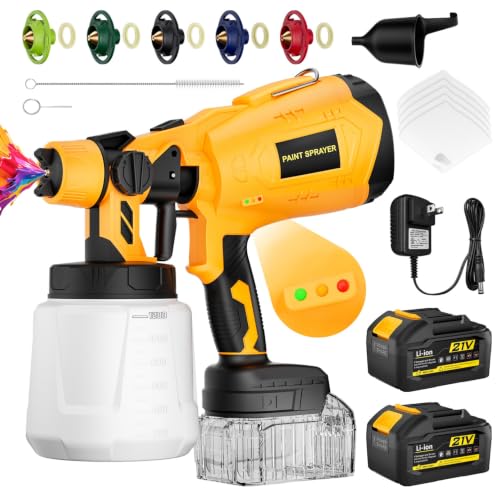

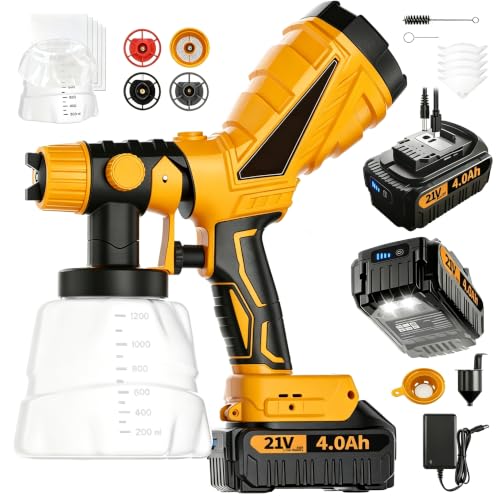
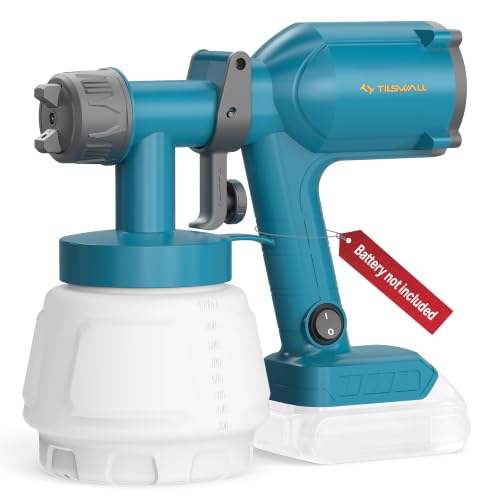
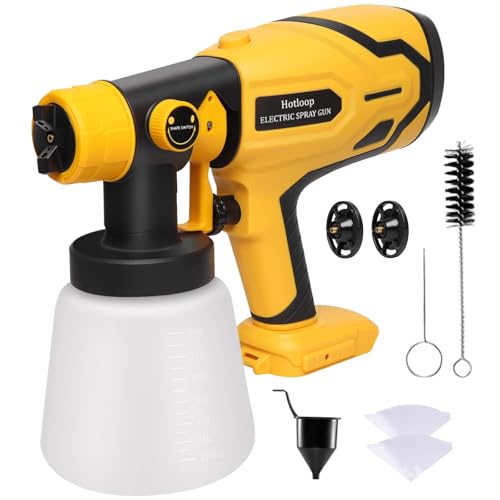
Who Should Buy Which of the Best Cordless Paint Sprayers?
Furniture and Cabinet Refinishers
Your work is small, detailed, and finish critical, so the HVLP cup gun class is your home. It lays down smooth, controlled coats on cabinet doors, drawers, and furniture with far less overspray than an airless unit, and the small cup suits jobs measured in quarts rather than gallons. Lay doors flat, spray in light passes, and the finish levels beautifully. For a deeper look at this pairing, see our guide to the best paint sprayer for cabinets, which covers tip choice and finish schedules in detail.
Fence, Deck, and Shed Owners Doing Outdoor Sections
Outdoor work rewards the handheld airless class, because it sprays thicker coatings, covers rough lumber fast, and never asks you to thin stain or paint as carefully. Battery power shines here since fences rarely run near an outlet, and you can work one section per charge without a cord winding through the yard. Expect to plan around battery swaps on a long fence line. If your outdoor projects are large and frequent, compare against the corded and cart options in our general guide to the best paint sprayer types before settling on cordless.
Homeowners Touching Up Rooms, Doors, and Trim
For one room at a time, either class can work, and the deciding factor is finish quality versus speed. HVLP gives smoother results on doors and trim but demands thinner paint and more patience, while handheld airless covers walls and ceilings faster with more overspray to mask against. Cordless power also means no cord dragging through wet paint at your feet. Renting is the honest alternative for a single whole house project, but for the steady drip of small jobs most homeowners face, owning the right class pays off quickly.
Key Features to Compare
Sprayer Type: Handheld Airless or HVLP Cup Gun
Handheld airless sprayers pump paint at high pressure through a small tip, which atomizes thick latex and stains with little or no thinning, at the cost of more overspray and a heavier unit once the cup is full. HVLP cup guns use a turbine to move a high volume of air at low pressure, producing a soft, controllable pattern with less overspray and a finer finish, but they need paint thinned to the right viscosity. Our guide to the best hvlp paint sprayer class explains the turbine sizes and cup designs in more depth. Pick airless for coverage speed outdoors, HVLP for finish quality indoors.
Battery Platform and Runtime per Charge
Runtime is the cordless question, and it is measured in paint volume more than minutes. A compact battery might spray only a few cups before fading, while a large high capacity pack on an efficient unit can cover a small room or a long fence section. If you already own tools on an 18 or 20 volt platform, staying on it saves real money, because the sprayer alone is the cheap part of the system. For bigger jobs, price a second battery into the purchase from the start, and note the charger speed, since a slow charger turns a two battery rotation into a waiting game.
Tip Sizes, Flow Rate, and Paint Viscosity
The tip decides what the sprayer can spray. Airless tips are sized by orifice and fan width, and reversible tips clear clogs with a twist, which you will appreciate mid job with latex. Fine finish tips use lower pressure for smoother coats on cabinets and trim. HVLP guns instead ask you to match needle size to viscosity, and most include a viscosity cup so you can time the paint flow and thin until it runs in the target range. Unthinned thick latex is the classic cordless disappointment, so confirm your coating type appears in the maker listed materials before you buy.
Cup Size and Refill Pace
Cordless sprayers carry their paint with them, in cups that range from about a quart to roughly a gallon and a half on the largest handheld airless models. A bigger cup means fewer refills and more weight in your hand with every pass, and that weight swing changes your spray distance and your fatigue by the end of a fence run. Flexible cup liners and suction tubes that work at angles matter on ceilings and under cabinets, where a rigid pickup tube starts sucking air. Match cup size to your typical job, not your biggest imagined one.
Weight, Balance, and Cleanup Time
A full cup, a large battery, and a motor add up to several pounds held at arm length, so balance matters as much as the scale number. Units that carry the battery low and the cup close to your hand tire you less. Cleanup is the other hidden cost: airless units need the pump, hose path, and tip flushed until the water runs clear, while HVLP cups mostly need the cup, needle, and air cap cleaned. Budget ten to twenty minutes of cleanup per session, and favor designs with few parts and available replacement seals and filters.
How to Plan a Cordless Spray Job: Batteries, Thinning, and Test Patterns
Charge every battery the night before, and stage your paint strained into a clean bucket, because straining removes the dried flecks that clog small tips. Thin a test batch if your sprayer requires it, spray a cardboard sheet, and adjust pressure and distance until the fan pattern shows even edges with no heavy lines at the sides, which signal the paint is too thick or the pressure too low.
Safety belongs in the plan too. Spray with a respirator rated for paint, ventilate the space, and keep solvent based coatings away from pilot lights and sparks. Treat a handheld airless unit with respect around skin: the stream can inject paint through skin at close range, an injury that needs emergency care the same day even when the wound looks like a pinprick. Corded handheld units share most of these habits, and our guide to the best handheld paint sprayer class covers them from the plug in side.
Common Mistakes to Avoid
- Spraying thick latex unthinned in an HVLP cup gun, then blaming the sprayer for the spatter and orange peel finish.
- Buying a bare tool on a platform you do not own, so the real cost doubles once batteries and a charger join the cart.
- Skipping the cardboard test pattern, so the first pass on the actual door reveals a clogged tip or the wrong pressure.
- Letting paint dry inside the pump or cup between coats, which turns a ten minute rinse into an hour of picking at seals.
- Underestimating overspray indoors, and masking too little because the sprayer felt small and tame in the store.
How to Make Your Cordless Paint Sprayer Last Longer
Cleanup is sprayer maintenance, full stop. Flush an airless unit until the discharge runs clear, clean or replace the inlet filter, and store the pump with the maker recommended storage fluid if it will sit for months, because dried latex inside a pump shortens its life fast. On HVLP guns, clean the needle and air cap gently, since a bent needle or a clogged air horn ruins the pattern.
Store batteries indoors at a partial charge, keep spare tips and seals on hand so a worn part never cancels a weekend job, and never store the sprayer with paint in the cup. A five minute strain and rinse routine after every session is the difference between a sprayer that lasts for years and one that clogs into the trash.
FAQ
Are cordless paint sprayers worth it?
Yes, for small and medium jobs where setup time dominates: cabinet doors, furniture, fences, sheds, and single rooms. The freedom from hoses and cords cuts setup and cleanup friction, and battery platforms you already own keep the entry cost low. The case weakens for whole house exterior work or all day spraying, where a corded or cart unit with a hose simply moves more paint. Match the tool to your typical job size, not your largest one.
What are the best cordless paint sprayers?
The best cordless paint sprayers depend on your coating and your surface. Choose a handheld airless model for fences, decks, and walls where coverage speed matters and the paint is thick, and an HVLP cup gun for cabinets and furniture where finish quality rules. Then confirm the battery platform, because a sprayer that shares your existing batteries is worth more than a slightly stronger unit that starts a second battery collection.
How do you clean a cordless paint sprayer?
Empty the cup back into the can, then flush the unit with water for latex or the maker specified solvent for oil based coatings, spraying into a waste bucket until the stream runs clear. Remove and scrub the tip, filters, and air cap, and wipe seals before reassembly. One point owners learn late: clean the unit before you clean anything else, because paint that dries during a long room cleanup becomes far harder to remove from small passages.
How long does a cordless paint sprayer last?
With prompt cleanup, the motor and pump on a decent unit last for years of homeowner use, and the wear items are tips, seals, filters, and batteries. Airless tips wear visibly, widening the fan and roughening the finish, so treat them as consumables on a schedule set by gallons sprayed. Batteries age out after several hundred cycles. A sprayer that is stored clean and dry between jobs will usually outlast one that is put away dirty a single time too many.
Is a paint sprayer worth it compared with a roller?
For textured surfaces, fences, cabinets, and anything with detail a roller cannot reach, a sprayer wins on both speed and finish. For a single smooth wall in an occupied room, a roller often wins once masking time is counted honestly. Many owners end up using both: spray the doors, trim, and cabinets, then roll the broad walls. The sprayer earns its shelf space when your project list has detail work on it several times a year.
Final Thoughts
Choose the type by your coating and surface, the platform by your battery shelf, and the cup by your typical job, and you will own one of the best cordless paint sprayers for your projects rather than the strongest one on the shelf. Keep it clean, keep spare tips handy, and it will turn weekend painting from a chore into a quick win. Compare the two classes in the product table above before you decide.


