
Best Cordless Soldering Iron in 2026: A Practical Buying Guide
Disclosure: We may earn a commission when you buy through links on this page, at no extra cost to you. As an Amazon Associate I earn from qualifying purchases. Learn more

Power source, heat up time and tip choice decide the best cordless soldering iron for bench, garage and field repairs. Compare them before you buy.
A corded iron ties you to the bench, and plenty of soldering jobs do not happen at a bench. Wiring repairs on a trailer, a loose connector inside a car door, or a broken lead at an RC flying field all call for heat where there is no outlet. The best cordless soldering iron for you depends on how much heat your joints need, how long you work between charges, and which power source fits the tools you already own. The comparison table below lines up the main types side by side.
This guide skips product rankings and focuses on the decisions that actually matter: battery, USB, or butane power, real heating performance, tip choice, and run time. If you are still weighing cordless against a bench station, our guide to the best soldering iron covers the full range of options. Read on to match an iron to the work you actually do.

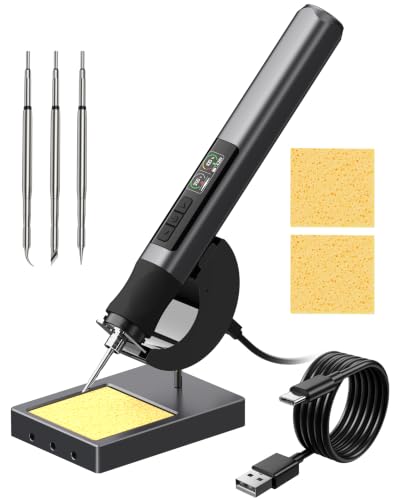
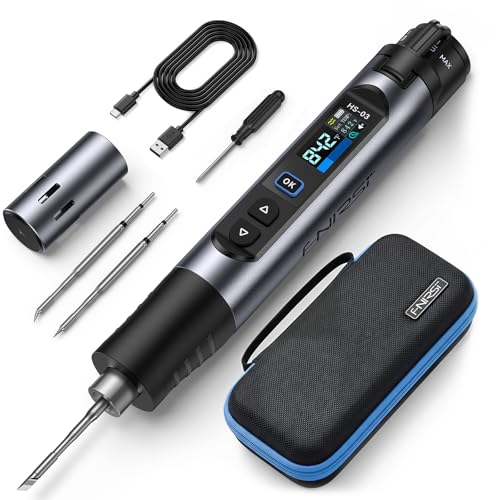
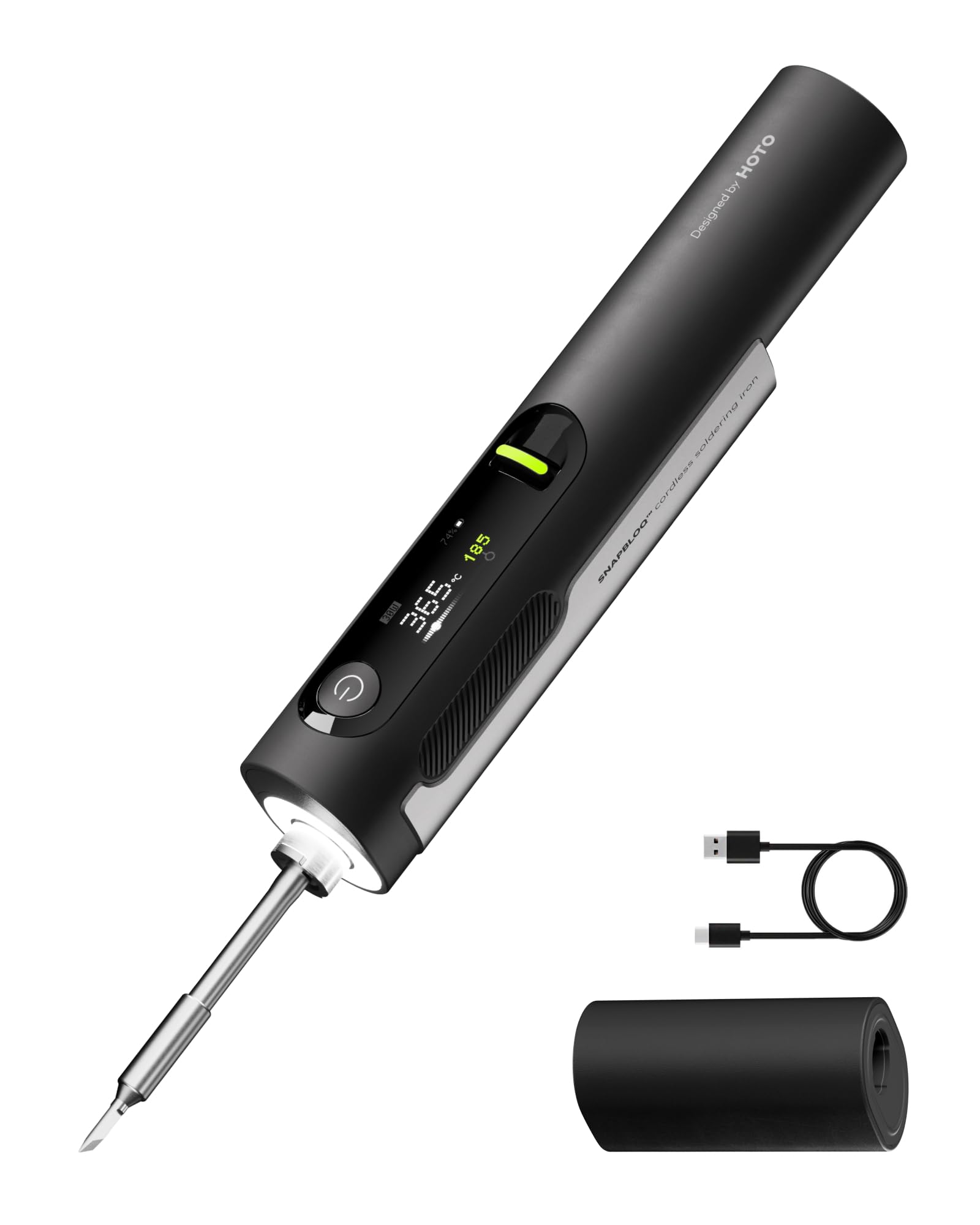
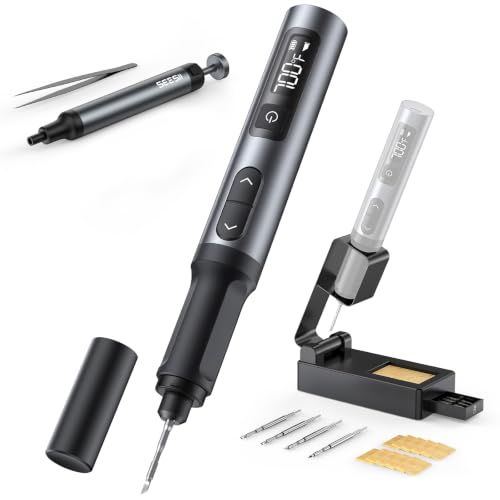


Who Should Buy Which Cordless Soldering Iron?
Field Repair and Hobby Work Away From the Bench
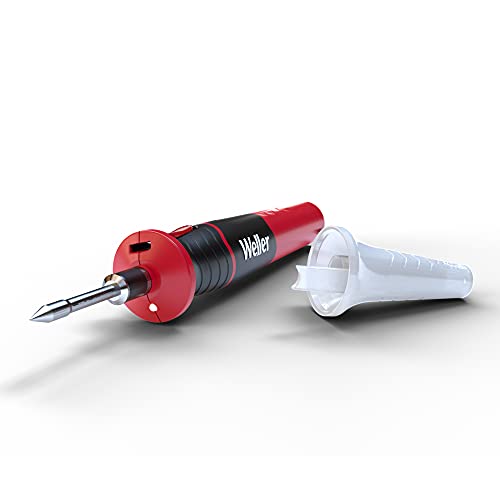
RC pilots, drone owners, and field technicians fix broken leads and connectors wherever the equipment stops working. A slim USB powered or battery powered iron that heats in under 30 seconds suits this work well, because most field joints are small signal wires and board pads. Choose a model with a heat resistant cap so you can drop it back into a tool bag while the tip is still warm, and pick a tip set that includes a fine point for board work.
Car, Boat, and Trailer Owners Fixing Wiring in Place
Vehicle wiring lives under dashboards, inside bilges, and along trailer frames, far from any outlet. These joints are heavier than board work, often 14 to 18 gauge wire with crimped or soldered splices, so you need more thermal mass than a pocket USB iron offers. A tool battery powered iron or a butane iron with a larger tip holds temperature when the joint pulls heat away. Plan on a stand or heat proof mat too, since there is rarely a safe place to set a hot iron down inside a vehicle.
Occasional Users With a Small or Shared Work Space
If you solder a few times a month for small repairs and crafts, a compact rechargeable iron that stores in a drawer beats a full bench station. Look for simple controls, a clear temperature display, and a price that matches light use. Newer users will find the technique advice in our guide to the best soldering iron for beginners helpful, since cordless irons reward good joint preparation even more than corded ones do.
Key Features to Compare
Power Source: Battery Pack, USB, or Butane
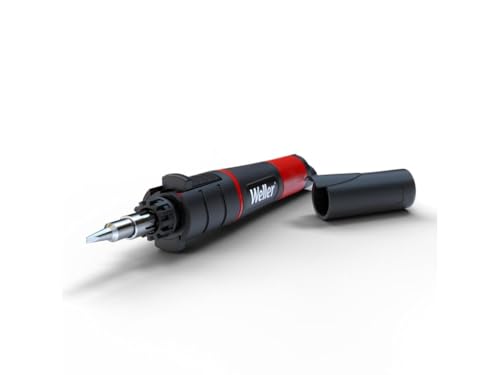
The power source decides almost everything else about a cordless iron. USB rechargeable irons are the smallest and cheapest, charge from any USB port, and suit light electronics, but their heating elements are modest and they cool quickly on big joints. Irons that run on 18 or 20 volt tool batteries deliver corded class heat and swap packs with your drill or driver, which makes them the strongest cordless option. Butane irons need no charging at all and refuel in seconds, yet they vent hot exhaust near the tip and their temperature control is rougher.
Heating Power and Heat Up Time
Manufacturers quote wattage in confusing ways, so treat the number as a rough guide rather than a precise spec. What you feel in use is recovery: how fast the tip returns to temperature after a joint draws heat out of it. Small USB models may take 20 to 40 seconds to reach working heat and recover slowly, while tool battery and butane models often heat in 10 to 20 seconds and hold up on medium joints. For fine board work, fast recovery matters less than stable temperature, since the joints are tiny.
Temperature Range and Control
Most soldering happens between about 600 and 750 degrees Fahrenheit, and an adjustable iron lets you turn down for heat sensitive pads or up for stubborn joints. Digital models with a display hold a set temperature closely, while basic models offer a few preset levels or a single fixed setting. Fixed temperature irons are fine for general wiring but risky for delicate boards, where excess heat lifts pads. Readers focused on circuit boards should also see the control details in our guide to the best soldering iron for electronics.
Tip Selection and Compatibility
The tip does the actual work, so tip choice matters as much as power. Fine conical tips suit board pads and small components, chisel tips move more heat into wire splices, and a knife tip can bridge or drag solder along a row of pins. Check that the iron accepts a common tip family with replacements sold separately, because tips wear out and a model with only one proprietary tip becomes useless once that tip pits. A mid size chisel tip is the best single choice if the iron ships with just one.
Run Time and Charging
Run time claims assume light, intermittent joints, so expect less in real use. A USB iron may give roughly 30 to 60 minutes of active soldering per charge, while a large tool battery can run an iron through a full afternoon of wiring work. Charging speed matters too: USB C fast charging can refill a small iron during a lunch break, and some models work while plugged in, which rescues a dead battery mid job. Butane run time depends on tank size, typically about 30 to 90 minutes per fill.
Safety Features and Handling
A hot tool with no cord still needs safe handling. Auto sleep that drops the tip to a low standby temperature after a few idle minutes saves battery and prevents scorched surfaces, and motion sensing wake up makes it feel instant again. A cap that fits over a warm tip protects your bag and your hands. Weight and balance count on overhead or in dash work, where a bulky iron tires your wrist quickly. Avoid irons with no sleep feature if you tend to set tools down and walk away.
Matching Cordless Power to the Joint
Cordless irons struggle where a large mass of metal pulls heat away faster than the element can replace it. Battery terminals, heavy ground straps, thick copper pipe fittings, and large gauge power cables all fall in this group, and a small iron will sit on the joint while the solder never quite flows. The honest fix is a bigger tip, a higher setting, and patience, or a corded station for that class of work. Sustained high heat work such as foil and came joints is another case where most users stay corded, as explained in our guide to the best soldering iron for stained glass. For everything up to medium wiring and board repair, a well chosen cordless iron keeps up fine.
Common Mistakes to Avoid
- Buying the smallest USB iron for vehicle wiring, then fighting cold joints because the tip cannot keep up with heavy wire.
- Judging an iron by its top temperature alone, when recovery speed and tip size decide how it solders in practice.
- Choosing a model with a single proprietary tip, so the whole iron is scrap once that tip wears out.
- Leaving a butane iron running on a cluttered bench, where its exhaust and hot tip can scorch nearby material.
- Skipping a stand or heat proof surface, then setting a hot iron down on a seat, carpet, or workbench edge.
- Storing the iron with a bare, oxidized tip, which makes the next session start with poor heat transfer.
How to Make Your Cordless Soldering Iron Last Longer
Tip care decides how long any soldering iron stays useful. Tin the tip with fresh solder before you switch the iron off, every time, so a protective layer shields the plating from oxidation while it sits. Clean during work with a brass wool ball rather than a wet sponge, since brass wool avoids the thermal shock that cracks tip plating. Keep tips snug in the barrel, because a loose tip transfers heat poorly and overheats the element. For battery models, store the pack partly charged rather than fully drained, and keep butane irons empty of fuel pressure leaks by closing the valve fully after use. Wipe the barrel and vents free of flux residue monthly if you solder often.
FAQ
Are cordless soldering irons powerful enough for electronics work?
Yes, for most board level work a mid range cordless iron has plenty of heat, since pads and component leads are small. The real limit is recovery on large ground planes, where a small tip cools faster than the element reheats it. Using a wider chisel tip and letting the iron recover for a few seconds between joints solves most of these cases without a bench station.
How long does a cordless soldering iron run on one charge?
Run time depends on the power source and how continuously you solder. Small USB irons usually manage about 30 to 60 minutes of active work, while an iron on a large tool battery can run for several hours of intermittent wiring. Auto sleep stretches every charge, because the iron only draws full power while you are actually making joints.
Can a cordless soldering iron join heavy gauge wire?
A tool battery or butane iron with a large chisel tip can join wire up to about 10 or 12 gauge if you preheat the joint and work patiently. Below that size, and on lugs or terminals, even strong cordless models fall behind a corded station. Twisting the strands tightly and using flux shortens the heating time and improves your odds on borderline joints.
Is butane or battery power better for a cordless soldering iron?
Battery power gives cleaner temperature control and no exhaust, which suits electronics and indoor work. Butane wins when you are far from charging for days, since a refill takes seconds and fuel is easy to carry. Butane irons also double as small torches or heat tools on some models, a bonus for shrink tubing and stuck fasteners.
How should you store a cordless soldering iron between jobs?
Let the tip cool fully, tin it lightly, and fit the protective cap before the iron goes into a drawer or bag. Store battery models with the pack partly charged and out of hot vehicles, because heat ages lithium cells quickly. Keeping spare tips in the same case prevents the common problem of finding the iron but not the tip a job needs.
Final Thoughts
The right choice comes down to your joints and your power source. Light board work and quick fixes suit a USB iron, vehicle and trailer wiring calls for tool battery or butane power, and nobody should expect any cordless model to replace a bench station on heavy terminals. Compare the types in the product table above against the features that matter for your work, and the best cordless soldering iron for your kit will be an easy pick. Prices and availability can change, so check the product page before ordering.


