
Best Pump Sprayers: What Actually Matters Before You Buy
Disclosure: We may earn a commission when you buy through links on this page, at no extra cost to you. As an Amazon Associate I earn from qualifying purchases. Learn more

Our checklist for the best pump sprayers and three picks that pass it, from manual to battery powered.
A pump sprayer is one of the most useful tools in a garage or garden shed. It applies weed killer along fence lines, fertilizer on shrubs, insecticidal soap on roses, deck cleaner on boards and stain on fences, all with more control than a hose end sprayer. Cheap sprayers, though, leak at the seals, clog at the nozzle and lose pressure halfway through a tank. The best pump sprayers hold pressure, spray an even pattern, resist the chemicals you use and are comfortable to carry around the yard.
Instead of a long list, we built a checklist of what matters most, then picked three sprayers that pass it. Use the same checklist to judge any sprayer you are considering.



How We Evaluate Pump Sprayers
We score pump sprayers on seven criteria: power source, included accessories, spray performance, weight and comfort, control features, warranty and capacity. Each criterion below explains what good and poor look like.
Manual Pump vs Battery Powered
Good: manual sprayers with a smooth pump handle that pressurizes the tank in 20 to 30 strokes, or battery sprayers that hold steady pressure without pumping. Battery models reduce hand and arm fatigue on big jobs. Poor: sprayers that need constant re pumping because the tank loses pressure quickly.
Accessories Included
Good: an adjustable nozzle with cone and stream patterns, a wand of 18 inches or more, a funnel top or measuring cup and a spray shield for precise weed control. Poor: a single fixed nozzle and a short hose that limit reach.
Spray Performance
Good: a consistent pattern from a full tank to nearly empty, with an in line filter that prevents clogs. Poor: spitting or dribbling as pressure falls and nozzles that clog with wettable powders.
Weight, Ergonomics, and Comfort
Good: a lightweight poly tank, a comfortable carry handle or shoulder strap and a low center of gravity so it does not tip over. A 2 gallon sprayer weighs about 17 to 18 pounds when full. Poor: hard plastic handles that dig into hands.
Control Features
Good: a lockable shut off trigger for long sprays, an adjustable brass or quality poly nozzle and a pressure relief valve for safe opening. Poor: triggers that leak or no way to release pressure before opening the tank.
Warranty and Replacement Parts
Good: at least a 1 year warranty and readily available seal kits, nozzles and wands. Viton seals resist harsh chemicals. Poor: sprayers with no replacement parts, which become throwaways when one seal fails.
Capacity and Working Range
Good: 1 gallon for small gardens and spot treatments, 2 gallons for most yards and 3 to 4 gallons or backpack sprayers for large properties. A translucent tank lets you see the fill level. Poor: oversized tanks that are too heavy to carry comfortably.
3 Picks That Pass Our Checklist
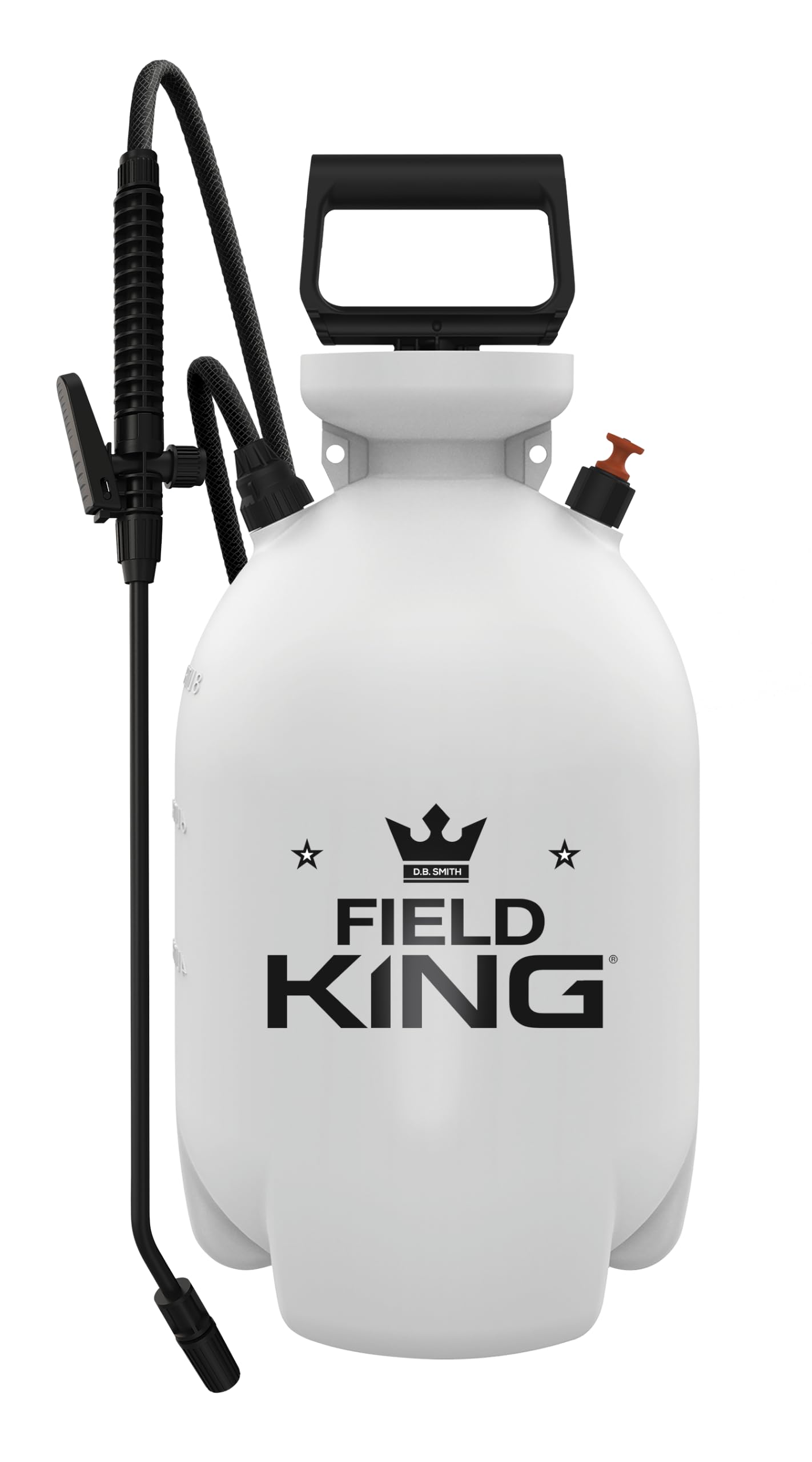
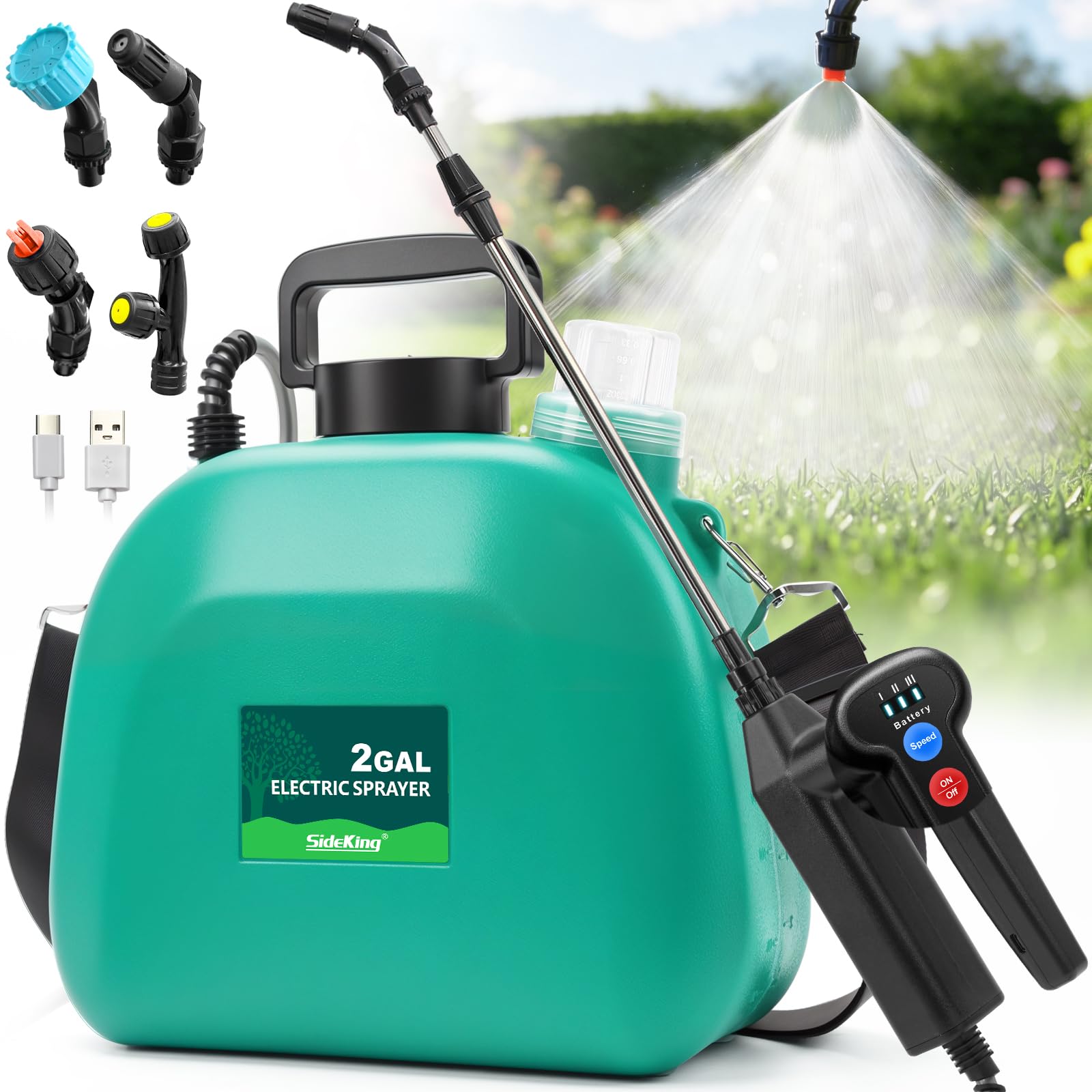
The Chapin 29002 Stand 'N Spray is our best overall pump sprayer thanks to its no bend pump handle and anti clog filter, the Chapin 20024 SureSpray 2 Pack is the best value for keeping separate sprayers for herbicides and other products, and the Scotts 2 Gallon Battery Powered Sprayer is the best premium pick for no pumping at all. Check the product table above for current prices.
| Award | Product | Key Spec | Best For |
|---|---|---|---|
| Best Overall | Chapin 29002 Stand 'N Spray | 2 gallon, extended no bend pump, anti clog filter | Most yards and back friendly use |
| Best Value | Chapin 20024 SureSpray (2 pack) | Two 2 gallon tanks, funnel top, 34 inch hose | Separate sprayers for different chemicals |
| Best Premium Pick | Scotts 2 Gallon Battery Powered Sprayer | Lithium ion, up to 12 tanks per charge, 3 in 1 nozzle | Large yards and frequent spraying |
Best Overall: Chapin 29002 Stand 'N Spray
The Chapin 29002 Stand 'N Spray is the best pump sprayer for most yards, at around $40. It is made in the USA with global materials.
- Why it passes: an extended pump handle lets you pressurize the tank without bending over, a SureSpray anti clog filter keeps debris out of the nozzle and a pressure relief valve is built in.
- Accessories: an 18 inch curved poly wand, 34 inch hose, brass adjustable nozzle, measuring cup and spray shield; the translucent 2 gallon tank shows the fill level. It carries a 1 year limited warranty.
- Trade off: as a manual sprayer, it still needs re pumping on long sessions.
Best for: homeowners with back trouble and anyone spraying weeds, fertilizer or insect control. Skip it if you spray for hours at a time.

Best Value: Chapin 20024 SureSpray 2 Gallon Pump Sprayer, 2 Pack
The Chapin 20024 SureSpray 2 Pack is the best value pump sprayer, at around $45 for two. Having two tanks avoids cross contamination.
- Why it passes: each 2 gallon translucent funnel top tank reduces spills and shows fluid levels, and a modular design helps prevent leaks and lets you clean and replace seals easily.
- Versatile: an adjustable cone nozzle switches between a targeted stream and broad spray, a 34 inch hose adds reach and the lightweight poly tank and ergonomic handle reduce fatigue. Made in the USA with a 1 year limited warranty.
- Trade off: the standard pump handle requires bending to pressurize.
Best for: keeping one sprayer for herbicide and another for fertilizer, cleaners or insecticidal soap. Skip it if you want a no bend pump.

Best Premium Pick: Scotts 2 Gallon Lithium Ion Battery Powered Sprayer
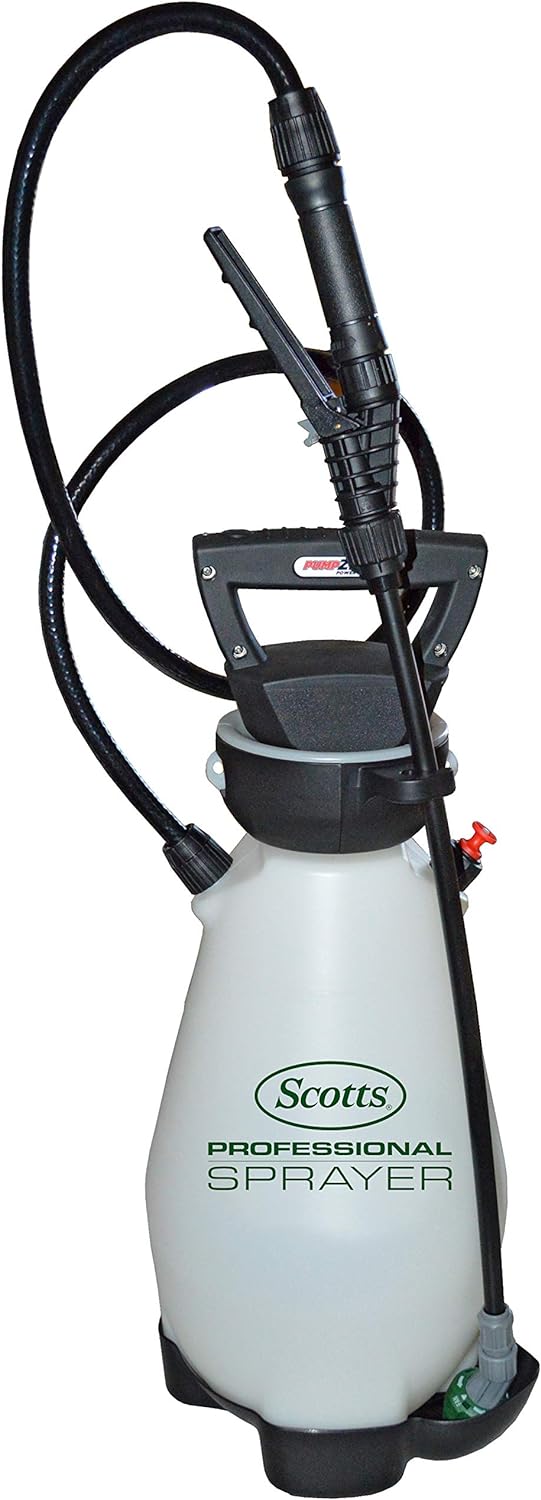
The Scotts 2 Gallon Battery Powered Sprayer is the best premium pump sprayer, at around $79. It removes pumping entirely.
- Why it passes: a rechargeable lithium ion pump sprays up to 12 full tanks per charge, and a commercial grade shut off with a lock on feature keeps spraying steady.
- Built to last: a 21 inch poly wand with Viton seals resists chemicals, an easy to clean in line filter prevents clogs, a pressure release valve adds safety and a teardrop tank resists tipping. It has a 3 in 1 nozzle and a limited 3 year warranty with free replacement parts.
- Trade off: it costs about twice as much as manual sprayers and needs charging.
Best for: large yards, frequent spraying and anyone with hand or shoulder pain. Skip it if you spray only a few times a year.
Quick Buyer Checklist
- Is the tank size right for your yard and strength?
- Does it have an adjustable nozzle with stream and cone patterns?
- Is there an in line or tank filter to prevent clogs?
- Does it include a pressure relief valve?
- Are seals compatible with your chemicals (Viton for harsh products)?
- Can you buy replacement seals, nozzles and wands?
- Is the wand long enough to reach without bending?
- Does it carry at least a 1 year warranty?
Red Flags to Watch For
- No pressure relief valve: opening a pressurized tank can spray chemicals on you.
- Vague seal materials: cheap seals swell or crack with oil based products.
- No replacement parts: one failed O ring makes the sprayer useless.
- Thin, opaque tanks: you cannot see levels and they may crack.
- Battery sprayers with no runtime spec: you cannot judge how many tanks a charge covers.
How Much to Spend on the Best Pump Sprayers
Most homeowners find the best pump sprayers for their needs between about $25 and $80.
- Under $30: 1 gallon manual sprayers for spot treatments, patios and small gardens.
- Around $30 to $50: 2 gallon manual sprayers with filters, brass nozzles and better seals, or two packs for separate chemicals.
- Around $50 to $100: battery powered sprayers and stainless steel tanks for frequent use, solvents and large yards.
Common Sprayer Problems and Fixes
- Tank will not hold pressure: clean and lubricate the pump O ring and check that the lid seal is seated.
- Nozzle sputters: rinse the filter and nozzle tip; strain wettable powders before filling.
- Leaks at the shut off: replace the trigger seal kit.
- Uneven spray pattern: adjust the nozzle and keep the wand at a consistent height above the target.
Safe Spraying Tips
Always read and follow the chemical label, which is the legal guide for mixing and application. Wear gloves and eye protection, spray on calm days with wind under about 10 mph and avoid spraying before rain. Label each sprayer for a single purpose, especially herbicides, since residue can damage plants later. Keep children and pets away until treated areas are dry.
Care and Maintenance Tips
- Rinse after every use: fill with clean water, shake and spray through the wand and nozzle.
- Release pressure before storage: it reduces stress on seals.
- Lubricate seals: apply the manufacturer recommended lubricant to pump O rings each season.
- Store indoors: sunlight and freezing weather weaken tanks and hoses.
- Clean the filter: rinse it whenever spray becomes uneven.
Pump Sprayers: Your Questions Answered
Is a battery powered sprayer worth it?
Yes, if you spray large areas or have hand or shoulder strain. Battery sprayers keep constant pressure without pumping and cover several tanks per charge. For occasional spot spraying, a manual sprayer is cheaper and simpler.
Can I use one sprayer for herbicides and fertilizers?
It is better not to. Herbicide residue can remain in tanks and hoses even after rinsing and damage plants later. Keep a dedicated, labeled sprayer for weed killers.
Manual or battery: which is better for DIY?
Manual sprayers suit most DIY tasks such as weed control, deck cleaning and fertilizing small beds. Battery sprayers are better for large properties and frequent use.
What size pump sprayer do I need?
A 1 gallon sprayer suits spot treatments and small gardens, 2 gallons suits most homes and 3 to 4 gallon or backpack sprayers suit large properties.
Our Verdict
Judge any sprayer by pressure retention, nozzle quality, seals, filters and replacement parts. The Chapin 29002 Stand 'N Spray is our all around pick with a no bend pump, the Chapin 20024 2 Pack is the value choice for separate chemicals and the Scotts battery sprayer is the premium no pump option. The best pump sprayers make lawn and garden jobs faster and safer, so check the product table above for current prices.


