
Best Soaker Hoses: Every Type Explained Side by Side
Disclosure: We may earn a commission when you buy through links on this page, at no extra cost to you. As an Amazon Associate I earn from qualifying purchases. Learn more

Round, flat and drip watering compared side by side, plus how to choose and install the best soaker hoses.
Sprinklers waste a surprising amount of water. Much of it evaporates, blows onto the driveway or lands on leaves where it can spread disease. A soaker hose takes a different approach: water seeps slowly through the hose wall or tiny holes right at the soil line, soaking roots where plants need it. The best soaker hoses deliver even moisture along their whole length, resist leaks and splits, fit the layout of your beds and hold up to sun and seasons.
This guide compares every main type of soaker hose side by side, helps you choose between lightweight and heavy duty options and explains material, durability, layout, flow and safety, plus care tips that keep hoses working for years.


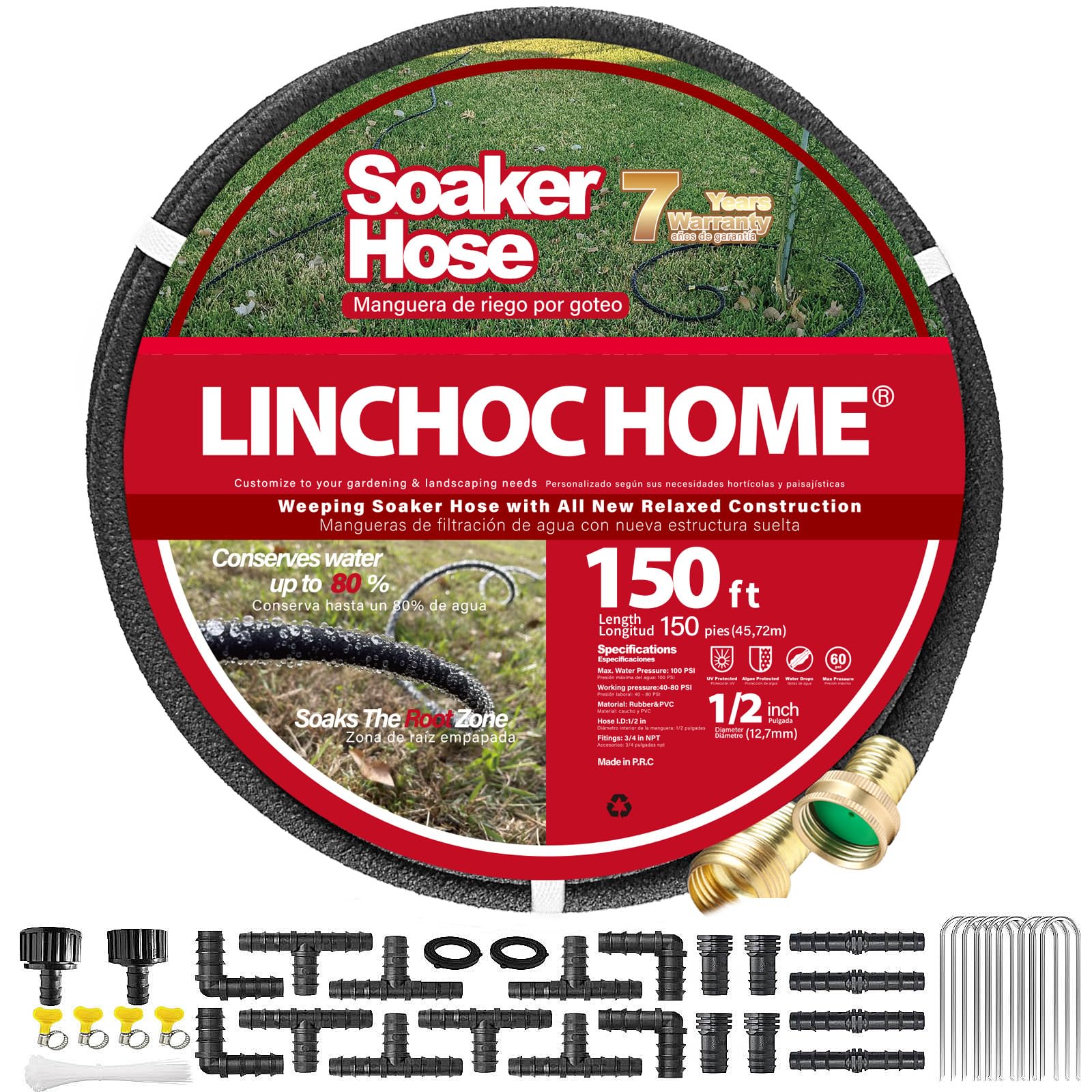


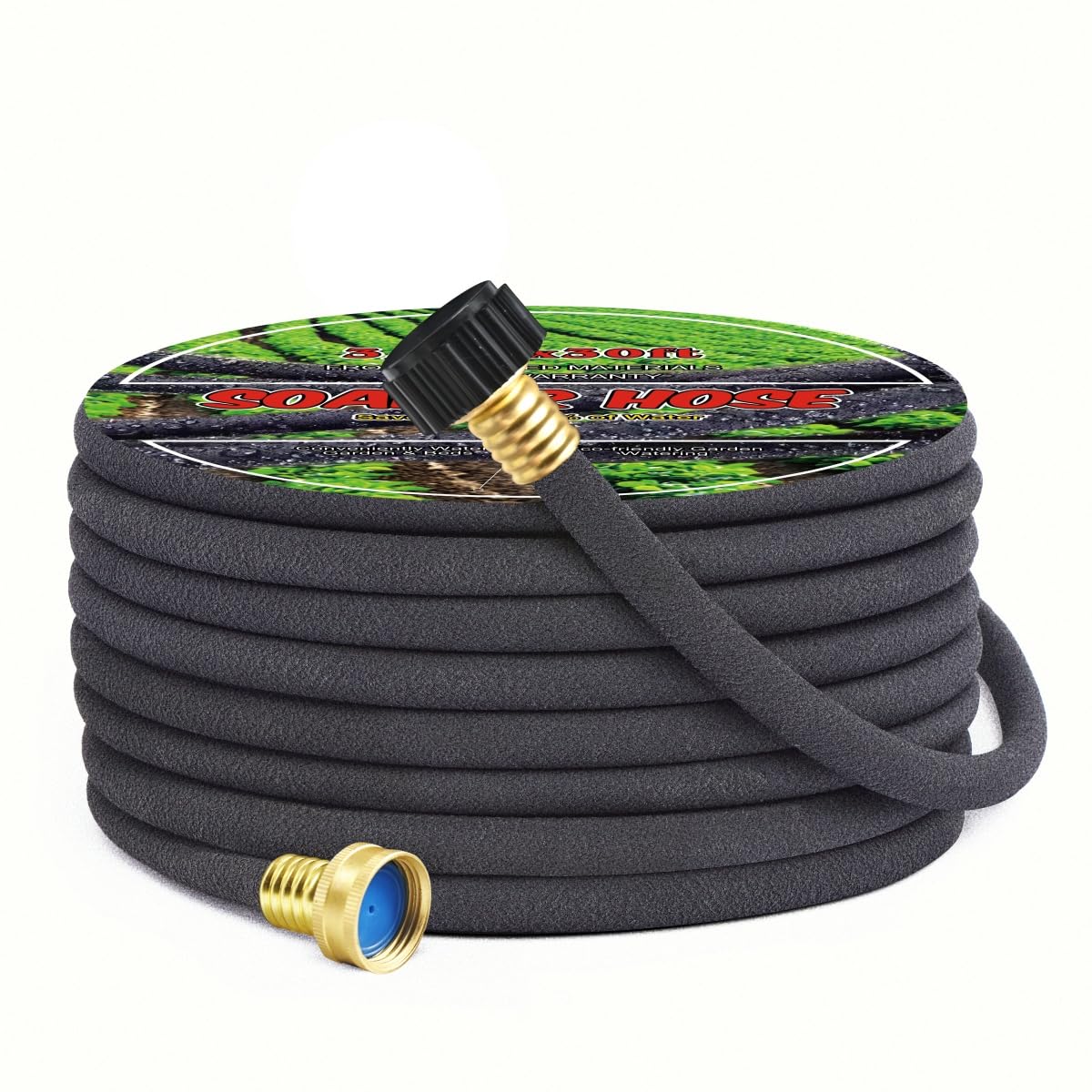
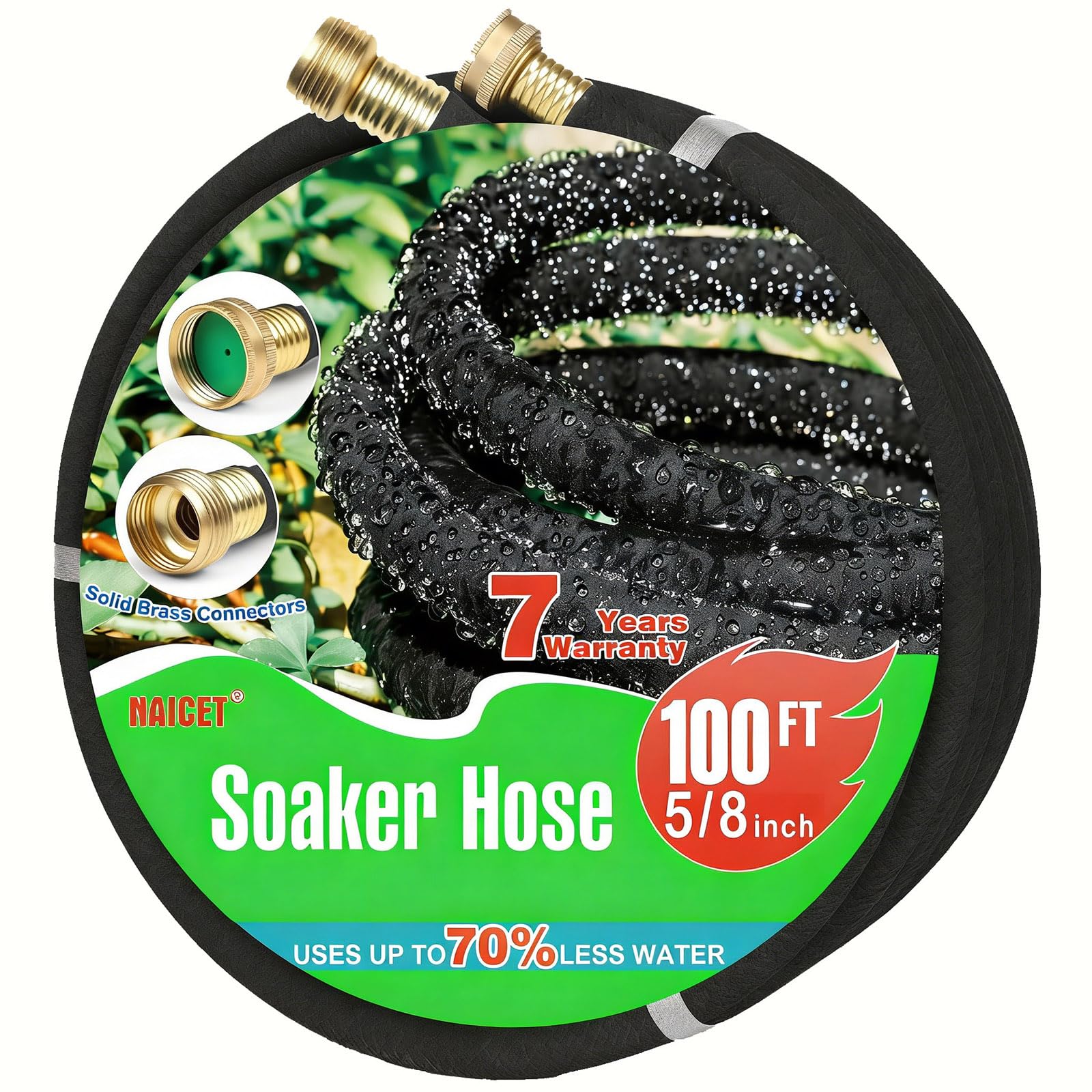

Types of Soaker Hoses Compared
Round rubber soaker hoses are the most durable, flat fabric or vinyl soaker hoses are the easiest to lay out and store, and drip irrigation tubing gives the most precise control.
| Type | Best For | Pros | Cons | Typical Price |
|---|---|---|---|---|
| Round recycled rubber | Vegetable beds, shrubs, foundations | Durable, even seeping, can be buried under mulch | Heavy, can crack in freezing weather | Around $40 to $60 per 75 to 100 ft |
| Flat fabric or vinyl | Narrow beds, rows, small gardens | Lightweight, lies flat, stores easily | More fragile, uneven flow over long runs | Around $45 to $85 per 100 to 200 ft |
| Linkable kits with stakes | Raised beds and DIY systems | Connect sections, stakes hold hoses in place | More connections that can leak | Around $45 to $60 |
| Drip irrigation tubing | Containers, trees, mixed beds | Precise emitters, less water | More parts and setup time | Around $30 to $80 per kit |
Lightweight and Flat Options
Flat soaker hoses are made from fabric covered or vinyl tubes with tiny perforations. They lie flat in narrow rows, roll up neatly for storage and are easy to cut and link. Many come in multi packs of 50 foot sections so you can cover 100 to 200 feet of beds.
Their weakness is durability. Thin walls can puncture from garden tools or animals, and water pressure can drop along long runs, leaving the far end drier.
Choose flat hoses for small vegetable rows, narrow flower beds and gardens where you rearrange layouts each season.
Premium and Heavy Duty Options
Heavy duty soaker hoses use thick round rubber walls, often 1/2 or 5/8 inch diameter, with brass or metal fittings. They seep evenly along their length, resist kinks and can lie under mulch for years.
The trade off is weight and cost. Thick rubber hoses are harder to move and should be drained before freezing weather to prevent cracking.
Choose heavy duty hoses for permanent beds, shrubs, tree lines and foundation watering.
Organic and Eco Friendly Options
Many round soaker hoses are made from recycled rubber, often from old tires, which keeps material out of landfills. Some brands also offer lead free or drinking water safe hoses for edible gardens.
Soaker hoses are already one of the most water efficient ways to irrigate, often using far less water than sprinklers because there is little evaporation or runoff.
Choose recycled or lead free options if you grow vegetables or want the lowest environmental impact.
Standard Options
Standard round soaker hoses of 25 to 75 feet with plastic or basic metal fittings are the most common entry point. They work well for single beds and seasonal gardens at a moderate price.
Look for end caps, a pressure regulator or flow control disc and good reviews for even seepage. Upgrade fittings to brass if plastic ones leak.
Flat vs Round Soaker Hoses: Which Should You Choose?
A round rubber soaker hose is better for permanent beds, shrubs and long runs because it seeps evenly and lasts longer, while a flat soaker hose is better for small, changing vegetable rows and easy storage.
- Durability: round rubber wins; flat hoses puncture more easily.
- Even watering: round hoses seep more evenly over longer lengths.
- Handling and storage: flat hoses are lighter and roll up compactly.
- Layout: flat hoses bend into tight rows; round hoses curve gently around plants.
- Cost: similar per foot; flat hoses often come in larger multi packs.
How to Choose the Right Soaker Hose
Material and Build Quality
Recycled rubber is durable and seeps evenly. Vinyl and fabric flat hoses are lighter but less tough. Brass fittings with rubber washers resist leaks better than plastic. Check that the hose includes an end cap and, ideally, a flow restrictor.
Durability and Weather Resistance
UV resistant materials last longer in sun. Covering the hose with 1 to 2 inches of mulch protects it from sunlight and hides it. Drain and store hoses before temperatures fall below freezing to prevent cracks.
Match the Hose to Your Garden Size and Layout
Measure the total length of your beds and how you will snake the hose. Space runs about 12 to 18 inches apart in sandy soil and 18 to 24 inches apart in clay soil. Keep single runs to about 100 feet or less for even watering; longer runs may leave the far end dry.
Performance Specs: Length, Diameter and Flow
1/2 inch hoses suit most beds, while 5/8 inch hoses carry more water for longer runs. Soaker hoses work best at low pressure, around 10 to 25 PSI; a pressure regulator prevents bursting and spraying. Linkable sections let you expand coverage.
Safety: Drinking Water Safe, Lead Free and Pet Safe
For vegetable gardens, choose hoses labeled lead free or drinking water safe. Brass fittings sometimes contain lead, so look for lead free fittings. Keep chewing pets away from flat fabric hoses, which they can puncture easily.
How to Install and Run a Soaker Hose
- Lay the hose out in the sun for an hour to soften it before positioning.
- Snake it through the bed close to plant bases, keeping runs evenly spaced.
- Pin it with landscape stakes so it stays in place.
- Add a pressure regulator and timer at the spigot.
- Cover with mulch to reduce evaporation and protect from UV.
- Run a first session for 30 to 60 minutes, then check soil moisture 6 inches down.
- Adjust timing so the soil stays evenly moist but not soggy.
How Long and How Often to Water
Most gardens need about 1 inch of water per week. A soaker hose may need 30 minutes to 2 hours per session depending on soil, hose type and water pressure. Water early in the morning two or three times a week rather than daily, so roots grow deeper. Use a trowel or moisture meter to check that water reaches 6 to 8 inches deep.
How Much to Spend on the Best Soaker Hoses
Most gardeners find the best soaker hoses for their beds between about $40 and $60 for 75 to 150 feet of coverage.
- Under $45: 50 to 75 foot round rubber hoses or basic flat hoses for a single bed.
- Around $45 to $60: heavy duty 5/8 inch rubber hoses, linkable flat multi packs and kits with brass connectors and stakes.
- Around $60 to $85: 150 to 200 foot flat hose systems for large vegetable gardens.
Add about $10 to $15 for a pressure regulator and $25 to $50 for a hose timer, which automate watering and protect the hose.
Soaker Hoses for Foundations and Trees
In dry climates with expansive clay soil, some homeowners run a soaker hose 12 to 18 inches from the foundation to keep soil moisture consistent and reduce shrinking and swelling. Run it on a timer for short sessions, and never let water pool against the foundation. For trees, coil a soaker hose in a spiral around the drip line rather than at the trunk, since feeder roots spread outward.
Common Soaker Hose Problems and Fixes
- Far end stays dry: shorten the run to under 100 feet, use 5/8 inch hose or feed water from the middle with a Y splitter.
- Water sprays instead of seeping: add a pressure regulator or open the spigot only partway.
- Leaks at the spigot: replace the rubber washer and tighten by hand.
- Some sections stay dry: flush the hose by removing the end cap; mineral buildup can clog pores in hard water areas.
- Split hose: cut out the damaged section and join the ends with a hose mender.
How to Make Your Soaker Hose Last Longer
- Use a pressure regulator to avoid bursts and spraying.
- Cover hoses with mulch to block UV rays.
- Flush hoses each spring by removing the end cap and running water through.
- Drain and store hoses indoors before freezing weather.
- Replace worn washers to stop fitting leaks.
Soaker Hoses: Your Questions Answered
Can you bury a soaker hose?
You can cover a soaker hose with 1 to 2 inches of mulch, which is ideal. Burying it in soil is not recommended because roots and soil particles can clog the pores and make leaks hard to find.
Do soaker hoses need a pressure regulator?
Yes, in most homes. Household water pressure often exceeds 40 PSI, while soaker hoses work best around 10 to 25 PSI. A regulator gives even seeping and prevents bursts.
How long should a soaker hose last?
A good rubber soaker hose can last several seasons, often five years or more, with mulch cover and winter storage. Flat hoses usually last a few seasons.
How much soaker hose do I need for my garden?
Measure the total length of plant rows, then add runs spaced 12 to 24 inches apart depending on soil. A typical 4 by 8 foot raised bed needs about 25 to 50 feet.
Are soaker hoses better than drip irrigation?
Soaker hoses are simpler and cheaper for dense beds and rows. Drip irrigation offers more precise watering for containers, trees and mixed plantings but takes more setup.
Final Thoughts
Choose round rubber soaker hoses for permanent beds and long life, flat hoses for flexible vegetable rows and drip kits for precise watering. Add a pressure regulator, cover hoses with mulch and drain them before winter. The best soaker hoses save water and grow healthier plants, so check the product table above for current models and prices. For hose storage, see our best retractable hoses guide.


