
Best Self Propelled Electric Lawn Mowers: A First Time Buyer's Guide for 2026
Disclosure: We may earn a commission when you buy through links on this page, at no extra cost to you. As an Amazon Associate I earn from qualifying purchases. Learn more

A first time buyer's guide to self propelled electric lawn mowers: batteries, drive, decks and setup.
Battery lawn mowers have come a long way. Today's cordless models start with a button, run quietly enough for early morning mowing and cut as cleanly as gas mowers on most suburban lawns. Add a self propelled drive, and the mower pulls itself forward so you only steer, which makes slopes and larger lawns far less tiring. The best self propelled electric lawn mowers pair a strong brushless motor with enough battery runtime for your yard and a drive system that matches your pace.
If this is your first electric mower, this guide explains the basics, the key specs in plain English, common rookie mistakes and how to set up and use your mower the first time.


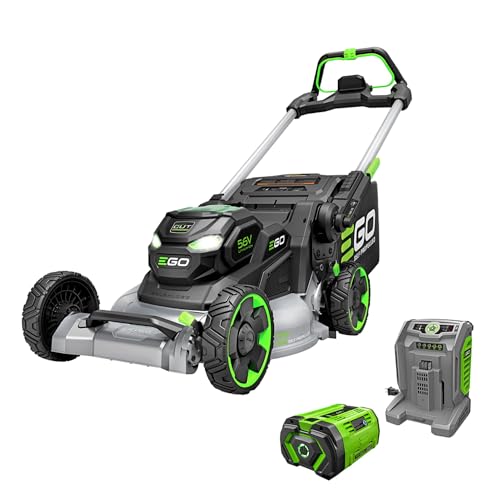


Self Propelled Electric Lawn Mowers 101: The Basics
A self propelled electric lawn mower is a walk behind mower powered by a rechargeable battery (or occasionally a cord) that uses a separate drive motor to turn the wheels, so the mower moves forward on its own while you guide it.
The blade motor and drive motor typically share one battery pack. You control speed with a dial, trigger or touch sensitive handle bar: push the bar forward harder and the mower goes faster. Release the bail lever and both the blade and drive stop.
A few terms help when comparing models. Voltage (40V, 56V, 60V, 80V) indicates power potential. Amp hours (Ah) indicate battery capacity and runtime. Brushless motors are more efficient and last longer than brushed motors. Deck width is the cutting path, usually 19 to 22 inches. 3 in 1 means the mower can mulch, bag or side discharge clippings.
Key Specs Explained in Plain English
Six specs decide whether an electric self propelled mower fits your lawn and your body.
Power Source: Gas, Battery, or Corded Electric
Battery self propelled mowers are the most popular electric choice. They are quiet, produce no exhaust and need no oil changes, spark plugs or fuel stabilizer. Runtime is limited by battery size, typically 30 to 60 minutes.
Corded electric mowers are cheap and never run out of power but drag a cord and rarely include self propelled drives. Gas self propelled mowers run as long as you have fuel and handle very tall grass easily, but they are loud and need regular maintenance.
Battery Voltage, Capacity and Runtime
Voltage indicates power, and amp hours indicate how long it lasts. A 40V 5.0Ah battery usually covers about 1/4 to 1/3 acre with self propel engaged. A 56V or 60V battery of 6.0 to 7.5Ah typically handles 1/3 to 1/2 acre. Larger lawns benefit from two batteries or dual battery ports.
Self propel drains extra power, as do tall wet grass and bagging, so treat listed runtimes as best case figures.
Slopes and Terrain
Rear wheel drive gives the best traction on hills because weight shifts to the back wheels as you push uphill, especially when the bag fills. Front wheel drive is easier to steer and turn but can lose grip on slopes.
All wheel drive offers the most traction on steep or bumpy lawns but costs more and uses more battery. For yards with significant slopes, choose rear wheel or all wheel drive and larger rear wheels.
Mulch, Bag, and Side Discharge Options
Mulching cuts clippings into fine pieces and returns nitrogen to the lawn, which is ideal for regular weekly mowing. Bagging collects clippings for a clean look and helps in spring and fall when there are leaves.
Side discharge handles tall or overgrown grass without clogging. Most self propelled electric mowers support all three modes, but check that a side discharge chute is included if you need it.
Yard Size and Cutting Width
Match deck size to your lawn. Under 1/4 acre, a 19 to 20 inch deck is light and easy to store. From about 1/4 to 1/2 acre, a 21 to 22 inch self propelled mower is the sweet spot. Up to about 3/4 acre, larger batteries and 22 inch decks keep mowing time reasonable. Above 1 acre, a riding mower or robotic mower is usually more practical.
Drive Type: Push, Self Propelled, Riding, Zero Turn, Robotic
Push mowers are lighter and cheaper but tiring on hills. Self propelled mowers reduce effort while letting you control the cut. Riding mowers and zero turns suit lawns over 1 acre, with zero turns best on flat, wide areas. Robotic mowers handle mowing automatically but need boundary setup and work best on simpler lawns.
Noise, Storage, and Maintenance
Electric mowers run at around 70 to 80 decibels, far quieter than gas mowers at 90 decibels or more. Many fold their handles flat and store vertically, taking up a fraction of the garage space.
Maintenance is minimal: sharpen or replace the blade yearly, clean the deck, and store batteries indoors at moderate temperatures.
How Much to Spend on the Best Self Propelled Electric Lawn Mowers
Most buyers find the best self propelled electric lawn mowers between about $500 and $900, including a battery and charger.
- Under $500: 40V to 80V mowers with 20 to 21 inch decks and smaller batteries. Fine for flat lawns up to about 1/4 acre.
- Around $500 to $900: 56V to 80V brushless mowers with 21 inch decks, variable speed drive and 6.0Ah or larger batteries. The sweet spot for most suburban lawns.
- Over $900: 22 inch aluminum or composite decks, dual blade systems, two batteries and premium touch drive controls for larger or hilly yards.
Rookie Mistakes to Avoid
- Undersizing the battery: a small battery may run out halfway through a 1/2 acre lawn.
- Ignoring battery ecosystems: buying into a brand that also makes your trimmer and blower saves money on batteries.
- Mowing wet grass: it clogs the deck, drains the battery and leaves a ragged cut.
- Cutting too short: scalping weakens grass and invites weeds.
- Leaving batteries in a hot or freezing garage: temperature extremes shorten battery life.
Battery Care Tips for Longer Runtime
Lithium ion mower batteries last longest when kept cool, partly charged in storage and away from extreme temperatures.
- Let a hot battery cool for 15 to 30 minutes before charging it after a long mow.
- Store at about 40 to 60 percent charge over winter rather than full or empty.
- Keep batteries indoors between roughly 40°F and 80°F, never in a freezing shed or a hot car.
- Use the manufacturer's charger; rapid chargers save time but generate more heat.
- Keep contacts clean and dry to prevent poor connections and error lights.
Common Problems and Easy Fixes
Most electric mower issues come from grass buildup, dull blades or battery temperature rather than motor failure.
- Runtime suddenly drops: raise the cutting height, switch from bagging to mulching and check that the blade is sharp.
- Mower stops in thick grass: the overload protection has tripped; raise the deck, slow down and restart.
- Self propel feels weak: clean grass from the wheels and drive gears, and check tire wear.
- Uneven cut: make sure all wheels are set to the same height and the blade is balanced.
- Battery will not charge: let it reach room temperature, reseat it in the charger and check for a blinking error code in the manual.
Getting Started: Setup and First Use
- Charge the battery fully before the first mow.
- Unfold and lock the handle, then adjust height for comfortable posture.
- Set cutting height: start at about 3 inches for most cool season grasses.
- Choose a mode: insert the mulch plug, attach the bag or fit the side chute.
- Start slowly: engage self propel at a low speed and increase gradually.
- Keep blades sharp: sharpen each season for clean, healthy cuts.
- Never cut more than 1/3 of the grass blade at once: raise the deck for overgrown grass and mow twice.
Self Propelled Electric Lawn Mowers: Your Questions Answered
What size mower do I need for my yard?
For lawns under 1/4 acre, a 19 to 20 inch deck works. For 1/4 to 1/2 acre, choose a 21 to 22 inch self propelled mower with a 6.0Ah or larger battery. Above 3/4 acre, consider a riding or robotic mower.
Is a zero turn worth it for one acre?
For a full acre of mostly flat lawn, yes, a zero turn saves a lot of time. A self propelled mower can handle one acre but may take two hours or more and multiple batteries, so it suits smaller yards better.
How long does a self propelled electric lawn mower last?
The mower body and brushless motors often last 8 to 10 years with care. Lithium ion batteries typically last about 3 to 5 years or several hundred charge cycles before capacity drops noticeably.
Are battery mowers as good as gas?
For most lawns up to about 1/2 acre, yes. Modern brushless battery mowers cut as cleanly as gas, start instantly and are much quieter. Gas still has the edge for very tall grass and large properties.
How often should I sharpen mower blades?
Sharpen at least once per season, or about every 20 to 25 hours of mowing. If grass tips look torn or brown after mowing, the blade is dull and needs sharpening or replacing.
Can I mow in the rain with an electric mower?
No. Most manufacturers advise against mowing wet grass or in the rain with a battery mower. Wet clippings clog the deck, drain the battery faster and leave a ragged cut, and water can reach electrical parts. Wait until the lawn is dry, ideally late morning.
Final Thoughts
Choose a self propelled electric mower by lawn size and battery capacity first, then drive type for your terrain. A 21 inch deck with a 56V to 80V brushless motor and a 6.0Ah or larger battery covers most suburban yards, while rear wheel drive helps on slopes. The best self propelled electric lawn mowers make mowing quieter and easier, so check the product table above for current models and prices. For hilly yards, see our best self propelled lawn mowers for hills guide.


