
Best Seed Spreaders: A First Time Buyer's Guide for 2026
Disclosure: We may earn a commission when you buy through links on this page, at no extra cost to you. As an Amazon Associate I earn from qualifying purchases. Learn more

How to choose and use a seed spreader for an even, healthy lawn.
Throwing grass seed by hand leaves bare streaks and thick clumps, and a cheap spreader that dumps seed unevenly is not much better. A good seed spreader lays down an even layer at the rate printed on the seed bag, which saves money on seed and gives you a uniform lawn instead of a patchy one. This beginner friendly guide explains how to choose the best seed spreaders, from handheld models for small patches to push and tow behind spreaders for large lawns.
We start with the basics of how spreaders work, then explain the key specs in plain English, list rookie mistakes and walk through setup and first use.




Seed Spreaders 101: The Basics
A seed spreader holds seed (or fertilizer, salt and ice melt) in a hopper and releases it through an adjustable opening onto the ground. There are three main types. Broadcast or rotary spreaders fling material from a spinning plate in a wide arc, covering ground quickly. Drop spreaders release material straight down between the wheels for precise placement along beds and edges. Handheld spreaders, cranked by hand or battery powered, suit small lawns, patches and overseeding bare spots.
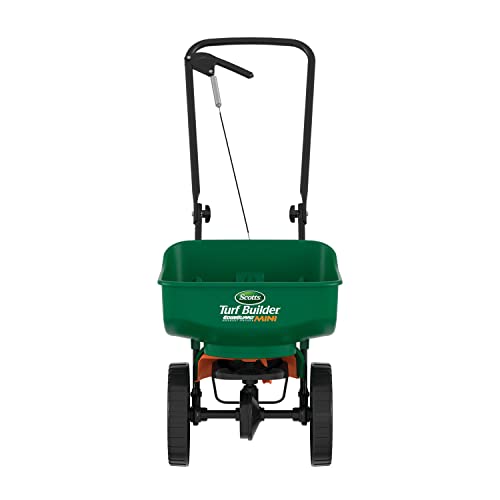
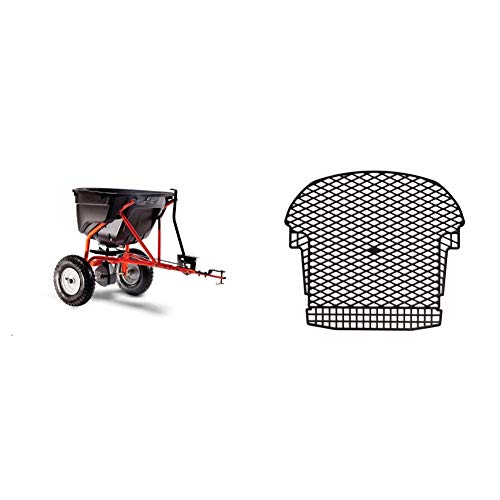
Spreaders are also classed by how they move: handheld, walk behind push spreaders like the Scotts EdgeGuard models and tow behind spreaders like Agri-Fab units that hitch to a riding mower or ATV. Most homeowners with a typical suburban lawn are best served by a push broadcast spreader.
Key Specs Explained in Plain English
Focus on spreader type, capacity, accuracy controls, build quality and ease of use.
Manual vs Battery Powered
Most push and tow behind spreaders are powered by their wheels; as you walk, gears spin the broadcast plate. Handheld spreaders come as hand crank models, like the Scotts Whirl, and battery powered versions that spin automatically. Battery models reduce effort on medium patches but add weight and charging. For lawns larger than about 1,000 square feet, a wheeled push spreader is more efficient than any handheld.
Durability and Build Quality
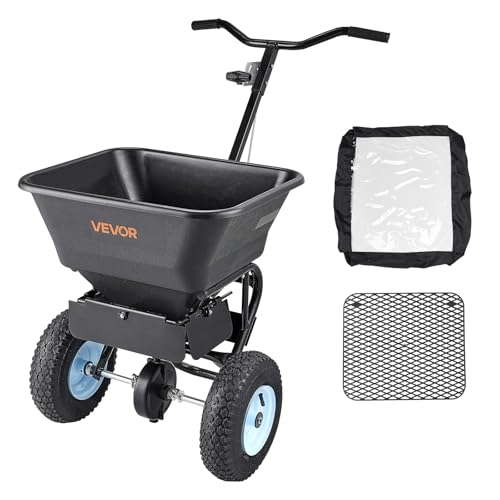
Look for rust resistant frames, sturdy hoppers and enclosed gearboxes that keep seed and moisture away from gears. Pneumatic or large all terrain tires roll more smoothly over bumpy lawns than small plastic wheels. Steel frames and stainless parts last longer, especially if you also spread fertilizer or salt, which are corrosive. The VEVOR 100 lb walk behind spreader uses larger tires and a sturdy frame for rough terrain.
Weight, Ergonomics, and Handling
Comfortable handle height, padded or foam grips and a hopper that does not tip when full make spreading easier. Handheld spreaders should feel balanced and hold enough for your area without becoming too heavy. Push spreaders with folding handles store more easily in small sheds and garages.
Accuracy and Control Features
Accuracy depends on rate settings and spread control. Look for clear, numbered rate settings that match the charts on seed and fertilizer bags. Edge guards, like Scotts' EdgeGuard technology, block the spread on one side so you do not throw seed into flower beds, driveways or streets. Drop spreaders offer the most precise placement but take longer on large lawns.
Capacity and Working Range
Capacity is often listed in pounds or in square feet covered per fill. Handheld spreaders cover small areas of a few thousand square feet. Push spreaders like the Scotts Turf Builder EdgeGuard DLX cover up to 15,000 square feet per fill of fertilizer, while 100 lb walk behind models suit large lawns. Tow behind spreaders hold 100 to 175 lb for acreage.
Spread Width and Speed
Broadcast spreaders throw seed in a pattern several feet wide; the VEVOR model lists a spread width up to about 9.8 feet. Wider spreads mean fewer passes but less precision near edges. Walk at a steady pace, since speed changes the spread rate and pattern.
Seed Spreader Types Compared
| Type | Best For | Pros | Cons | Typical Price |
|---|---|---|---|---|
| Handheld | Small lawns, patches | Cheap, compact, easy | Tiring for large areas | Around $20 to $40 |
| Push broadcast | Most suburban lawns | Fast, even coverage, versatile | Less precise at edges without guards | Around $55 to $140 |
| Drop spreader | Precise edges, small lawns | Very accurate placement | Slower, striping if passes miss | Around $60 to $150 |
| Tow behind | Acreage, large properties | Big capacity, fast | Needs mower or ATV | Around $250 to $330 |
Choosing the Best Seed Spreaders by Lawn Size
Lawn size is the quickest way to narrow down the best seed spreaders for your yard.
- Under 1,000 sq ft: a handheld spreader like the Scotts Whirl handles patch repairs and small yards for around $22.
- 1,000 to 5,000 sq ft: a compact push broadcast spreader like the Scotts EdgeGuard Mini is light, easy to store and covers small lawns quickly.
- 5,000 to 15,000 sq ft: a full size push spreader like the Scotts EdgeGuard DLX holds enough for most suburban lawns in one fill.
- Half an acre and up: a 100 lb walk behind spreader with big tires, or a tow behind model for riding mowers, saves many trips.
How to Calibrate a Seed Spreader
Rate charts are a starting point, but calibration makes your spreader accurate. Measure out a trial area, such as 1,000 square feet, on a driveway or tarp. Weigh a set amount of seed, spread it over the area at your normal walking pace and weigh what remains. Compare the amount used with the rate on the seed bag, then adjust the setting up or down. Repeat until the amount matches. Calibrate again when you switch products, since seed and fertilizer flow at different rates, and recheck each season as gates and gears wear.
Rookie Mistakes to Avoid
- Skipping the rate chart: guessing settings wastes seed or leaves thin spots.
- Filling the hopper on the lawn: spills create heavy spots; fill on a driveway or tarp.
- Single pass spreading: applying half the rate in two crisscross directions gives more even coverage.
- Spreading on windy days: wind blows seed off target.
- Not cleaning the spreader: fertilizer residue corrodes metal and jams gates.
Getting Started: Setup and First Use
- Assemble the spreader per the manual and check that the gate opens and closes fully.
- Prepare the lawn: mow short, rake out thatch and loosen soil on bare spots.
- Set the rate using the chart on the seed bag or the spreader manual.
- Fill the hopper on a hard surface, with the gate closed.
- Spread the perimeter first, then walk back and forth in straight lines with slight overlap.
- Water lightly and keep the seedbed moist until germination.
- Rinse and dry the spreader after use, then store it out of the weather.
FAQs
Broadcast or drop spreader: which is better for seed?
A broadcast spreader is better for most lawns because it covers ground faster and blends passes. A drop spreader is better for small lawns and near beds where precise placement matters. Many homeowners use a broadcast spreader with an edge guard for the best of both.
Is a battery powered handheld spreader worth it?
It is worth it for medium patches if hand cranking tires you out. For full lawns, a wheeled push spreader is faster and more even than any handheld model.
Can I use a seed spreader for fertilizer and ice melt?
Yes, most broadcast spreaders handle seed, fertilizer, salt and ice melt. Rinse the spreader after spreading fertilizer or salt to prevent corrosion, and check the manual for material compatibility.
What specs matter most for home lawns?
Accurate rate settings, an edge guard, sturdy wheels and enough capacity for your lawn matter most. A push broadcast spreader holding enough for 5,000 to 15,000 square feet covers most yards.
When is the best time to spread grass seed?
Early fall is best for cool season grasses, and late spring to early summer for warm season grasses. Soil temperature, moisture and your local climate matter most, so check guidance for your region.
Our Verdict
Choose a handheld spreader for patches, a push broadcast spreader with an edge guard for most lawns and a tow behind spreader for acreage. Set the rate from the seed bag chart, spread in two directions and clean the spreader after every use. Keep those basics in mind and the best seed spreaders will give you thick, even grass. Compare current models in the product table above.


