A-iPower
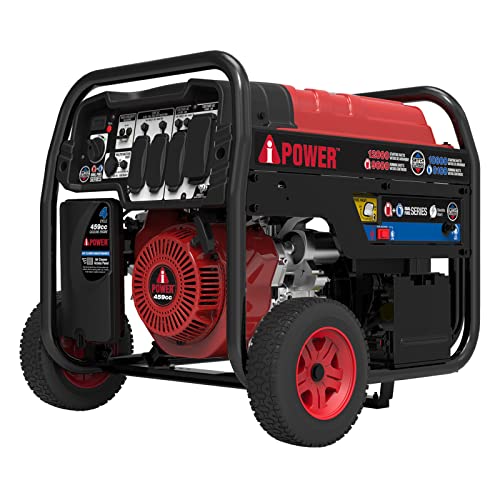
A-iPower SUA12000ED 12000 Watt Portable Generator Heavy Duty Gas & Propane Powered with Electric Start for Jobsite, RV, ED, Whole House Backup Emergency
Disclosure: We may earn a commission when you buy through links on this page, at no extra cost to you. As an Amazon Associate I earn from qualifying purchases. Learn more
Highlights
- The A-iPower SUA12000 Dual Fuel generator produces 12,000 starting watts with 9,000 running watts of power with gasoline and 10,800 starting watts with 8,100 running watts with propane (LPG)
- Powerful 459 cc OHV 4 stroke engine with a low oil alert light and low oil automatic shutdown, helping keep your generator performing year after year
- Large 7 gallon gasoline fuel tank provides average run time of 7 hours at 100% load and 9 hours at 50% load
- Complete with Electric Start capability allowing you to quickly, easily, and conveniently start up your generator whenever you need it
- Outlets include 4 x GFCI 120V 20A NEMA5-20R, 1 x 120V 30A NEMAL 5-30R, 1 x 120/240V 30A NEMA L-14-30R, 1 x 12V83A Multifunction Port USB Ready All outlets include Rubber Covers for an additional layer of Safety
Why You'll Love It
- Choose gasoline or propane power to suit your available fuel supply
- Delivers up to 12,000 starting watts on gasoline for substantial power demands
- Electric start makes getting the generator running more convenient
- A 7-gallon gasoline tank provides up to 9 hours of runtime at 50% load
- Multiple GFCI and 120V and 240V outlets accommodate different power connections
- Low-oil monitoring and automatic shutdown help protect the engine
Pros
- +Gasoline and propane fuel options
- +Electric start capability
- +High starting wattage
- +Multiple outlet configurations
- +Low-oil automatic shutdown
Cons
- -Lower power output when using propane
- -Gasoline runtime varies with electrical load
Detailed Review
The A-iPower SUA12000ED is a dual-fuel portable generator designed for buyers who need substantial electrical output for jobsite use, RV applications, or whole-house backup during emergencies. Its main attraction is the combination of gasoline and propane operation with a maximum starting output of 12,000 watts on gasoline. That gives shoppers two fuel options and a choice of output levels depending on which fuel they use. It is particularly worth considering if your priority is having a generator that can serve several power-related purposes rather than one narrowly defined task.
Power output depends on the selected fuel. On gasoline, the generator provides 12,000 starting watts and 9,000 running watts. On propane, those figures are 10,800 starting watts and 8,100 running watts. This distinction matters when deciding whether it can accommodate the equipment you intend to operate. Starting wattage and running wattage serve different purposes in your power calculations, so compare your equipment's requirements with the appropriate figures rather than choosing based on the largest number alone. The gasoline option offers the higher output, while propane provides an alternative when that fuel better suits your arrangements.
The generator uses a 459 cc OHV four-stroke engine and includes a low-oil alert light and automatic low-oil shutdown. These features give the operator a way to monitor the oil condition and help protect the engine from running when oil is too low. Its 7-gallon gasoline tank is listed for an average runtime of 7 hours at full load and 9 hours at half load. That makes the expected operating period directly relevant to how heavily you plan to use it. Electric start is another practical feature, offering a convenient alternative to relying on a manual starting process.
Its outlet selection is another important part of the design. There are four GFCI 120V 20A NEMA 5-20R outlets, one 120V 30A NEMA L5-30R outlet, one 120/240V 30A NEMA L14-30R outlet, and a 12V 8.3A multifunction port described as USB-ready. Rubber covers are included on all outlets. This variety gives buyers several connection formats to consider when matching the generator to their equipment and intended applications. The main trade-off is that gasoline and propane do not deliver identical output, and gasoline runtime changes with the electrical load. Buyers should also consider whether the available outlets match their actual connection needs.
Verdict: This portable generator is a strong candidate for shoppers who want substantial output, two fuel choices, electric starting, and several outlet configurations in one unit. It makes the most sense for buyers who have checked their equipment requirements and are comfortable choosing between its gasoline and propane output levels. Shoppers who need a different outlet arrangement or higher output on propane should compare alternatives before deciding.
Who Should Buy It
A great fit if you:
- Need a generator for jobsite equipment and want substantial gasoline-powered starting and running output.
- Want the flexibility to choose between gasoline and propane depending on your available fuel supply.
- Are preparing for emergency backup and want a generator with both 120V and 240V outlet options.
- Use an RV and have equipment whose electrical requirements match the generator's listed outlet configurations.
- Prefer electric starting and appreciate having a low-oil alert and automatic shutdown feature.
Consider something else if you:
- Need a smaller-capacity generator for modest electrical requirements, making a lower-output model more suitable.
- Require higher running output on propane, making a generator with greater propane output a better alternative.
The most important decision is whether your intended equipment matches the available running watts and outlet types. Buyers should make that comparison before treating the generator's maximum starting output as a measure of its everyday operating capacity.
Before You Buy
Confirm on the listing:
- Check the complete dimensions and weight so you can determine whether the generator suits your intended storage and operating space.
- Confirm which fuel arrangements are appropriate for your plans and whether the included contents cover what you need for gasoline or propane operation.
- Compare the outlet types and electrical requirements of your equipment, paying attention to voltage, amperage, and connector configuration.
- Check the included documentation for operating instructions, oil requirements, maintenance guidance, and any additional setup information.
How to compare your options: Start with running watts rather than focusing only on starting watts. This model provides 9,000 running watts on gasoline and 8,100 on propane, so your choice of fuel affects the available output. Next, compare the outlet arrangement against the equipment you intend to connect. Finally, consider fuel preference, electric starting, tank capacity, and the stated runtime at different loads. A suitable generator is one whose output, connections, and operating arrangements match your actual requirements, not simply the one with the largest headline wattage.
Getting the Most From It
Start by reviewing the operating documentation and becoming familiar with the available controls, outlets, and fuel options. Make sure you understand the difference between the gasoline and propane output figures before choosing which fuel to use. This will help you make a more informed decision about which equipment to connect.
Keep your expected electrical demand in mind during operation. The generator provides different starting and running wattages, and its gasoline runtime also changes with load. Planning around the running wattage rather than the headline starting figure helps you account for the generator's actual operating capacity.
Pay attention to the low-oil alert light and automatic shutdown feature. Follow the manufacturer's instructions for checking oil and maintaining the 459 cc four-stroke engine. Keeping up with the recommended care routine helps you make use of the monitoring features as intended.
Use the rubber-covered outlets as provided, and become familiar with each connection before plugging in equipment. Match the voltage, amperage, and outlet configuration to the requirements of the device. Keep the operating and care instructions available so you can refer to them when changing fuel arrangements or maintaining the generator.
FAQ
Does the A-iPower SUA12000ED run on both gasoline and propane?
Yes. It is a dual-fuel generator that operates on gasoline or propane. Its output is 12,000 starting watts and 9,000 running watts on gasoline, compared with 10,800 starting watts and 8,100 running watts on propane.
How long does it run on a tank of gasoline?
The 7-gallon gasoline tank provides an average runtime of 7 hours at 100% load and 9 hours at 50% load. Actual runtime depends on the operating load.
Does this generator have electric start?
Yes. Electric start is included for convenient starting. It also has a low-oil alert light and automatic low-oil shutdown.
What outlets does the generator have?
It has four GFCI 120V 20A outlets, one 120V 30A outlet, one 120/240V 30A outlet, and a 12V 8.3A multifunction port described as USB-ready. All outlets have rubber covers.
Is it suitable for whole-house backup?
It is marketed for whole-house backup, but suitability depends on your electrical requirements. Compare your intended loads with its running wattage and confirm that your required connections match its available outlets before purchasing.
Product Details
| Brand | A-iPower |
| ASIN | B07L8TVLWT |
Similar Products
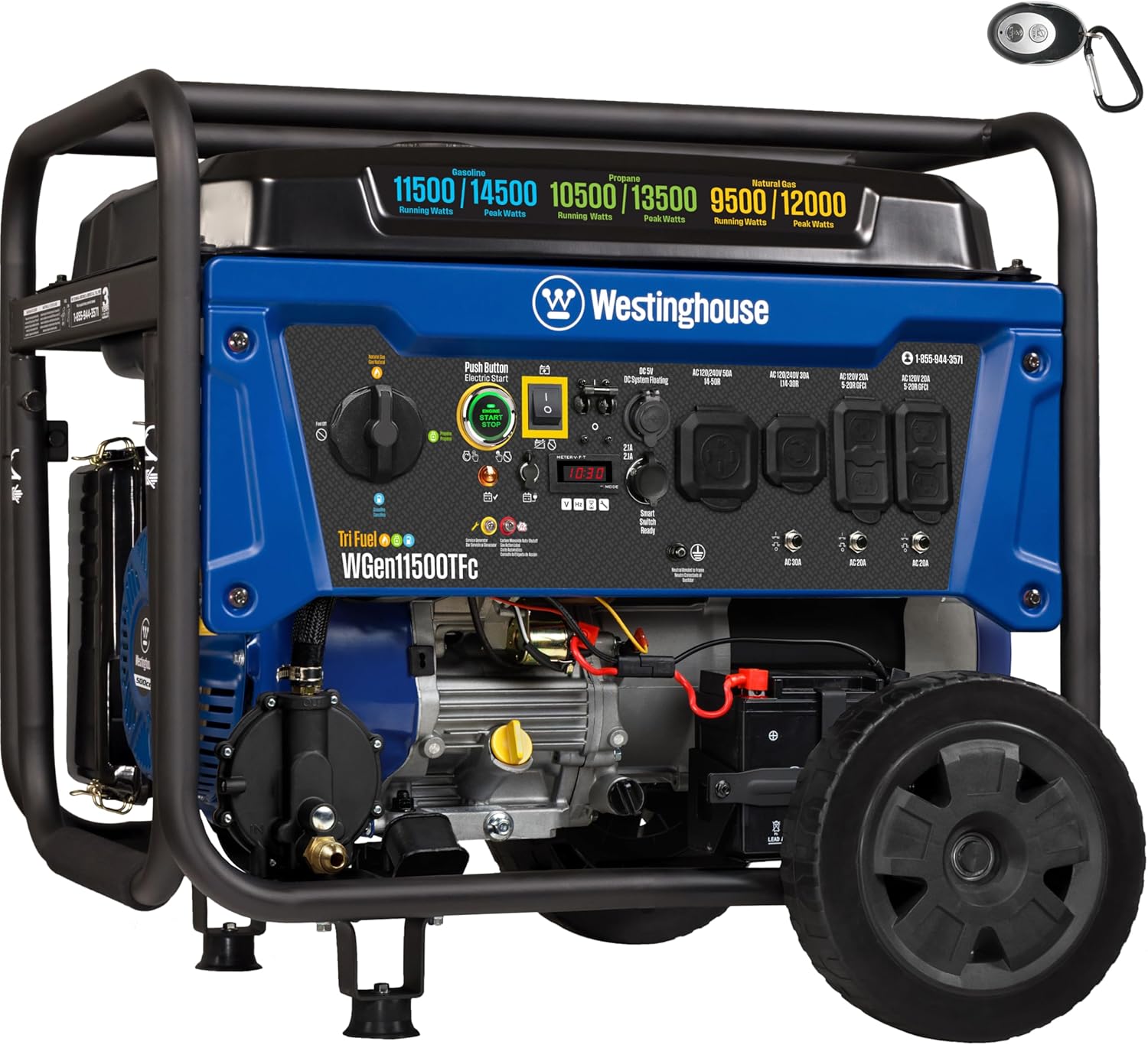
Westinghouse 14500 Peak Watt Tri-Fuel Home Backup Portable Generator, Remote Electric Start,
★ 9.6/10