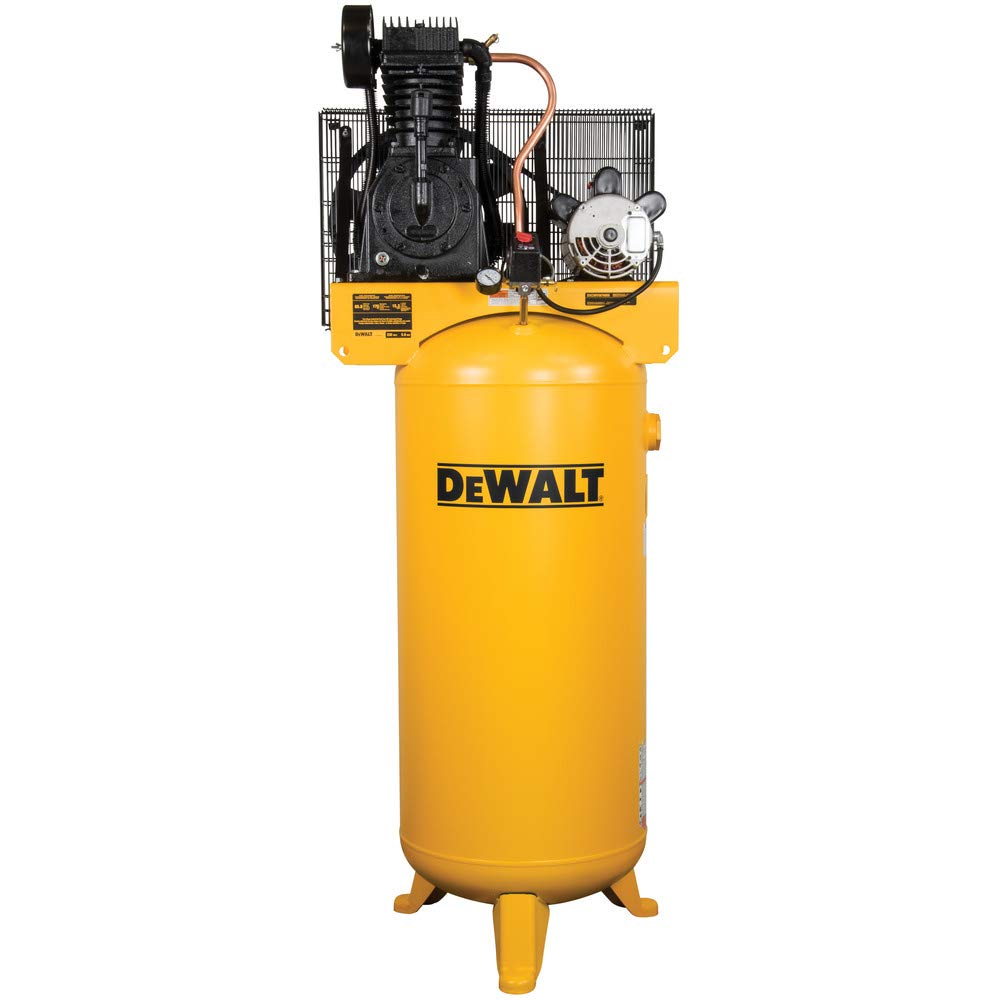
DEWALT 60-Gallon Stationary Vertical Air Compressor (DXCMV5076055)
Disclosure: We may earn a commission when you buy through links on this page, at no extra cost to you. As an Amazon Associate I earn from qualifying purchases. Learn more
Highlights
- 60 Gal. 175 PSI Two Stage Stationary Electric Air Compressor
Why You'll Love It
- Large 60-gallon tank provides substantial compressed air storage for workshop applications
- 175 PSI pressure rating gives buyers a clearly defined pressure specification
- Two-stage compression design is suited to buyers seeking a stationary compressor setup
- Electric-powered operation offers a stationary alternative to portable compressor designs
- Vertical stationary configuration makes this a dedicated piece of workshop equipment
Pros
- +60-gallon air storage capacity
- +175 PSI pressure rating
- +Two-stage compression design
- +Electric-powered operation
Cons
- -Stationary rather than portable
- -Requires an electric power source
Detailed Review
This 60-gallon air compressor is aimed at buyers who want a stationary compressed air setup rather than equipment intended to move between locations. Its defining combination is a 60-gallon tank, a 175 PSI pressure rating, and a two-stage compression design. Together, these specifications give shoppers a useful starting point for deciding whether this equipment belongs in their workshop or work area. It is particularly worth considering if you have a dedicated place for an electric compressor and want substantial tank capacity as part of your setup.
The 60-gallon capacity is one of the most important details to consider. Tank capacity helps define the type of compressor arrangement a buyer is choosing, and this model is intended for someone who has a reason to dedicate space to a larger stationary unit. Rather than choosing equipment primarily around portability, the emphasis here is on having a substantial air storage capacity in one location. Think about the work you plan to support and whether this tank size makes sense for your intended applications.
The 175 PSI rating provides another concrete point of reference when evaluating the compressor. Pressure specifications matter because buyers need to consider whether their intended equipment and applications are suited to the compressor they choose. The two-stage design is also a defining part of this model. These features give shoppers more than a general description of an electric compressor: they identify its pressure rating and compression configuration, two specifications worth comparing against the requirements of an existing or planned setup.
There are practical trade-offs to consider before choosing this model. Its stationary design makes it a less suitable choice for anyone who needs to move a compressor between work areas. Electric operation also means the buyer should account for the power arrangement at the intended location. The 60-gallon capacity is a specific design choice, so shoppers should consider their available space and actual requirements rather than assuming a larger tank automatically makes every compressor the right purchase.
Verdict: This stationary air compressor is worth considering for buyers who want a 60-gallon tank, a 175 PSI rating, and two-stage compression in an electric setup. It makes less sense for shoppers who prioritize portability or need equipment that can easily move between different work locations.
Who Should Buy It
A great fit if you:
- Have a dedicated workshop location and want an air compressor that can remain in one place as part of your equipment setup.
- Have applications that call for a compressor with a 60-gallon tank and want that capacity as a central purchasing consideration.
- Are comparing equipment by pressure rating and specifically want a model listed with a 175 PSI rating.
- Prefer an electric stationary compressor with a two-stage design rather than a portable compressor arrangement.
Consider something else if you:
- Regularly move between work locations and would benefit more from a portable compressor designed around mobility.
- Have limited room for stationary equipment and would be better served by a smaller-capacity compressor.
Before You Buy
Confirm on the listing:
- Measure the intended installation area and check the complete product dimensions against the space available for a vertical stationary compressor.
- Check the electrical requirements and confirm that your intended location can accommodate the compressor's power needs.
- Review the included components and confirm whether any additional equipment needed for your intended setup must be purchased separately.
- Compare the compressor's 175 PSI rating with the pressure requirements of the equipment and applications you intend to use.
How to compare your options: Start with tank capacity, pressure rating, compression design, and power arrangement. This model offers a 60-gallon tank, a 175 PSI rating, two-stage compression, and electric stationary operation. Compare those specifications against your actual workload and available space, rather than making a decision based on tank capacity alone. Also consider whether a stationary configuration fits your working habits. If your needs involve frequent relocation, a portable alternative may make more sense. The right choice is the compressor whose specifications and physical arrangement match the job you expect it to support.
Getting the Most From It
Start by deciding where the compressor will belong in your overall workspace. Because this is stationary equipment, choosing an appropriate permanent location is an important part of planning the setup. Consider the available space, access to the intended electrical supply, and how the compressor will fit into your existing work arrangement.
Next, identify the applications you expect to support. Keep the 60-gallon capacity and 175 PSI rating in mind when reviewing the requirements of the equipment you plan to use. Matching the compressor's specifications to those requirements gives you a more useful basis for planning than relying on general assumptions about what a compressor can handle.
Make the two-stage design and electric operation part of your setup considerations. If the product comes with operating and care instructions, review them before putting the equipment into service. Follow the manufacturer's guidance for the intended configuration and operation rather than relying on assumptions from other compressor models.
For ongoing care, use the supplied maintenance guidance if available and make routine attention part of your equipment habits. Keep the surrounding workspace organized, follow the manufacturer's recommendations for compressor care, and review any relevant instructions when changing how you use the equipment. These simple planning habits help keep the compressor's role in your workspace clear and consistent.
FAQ
What type of air compressor is this?
It is a stationary vertical electric air compressor with a two-stage compression design. It is intended for a fixed compressor setup rather than a portable arrangement.
How large is the tank?
The tank capacity is 60 gallons. This is an important specification to compare with the requirements of your intended applications and available workspace.
What is the maximum listed pressure?
The listed pressure rating is 175 PSI. Check that this specification is appropriate for the equipment and applications you intend to support.
Is this compressor portable?
No, it is identified as a stationary compressor. Buyers who need to move their equipment between work locations should consider a portable alternative.
Does it include everything needed for installation?
The listed product description does not identify the included accessories or installation components. Check the current product listing or confirm with the seller what is included before purchasing.
Product Details
| ASIN | B01IR1GPM0 |