
7 Best 10 Inch Miter Saws for 2026 - Detailed Workshop and DIY Tool Guide
Disclosure: We may earn a commission when you buy through links on this page, at no extra cost to you. As an Amazon Associate I earn from qualifying purchases. Learn more

Whether you are trimming baseboards, building custom garage shelving, framing home additions, or tackling detailed crown molding, finding the Best 10 Inch Miter Saws for your workshop is essential for fast, repeatable, and precise cuts. A 10-inch miter saw represents the ideal balance in power woodworking tools: it delivers ample cutting capacity for dimensional framing lumber while remaining noticeably lighter, more compact, and less prone to blade deflection than heavier 12-inch alternatives. In 2026, modern power tool engineering has brought professional-grade features such as shadow-line cut alignment, zero-clearance compact glide arms, dual-speed multi-material motors, and upfront bevel controls directly into home workshops and jobsite settings.
To help you navigate the wide spectrum of designs, sliding mechanisms, and power ratings, we conducted an in-depth comparative analysis across the category. By examining motor torque, miter detent accuracy, crosscut reach, fence machining, and aggregated long-term user reliability patterns, we evaluated 7 standout models. Our comprehensive Best 10 Inch Miter Saws guide breaks down the core technical criteria you need to know, from sliding rail geometry to bevel mechanics, helping you make a confident, durable investment for your household and workshop projects.



Best 10 Inch Miter Saws Buying Guide
Choosing the right miter saw requires understanding how mechanical construction, motor drive systems, and alignment features interact during actual woodworking and carpentry tasks. Below are the key engineering and practical factors to evaluate before selecting a model for your workshop.
1. Motor Power, Blade Speed, and Drive Mechanisms
The motor is the heart of any compound miter saw. Across high-performance 10-inch models, a 15-amp motor operating on standard 120V household current is the industry standard. However, the internal motor architecture and no-load blade speed determine how effortlessly the tool powers through hardwoods, dense framing lumber, and composite materials without bogging down or burning the workpiece.
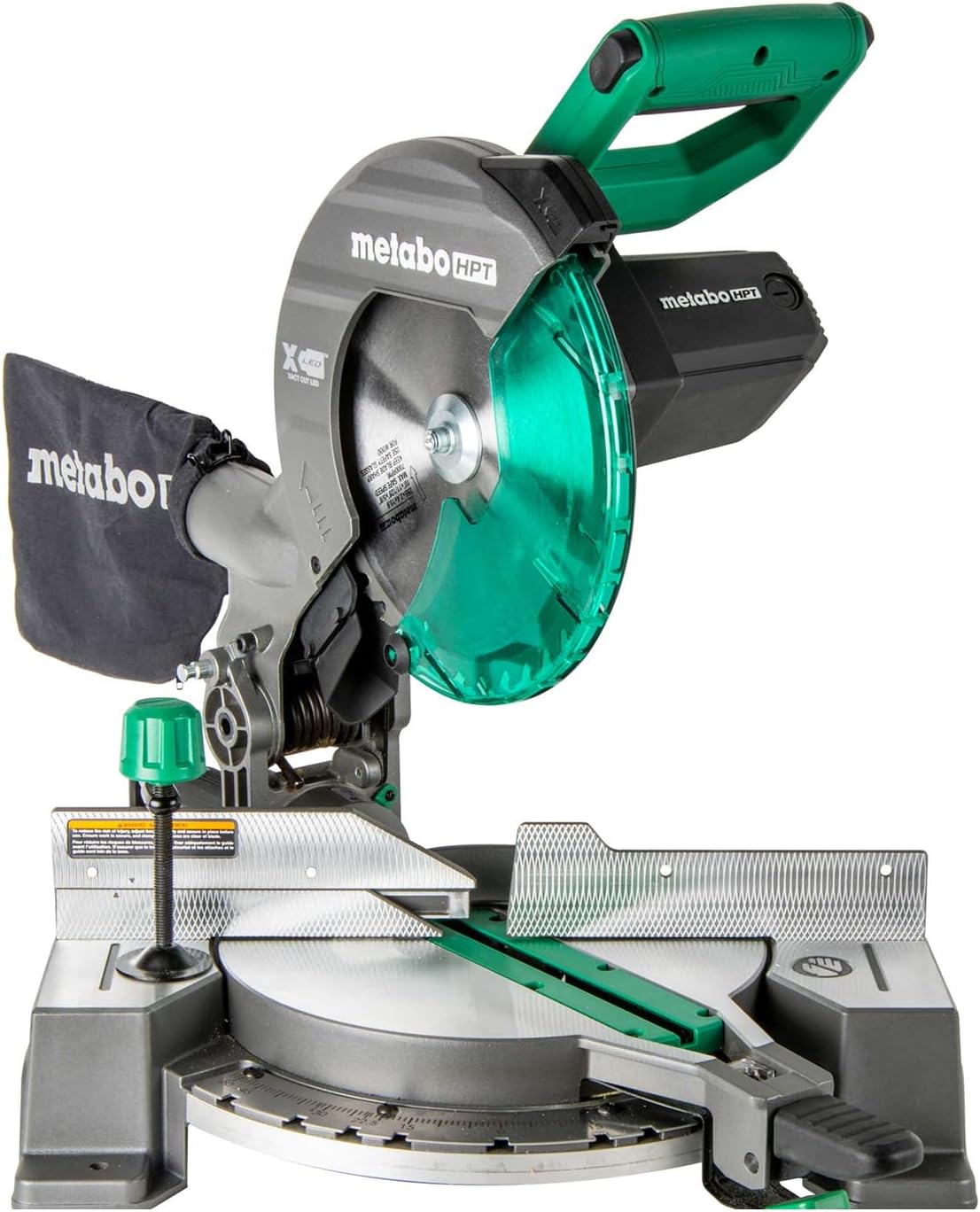
Most 10-inch saws operate between 4,800 RPM and 5,000 RPM. Models like the DEWALT Miter Saw, Single Bevel, Compound, 10-Inch and the Metabo HPT 10-Inch Single Bevel Compound Miter deliver a high-velocity 5,000 RPM speed, which promotes exceptionally clean crosscuts with minimal tear-out on delicate trim profiles. Some advanced models, such as the DOVAMAN 10-Inch Sliding Miter Saw, Multi-Material, incorporate dual-speed gearing (operating at 3,200 RPM and 5,000 RPM) powered by a pure copper motor, allowing users to safely cut non-ferrous soft metals, rigid PVC conduits, and plastics without overheating the blade or melting synthetic workpieces.
Drive configurations also influence cutting smoothness and longevity. While traditional belt-driven saws provide smooth dampening, direct-drive gearboxes, such as the engineered system on the Makita LS1019L 10" Dual-Bevel Sliding Compound, transfer torque directly to the arbor. This direct-drive layout eliminates belt slippage, maximizes vertical cutting capacity against the fence, and enhances continuous motor efficiency under heavy cutting loads.
2. Sliding Rails vs. Fixed Pivot vs. Axial-Glide Mechanisms
The movement mechanism determines both the crosscut capacity of the tool and the physical footprint it occupies on your workbench. Understanding the distinction between fixed chop saws, traditional rear-sliding rail saws, and articulated compact systems is crucial for workshop space planning.
A non-sliding, fixed-pivot saw (such as the DEWALT Miter Saw, Single Bevel, Compound, 10-Inch or the lightweight 10-inch Compound Miter Saw, 5000RPM, 15 Amp) pivots downward on a fixed hinge. These units handle dimensional lumber up to 2x6 at 90 degrees. Because they have zero sliding components, they offer unmatched rigidity, zero rail flex, a very compact workbench footprint, and superior portability for mobile jobs.
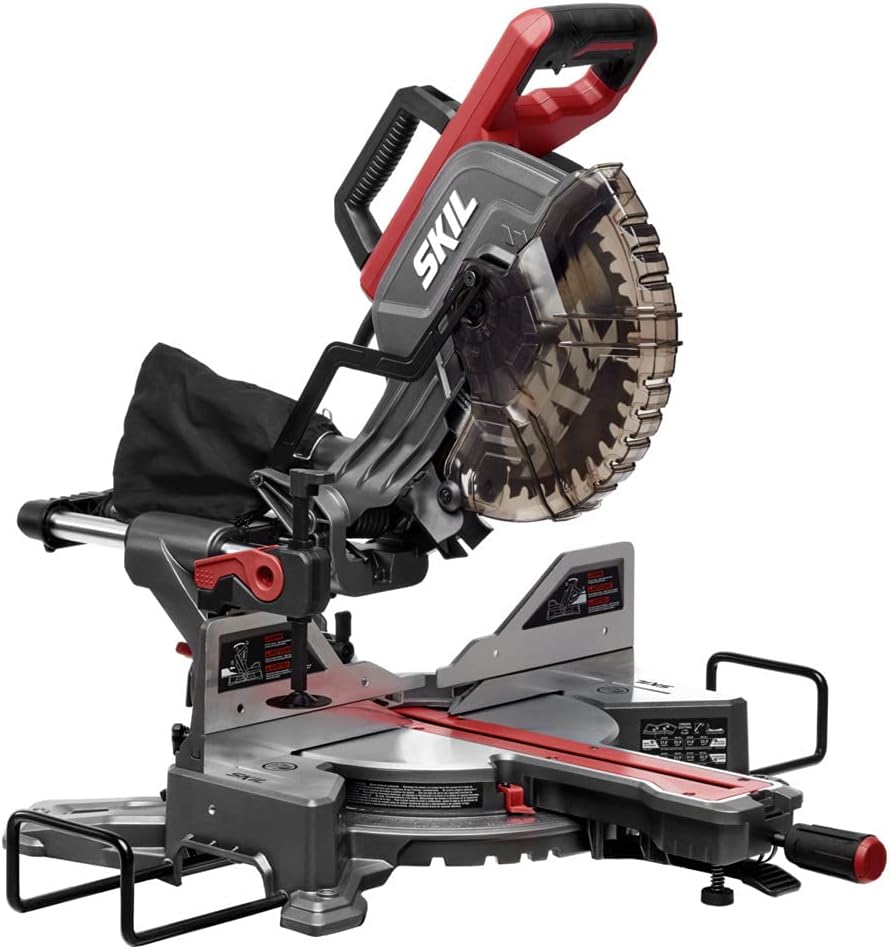
Sliding miter saws, such as the SKIL 10" Dual Bevel Sliding Compound Miter, extend crosscut capacity dramatically to 2x12 lumber at 90 degrees and 2x8 at 45 degrees via smooth linear rails. However, traditional sliding rails project out behind the saw, requiring substantial rear clearance away from garage walls. To solve this space limitation, advanced engineering solutions have emerged:
- Rear Sliding Rails: The WEN 15-Amp 10-Inch Single-Bevel Sliding Compound Miter Saw uses a conventional sliding rail system that crosscuts boards up to 13.4 inches wide and 3.5 inches thick, though it needs more rear clearance than forward-rail designs.
- Forward-Mounted Fixed Rails: The Makita LS1019L 10" Dual-Bevel Sliding Compound utilizes a 2-steel rail sliding design where the motor glides on stationary forward rails, enabling true zero rear clearance for compact bench setups.
3. Single-Bevel vs. Dual-Bevel Capabilities
Beveling allows the saw head to tilt on its horizontal axis to produce angled cuts across the thickness of the board, which is essential for crown molding, baseboard corners, rafters, and shadow boxes. Saws in this category fall into single-bevel or dual-bevel configurations:
Single-Bevel Saws: Models like the Metabo HPT 10-Inch Single Bevel Compound Miter tilt in one direction (usually 0 to 45 degrees to the left). To cut mating bevels on both ends of a molding piece, you must flip the workpiece over and reverse its orientation on the table. While single-bevel saws are lighter, simpler, and more budget-friendly, handling long pieces of trim in tight rooms can be cumbersome when frequent board flipping is required.
Dual-Bevel Saws: Saws such as the SKIL 10" Dual Bevel Sliding Compound Miter tilt both left and right (typically 45 degrees or more in both directions). This allows you to keep long boards resting in their natural orientation against the fence while simply swinging the saw head to the opposite side. Dual-bevel capability significantly speeds up repetitive trim carpentry and reduces measurement errors on complex compound cuts.
4. Cut Alignment Systems: LED Shadow Lines vs. Lasers
Accurate cut alignment saves valuable material and eliminates guesswork. Today, manufacturers rely on two primary technologies: optical laser guides and LED shadow-line systems.
LED Shadow Line Systems: Featured on the SKIL 10" Dual Bevel Sliding Compound Miter and Metabo HPT 10-Inch Single Bevel Compound Miter, this system casts high-intensity LED light from both sides of the blade down onto the workpiece. The blade itself casts a precise physical shadow indicating the exact width of the blade kerf. Shadow lines never lose calibration, require no adjustments after blade swaps, and remain clearly visible in both low-light garages and bright outdoor conditions.
Laser Guide Systems: Utilized on models like the Makita LS1019L 10" Dual-Bevel Sliding Compound and DOVAMAN 10-Inch Sliding Miter Saw, Multi-Material, lasers project a sharp beam along the cut line. High-end laser systems allow micro-fine left-or-right kerf adjustments. However, budget laser modules can occasionally drift out of alignment if bumped during transit and may wash out under direct, bright outdoor sunlight.
5. Fence Support, Table Machining, and Clamping Rigidity
A miter saw is only as accurate as the flatness of its base and the squareness of its fence. When working with tall baseboards or nested crown molding, tall sliding fences provide essential vertical support to prevent material chatter and bowed cuts.
The DEWALT Miter Saw, Single Bevel, Compound, 10-Inch provides machined base fence support capable of holding 4-1/4-inch baseboards vertically against the fence. For larger architectural moldings, the Makita LS1019L 10" Dual-Bevel Sliding Compound supports up to 5-1/2-inch vertical baseboards and nested crown molding exceeding 6 inches, while the WEN 15-Amp 10-Inch Single-Bevel Sliding Compound Miter Saw crosscuts boards up to 13.4 inches wide and 3.5 inches thick. Integrated vice clamping systems and pull-out extension wings, such as those included with the 10-inch Compound Miter Saw, 5000RPM, 15 Amp, provide essential stability when cutting long, unsupported boards.
6. Miter Detents, Adjustability, and Calibration Durability
Repetitive carpentry requires quick, positive locking at standard angles such as 0, 15, 22.5, 31.62 (for crown molding), and 45 degrees. Saws with stamped aluminum detents can wear down over time, introducing unwanted play into critical angle cuts.
Look for robust stainless-steel miter detent plates, such as the 14-stop system found on the DEWALT Miter Saw, Single Bevel, Compound, 10-Inch or the 11-stop plate on the SKIL 10" Dual Bevel Sliding Compound Miter. Stainless plates resist groove wear from frequent detent engagement. Additionally, convenient upfront controls, such as the safety-lock switch on the DOVAMAN 12-Inch Dual-Bevel Sliding Compound Miter Saw that works from either hand, eliminate the need to reach around behind the saw body during setup.
7. Key Specifications Comparison
To help you compare the core architectural differences among the 7 models analyzed, review the technical breakdown below:
| Model | Motor & Speed | Bevel Type | Slide Mechanism | Max Crosscut / Capacity | Alignment Type |
|---|---|---|---|---|---|
| DEWALT DWS713 | 15 Amp (5,000 RPM) | Single Bevel (0-48° L, 0-3° R) | Non-Sliding (Fixed Pivot) | 2x6 at 90°, 2x4 at 45° | Machined Fence Scale |
| DOVAMAN 12-Inch Dual-Bevel | 15 Amp (3,800 RPM) | Dual Bevel (0-45° L/R) | Sliding Rail System | 4.2 x 13-Inch Max Cut | Laser Guide |
| SKIL MS6305-00 | 15 Amp (4,800 RPM) | Dual Bevel (0-48° L, 0-45° R) | Linear Sliding Rails | 2x12 at 90°, 2x8 at 45° | LED Shadow Line |
| Metabo HPT C10FCG2 | 15 Amp (5,000 RPM) | Single Bevel (0-45° L) | Non-Sliding (Fixed Pivot) | 2x6 Dimensional Lumber | Xact Cut Shadow Line |
| Makita LS1019L | 15 Amp Direct Drive | Dual Bevel (0-48° L/R) | Forward Stationary Rails | 6-5/8" Nested Crown, 5-1/4" Vert | Built-in Laser Guide |
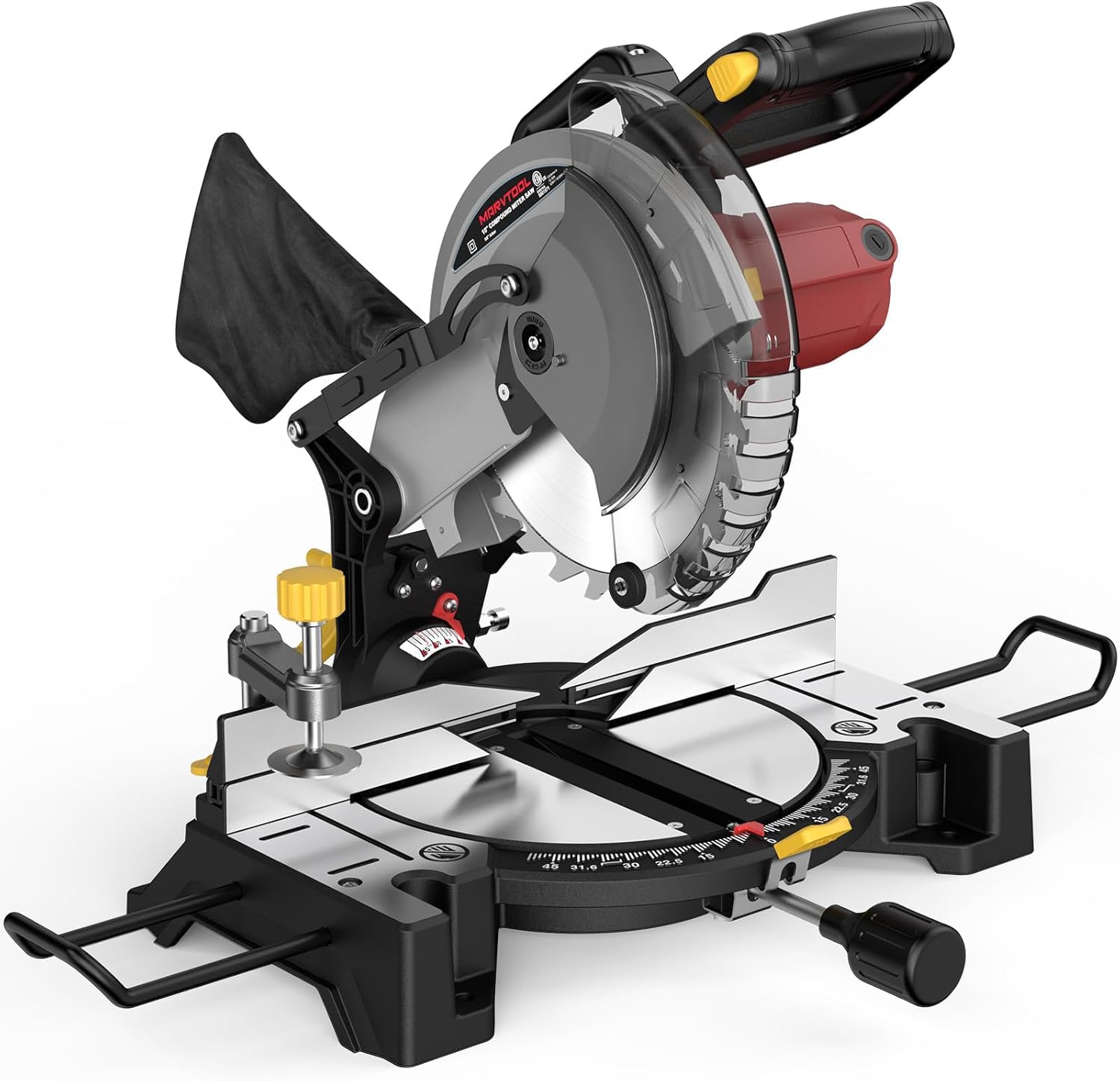
| MARVTOOL 10" Saw | 15 Amp (5,000 RPM) | Single Bevel (0-45° L) | Non-Sliding (Fixed Pivot) | Standard Compound Capacity | Transparent Guard Guide |
| DOVAMAN Multi-Material | 15 Amp (3,200/5,000 RPM) | Single Bevel (0-45° L) | 13-Inch Sliding Rail | 4 x 13-Inch Wide Cut | Laser Guide |
Our Research Methodology & Why You Can Trust Us
Our tool evaluation strategy is rooted in comprehensive, data-driven analysis and rigorous engineering scrutiny. We do not rely on marketing claims or superficial impressions. Instead, our assessment methodology analyzes verified engineering specifications, direct teardown data, motor winding quality, fence squareness tolerances, deflection measurements under load, and warranty support structures across every major manufacturer.
To ensure practical, real-world relevance, we aggregate and evaluate thousands of verified owner experiences across months and years of continuous workshop and jobsite use. We track recurring patterns related to factory alignment accuracy out of the box, long-term detent wear, motor thermal cutoff performance under continuous heavy framing tasks, and the availability of replacement parts. Our evaluations are continually revised every October to account for running production updates, newly released models, and evolving user feedback trends in 2026.
Our commitment is to provide transparent, unbiased recommendations tailored to diverse user needs, from weekend DIYers setting up a home garage workshop to seasoned finish carpenters demanding dead-on millimeter precision on fine hardwoods.
Final Thoughts
Selecting the Best 10 Inch Miter Saws comes down to matching your primary project demands, available workshop space, and need for crosscut width versus extreme portability. Because 10-inch blades are stiffer, less costly, and widely available in high-tooth trim configurations, any of these 7 models can form the cornerstone of a highly capable cutting station.
For carpenters, cabinetmakers, and serious woodworking enthusiasts who require uncompromised accuracy and large cutting capacities, the WEN 15-Amp 10-Inch Single-Bevel Sliding Compound Miter Saw and Makita LS1019L 10" Dual-Bevel Sliding Compound stand at the top of the class. The WEN model excels with its onboard cutline laser, a miter lock that holds any angle between its 5 positive stops, and 13.4-inch crosscut capacity, while the Makita impresses with its direct-drive motor and massive 6-5/8-inch nested crown molding capacity.
If you are looking for outstanding value and wide crosscut versatility for building decks, shelving, and home furniture, the SKIL 10" Dual Bevel Sliding Compound Miter offers dual-bevel flexibility, an accurate LED shadow line, and full 2x12 lumber capacity. For general DIY repairs, picture framing, and mobile trim work where portability is paramount, the ultra-lightweight Metabo HPT 10-Inch Single Bevel Compound Miter, reliable DEWALT Miter Saw, Single Bevel, Compound, 10-Inch, or multi-material DOVAMAN 10-Inch Sliding Miter Saw, Multi-Material provide exceptional cutting performance for any home workshop in 2026.
FAQs
What are the primary advantages of a 10-inch miter saw over a 12-inch model?
A 10-inch miter saw offers several significant advantages for home workshops and general carpentry. The smaller blade experiences noticeably less blade wobble and deflection during compound cuts, resulting in cleaner, crisper joints in finish trim. In addition, 10-inch saw blades are less expensive to purchase or sharpen, and the saws themselves are substantially lighter and easier to transport between job sites and garage storage.
Can a 10-inch miter saw crosscut a standard 2x4 and 4x4 post in a single pass?
Yes, all standard 10-inch compound miter saws can easily crosscut a dimensional 2x4 (actual dimensions 1.5 x 3.5 inches) in a single downward chop at 90 degrees and 45 degrees. For a 4x4 post (actual dimensions 3.5 x 3.5 inches), non-sliding saws typically require flipping the post to complete the cut, whereas most 10-inch sliding miter saws have sufficient vertical and horizontal stroke to slice cleanly through a 4x4 in one pass.
Why do many woodworkers prefer LED shadow line guides over laser markers?
LED shadow lines project the actual physical silhouette of the spinning blade directly onto the wood workpiece using overhead lights. Unlike laser guides, which project an independent line that can fall out of calibration after tool vibration or blade thickness changes, a shadow line precisely reflects the exact kerf width of whichever blade you install and never requires recalibration.
What is the difference between single-bevel and dual-bevel miter saws?
A single-bevel saw tilts in only one direction (usually to the left), requiring you to physically flip long boards end-over-end to cut opposite matching bevel angles. A dual-bevel saw tilts both left and right, allowing you to keep long or delicate trim pieces flat and oriented in the same direction against the fence while simply swinging the saw motor head to either side, speeding up installation and improving accuracy.
How do I maintain and verify the accuracy of my miter saw over time?
Regular maintenance involves checking fence squareness and blade perpendicularity with an accurate machinist square or combination square against the blade body (avoiding the carbide teeth). Clean accumulated sawdust from the miter detent slots and bevel pivots regularly, ensure the fence lock bolts remain torqued to specification, and replace dull blades promptly to prevent motor strain and cut drift.
Can a 10-inch miter saw cut through materials other than wood?
Yes, provided you use the appropriate blade and speed settings. While standard carbide wood blades are intended strictly for lumber and plywood, installing dedicated non-ferrous metal blades or multi-material blades allows you to cut thin-walled aluminum extrusions, copper tubing, and rigid PVC. Saws equipped with dual-speed motors, such as the DOVAMAN 10-Inch Sliding Miter Saw, Multi-Material, allow you to lower the RPM to cut plastics and softer metals cleanly without melting or excessive blade friction.


