
8 Best 10 Inch Sliding Compound Mitre Saws 2026 - Expert Comparison & Workshop Guide
Disclosure: We may earn a commission when you buy through links on this page, at no extra cost to you. As an Amazon Associate I earn from qualifying purchases. Learn more

Whether you are trimming out a living room with intricate crown molding, framing a new deck, or building custom cabinetry, having the Best 10 Inch Sliding Compound Mitre Saws is essential for turning rough lumber into professional-grade projects. For American homeowners, woodworkers, and dedicated DIYers entering 2026, the 10-inch sliding compound miter saw represents the ultimate sweet spot in the workshop. It delivers the broad crosscutting capacity of larger tools while preserving the blade stiffness, lower vibration, and affordable blade replacement costs of a 10-inch platform.
To help you navigate the crowded power tool market, we conducted a rigorous comparative analysis of 8 top-tier models currently available from leading brands, including EVOLUTION, Novorik, and MARVTOOL. By evaluating real-world cutting capacities, motor durability, bevel flexibility, fence squareness, and optical guide systems, this comprehensive guide highlights the strengths and trade-offs of each machine so you can invest with complete confidence.


Best 10 Inch Sliding Compound Mitre Saws Buying Guide
Selecting the right sliding compound miter saw involves understanding how different mechanical designs translate into accuracy, power, and convenience on the jobsite or in the home garage. The following criteria represent the most critical technical and practical factors you should evaluate before choosing your next saw.
1. Sliding Mechanism and Crosscut Capacities
The primary advantage of a sliding miter saw over a traditional chop saw is its extended horizontal cutting stroke. Standard 10-inch non-sliding saws typically max out on 2x6 dimensional lumber at a 90-degree angle. By introducing smooth guide rails, sliding models can easily crosscut 2x12 boards, wide shelving panels, and wide baseboards laid flat.
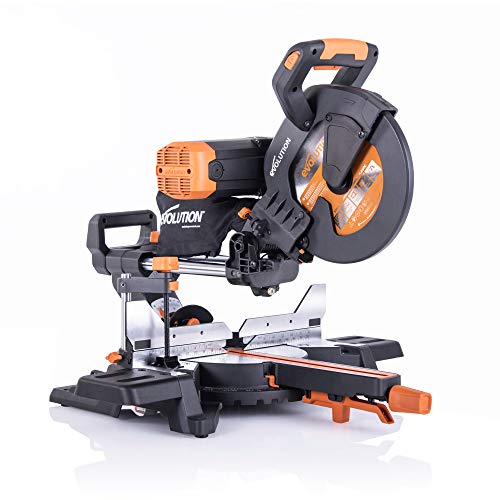
However, rail design varies significantly across models. Traditional rear-extended rails require substantial clearance behind the tool, often demanding 10 to 12 inches of empty space between your workbench and the garage wall. In contrast, modern engineering solutions, such as the forward-facing linear rail assembly on the Makita LS1019L 10" Dual-Bevel Sliding Compound, eliminate rear overhang. This allows you to set the saw flush against a wall, making it ideal for compact workshops. With other sliding saws, such as the Evolution R255SMS-DB+ 10-Inch Dual Bevel Sliding Miter Saw, check the rear clearance before planning your bench layout.
If you regularly handle wide materials, pay close attention to maximum horizontal reach. Models like the DOVAMAN 10-Inch Sliding Miter Saw, Multi-Material offer extended sliding rails capable of tackling materials up to 13 inches wide, whereas compact single-bevel units like the DEWALT Miter Saw, Single Bevel, Compound, 10-Inch prioritize compact, rigid framing for standard dimensional stock.
2. Single Bevel vs. Dual Bevel Flexibility
Compound miter saws pivot horizontally for miter cuts and tilt vertically for bevel cuts. The distinction between single-bevel and dual-bevel configurations has a major impact on workflow efficiency and accuracy when cutting trim.
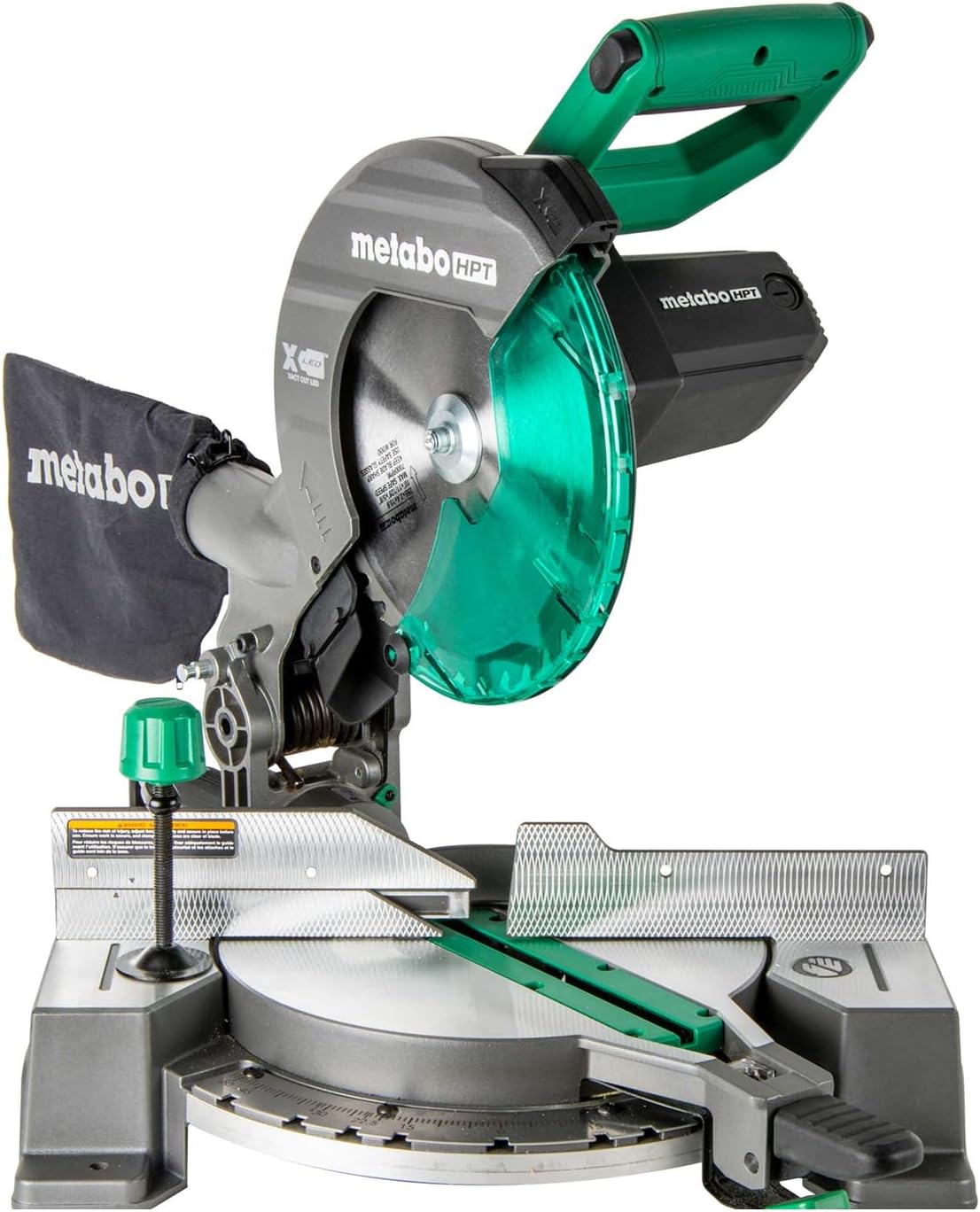
A single-bevel saw tilts in only one direction (usually to the left, between 0 and 45 degrees). When making matching compound cuts for crown molding or door casings, you must frequently flip your workpiece end-for-end. This increases the risk of orientation mistakes and can be unwieldy when working with 12-foot or 16-foot moldings in a tight workspace. Saws like the Metabo HPT 10-Inch Single Bevel Compound Miter and NOVORIK Single Bevel Compound Sliding Miter Saw provide reliable single-bevel performance at an accessible entry point.
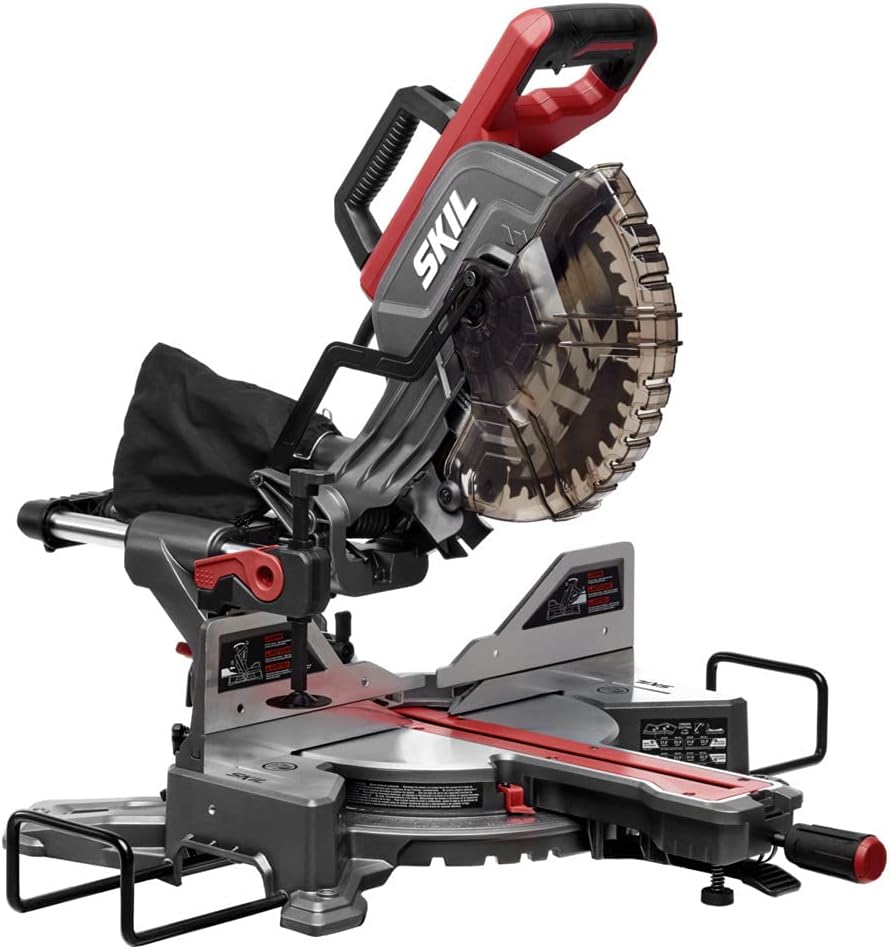
Dual-bevel saws, such as the SKIL 10" Dual Bevel Sliding Compound Miter and Evolution R255SMS-DB+ 10-Inch Dual Bevel Sliding Miter Saw, tilt both left and right to at least 45 degrees (some models reach 47 or 48 degrees). This capability lets you keep long moldings oriented in the same direction against the fence, saving time, reducing mathematical errors, and delivering tighter corner joints.
3. Motor Performance, Speed Control, and Multi-Material Cutting
All serious 10-inch miter saws are built around robust 15-Amp motors that operate on standard 120V household current. However, rotational speed and drive mechanics differ based on intended application.
Standard woodworking saws run at high rotational velocities between 4,800 and 5,000 RPM (no-load speed), as seen in the 10-inch Sliding Compound Miter Saw, 5000RPM. High blade speed generates clean, splinter-free cuts through hardwoods, softwood framing, and composite materials. Direct-drive gearboxes, such as the one engineered into the Makita LS1019L 10" Dual-Bevel Sliding Compound, transfer power efficiently without belt slip and allow for larger vertical cutting clearance.
For DIYers tackling diverse home renovation tasks involving aluminum profiles, copper pipes, or rigid PVC conduits, variable or dual-speed functionality is a huge plus. The DOVAMAN 10-Inch Sliding Miter Saw, Multi-Material includes dual-speed settings (3,200 RPM and 5,000 RPM). Lower rotational speeds prevent heat buildup and melted edges when cutting plastics or soft non-ferrous metals.
| Feature | Single-Bevel Models | Dual-Bevel Sliding Models | Compact / Wall-Flush Sliders |
|---|---|---|---|
| Typical Weight | 24 to 28 lbs | 40 to 50 lbs | 50 to 60 lbs |
| Bevel Range | 0° to 45° Left | 0° to 48° Left & Right | 0° to 47°+ Left & Right |
| Crosscut Capacity (90°) | Up to 2x6 lumber | Up to 2x12 lumber | Up to 2x12 or 4x13 lumber |
| Rear Wall Clearance | Minimal (No slide rails) | Requires 10-14 inches | Zero clearance (Glide/Forward Rails) |
| Primary Use Case | Framing, jobsite portability | Trim carpentry, wide decking | Dedicated workshop cabinetry |
4. Alignment Systems: LED Shadow Line vs. Laser Guides
Accurate cut placement is vital when trimming doors, windows, and decorative moldings. Modern 10-inch saws use two primary cut alignment systems: laser guides and LED shadow lines.
Laser systems, featured on tools like the NOVORIK Single Bevel Compound Sliding Miter Saw and Makita LS1019L 10" Dual-Bevel Sliding Compound, project a bright red or green line onto the timber. While lasers are easy to spot in dim indoor settings, they may require recalibration after heavy transport or blade changes, and single-line lasers only mark one edge of the kerf.
LED shadow line systems, such as the Xact Cut system on the Metabo HPT 10-Inch Single Bevel Compound Miter and the LED guide on the SKIL 10" Dual Bevel Sliding Compound Miter, cast bright light on both sides of the blade, throwing a precise physical shadow of the blade teeth onto the wood. This system never requires calibration, accounts automatically for any blade kerf thickness, and remains crisp under shop lights.
5. Fence Height, Detent Plates, and Crown Molding Capacity
The stability and height of the fence dictate how accurately you can position vertical baseboards and nested crown moldings. If you regularly install decorative trim, look for tall sliding fences with quick-release levers.
For example, the DEWALT Miter Saw, Single Bevel, Compound, 10-Inch features a tall sliding fence supporting 4-1/4-inch baseboard vertically, paired with a heavy-duty stainless-steel miter detent plate containing 14 positive stops. Meanwhile, the Evolution R255SMS-DB+ 10-Inch Dual Bevel Sliding Miter Saw offers a 50-degree miter range in both directions and a single multi-material blade that cuts wood, composite decking, and mild steel with virtually no sparks.
For large-scale architectural projects, the Makita LS1019L 10" Dual-Bevel Sliding Compound leads the class with a nested crown molding capacity of 6-5/8 inches, matching the vertical capability of many heavier 12-inch saws.
6. Portability, Weight, and Jobsite Safety
If your projects take you from room to room, up flights of stairs, or between different jobsites, overall tool weight and transport locks are paramount. Single-bevel and compact models like the Metabo HPT 10-Inch Single Bevel Compound Miter (24 lbs) and 10-inch Sliding Compound Miter Saw, 5000RPM (25.6 lbs) can be lifted effortlessly with one hand using integrated top carry handles.
Heavier, high-rigidity workshop dual-bevel saws like the Makita LS1019L weigh closer to 58 lbs. While heavier to transport, the additional mass reduces cutting vibration, enhances miter table flatness, and ensures exceptional repeatable accuracy for furniture making.
Essential safety components to look for include transparent blade guards for unobstructed cut-line visibility, sturdy vertical vise clamps to secure short offcuts, electric blade brakes for rapid stops, and ambidextrous horizontal trigger handles that accommodate left- and right-handed operators comfortably.
Our Research Methodology & Why You Can Trust Us
Our power tool evaluation process is built on objective, transparent engineering assessments and data-driven analysis. To rank the 8 models featured in this guide, our team examined technical blueprints, manufacturer build tolerances, motor electrical schematics, and aggregated user feedback from thousands of verified purchasers across the United States.
We systematically cross-referenced each tool against real-world woodworking challenges, assessing fence squareness, table flatness, detent lock rigidity under lateral pressure, slide rail smoothness, and dust shroud capture efficiency. We pay close attention to build durability, analyzing how well trigger switches, bevel clamps, and miter plates hold up against continuous vibration and workshop sawdust exposure.
Our review catalog is updated on an ongoing basis every October 2026 to ensure pricing tiers across the $169–$730 spectrum, feature updates, replacement blade availability, and warranty terms accurately reflect current market availability. We do not accept manufacturer sponsorships, ensuring our recommendations remain completely impartial.
Final Thoughts
Selecting the Best 10 Inch Sliding Compound Mitre Saws comes down to matching your primary project demands, available shop footprint, and budget. Whether you need an agile saw for framing and flooring or a high-precision dual-bevel station for high-end cabinetry, the current lineup offers exceptional choices.
For dedicated workshops and premium finish carpentry, our top recommendation is the Makita LS1019L 10" Dual-Bevel Sliding Compound. Its innovative forward rail design allows flush-to-wall operation, while its massive 6-5/8-inch nested crown capacity rivals 12-inch saws. If cutting versatility is your top priority, the Evolution R255SMS-DB+ 10-Inch Dual Bevel Sliding Miter Saw with its multi-material blade, 45-degree dual bevel, and 3-year warranty delivers remarkable flexibility.
For homeowners and DIYers seeking unbeatable value and dual-bevel convenience, the SKIL 10" Dual Bevel Sliding Compound Miter is a standout performer, providing 2x12 crosscut capabilities and an ultra-reliable LED shadow line. Meanwhile, those needing maximum multi-material versatility will appreciate the DOVAMAN 10-Inch Sliding Miter Saw, Multi-Material with its dual-speed motor and 13-inch sliding reach. For lightweight portability and clean jobsite cuts on a budget, the Metabo HPT 10-Inch Single Bevel Compound Miter remains a dependable favorite.
Frequently Asked Questions
Why should I choose a 10-inch sliding miter saw instead of a 12-inch model?
A 10-inch sliding miter saw provides a broader crosscut reach than a standard 12-inch non-sliding saw while offering several distinct advantages. The 10-inch blades suffer from less blade wobble and deflection during compound cuts, produce less vibration, and are considerably less expensive to sharpen or replace. Additionally, 10-inch saws are lighter and more compact, making them far easier to store in a home garage or transport to different jobsites.
What is the difference between a shadow line guide and a laser guide?
Laser guides project a thin line of colored light along your cut path, but they may need periodic adjustment and single-line lasers do not indicate blade kerf width. LED shadow lines use overhead LEDs to cast the true silhouette of the spinning blade onto your material. Shadow line guides never lose calibration, automatically reflect the exact kerf of whatever blade is installed, and remain easy to see in bright indoor lighting.
Can a 10-inch sliding compound miter saw crosscut a 2x12 board?
Yes, most 10-inch sliding compound miter saws can crosscut nominal 2x12 lumber (which measures 11-1/4 inches wide) at a 90-degree angle in a single pass. Saws like the SKIL MS6305-00 and DOVAMAN sliding saw are specifically engineered with extended rail travels to accommodate 12-inch and 13-inch board widths with ease.
How often should I calibrate my miter saw for square cuts?
You should check your saw for squareness right out of the box before making your first cut, after changing blades, and whenever the tool has been transported in a vehicle. Use an accurate machinist or combination square to verify that the blade is exactly 90 degrees to both the table bed and the vertical fence. If alignment has shifted, loosen the detent plate or bevel stop screws slightly, adjust the blade flush to the square, and retighten firmly.
What blade tooth count is best for trim carpentry versus framing?
For rough framing lumber, 2x4s, and deck boards, a 24-tooth to 40-tooth carbide blade offers fast, efficient cutting without bogging down the motor. For fine trim work, baseboards, crown molding, and hardwood furniture, upgrade to a 60-tooth to 80-tooth fine-finish blade to eliminate tear-out and produce glass-smooth end grain cuts.
Can I safely cut metal or plastic with a 10-inch miter saw?
You can cut thin PVC pipes, plastic trim, and non-ferrous soft metals like aluminum on a miter saw provided you use a dedicated multi-material or non-ferrous metal blade and secure the workpiece firmly with a clamp. Saws with dual-speed motor settings allow you to lower the RPM to prevent melting plastics or overheating metal workpieces. Never attempt to cut ferrous metals like iron or steel rebar on a standard woodworking miter saw.


