
Best 16 Gauge Nail Gun in 2026: How to Choose for Trim That Holds
Disclosure: We may earn a commission when you buy through links on this page, at no extra cost to you. As an Amazon Associate I earn from qualifying purchases. Learn more

Choose the best 16 gauge nail gun with guidance on angled magazines, nail lengths, air or battery power and depth control for trim, cabinets and casing.
Sixteen gauge finish nails hit the middle ground of trim work: thick enough to hold baseboard and casing firmly, slim enough to fill with a dab of putty. The best 16 gauge nail gun drives those nails to a consistent depth in oak and MDF alike, clears jams fast, and reaches into corners without fighting you. The comparison table below lines up straight and angled, air and cordless formats so you can choose with clear eyes.
This guide explains where 16 gauge sits between brad nailers and heavier 15 gauge guns, which magazine style suits your projects, and what a small compressor or a battery platform means for total cost. Our overview of the best nail gun types maps the whole family if you are still deciding which gun class your work needs. Here, depth control, nail length range, and honest jam clearing matter more than headline nail counts.

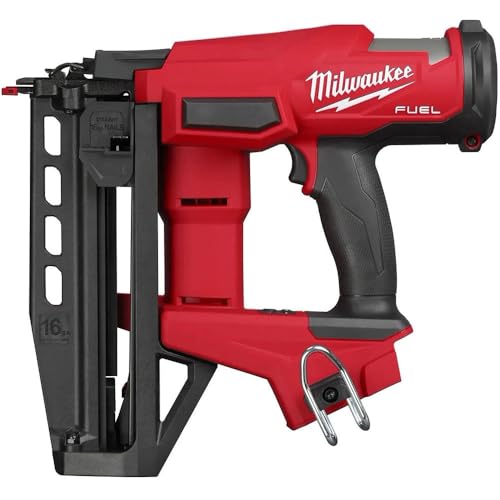

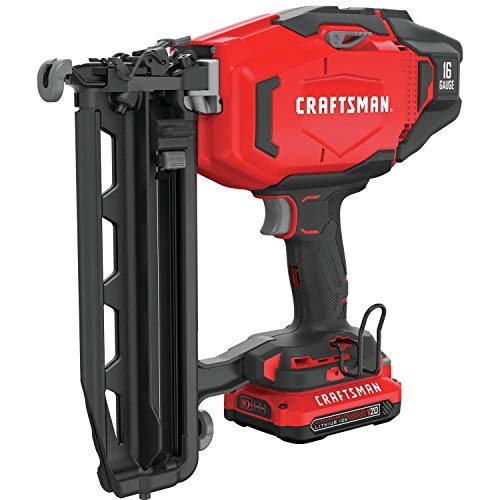


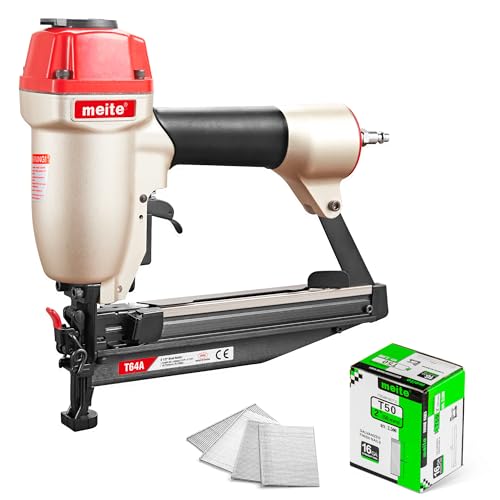

Who Should Buy Which 16 Gauge Nail Gun?
Trim Carpenters and Remodelers
You hang casing, baseboard, and crown all week, and your gun must drive thousands of nails at one depth without mood swings. An angled magazine earns its keep in your hands, since it reaches into corners and against ceilings that a straight gun cannot. Pneumatic guns still rule many pro crews for their light weight, while cordless wins on punch list work where dragging a hose costs more time than the job itself.
Cabinet and Built In Installers
Your nails land in face frames, scribe molding, and cabinet backs, where a split ruins an expensive part. You need fine depth control, a soft no mar tip, and a compact nose that sees the work. Straight magazine guns often suit you well because cabinet work is mostly open and flat, and their nails cost less and stock everywhere. A gun that clears jams without tools matters when you are kneeling inside a cabinet.
Homeowners Stepping Up From a Brad Nailer
Your brad nailer handles craft trim but leaves baseboard loose and door casing underpowered. A 16 gauge gun is the natural step up: nails with real heads and shanks for trim that stays put, in a tool that still feels familiar. Buyers in this group should decide the air question first, because a small compressor purchase or a battery platform choice shapes the whole budget.
Key Features to Compare
Straight Versus Angled Magazines
Straight magazine guns are simpler, lighter at the nose, and use inexpensive nail strips that every store stocks. Angled magazine guns tilt the rail about 20 degrees so the body clears corners, crown intersections, and tight casing returns. Angled strips cost a bit more and come in fewer lengths, but the access is real, and trim carpenters rarely go back. Match the style to your work: open runs and cabinets favor straight, while room trim with corners and ceilings favors angled. The gun and its nails must match in style, since the strips are not interchangeable.
Nail Length Range and Strip Types
Sixteen gauge finish nails run from about 3/4 inch to 2 1/2 inches, and a good gun should fire the full range. Length math decides holding power: baseboard over half inch drywall plus the trim itself needs a 2 to 2 1/2 inch nail to bite the stud by a solid margin. Shorter nails serve cabinet backs and thin molding. Check that your chosen gun lists the lengths you need rather than assuming, because a few compact models stop at 2 inches, which quietly rules out thick baseboard work.
Air Versus Cordless Power
Pneumatic guns are light, cheap to buy, and proven over decades, but they tie you to a compressor and hose. Cordless models, covered in depth in our guide to the best cordless nail gun, cost more and weigh more, yet set up in seconds and shine on ladders and punch lists. Modern cordless guns drive with flywheels or sealed air systems and keep pace with air guns on trim. Total cost is the fair comparison: an air gun plus a compressor you do not own yet can cost as much as the cordless gun alone.
Depth Adjustment and No Mar Tips
Consistent depth is the difference between trim that fills in minutes and trim that needs an hour of nail setting. Look for a tool free depth dial you can adjust with gloves on, and test it on a scrap of the exact material before the real piece goes up, since oak and MDF want different settings. A rubber no mar tip protects prefinished and painted trim from nose dents. Better guns keep depth steady across a pressure range, so the last nail of the day matches the first.
Jam Access and Firing Modes
Jams happen, usually at the worst moment, and the guns worth owning open their nose with a latch rather than a wrench. Dry fire lockout is the other quiet hero: it stops the gun from firing on an empty magazine, which prevents nose dents in finished trim and saves the driver blade wear. Sequential mode places one nail at a time for careful work, while contact mode fires as fast as you bump the nose, which suits long baseboard runs in experienced hands.
Where 16 Gauge Fits Between 15 and 18 Gauge
Gauge numbers run backward: the higher the number, the thinner the nail. Eighteen gauge brads, covered in our guide to the best brad nail gun, leave tiny holes and suit delicate trim, returns, and glued joints, but their thin shanks and small heads hold weakly in thick stock. Fifteen gauge nails are the heavy end of finish work, with angled guns and strong holding for exterior doors and dense hardwood. Sixteen gauge sits between them as the one gun compromise: strong enough for nearly all interior trim, gentle enough to fill fast. Structural work is a different world entirely and belongs to the best framing nail gun class, not to any finish gun.
Common Mistakes to Avoid
- Reaching for a 16 gauge gun on framing or fence work, where its nails lack the shank and head for structural loads.
- Setting air pressure once and never testing, so the first nails blow through MDF or sit proud in oak.
- Loading brad strips into a finish gun, since the strips differ in size and collation and will jam or misfire.
- Skipping daily oil in a pneumatic gun, which dries the seals and turns strong drives into weak ones.
- Firing long nails near the edge of trim at an angle, which splits the wood and ruins the piece.
How to Make Your 16 Gauge Nail Gun Last Longer
Pneumatic guns ask for a few drops of air tool oil at the inlet each day you use them, and that small habit protects the seals and driver for years. Drain the compressor tank after sessions, because the moisture it collects travels down the hose and rusts gun internals from the inside. Wipe the magazine rails clean of the wax and glue dust that nail strips shed, since buildup there is a leading cause of feeding jams.
Store nails in a dry place so their collation strips stay intact and rust free, and keep the gun itself out of damp basements and freezing trucks when you can. On cordless models, keep the battery contacts clean and store packs at a partial charge through long idle stretches. A gun treated this way drives true for a very long time, and most early failures trace back to water, grit, or dry seals rather than to the tool itself.
FAQ
What is a 16 gauge nail gun used for?
Interior finish work is its home ground: baseboard, door and window casing, crown molding, chair rail, and cabinet face frames. It also hangs prehung interior doors well, since its nails have the shank to hold a jamb steady while you shim it. Think of it as the gun for any trim thick enough that a brad might creep loose over time, in material valuable enough that a framing nail would be vandalism.
Can a 16 gauge nail gun use 18 gauge brads?
No. The driver blade, magazine, and nail strips are all sized to one gauge, and brads are thinner with different collation. Forcing the wrong strip causes jams at best and a bent driver at worst. This is why many trim workers own both guns: each is cheap insurance for its own nail size, and the pair covers nearly every finish job in a house between them.
Are angled 16 gauge nails harder to buy than straight ones?
They are stocked a little less widely and cost a bit more per box, and the longest lengths can sell out during busy building seasons. None of that stops pros, who simply buy angled strips ahead of a big job. If your work is mostly open runs and cabinets, straight nails remove the concern entirely. Either way, match the strip angle and gauge printed on the gun magazine, not just the length you want.
What air pressure does a 16 gauge nail gun need?
Most run well between about 70 and 120 PSI, set at the regulator, with the gun depth dial doing the fine adjustment. Finish guns sip air, so a small 1 to 2 gallon or pancake compressor keeps up easily, even on long baseboard runs. Raise pressure slowly and test on scrap: too much blows nails through MDF and soft pine, while too little leaves heads standing proud in oak.
Do 16 gauge nails hold better than 18 gauge brads?
Yes, clearly. The thicker shank resists bending and withdrawal, and the larger head keeps trim seated when wood moves with the seasons. The hole left behind is only slightly bigger and still fills with a single dab of putty. For thin, delicate molding the brad remains the right choice, but for baseboard, casing, and crown, the step up to 16 gauge is the difference between trim that stays tight and trim that gaps by winter.
Final Thoughts
Pick the magazine style for your rooms, the power source for your budget, and the depth system for your materials, in that order. The product table above compares the main formats by style, power, and length range so the decision stays simple. Matched to your work, the best 16 gauge nail gun becomes the quiet center of your trim kit, driving nail after nail exactly where you set it.


