
Best Circular Saw With Laser Guide for 2026: When the Beam Actually Helps
Disclosure: We may earn a commission when you buy through links on this page, at no extra cost to you. As an Amazon Associate I earn from qualifying purchases. Learn more

Choose the best circular saw with laser guide by checking laser accuracy, blade size, shoe quality and power, plus when a guide rail beats the beam.
A glowing line on the workpiece feels like a promise of straight cuts, but laser guides vary from genuinely useful to pure decoration. The best circular saw with laser guide pairs an accurate, adjustable beam with a saw that is already solid in the basics, flat shoe, true blade and enough power. This guide shows you how to judge the laser itself, and where its limits sit.
Keep one fact in mind from the start: a laser shows where the blade will travel only if it is aligned, and alignment drifts. The comparison table below lists saws that include this feature, and the sections that follow explain how to test any of them before trusting the beam.


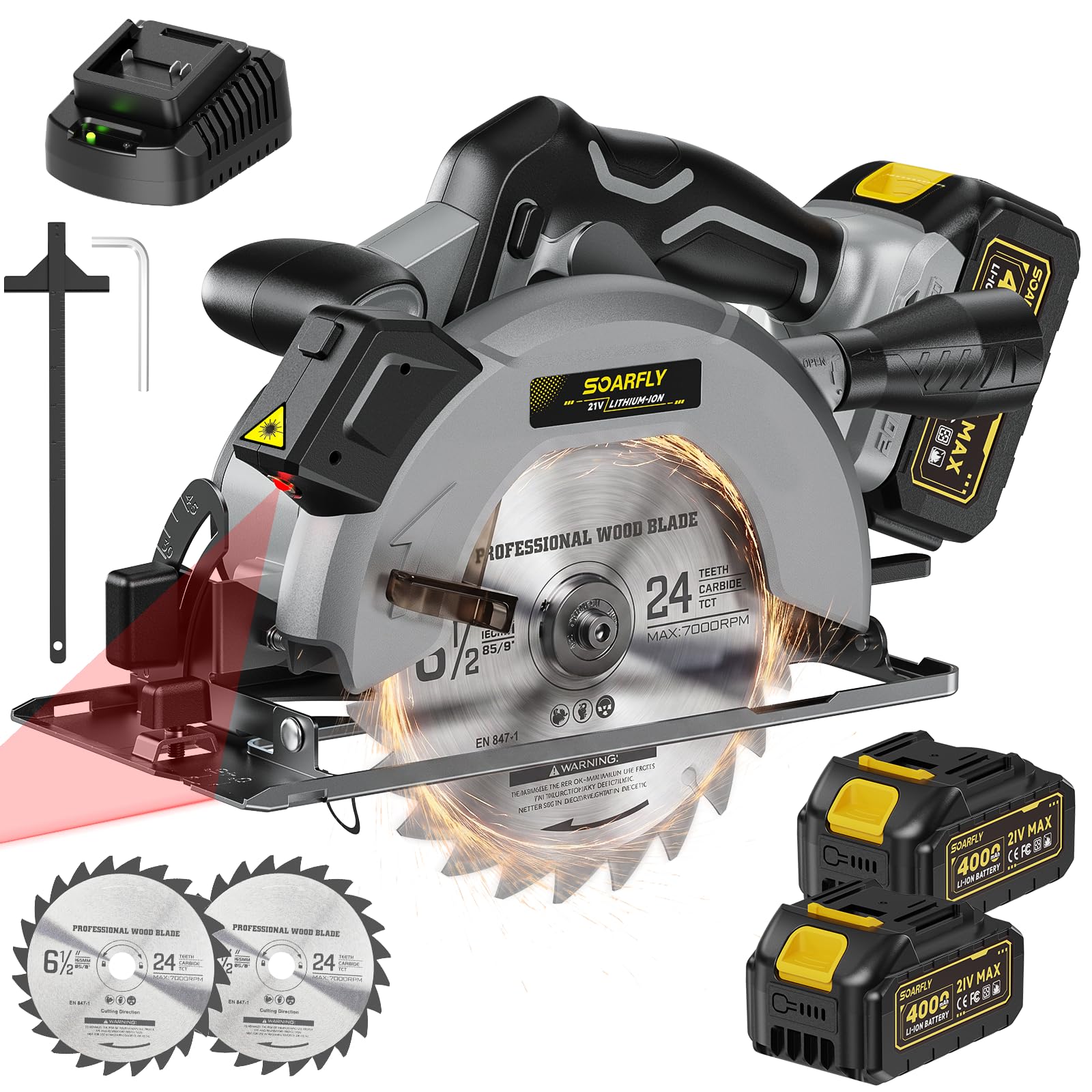
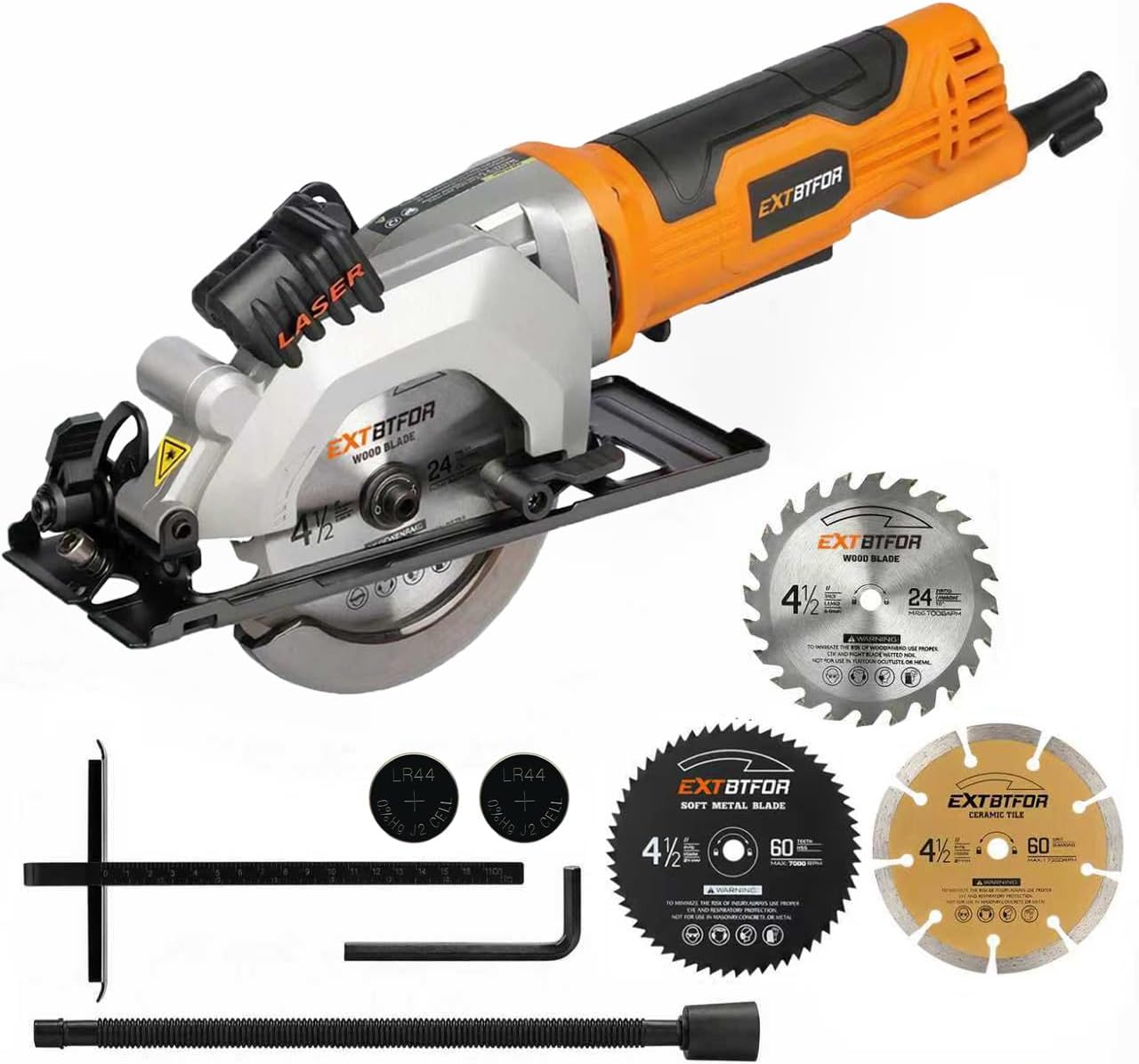
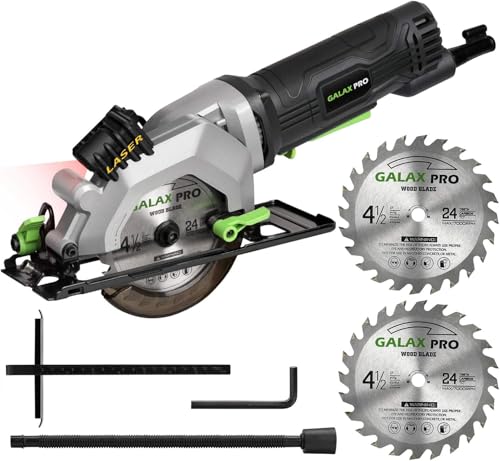
Who Should Buy Which Circular Saw With a Laser Guide?
DIYers Making Occasional Straight Cuts
If you cut shelves, closet parts and small furniture panels a few weekends a year, a laser guide earns its place. It speeds up marking and helps beginners keep a freehand line honest over short distances. Pick a mid size saw with a laser you can switch on separately, so the beam works while you set up the cut with the blade still.
Homeowners Breaking Down Sheet Goods
For plywood and MDF panels, the laser helps you start the cut on the line, but a clamped straightedge should steer the long middle section. Choose a saw with a wide, flat shoe that rides a guide without tipping, and treat the beam as a starting check. Our main guide to the best circular saw covers the sheet goods basics that matter alongside the laser.
Pros and Serious Woodworkers
Most professionals ignore the laser and reach for a track or a guide fence, because a beam cannot stop the saw from drifting. If you still want one, demand a beam that is user adjustable and bright enough for outdoor work. Otherwise spend the money on shoe quality, power and dust extraction, which improve every cut rather than a few.
Key Features to Compare
Laser Accuracy and How to Check It
The beam must land exactly on the cut line, and on many saws it sits a blade width off from the factory. Better models let you adjust the beam sideways to match the kerf of the blade you actually run, which matters because thin kerf and full kerf blades differ. Check accuracy before you trust it: clamp the saw, make a short cut in scrap, stop, and see where the beam falls against the real kerf. A laser that cannot be adjusted, or that shifts after a few cuts, is a distraction you will learn to ignore.
Beam Visibility in Real Light
Most saw lasers are red, and red washes out quickly in bright sun or under strong shop lights. Green beams read as brighter to the human eye at the same power, though they remain rare on circular saws. Inside a garage or basement, either color works fine. If your cutting happens on a driveway, weight visibility heavily and test the beam outdoors before the return window closes. Also note that sawdust settles on the lens within a few cuts, so an easy to wipe lens position and a strong dust blower near the cut line both protect the beam usefulness during a session.
Laser Switch and Power Source
Look for a laser switch that works independently of the trigger. That single detail lets you line up the cut calmly before the blade spins, which is when the beam helps most. Lasers powered by the tool battery or cord stay consistent, while small button cell lasers fade and add a battery to maintain. A beam that only lights while the trigger is pulled forces you to aim a running saw, which is both less accurate and less safe. This feature costs little, yet it separates thoughtful designs from checkbox ones.
Blade Size, Depth and Bevel Range
The laser does not change the cutting math. A 7 1/4 inch blade cuts two by stock at a bevel in one pass, while a 6 1/2 inch blade may need two passes on beveled thick stock. Bevel capacity of at least 45 degrees covers trim and roof work, and clear depth and bevel scales matter more than the beam for repeatable angled cuts. Buyers who mostly cut thinner stock can go smaller and lighter, and the compact end of this family overlaps with the best mini circular saw class for flooring and laminate jobs.
Shoe Flatness and Guide Compatibility
A laser cannot fix a rocking shoe. The base plate should be flat across its full length, stiff under hand pressure and wide enough to stay stable on narrow stock. Check that the shoe edge is straight and parallel to the blade, because that edge is what rides your straightedge on guided cuts. Stamped steel shoes on cheap saws often arrive slightly bent, and a bent shoe makes every cut, laser or not, wander. Magnesium and cast shoes cost more but hold their shape for years of site work.
Power and Handling With the Laser Fitted
Motor strength still decides how the saw behaves in dense material. Corded models in this class usually run 13 to 15 amps, while corded saws hold speed without battery worries, as covered in our guide to the best corded circular saw. Rear handle layouts borrow from the best worm drive circular saw family and put the blade on the left, which suits right handed users who want a clear view. Whatever the layout, confirm you can see both the blade and the beam from your normal stance, since a beam you have to lean to see will not get used.
Laser Guide or Straightedge: Being Honest About Precision
A laser line is a reference, not a fence. Over a short crosscut it keeps you honest, but over an eight foot rip the saw can still drift a sixteenth of an inch while the beam sits on the pencil line, because the beam shows direction, not the shoe position. For cabinet grade edges, clamp a straightedge or use a track and let the shoe ride it. The laser then does its best work at setup, confirming the guide placement before the cut starts. Framing and rough work forgive the drift, which is why lasers feel more impressive on site lumber than on furniture panels.
Common Mistakes to Avoid
- Trusting the factory laser alignment without a test cut, so every board comes out a blade width off size.
- Following the beam through a long rip instead of clamping a straightedge, which lets the cut drift wide.
- Buying the laser model with a bent stamped shoe, so the saw rocks and no beam can save the cut.
- Cutting in bright sun with a faint red beam and squinting at the line instead of using a guide.
- Forgetting to clean dust off the lens, then blaming the laser when the line fades mid job.
How to Make Your Circular Saw Last Longer
The laser adds one care task to the usual list: keep its lens clean. Wipe it with a soft dry cloth after dusty sessions, and never use solvent that can cloud the plastic window. Recheck beam alignment after any drop or blade change, because both can shift the relationship between beam and kerf. Store the saw where the lens will not be scratched by other tools rolling against it in a truck box.
For the saw itself, keep blades sharp and resin free, since a dull blade forces the motor to labor and throws more dust at the lens. Blow out the vents and guard pivot regularly, confirm the lower guard snaps shut freely, and keep corded models away from their own cords during cuts. A saw that runs cool and clean keeps its shoe true, and a true shoe is what makes any guide, laser or metal, worth using.
FAQ
Is a circular saw with laser guide worth it?
It is worth it when the beam is adjustable, bright enough for your workspace and switchable on its own. For short and medium cuts it genuinely speeds up setup and helps beginners. It is not worth paying a large premium for, because a clamped straightedge delivers more accuracy for long cuts at almost no cost.
What is the best circular saw with laser guide for plywood?
Choose a 7 1/4 inch saw with a flat, wide shoe and a fine tooth blade of 40 teeth or more, and use the laser to place your straightedge rather than to steer by eye. The beam earns its keep at setup, while the guide guarantees the edge. A strong dust blower or vacuum port keeps both the beam and the cut line visible through the sheet.
Why does my circular saw laser not match the cut?
Misalignment is the usual cause, and it often appears after changing to a blade with a different kerf width. Some beams are set to fall beside the blade rather than on it, by design. Make a test cut in scrap, compare the beam to the real kerf, and adjust the beam if your saw allows it. If the beam moves between cuts, the mount is loose and the feature is not usable until fixed.
Can a laser guide replace a track saw for straight cuts?
No. A track controls the saw position along the whole cut, while a laser only shows the intended path at one moment. On long sheet goods the difference shows up as wavy edges and parts that do not match. Use the laser for quick work and rough lumber, and use a track or clamped guide whenever the edge will be seen or glued.
How long does a circular saw with a laser guide last?
The saw itself lasts like any circular saw, often a decade of home use with sharp blades and basic care. The laser module usually lasts the life of the tool when it runs off the main power source. Button cell powered beams are the exception, since their output fades as the small battery fades, and replacing the cell restores the brightness.
Final Thoughts
Judge the saw first and the beam second. A flat shoe, honest power and an adjustable laser that you can switch on early make the feature genuinely useful. Check the candidates in the product table above against the points in this guide, and the best circular saw with laser guide for your bench will be the one whose beam you still trust a year from now.


