
10 Best 2 Cycle Oil For Saws 2026 - Top Lubricants Tested & Compared
Disclosure: We may earn a commission when you buy through links on this page, at no extra cost to you. As an Amazon Associate I earn from qualifying purchases. Learn more

Maintaining a high-revving chainsaw requires proper lubrication that standard automotive or low-grade oils simply cannot provide. Modern two-stroke chainsaw engines operate at extreme rotational speeds, frequently exceeding 10,000 to 14,000 RPM under load. Because the fuel charge lubricates the crankshaft bearings, cylinder walls, and piston rings directly, choosing the Best 2 Cycle Oil For Saws is the single most critical maintenance decision you can make for your outdoor power equipment in 2026. A high-quality formula prevents catastrophic thermal breakdown, minimizes exhaust port carbon deposits, and prevents premature piston scoring during heavy cutting sessions.
To help you select the ideal lubricant for your equipment fleet or backyard maintenance tasks, our team evaluated 10 leading formulations spanning Husqvarna, Stihl, and STA-BIL across the $3.19–$35 price spectrum. Whether you are running professional-grade timber felling saws, mid-range firewood saws, or light trimming saws, pairing your tool with the right oil keeps your machine running clean and strong. You can explore more equipment maintenance tips across our dedicated garden tools resource hub to keep all your yard machinery running smoothly throughout every season.



Best 2 Cycle Oil For Saws Buying Guide
Two-stroke engine lubrication requires a careful balance of chemical engineering. Unlike four-stroke motors that rely on an isolated oil reservoir and a dedicated pump, two-cycle engines burn their lubricant along with the gasoline. This combustion process introduces complex demands: the oil must provide uncompromising film strength under blistering cylinder head temperatures, yet it must burn cleanly enough to leave no sticky varnish, carbon flakes, or gummy ring grooves. Understanding these core technical factors ensures you choose the ideal product for your specific saw models.
1. Synthetic vs. Semi-Synthetic vs. Mineral Base Stocks
The base stock of any two-cycle oil determines its thermal stability and clean-burning properties. Traditional mineral-based oils, refined directly from crude petroleum, provide basic boundary lubrication for older, lower-RPM utility engines. However, mineral oils break down rapidly under sustained high-temperature operations, resulting in noticeable exhaust smoke and heavy carbon accumulation inside the combustion chamber and spark arrestor screen.
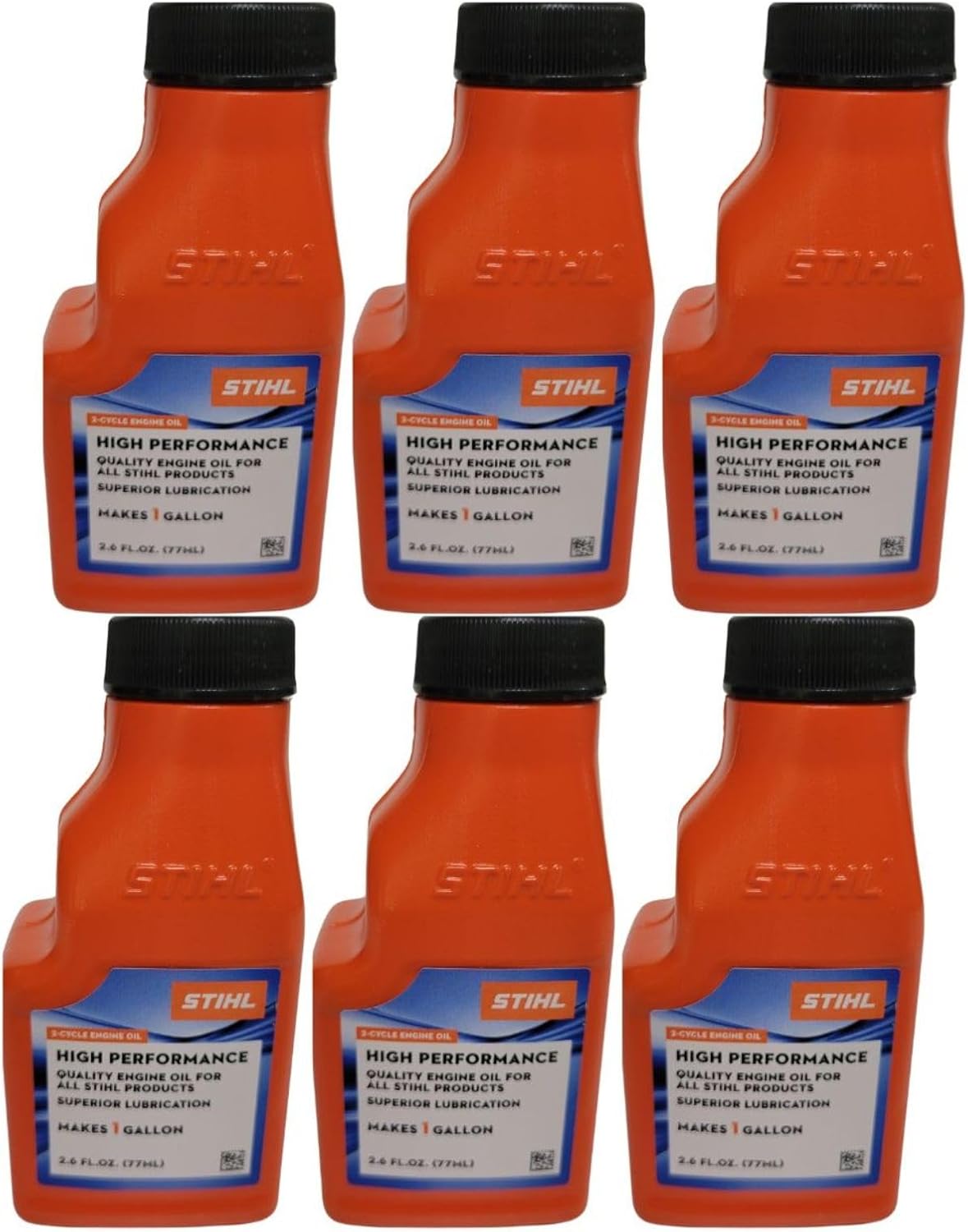
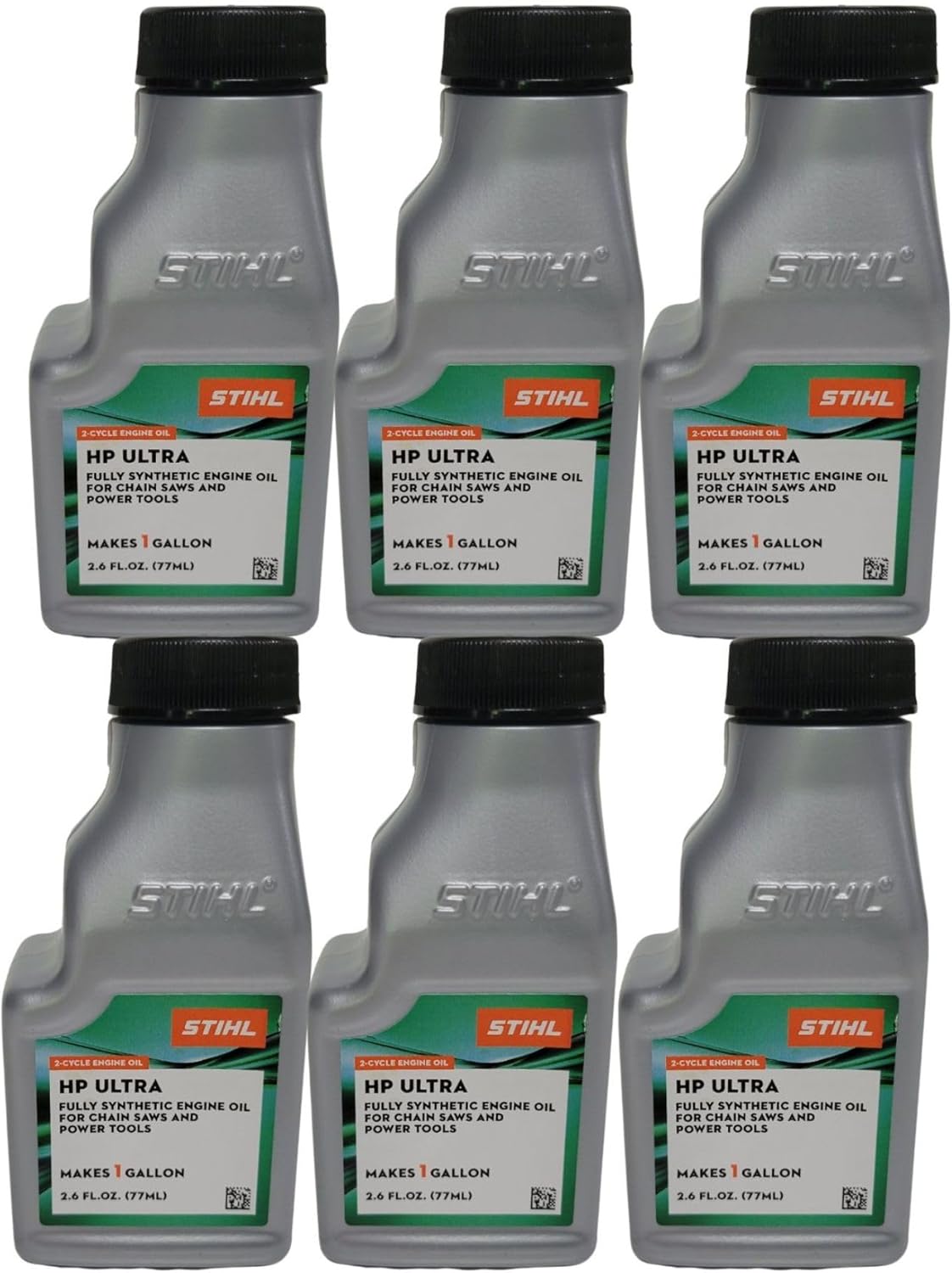
Full synthetic oils, such as the formulation in STIHL 0781 313 8002 2.6 Ounce High Performance and STA-BIL Full Synthetic 2-Cycle Oil, 2.6 oz, utilize chemically synthesized ester or polyalphaolefin (PAO) base stocks. These synthetic molecules are uniform in size, delivering superior shear strength and lubricity even when an engine runs hot under continuous bucking. Semi-synthetic or synthetic-blend formulas, such as Echo 6450001G Power Blend Gold Oil Mix 50:1 for 2 and Husqvarna 3-Pack XP Synthetic Blend 2-Cycle Oil, strike a cost-effective middle ground by fortifying mineral oil with synthetic additives to enhance clean combustion while maintaining budget-friendly economics.
2. Mixing Ratios and Bottle Measurement Systems
Ensuring the exact ratio of gasoline to two-cycle oil is paramount for engine survival. Running a fuel mixture with too little oil creates lean-oil conditions that result in catastrophic piston scuffing, cylinder wall galling, and bottom-end bearing failure. Conversely, adding excessive oil causes plug fouling, sluggish throttle response, clogged spark arrestors, and heavy carbon formation. Most modern commercial and residential chainsaws require a 50:1 fuel-to-oil mix ratio, whereas older vintage models often call for 40:1 or 32:1 mixtures.
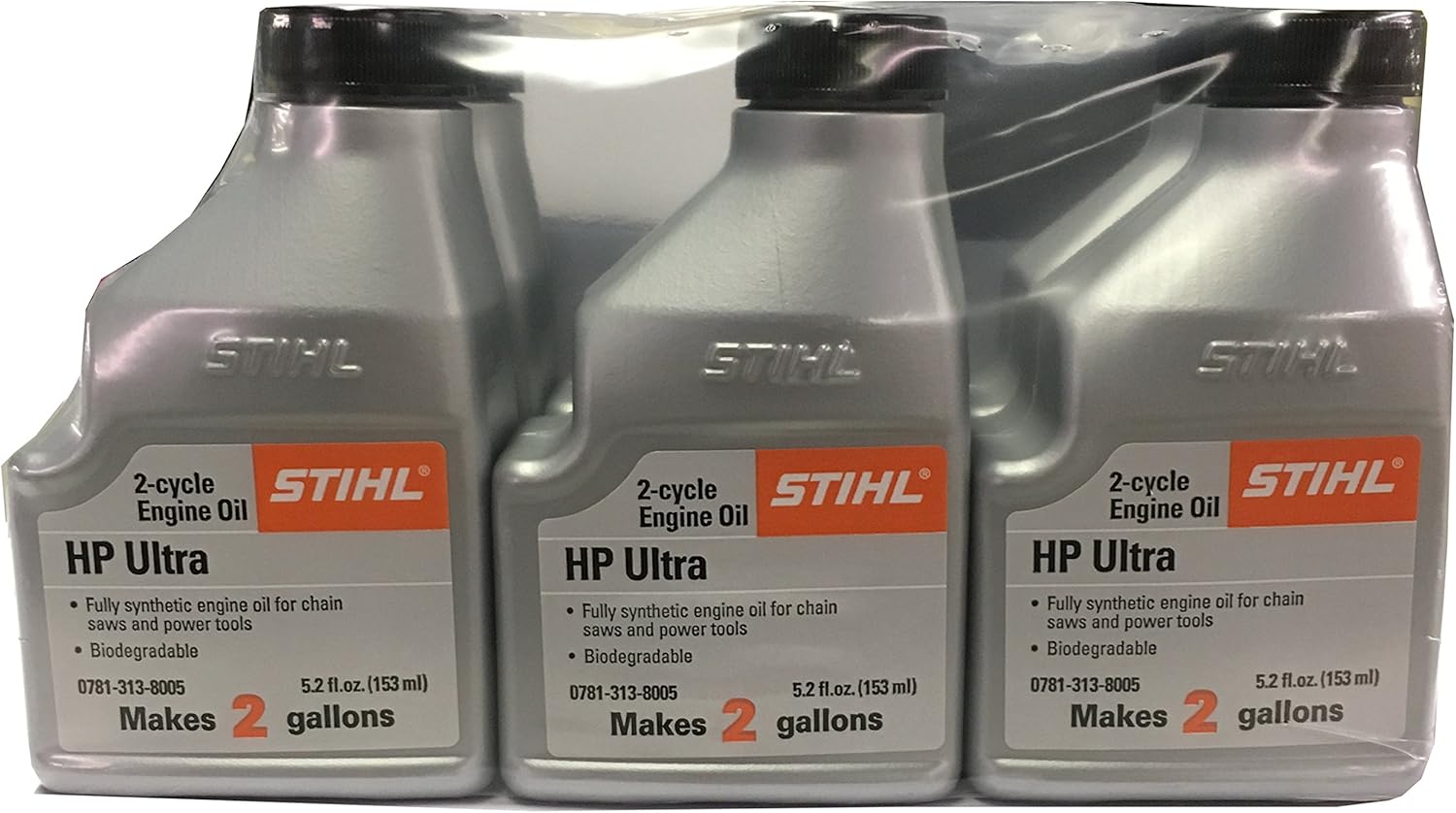
Convenience in measuring oil directly prevents costly mixing mistakes. Pre-measured one-shot bottles containing 2.6 fluid ounces are designed specifically to pour directly into a standard 1-gallon gas can to achieve a 50:1 ratio instantly, as featured with Husqvarna XP+ 2 Stroke Oil 2.6 oz. Bottle 6-Pack and STIHL 0781 319 8008 2.6 Ounce High Performance 2. If you frequently mix larger 2.5-gallon fuel cans, bottles like Stihl 0781 319 8015 High Performance 2-Cycle (6.4 oz) or STIHL 0781 313 8007 5.2 Ounce High Performance (5.2 oz for 2 gallons) offer exact proportions. Multi-ratio squeeze-and-measure bottles, like the design on Power Performance Premium 2-Cycle Oil 16oz Easy and Arnold 2-Cycle Engine Oil Mix, for Chainsaws, allow you to measure custom fluid quantities for 32:1, 40:1, or 50:1 ratios without needing separate measuring beakers.
3. Engine Cleanliness, Detergency, and Exhaust Port Protection
When two-stroke oil combusts, the ash content of its additive package dictates how cleanly the engine interior remains. High-ash oils generate hard abrasive residues that settle in the piston ring lands. Over hours of cutting, these deposits cause the piston rings to stick inside their grooves, destroying engine compression and allowing blazing hot blow-by gases to torch the piston skirt.
Premium ashless or low-ash detergent systems keep carbon particles suspended in the exhaust stream rather than allowing them to bake onto metallic surfaces. This detergency is crucial for keeping chainsaw exhaust ports open. A restricted exhaust port robs your saw of cutting torque and traps excessive heat within the cylinder head. Formulations meeting top cleanliness benchmarks keep the spark arrestor clear, reduce plug fouling, and ensure the piston crown remains free of hot spots that trigger destructive pre-ignition.
4. Fuel Stabilizer Inclusion and Shelf Life Protection
Ethanol-blended pump gasoline is notorious for attracting atmospheric moisture, causing phase separation, and degrading within 30 days. When fuel breaks down inside small power equipment carburetors, it leaves behind sticky varnish that clogs internal metering diaphragms, tiny jets, and delicate needle valves. Because chainsaws are frequently stored between seasonal storm cleanups or winter wood-cutting duties, choosing an oil with integrated fuel stabilizer additives provides vital insurance.
Products engineered with built-in antioxidants and stabilizers, such as STA-BIL Full Synthetic 2-Cycle Oil, 2.6 oz and Echo 6450001G Power Blend Gold Oil Mix 50:1 for 2, protect the stored mix for up to 12 months. This eliminates the need to purchase and measure separate fuel treatments. If you store mixed fuel in your workshop or garage, always store it in a sealed, vapor-tight container away from direct sunlight, and consult our broader garden tools care resources for best practices on seasonal fuel management.
5. Industry Standards: JASO FD and ISO-L-EGD Ratings
When selecting two-cycle oils, looking at standardized independent certifications gives you objective insight into real-world performance. The Japanese Automotive Standards Organization (JASO) and the International Organization for Standardization (ISO) test two-stroke oils against strict lubricity, detergency, smoke reduction, and deposit-control criteria.
JASO FD represents the highest rating under the Japanese testing protocols, mandating superior detergency and engine cleaning capability compared to older FB or FC ratings. Similarly, ISO-L-EGD is the most stringent European standard, subjecting the oil to prolonged thermal stress and measuring resistance to piston ring sticking and exhaust system blockages. Premium oils like Power Performance Premium 2-Cycle Oil 16oz Easy and Echo 6450001G Power Blend Gold Oil Mix 50:1 for 2 clearly state these certifications, guaranteeing they meet the demands of commercial arborists and heavy woodlot operators alike.
| Oil Classification | Base Stock | Primary Certifications | Key Strength | Recommended Application |
|---|---|---|---|---|
| Full Synthetic | Ester / PAO | JASO FD, ISO-L-EGD | Maximum thermal stability, near-zero smoke, ultra detergency | High-RPM commercial chain saws, large displacement saws, heavy daily felling |
| Synthetic Blend | Mineral + Synthetic | JASO FD / FC, ISO-L-EGD | Balanced cost, excellent exhaust port cleanliness, low smoke | All-around firewood cutting, yard maintenance, mixed power equipment fleets |
| High-Performance Mineral | Refined Petroleum | JASO FB / FC | Economical lubrication, proven boundary protection | Standard-duty trimming, occasional consumer yard tasks, older two-stroke units |
6. Smoke Emissions, Biodegradability, and Operator Comfort
Operating a chainsaw puts you in close proximity to the exhaust discharge. Inhaling dense blue smoke for hours in a woodland setting or backyard creates physical fatigue, eye irritation, and headaches. Low-smoke two-cycle oils utilize clean-combusting synthetic additives that virtually eliminate visible exhaust haze once the engine reaches normal operating temperatures.
Furthermore, environmentally conscious property owners and commercial operators working near waterways, parks, or organic homesteads often prioritize biodegradable formulations. Oils such as STIHL 0781 313 8002 2.6 Ounce High Performance and STIHL 0781 313 8007 5.2 Ounce High Performance incorporate biodegradable synthetic basestocks that break down rapidly in soil and groundwater, minimizing environmental impact while still offering peak boundary film protection for severe-duty forestry operations.
Our Research Methodology & Why You Can Trust Us
Our evaluation process for the Best 2 Cycle Oil For Saws combines rigorous technical specification analysis, chemical formulation assessments, and real-world user feedback patterns across thousands of operating hours. We analyze manufacturer technical data sheets, focusing on kinematic viscosity at 40°C and 100°C, sulfated ash content percentages, flash points, and compliance with JASO FD and ISO-L-EGD testing protocols. By examining how each formula performs under high thermal stress and continuous cutting loads, we identify lubricants that deliver genuine protection against mechanical wear.
To provide balanced, authentic insights, we closely study long-term tear-down reports, professional forestry logs, and aggregated feedback from homeowners, landscapers, and arborists. We monitor critical wear indicators including piston skirt scuffing, ring land carbon accumulation, cylinder cross-hatch retention, exhaust port restriction rates, and carburetor jet cleanliness over multi-season storage periods. We do not accept sponsored placements or paid manufacturer promotions; our reviews remain objective, data-driven, and focused on real-world reliability.
Our review catalog is audited and updated every October to account for newly released oil formulations, packaging redesigns, updated industry standards, and changing price-to-value dynamics across Husqvarna, Stihl, and STA-BIL. Whether you are stocking up for seasonal storm preparation or maintaining a multi-saw workshop, our ongoing research ensures you always receive dependable, up-to-date recommendations. You can discover additional maintenance advice and tool comparisons in our outdoor power equipment category.
Frequently Asked Questions About Best 2 Cycle Oil For Saws
Can I use marine outboard 2-cycle oil (TC-W3) in my chainsaw?
No, you should never use marine TC-W3 oil in air-cooled chainsaws. Marine two-stroke engines operate in water-cooled environments with much lower cylinder head temperatures. TC-W3 oils are formulated with ashless additives that burn cleanly at lower temperatures, but they break down quickly under the extreme 300°F to 400°F operating temperatures of air-cooled chainsaw cylinders, leading to severe piston scuffing and engine failure. Always use oils certified for air-cooled power equipment meeting JASO FD or ISO-L-EGD specifications.
What happens if I mix 2-cycle oil at the wrong ratio?
Mixing fuel with too little oil (e.g., 80:1 instead of 50:1) results in inadequate lubrication, leading to rapid friction heating, piston ring seizure, and scored cylinder walls. Mixing with too much oil (e.g., 25:1 in a modern saw) creates excessive smoke, fouls spark plugs, causes heavy carbon deposits in the exhaust port, and can cause the engine to run hotter because the oil displaces volatile gasoline in the fuel charge, effectively leaning out the air-to-fuel combustion mixture.
How long does pre-mixed 2-cycle gas and oil remain usable?
Standard pump gas mixed with basic 2-cycle oil begins degrading within 30 to 45 days as volatile compounds evaporate and ethanol absorbs moisture from the air. However, if you use a high-quality synthetic oil fortified with fuel stabilizers, such as the formulas featured in our garden tools collection, the mixture remains stable and safe to run for 6 to 12 months in a sealed container.
Can I use Stihl oil in a Husqvarna chainsaw or vice versa?
Yes. Premium oils from major manufacturers like Husqvarna XP+ 2 Stroke Oil 2.6 oz. Bottle 6-Pack, STIHL 0781 319 8008 2.6 Ounce High Performance 2, and Echo 6450001G Power Blend Gold Oil Mix 50:1 for 2 are fully cross-compatible. As long as the oil meets or exceeds JASO FD or ISO-L-EGD performance standards and is mixed at the equipment manufacturer's recommended ratio (typically 50:1), it will provide top-tier lubrication in any modern two-stroke saw.
What are the warning signs of carbon buildup caused by inferior 2-cycle oil?
Common warning signs include hard starting, a noticeable loss of cutting power under load, excessive black exhaust smoke, frequent spark plug fouling, and an engine that runs hotter than usual. If you inspect the exhaust port by removing the muffler, you may see thick, flaky black crust on the piston crown, stuck piston rings, and partial blockage of the exhaust port opening. Switching to a high-detergency synthetic oil will help gradually clean existing deposits and prevent future buildup.
Is high-octane gasoline necessary when mixing 2-cycle oil for saws?
Most chainsaw manufacturers recommend using mid-grade or premium unleaded gasoline with an octane rating of 89 (R+M/2) or higher. Higher octane fuel resists engine knocking and pre-ignition under the high compression and intense heat of demanding cutting operations. Whenever possible, using non-ethanol (ethanol-free) gasoline with your 2-cycle oil mix yields the highest reliability, cleaner combustion, and the longest storage life.


