
Best Robotic Lawn Mowers: Types Compared and How to Choose
Disclosure: We may earn a commission when you buy through links on this page, at no extra cost to you. As an Amazon Associate I earn from qualifying purchases. Learn more

How robotic lawn mowers compare with traditional mowers, who they suit and how to choose by yard size, slopes and navigation.
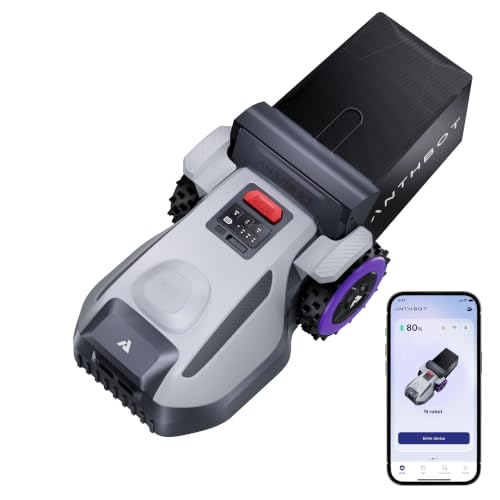
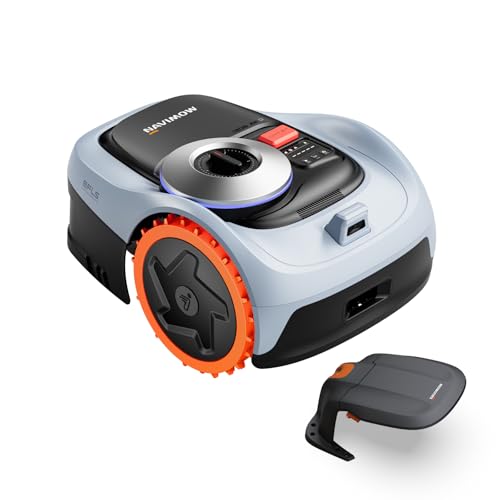
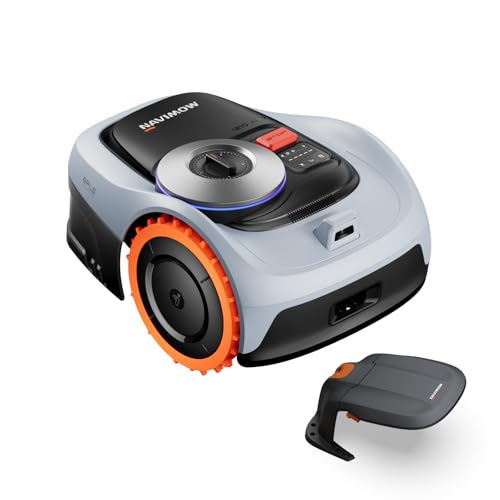
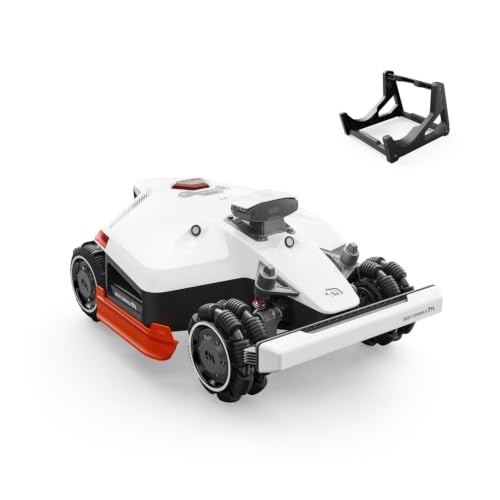
A robotic lawn mower trims your grass a little every day or two while you work, travel or sleep, so the lawn always looks freshly cut without a weekend chore. The catch is that robot mowers differ more than most people expect: some follow a buried boundary wire, others navigate with satellite RTK positioning, and newer models use LiDAR and cameras. The best robotic lawn mowers match your yard size, slopes, obstacles and how much setup you are willing to do.
This guide compares robotic mowers with traditional mower types, explains who they suit and walks through the specs that matter. Compare current models in the product table above.






How Robotic Lawn Mowers Compare to Other Options
Robotic lawn mowers trade cutting speed and raw power for automation, quiet operation and a consistently neat lawn. Here is how they stack up against the main alternatives.
Robotic Lawn Mowers vs Self Propelled Mowers
Self propelled walk behind mowers cut a typical quarter acre lawn in about 45 minutes to an hour, cost roughly $300 to $800 and handle tall, overgrown grass with ease. Robotic mowers cost more, often $900 to $2,500 for residential models, but they mow on their own schedule and need no one to push or steer. Robots cut only a small amount each time, producing fine clippings that fall back into the lawn as natural fertilizer, so you never bag or rake. A self propelled mower is the better pick if you enjoy mowing, have rough or overgrown areas, or want the lowest upfront cost. A robot wins if your time is worth more than the price difference.
Robotic Lawn Mowers vs Riding Lawn Mowers and Tractors
Riding mowers and lawn tractors are built for large properties of one acre or more, finishing big lawns in an hour or two and towing carts and spreaders. Robotic mowers for large yards exist, with some rated for 1 to 6 acres, but they take many hours spread across the week to cover that area. Riders handle tall grass, rough fields and steep banks better, while robots excel at keeping already maintained lawns short. Many owners of larger properties use a robot for the main lawn and keep a rider or zero turn for fields and seasonal cleanup.
Robotic Lawn Mowers vs Push Mowers
Push mowers are the cheapest and simplest option for small yards, often under $300 for a battery model. They are light, easy to store and need no setup. Robotic mowers cost several times more but save one to two hours of work each week and run nearly silently, so they can mow early in the morning without bothering neighbors. For very small, flat lawns a push mower is hard to beat on value; for busy homeowners, people with mobility limits or anyone who simply dislikes mowing, a robot pays back in time.
Who Should Choose Robotic Lawn Mowers?
Robotic lawn mowers suit homeowners with maintained lawns who want a neat yard without spending weekends mowing. They are an especially good fit for:
- Busy households who would rather spend weekends doing something else.
- Older adults and people with mobility limits who find pushing or riding a mower difficult.
- Frequent travelers, since the robot keeps mowing on schedule while you are away.
- Noise sensitive neighborhoods, because robots run far quieter than gas mowers.
- Lawn enthusiasts who want the even, carpet like look that comes from frequent light cutting.
Robots are a poorer fit for very rough or overgrown properties, lawns with lots of toys and debris left out, steep banks beyond the robot's slope rating, or homeowners on a tight budget.
How to Choose the Right Robotic Lawn Mower
The right robotic lawn mower is rated comfortably above your lawn size, handles your steepest slope and uses a navigation system that suits your yard layout. These are the specs to compare.
Yard Size and Cutting Width
Manufacturers rate robot mowers by maximum area, such as 0.15, 0.25, 0.5, 0.75 or 1.25 acres. Choose a model rated at least 25% above your actual lawn area, because complex layouts, narrow passages and multiple zones reduce real coverage. Cutting widths range from about 7 to 16 inches; wider decks and dual blade discs finish faster. Check the cutting height range too, typically about 0.8 to 4 inches, and whether height adjusts in the app or manually.
Navigation: Boundary Wire, RTK, LiDAR and Vision
Navigation is the biggest difference between models. Boundary wire robots follow a low voltage wire you bury or stake around the lawn edges; they are proven and affordable but take hours to install and wires can break. RTK GPS robots use satellite positioning corrected by a base station for accuracy within a few centimeters, with virtual boundaries drawn in an app, but they may struggle under dense trees or next to tall buildings. LiDAR and camera vision robots map the yard with lasers and cameras, work well under trees and recognize obstacles, and are now the fastest growing segment. Many premium models combine RTK, LiDAR and vision for reliability.
Power Source and Battery
Robotic lawn mowers are battery powered and return to a charging station on their own. Battery capacity and charge time determine how much they mow per day. A mid size robot typically mows 60 to 150 minutes per charge and recharges in 60 to 120 minutes. Lithium ion batteries usually last three to five seasons before capacity drops noticeably, and replacement packs are available for most major brands.
Slopes and Terrain
Slope ratings are given as a percentage, where 45% equals about 24 degrees and 80% equals about 39 degrees. Two wheel drive robots usually handle 35% to 50%, while all wheel drive models can manage 70% to 80% or more. Check also for obstacle crossing height if you have edging or tree roots, and for rain sensors that pause mowing in wet conditions to protect turf.
Noise, Storage and Maintenance
Most robot mowers run at about 55 to 65 decibels, quiet enough to mow at night in many neighborhoods (check local rules and protect wildlife like hedgehogs by mowing in daylight). The charging station sits on the lawn edge, and a garage or cover protects the robot from sun and rain. Maintenance is light: clean the underside weekly, replace small pivoting razor blades every one to two months, and store the robot and battery indoors over winter.
Deck Material, Build and Safety
Look for a weather resistant body (an IPX5 or higher rating lets you rinse it with a hose), sturdy wheels with deep treads and a floating cutting deck that follows uneven ground. Safety features matter: lift and tilt sensors that stop blades instantly, bumper or vision based obstacle detection, PIN codes, GPS theft tracking and alarms. Supervise children and pets around any mower.
Multi Zone Yards and Narrow Passages
If your lawn is split into front and back areas, check whether the robot supports multiple zones and how it travels between them. Wire free models can usually drive along a mapped channel between zones, while wired models need a guide wire through passages. Narrow side yards should be at least as wide as the manufacturer's minimum passage width, often around 2 to 3 feet. Some robots need to be carried to separate zones that are not connected by grass, which matters if you are away often.
Smart Features and Connectivity
App control lets you set schedules, mowing zones and no go areas, while cellular (4G) modules keep the robot connected beyond WiFi range and enable theft tracking. Some models offer multi zone mapping, edge trimming modes and integrations with voice assistants. Firmware updates often improve navigation over time, so choose a brand with an active update history.
Robotic Lawn Mower Price Tiers
Price tracks closely with lawn size, navigation type and slope capability.
- Under $1,000: boundary wire models and compact wire free robots for small, simple lawns up to about a quarter acre.
- $1,000 to $1,500: wire free RTK or LiDAR robots for quarter acre lawns, often with all wheel drive options.
- $1,500 to $2,500: robots for half acre to 1.25 acre lawns with combined navigation and steeper slope ratings.
- Over $2,500: large property and multi season platforms rated for several acres.
Setup and Care Tips
A good setup makes the difference between a robot that mows flawlessly and one that gets stuck.
- Mow the lawn short with a regular mower before the robot's first run.
- Place the charging station on level ground near an outdoor outlet, with clear space in front.
- Walk the boundary carefully when mapping, keeping a small gap from flower beds, ponds and drop offs.
- Fill holes and remove sticks, toys and dog waste from the lawn.
- Set a schedule that avoids watering times and busy play times.
- Clean blades and the underside weekly, and replace blades as they dull.
Common Robotic Mower Problems and Simple Fixes
Most robotic mower problems trace back to setup, dull blades or yard obstacles, and they are usually easy to fix.
- Getting stuck in the same spot: fill holes, trim low branches and add a no go zone around exposed roots or soft ground.
- Uneven or ragged cut: replace the blades, clean grass buildup from the deck and raise the cutting height slightly in hot, dry weather.
- Missed patches: increase mowing time in the schedule or check that the rated area matches your real lawn size.
- Losing position: for RTK models, move the base station to a spot with a clearer view of the sky; for vision models, make sure cameras are clean.
- Not returning to dock: clear the area in front of the station, check that it is level and confirm the charging contacts are clean.
- Wire breaks: on boundary wire models, a wire break finder locates cuts, which can be repaired with waterproof connectors.
FAQs
How long does a robotic lawn mower last?
A well maintained robotic lawn mower typically lasts around 7 to 10 years, although the battery usually needs replacing every three to five seasons. Storing the robot indoors in winter, cleaning it regularly and keeping firmware updated all extend its life.
Are battery mowers as good as gas?
For most suburban lawns, yes. Modern battery mowers, including robotic models, cut cleanly, start instantly and need far less maintenance than gas mowers. Gas still has the edge for very large properties, tall overgrown grass and long continuous mowing sessions.
Is a zero turn worth it for one acre?
A zero turn mower can be worth it for an acre with many obstacles, since it maneuvers quickly around trees and beds and finishes in under an hour. A robotic mower rated for one acre or more is an alternative if you prefer automation. See our best zero turn radius lawn mowers guide to compare.
How often should I sharpen mower blades?
Robotic mowers use small, inexpensive razor style blades that are replaced rather than sharpened, typically every one to two months during the mowing season. Traditional mower blades should be sharpened about every 25 hours of use or at least once a season.
What size mower do I need for my yard?
For a robot, choose a model rated about 25% above your lawn area. For traditional mowers, a 21 inch walk behind mower suits lawns up to about half an acre, a 30 to 42 inch rider suits half an acre to two acres, and a 48 inch or larger zero turn suits bigger properties.
Do robotic lawn mowers work in the rain?
Most robotic mowers are weather resistant and can handle light rain, but many have rain sensors that send them back to the dock in heavy rain. Mowing wet grass can leave ruts and clumps, so pausing during storms is better for the lawn.
Wrapping Up
The best robot mower for you depends on three things: a rated area comfortably above your lawn size, a slope rating that covers your steepest section and a navigation system that suits your yard, whether that is boundary wire for simple lawns, RTK for open yards or LiDAR and vision for tree covered properties. Prepare the lawn well, keep blades fresh and the best robotic lawn mowers will keep your grass neat all season with almost no effort. Compare current models in the product table above, and see our best robotic lawn mowers for large yards guide for bigger properties.


