
Best Pole Saws: What Actually Matters Before You Buy
Disclosure: We may earn a commission when you buy through links on this page, at no extra cost to you. As an Amazon Associate I earn from qualifying purchases. Learn more

Our checklist for choosing a pole saw plus three top picks, a buyer checklist, red flags and safe trimming tips.
Overgrown branches hanging over the roof, blocking the driveway or shading the garden are a common yard problem, and climbing a ladder with a chainsaw is one of the most dangerous ways to fix it. A pole saw lets you trim limbs 10 to 16 feet up while standing safely on the ground. The best pole saws offer enough reach for your trees, enough cutting power for the branch sizes you deal with and a weight you can hold overhead without wearing out after a few cuts.
Below is the checklist we use to judge pole saws, followed by three picks that pass it, a quick buyer checklist and red flags to avoid.




How We Evaluate Pole Saws
We judge pole saws on power source, safety, accessories, cutting performance, reach, weight and durability. Our sources are manufacturer specifications, warranty terms, the details in each Amazon listing and patterns across large volumes of verified owner feedback, with extra weight on reports about chain oiling, battery life and how comfortable the saw is overhead. We did not run our own trials.
Corded vs Cordless (Battery Platform)
Cordless battery pole saws are the most popular choice for homeowners: they start instantly, run quietly and need no gas or extension cords. Higher voltage platforms like 40V and 56V deliver more power and runtime. Corded electric pole saws cost less and never run out of power, but cords limit range. Gas pole saws offer the most power for thick limbs and large properties but are heavier, louder and need fuel mixing and maintenance. Manual pole saws and pruners cost the least and are lightweight, but cutting is slow work.
Safety Features
Look for a trigger lockout to prevent accidental starts, a chain brake or low kickback chain, a bar cover for storage and a shoulder strap to support the weight. An adjustable or angled head helps you cut without standing directly under the branch. Always wear safety glasses, a helmet, gloves and sturdy shoes, and stay at least 10 feet away from power lines.
Accessories Included
Check whether the battery and charger are included, since many cordless saws are sold as bare tools. Useful extras include a second battery, bar oil, a shoulder strap, a bar cover and extension poles. Some kits double as a hedge trimmer or handheld mini chainsaw.
Power and Performance Specs
Bar length usually ranges from 6 to 10 inches on electric pole saws and up to 12 inches on gas models. A good rule is that a saw cuts branches up to about its bar length in diameter, though thinner branches cut faster. Brushless motors and higher chain speeds cut faster and more efficiently.
Capacity and Working Range
Reach is the tool's length plus your height and arm extension. Most pole saws offer total reach of about 12 to 17 feet. Telescoping shafts let you adjust length for different branches, and extension poles add more. Battery runtime, often listed as cuts per charge, determines how much you can trim in one session.
Weight, Ergonomics and Vibration
Weight matters more on pole saws than most tools because you hold them overhead and extended. Many cordless models weigh 7 to 12 pounds with the battery. Carbon fiber or aluminum shafts reduce weight, and a balanced design with the motor near the cutting head or a counterweighted handle makes long sessions easier.
Durability and Brushless Motors
Brushless motors last longer, run cooler and stretch battery life. Automatic chain oilers protect the bar and chain, and tool free chain tensioning makes maintenance easier. Shaft warranties and parts availability are good signs of long term durability.
3 Pole Saws That Pass Our Checklist
Each pick below names who it suits, the specs that earned its place and one honest limitation.
Best Overall: Greenworks 40V 8 Inch Pole Saw and Hedge Trimmer Kit
The Greenworks 40V pole saw and hedge trimmer kit is the best pole saw for most homeowners, at around $150. It gives you two tools in one with a single battery platform.
- Why it passes: an 8 inch bar and chain with an automatic oiler and easy chain tensioning handles typical branch trimming, and a 20 inch dual action hedge blade with a 7 position pivoting head trims tall hedges.
- Included: a 2.0Ah 40V battery and charger; no gas, oil mixing or emissions.
- Trade off: the included 2.0Ah battery limits runtime for big jobs, so a larger spare battery helps.
Best for: suburban yards with trees and tall hedges.

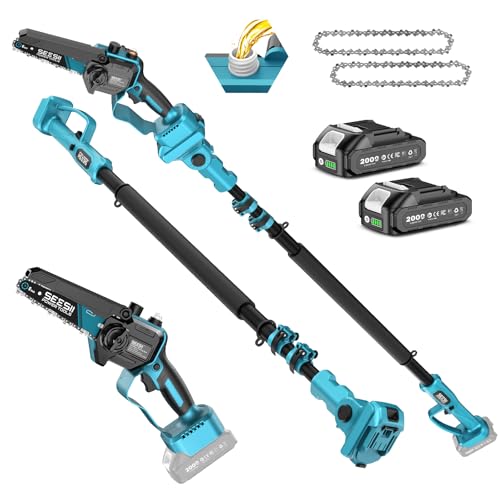
Best Value: SEESII 2-in-1 Brushless Pole Saw
The SEESII 2-in-1 brushless pole saw is the best value pole saw, at around $100. It converts between a pole saw and a handheld mini chainsaw.
- Why it passes: a brushless motor, two 4,000mAh batteries rated for up to about 120 minutes of runtime and a telescoping pole from 4.6 to 9 feet for up to 16 feet of total reach, according to the maker.
- Easy handling: about 3.4 pounds as a handheld saw and 6.9 pounds as a pole saw, with an adjustable cutting head and tool free oil and chain changes.
- Trade off: its smaller bar suits branches rather than thick limbs, and it is less powerful than 40V and 56V platforms.
Best for: light trimming, smaller trees and users who want the lightest option.

Best Premium Pick: EGO Power+ PS1001 Pole Saw
The EGO Power+ PS1001 is the best premium pole saw, at around $339 with battery and charger. It brings 56V power and premium build quality.
- Why it passes: a 10 inch bar and chain driven by a brushless motor with chain speeds up to 20 m/s, and EGO rates it for up to 100 cuts per charge with the included 2.5Ah battery.
- Premium touches: a telescopic carbon fiber shaft for up to 13 feet of reach (17 feet with an optional extension), an LED cut line indicator for shaded areas and tool free chain tensioning.
- Trade off: it costs more than budget options, though EGO's 56V batteries power a large range of yard tools.
Best for: larger yards, thicker branches and existing EGO owners.

Quick Buyer Checklist
- Total reach covers your highest branches without using a ladder.
- Bar length matches the branch diameters you cut most often.
- Weight is manageable overhead for several minutes at a time.
- Automatic chain oiler and easy chain tensioning are included.
- Battery platform matches your other yard tools, or the kit includes battery and charger.
- Safety lockout, bar cover and shoulder strap are included.
- Warranty covers the motor and shaft for at least two to three years.
Red Flags to Watch For
- Exaggerated reach claims that include the user's height without saying so.
- No chain oiler or a manual oiler that is easy to forget.
- Unknown battery platforms with no replacement batteries available.
- Very heavy designs with the motor at the far end and no strap.
- Vague cutting capacity without bar length or motor specs.
- No safety lockout on the trigger.
Picking the Right Pole Saws for Different Uses
Different trimming jobs call for different pole saws.
Best Portable Pole Saws
For portability, choose a lightweight cordless 2-in-1 pole saw that converts to a handheld mini chainsaw, or a manual telescoping pole saw that packs down small. They are easy to carry around the yard or to a cabin.
Best Tree Pole Saws
For mature trees with thicker limbs, choose a 40V to 56V cordless pole saw with a 10 inch bar, a long reach and a spare battery, or a gas pole saw for heavy use on large properties. Hire a professional arborist for limbs near power lines or very large branches.
How to Trim Branches Safely With a Pole Saw
- Check for power lines and keep the saw and branch at least 10 feet away from them.
- Plan where the branch will fall and clear the area of people, pets and vehicles.
- Stand to the side of the branch, never directly underneath it.
- For heavy limbs, make a small undercut first, then cut from the top slightly farther out to prevent bark tearing.
- Remove the remaining stub with a final cut just outside the branch collar for healthy healing.
- Let the saw do the work and avoid forcing it through the cut.
Pole Saw vs Pole Pruner vs Chainsaw
The best pole saws fill the gap between hand pruners and chainsaws. A powered pole saw is best for branches roughly 2 to 8 inches thick that are out of reach from the ground. A manual pole pruner with a lopper head and saw blade is quieter and cheaper, and works well for thin branches and occasional trimming, but cutting thick limbs by hand is tiring. A chainsaw handles large limbs and fallen trees but should never be used overhead or from a ladder. Many homeowners pair a cordless pole saw with a handheld chainsaw for cleanup, which is why 2-in-1 models that convert between the two are popular.
When to Trim Trees
Late winter and early spring, while trees are dormant, is usually the best time for structural pruning because cuts heal quickly once growth starts and you can see the branch structure clearly. Remove dead, damaged or crossing branches any time of year. Avoid heavy pruning of oaks during the growing season in areas where oak wilt is present, and check local guidance for your tree species.
How to Make Your Pole Saw Last Longer
Check the bar oil level before each use and top it up with bar and chain oil. Keep the chain sharp and correctly tensioned, since a dull chain strains the motor and battery. Clean sawdust and sap from the bar, chain and head after each session. Store batteries indoors at moderate temperatures, charged to around half for long storage, and use the bar cover.
Frequently Asked Questions
What specs matter most for home projects?
For home trimming, focus on total reach, bar length, weight and battery runtime. An 8 to 10 inch bar handles most yard branches, and a reach of about 12 to 16 feet covers typical trees. An automatic oiler and safety lockout are essential.
Is a brushless motor worth it?
Yes. Brushless motors cut more efficiently, run cooler and last longer, and they get more cuts from each battery charge. They are especially worthwhile on cordless pole saws used for regular yard work.
Can I use batteries across brands?
Generally no. Cordless pole saws run only on their own brand's batteries. Choosing a pole saw from a platform you already use saves money and lets you share batteries with other tools.
Corded or cordless: which is better for DIY?
Cordless is better for most DIYers because it offers freedom of movement around trees without a cord. Corded pole saws are cheaper and provide unlimited runtime, which works well for small yards close to outlets.
The Bottom Line
The Greenworks 40V pole saw and hedge trimmer kit is our overall pick for typical yards, the SEESII 2-in-1 is the value choice for light trimming and the EGO Power+ PS1001 is the premium option for bigger trees. Match reach and bar length to your trees, keep the chain sharp and oiled and always work safely from the ground, and the best pole saws will keep your yard tidy without risky ladder climbs.


