Best Zero Turn Radius Lawn Mowers: Budget, Midrange, and Premium Picks
Disclosure: We may earn a commission when you buy through links on this page, at no extra cost to you. As an Amazon Associate I earn from qualifying purchases. Learn more

The best zero turn radius lawn mowers at three price levels, plus what each tier delivers and which features are worth paying for.
Zero turn mowers sold on Amazon range from just under $4,000 to more than $8,000, and the price gap does not always line up with what your yard actually needs. Choosing among the best zero turn radius lawn mowers is really about matching deck size, power source and terrain to your property, then deciding which comfort and convenience features are worth the extra money.
This guide splits the market into budget, midrange and premium tiers, explains what each level delivers in real mowing terms and covers the features that matter most. If you are moving up from a lawn tractor or a self propelled mower, it will help you avoid both underbuying and overspending.




Top 3 Picks by Budget
These three mowers stand out at their price levels for homeowners with roughly one acre or more of lawn. Prices change often and large equipment can vary by seller, so treat the figures as approximate.
Amazon's zero turn selection is narrower than a dealer showroom, and a handful of established brands dominate it. That makes it easier to compare the best zero turn radius lawn mowers side by side: you are mostly choosing between proven gas engines and large battery systems, then picking the deck width that suits your lot.
Best Budget Pick: Husqvarna Z254F
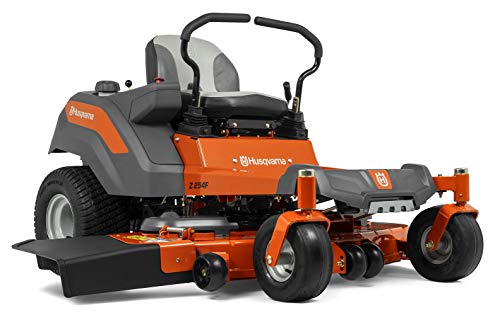
The Husqvarna Z254F suits homeowners with one to three acres who want a proven gas zero turn without paying premium prices. At around $3,900, it is one of the most accessible full size zero turns on Amazon.
Its two biggest strengths are a 23 HP Kawasaki engine with a top speed of about 6.5 mph and a 54 inch ClearCut deck that Husqvarna designed for deep airflow and better bagging. The hydrostatic transmission is described as maintenance free, which keeps ownership simple. The limitation is that mulching and bagging kits are sold separately, so total cost rises if you do not side discharge. Skip it if you mow steep slopes or want a quiet, low maintenance electric machine.
Best Midrange Pick: EGO Power+ Z6 42 Inch (ZT4214L)
The EGO Z6 is the zero turn for homeowners who are tired of gas, oil changes and engine noise. It costs around $5,300 and runs on six included EGO 56V ARC Lithium batteries.
Two strengths stand out. EGO says its Peak Power system delivers the power equivalent of a 24 HP gas engine and cuts up to 1.5 acres per charge, and a color digital screen lets you set driving mode, blade speed and cutting height. The batteries also fit EGO's handheld tools, and the mower carries a 5 year warranty (or 300 hours) plus up to 5 years on batteries with registration. The trade off is runtime: larger properties may need a mid job recharge. Skip it if you mow more than about 1.5 acres regularly.

Best Premium Pick: EGO Power+ 52 Inch Zero Turn (ZT5207L)
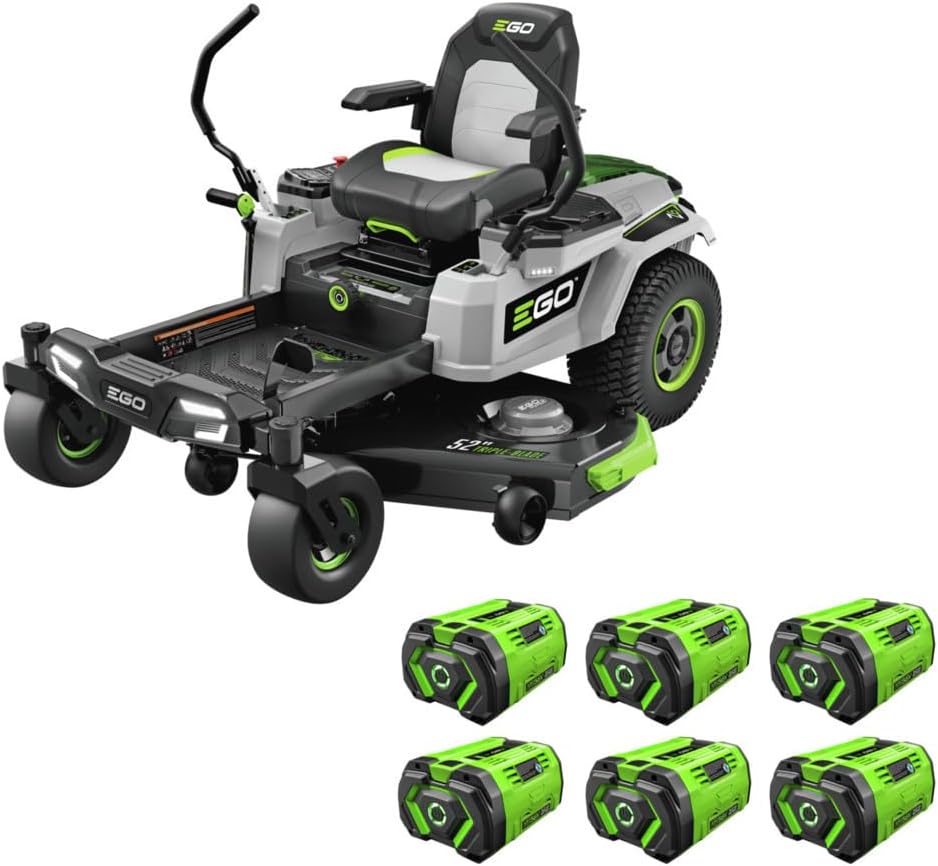
The 52 inch EGO is the premium choice for large properties that want electric power without compromise on coverage. It costs around $7,000 and includes six 56V 12.0Ah batteries.
Its standout strengths are coverage of up to 4 acres on a single charge according to EGO and a 52 inch deck that cuts mowing time on wide lawns. EGO rates it at a 25 HP equivalent with speeds from 4 to 8 mph. The drawback is the upfront price, which is close to double a budget gas zero turn. Skip it if your lawn is under two acres, where the midrange model covers the job for much less.

What Your Money Gets You at Each Price Tier
Every zero turn steers by driving each rear wheel independently, so even budget models turn on the spot. The difference between tiers comes down to deck build, engine or battery capacity, comfort and durability over many seasons.
Budget Tier: What to Expect
Budget zero turns on Amazon sit around $3,800 to $4,500. They typically pair a 21 to 24 HP gas engine from a known maker such as Kawasaki with a 42 to 54 inch stamped steel deck and residential hydrostatic transmissions. Seats are basic but comfortable, and top speeds around 6 to 7 mph cut mowing time dramatically compared with a lawn tractor.
The trade offs are lighter frames, fewer suspension features and accessories sold separately. These mowers suit one to three acres of fairly flat lawn and owners who are comfortable with basic engine maintenance.
Budget models are also easier to store and trailer because they are lighter and narrower. If you have a standard garage door and limited shed space, a 42 or 48 inch model at this tier is often the practical sweet spot.
Midrange Tier: The Sweet Spot for Most Buyers
Midrange models cost around $5,000 to $6,000. Here you find electric zero turns with large battery packs, gas models with fabricated decks and bigger engines, and better seats and controls. Electric options add quiet operation, instant starts and almost no routine maintenance.
This tier suits most suburban and rural lots between one and two acres. The main limitation is that battery models have a fixed runtime, while gas models at this price still require oil, filters and fuel.
Comfort upgrades start to show at this level, with better seat cushioning, armrests and smoother steering levers. Those details matter more than they sound when you are mowing for an hour or more every week.
Premium Tier: When Spending More Pays Off
Premium zero turns start around $6,500 and can exceed $8,000. They offer wide decks around 52 to 61 inches, larger battery packs or commercial style engines, heavier frames, more comfortable suspension seats and longer warranties. Some include rollover protection bars on larger gas models.
Spending more pays off on properties of two acres or more, where saved mowing time adds up every week, or for owners who want the quiet and low upkeep of electric power across a big property.
Premium mowers also hold their value better. Buyers in the used market look for known brands, documented maintenance and well kept decks, so the higher upfront price is partly recovered when you eventually sell.
Features Worth Paying For (and Ones to Skip)
Zero turn listings are full of specifications. These are the features that actually change how mowing feels and how long the mower lasts.
Slopes and Terrain
Zero turns are built for flat to gently rolling lawns. Because they steer with the rear wheels, they lose traction more easily on hills than lawn tractors with front steering. Many manufacturers advise against mowing slopes steeper than about 15 degrees with a zero turn, and some set lower limits. Always follow the manual's slope guidance.
If your property has steep banks or ditches, consider a lawn tractor or a walk behind mower for those areas. Wide frames and low centers of gravity help stability, which is why premium models often feel more planted.
Engine Size or Battery Voltage and Runtime
Gas zero turns list engine displacement in cc and power in horsepower. Around 21 to 24 HP handles most residential decks up to 54 inches; larger decks and thick grass benefit from more. Kawasaki, Briggs and Stratton and Kohler engines are common and well supported.
Battery zero turns run on multiple batteries, often 56V to 80V systems with large amp hour ratings. More total capacity means more acres per charge. Check the stated acreage per charge and whether the batteries also power other tools you own.
Yard Size and Cutting Width
A rough guide: under a quarter acre suits a push mower, a half to one acre suits a self propelled or small riding mower, and one acre or more is where a zero turn starts to make sense. Deck widths from 42 to 54 inches suit one to three acres, while 60 inch decks target large properties.
Measure gate openings, trailer widths and storage doors before choosing a wide deck. A mower that does not fit through your backyard gate is no bargain.
Power Source: Gas, Battery or Corded Electric
Gas zero turns offer unlimited runtime with refueling, strong power for thick grass and lower upfront prices, but they are loud and need oil changes, filters and winter fuel care. Battery zero turns are quiet, start instantly and need very little maintenance, but they cost more and have a fixed runtime per charge.
Corded electric options do not exist for riding mowers. For most homeowners with two acres or less, battery models are now a realistic alternative to gas.
Mulch, Bag and Side Discharge Options
Most zero turns side discharge by default, which handles tall grass well. Mulching kits chop clippings finely and return them to the lawn as fertilizer, ideal for regular mowing. Baggers collect clippings and leaves for a clean look but add cost, weight and time spent emptying.
Check whether kits are included or sold separately, since they can add several hundred dollars to the price.
Comfort and Controls
Seat quality, lap bar feel and footrest design decide how you feel after an hour on the mower. High back seats with armrests, adjustable lap bars and easy deck height levers are worth paying for if you mow weekly. Some owners add suspension seat kits later, but buying a comfortable mower from the start is simpler.
Cup holders, phone mounts and hour meters are small touches, but an hour meter in particular helps you track oil changes and blade sharpening accurately.
Features to skip at first include extra lighting packages and decorative trim. Spend on deck quality, comfort and power instead.
Warranty and Service Support
Zero turns are large machines that occasionally need professional service, so warranty terms and local support matter. Look for at least a few years of residential coverage on the mower and, for electric models, clear battery warranty terms. Brands with wide dealer networks make it easier to get parts and repairs without shipping a heavy mower anywhere.
Long Term Costs to Factor In
Gas zero turns need yearly oil and filter changes, air filters, spark plugs, fuel stabilizer and periodic hydrostatic transmission care, which together typically cost a modest amount each season if you do the work yourself. Blades need sharpening or replacing, and tires and belts wear over time. Battery zero turns avoid engine maintenance but still need blade care, and batteries eventually lose capacity, so check battery warranty terms.
Factor in accessories such as mulch kits, baggers, covers and trailer hitches. Over five to ten years, a well maintained mower from an established brand with good dealer or parts support usually costs less to own than a cheaper unit that is hard to service.
Fuel costs depend on mowing time, but a gas zero turn typically burns a few gallons per session on larger lots. Electric models cost far less per mowing in electricity, which helps offset their higher purchase price over several seasons.
Storage matters too. A dry shed or garage protects the deck and electronics, and a cover helps if the mower must sit outside.
Zero Turn Radius Lawn Mowers: Your Questions Answered
How often should I sharpen mower blades?
Sharpen zero turn blades about every 20 to 25 hours of mowing, or at least once or twice per season. Dull blades tear grass instead of cutting it cleanly, which leaves brown tips and stresses the lawn. Check blades after hitting rocks or roots, and replace them if they are bent, cracked or worn thin.
Is a zero turn worth it for one acre?
A zero turn can be worth it for one acre if your lawn has trees, flower beds or obstacles to mow around. The tight turning saves time trimming and backing up. For an open, rectangular acre, a lawn tractor or large self propelled mower may be enough. Compact 42 inch zero turns suit one acre well.
Are battery mowers as good as gas?
For many residential lawns, battery zero turns now match gas models in cutting quality and speed, while running quieter and needing less maintenance. Gas still leads for very large properties, thick wet grass and unlimited runtime. If your lawn fits within the stated acreage per charge, battery power is a strong choice.
How long does a zero turn radius lawn mower last?
A residential zero turn often lasts around 10 to 15 years, or roughly 500 to 1,500 engine hours for gas models, with regular maintenance. Battery models depend on battery life, though batteries can usually be replaced. Storing the mower dry and following the service schedule makes the biggest difference.
What size mower do I need for my yard?
Match deck width to lawn size: around 42 inches for one acre, 48 to 54 inches for one to three acres and 60 inches for larger properties. Also check gate and storage widths. A slightly smaller deck that fits your property is better than a wide one you cannot maneuver.
Wrapping Up
The factors that matter most are lawn size, terrain and power source. The Husqvarna Z254F is a proven budget gas option for one to three acres, the EGO Z6 42 inch is the quiet, low maintenance sweet spot for up to about 1.5 acres and the EGO 52 inch is the premium pick for large properties that want electric power. For smaller budgets, see our guide to the best affordable zero turn radius lawn mowers, and for big lots read the best lawn mowers for large yards.
Compare these picks with the full product table above, measure your property and choose the tier that fits. That is how you find the best zero turn radius lawn mowers for your yard without overspending.