
7 Best Affordable Zero Turn Radius Lawn Mowers 2026 - Detailed Comparison and Expert Guide
Disclosure: We may earn a commission when you buy through links on this page, at no extra cost to you. As an Amazon Associate I earn from qualifying purchases. Learn more

Maintaining a large residential lawn or managing multi-acre property boundaries requires equipment that delivers efficiency, power, and precise cutting performance. For property owners across the country, investing in the Best Affordable Zero Turn Radius Lawn Mowers in 2026 provides a dramatic reduction in mowing time while eliminating the awkward multi-point turns typical of conventional lawn tractors. Zero-turn mowers operate using independent wheel drives that allow a true zero-degree turning radius, letting you glide effortlessly around fence posts, landscaping beds, mature trees, and garden perimeters with minimal need for secondary trimming.
The outdoor power equipment landscape has transformed significantly, offering homeowners a diverse selection ranging from heavy-duty commercial-style gas engines to whisper-quiet, high-voltage lithium-ion electric platforms and intelligent robotic crawlers. To help you determine the right machine for your acreage, terrain layout, and maintenance preferences, our team conducted a comprehensive comparative analysis of the 7 Best Affordable Zero Turn Radius Lawn Mowers available on the market today. Explore our complete collection of outdoor equipment analyses in our dedicated Garden Tools section to keep your entire yard maintenance arsenal running smoothly.


Best Affordable Zero Turn Radius Lawn Mowers Buying Guide
Selecting the optimal zero-turn radius mower involves matching your yard size, terrain slope, and grass density with the structural and mechanical strengths of the equipment. Whether you manage a flat one-acre residential turf or a rugged five-acre country homestead, understanding the essential engineering specifications will protect your investment and ensure dependable cutting results season after season.
1. Cutting Deck Construction and Steel Gauge Durability
The cutting deck is the heart of any zero-turn mower, directly determining the clean quality of the cut, the airflow dynamics under the chassis, and the overall longevity of the machine. Mower decks fall into two primary construction categories: stamped steel and fabricated (welded) steel. Stamped decks are pressed from a single sheet of lighter-gauge metal (often 12-gauge or 14-gauge), making them lightweight and optimized for airflow on manicured, rock-free suburban lawns. However, stamped steel is more susceptible to bending or cracking if it impacts roots, buried rocks, or curb edges.
Fabricated steel decks, such as the 10-gauge reinforced steel decks found on heavy-duty units like the corrosion-resistant coated platforms of commercial-grade riders, are constructed from multiple plates of thick steel welded together. These heavy-duty decks resist severe impacts and provide rigid structural support for high-torque blade spindles. When evaluating deck durability, a lower gauge number signifies thicker steel. A 10-gauge fabricated deck will endure years of demanding mowing through dense brush and tall weeds without warping, whereas a 14-gauge stamped deck is better suited for regular, light-duty turf maintenance.
2. Power Systems: Commercial Gas Engines vs. High-Voltage Battery Platforms
Choosing between internal combustion gas engines and high-voltage lithium-ion electric platforms depends on your property layout, maintenance appetite, and performance requirements. Gas-powered zero-turn mowers equipped with twin-cylinder commercial engines, such as the Kawasaki V-Twin engines found on the Ariens Zenith 60 (60") 23.5HP Kawasaki Zero Turn and Husqvarna Z254FX 22HP 726cc Kaw Engine 54" FAB, provide unrelenting torque, easy mid-season refueling, and long-established mechanical serviceability across local dealer networks.
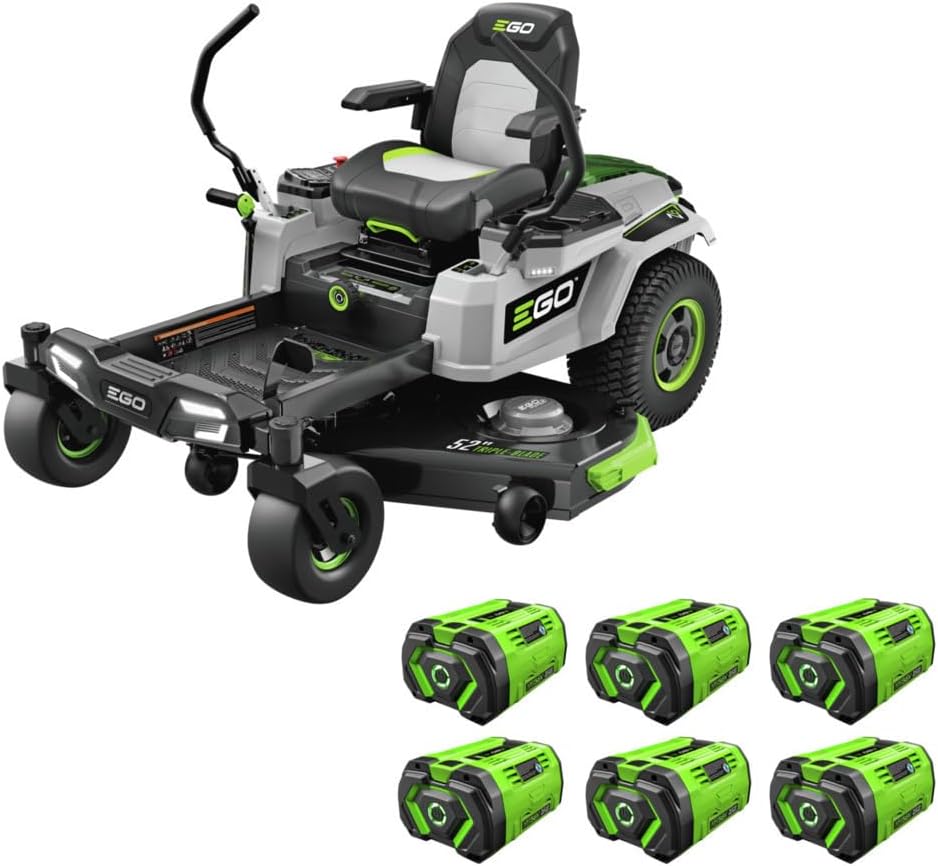
Conversely, modern electric zero-turn riders powered by 56V, 60V, or 80V lithium-ion battery ecosystems provide immense instant torque without engine bogging in tall grass. Advanced electric models like the Greenworks 60V 54" MaximusZ Zero Turn Riding Lawn and the EGO Power+ Z6 Zero Turn Electric Riding Lawn deliver gas-equivalent ratings between 20 HP and 31 HP while eliminating engine oil changes, spark plug replacements, fuel stabilizer hassles, and carburetor cleanouts. Electric models operate at significantly lower decibel levels and allow cross-platform battery sharing with handheld string trimmers, blowers, and chainsaws.
3. Deck Size, Blade Speed, and Acreage Capacity
Matching the cutting width to your total lawn acreage is critical for operational efficiency. Selecting a cutting deck that is too small increases mowing time and battery or fuel consumption, while an oversized deck can struggle to navigate through standard garden gates or around intricate landscape beds.
- Up to 1.5 Acres: A 42-inch deck provides the ideal balance of nimble maneuvering and gate clearance while maintaining high travel speeds up to 8 MPH.
- 1.5 to 3.5 Acres: A 52-inch or 54-inch fabricated deck optimizes cutting paths, dramatically reducing the number of passes required across medium to large properties.
- 3.5 to 5+ Acres: A 60-inch commercial-style deck powered by high-capacity battery banks or large displacement V-twin engines provides the blade tip speed (often exceeding 17,000 to 17,900 feet per minute) necessary to cleanly process thick pasture grass in fewer hours.
| Deck Width | Power Platform | Estimated Runtime / Coverage | Best Suited Application |
|---|---|---|---|
| 21.7" Tracked Deck | 9HP Gas/Electric Hybrid | Continuous Fuel Operation | Steep slopes (up to 45°), rough brush, orchards |
| 42" Twin Blade | 56V - 60V Electric ARC | Up to 1.5 - 2.0 Acres | Suburban yards, tight gates, obstacle-dense lots |
| 54" Triple Blade | 60V Electric / 22HP Gas | Up to 3.5 Acres | Medium-to-large properties, multi-zone yards |
| 60" Triple Blade | 80V Electric / 23.5HP Gas | Up to 5.0+ Acres | Sprawling acreage, commercial-scale residential properties |
4. Terrain Management, Slope Stability, and Traction
Traditional zero-turn mowers steer via independent hydraulic transaxles or dual electric wheel motors controlling the rear drive wheels. Because the front caster wheels swivel freely without direct steering links, standard zero-turn mowers are generally rated for slopes of 15 degrees or less. Operating a standard zero-turn on steep hillsides can result in front-wheel drift, loss of downhill braking, or turf scuffing during sharp pivot maneuvers.
For properties characterized by severe hillsides, drainage ditches, and uneven embankments, specialized configurations offer superior safety. Tracked remote-controlled platforms like the INFRONT Remote Control Lawn Mower climb slopes up to 45 degrees without placing the operator in harm's way. Meanwhile, intelligent all-wheel-drive robotic units like the Segway Navimow X430 Robot Lawn Mower Wire Free utilize all-wheel-drive traction control and specialized eccentric front steering to handle 84% (40-degree) slopes without tearing delicate turf.
5. Operator Ergonomics and Ride Quality
Mowing several acres at travel speeds between 4 MPH and 8 MPH subjects the operator to continuous vibrations and ground impacts. Premium zero-turn mowers mitigate operator fatigue through isolated frame designs, heavy-duty seat springs, and adjustable suspension seats with high-back lumbar support and foldable armrests. When comparing models, look for intuitive control lap bars with vibration dampening, spring-assisted foot pedals for effortless deck height adjustments, and clear digital dashboards that display battery charge percentages, hour meters, and drive mode selections in real time.
If you maintain auxiliary pneumatic gear or shop equipment for pneumatic tire upkeep on your zero-turn mower, check out our guide on heavy-duty air lines and tire inflation tools to ensure your mower tires remain balanced at the exact recommended PSI for level deck performance.
6. Utility Versatility, Towing, and Warranty Coverage
A zero-turn mower can serve as a year-round property maintenance hub when equipped with towing hitches, mulching kits, and integrated utility features. Select electric platforms incorporate rear cargo dump beds with hydraulic lift assistance capable of hauling soil, firewood, and mulch payloads up to 200 pounds. Towing capacities between 300 and 500 pounds enable you to pull lawn sweepers, aerators, and dethatchers across your turf.
Pay close attention to manufacturer warranties on both the frame and the battery systems. Reputable manufacturers provide comprehensive 3-year to 5-year residential warranties on chassis construction and battery packs. Ensure that electric models offer modular battery configurations, allowing you to easily swap individual packs or charge auxiliary batteries while working on extended landscaping projects.
Our Research Methodology & Why You Can Trust Us
Our evaluation process for identifying the Best Affordable Zero Turn Radius Lawn Mowers is grounded in rigorous technical analysis, manufacturer specification auditing, and aggregated long-term reliability metrics. We analyze structural blueprints, steel deck gauges, spindle bearing tolerances, brushless motor efficiency ratings, and kilowatt-hour capacities across all major product lines. We also examine real-world feedback from property owners, evaluating how each machine performs when tackling overgrown spring growth, damp turf, and complex hillside layouts.
We maintain strict editorial independence. Our rankings are determined solely by mechanical performance, build quality, safety features, ergonomic design, and long-term value. We cross-reference battery thermal management systems, charger output rates, and spare parts availability to verify that every recommended model delivers practical reliability in demanding home and farm environments.
To ensure our guides reflect the latest market innovations, seasonal product releases, and updated firmware enhancements for smart robotic and battery systems, our editorial team audits and updates this guide every October 2026. For additional equipment care strategies and tool protection advice, explore our detailed resource on protective coating and maintenance equipment.
Final Thoughts
Choosing the best zero-turn mower requires balancing your property size, terrain contours, power preferences, and budget. For homeowners seeking commercial-grade cutting performance with zero emissions, the Greenworks 60V 54" MaximusZ Zero Turn Riding Lawn represents our top overall electric recommendation, delivering 31 HP gas-equivalent power, a rugged 10-gauge fabricated 54-inch steel deck, and sufficient battery capacity to handle up to 3.5 acres on a single charge.
If you manage expansive acreage exceeding four to five acres and require massive cutting swaths, the commercial-proven Ariens Zenith 60 (60") 23.5HP Kawasaki Zero Turn provides unmatched blade speed and heavy-duty frame strength. For properties with challenging 40 to 45 degree slopes, ditches, or dense brush where riding can be hazardous, the INFRONT Remote Control Lawn Mower offers industry-leading safety and tracked climbing capability, while the Segway Navimow X430 Robot Lawn Mower Wire Free provides hands-free autonomous turf care with turf-safe zero-turn steering.
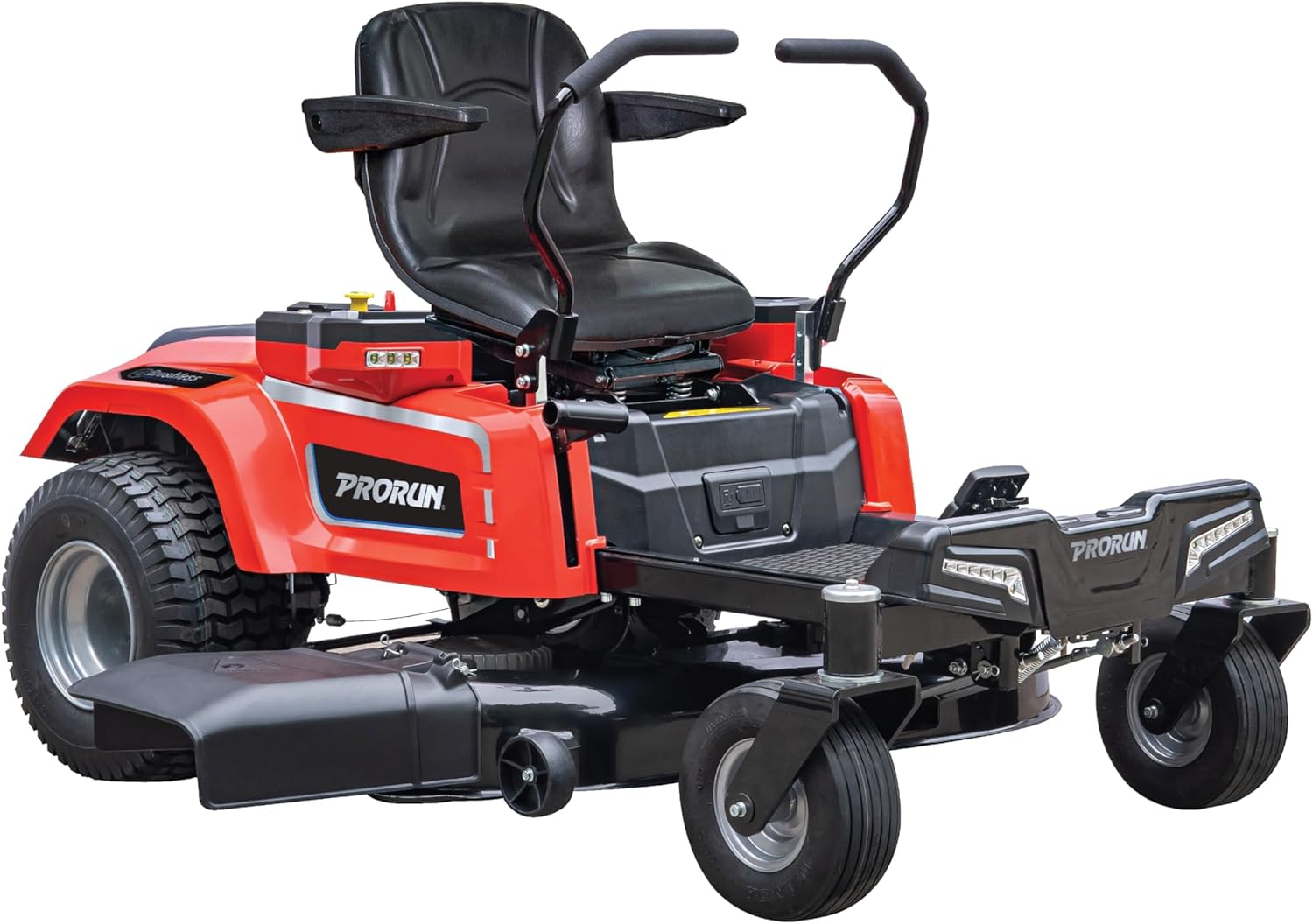
For standard suburban residential properties measuring between one and two acres, the EGO Power+ Z6 Zero Turn Electric Riding Lawn and PRORUN 60V Zero Turn Riding Lawn Mower deliver nimble 42-inch cutting footprints, intuitive digital displays, and universal battery platform compatibility. Review your lawn layout and specific landscape features to choose the model that will keep your property looking immaculate all season long.
Frequently Asked Questions
Are electric zero-turn lawn mowers powerful enough for tall, wet grass?
Yes. Modern high-voltage electric zero-turn mowers utilize direct-drive brushless motors that generate high continuous torque equivalent to 20 HP to 41 HP commercial gas engines. Features like intelligent blade speed management automatically boost blade tip speeds up to 17,900 feet per minute when encountering thick patches, preventing motor bogging and maintaining a clean, uniform discharge.
How do zero-turn mowers perform on steep hills and wet slopes?
Standard sit-on zero-turn mowers are primarily designed for slopes under 15 degrees because their free-swiveling front caster wheels rely entirely on rear-wheel traction for directional control. For slopes up to 40 or 45 degrees, tracked remote-control mowers or all-wheel-drive robotic models equipped with specialized traction management systems offer substantially safer operation without the risk of tipping or losing steering authority.
What is the difference between stamped and fabricated mower decks?
Stamped decks are pressed from a single sheet of lighter-gauge steel (typically 12 to 14-gauge) and offer excellent airflow for manicured, obstacle-free lawns. Fabricated decks are constructed from heavy 10-gauge steel plates welded together with reinforced leading edges. Fabricated decks withstand impacts from roots, rocks, and uneven terrain without cracking or bending, making them the preferred choice for rougher properties.
How long do lithium-ion batteries last on electric zero-turn mowers?
High-capacity battery kits on modern electric zero-turn mowers provide between 70 minutes and 2.5 hours of continuous cutting per charge, covering between 1.5 and 5.12 acres depending on battery capacity and turf thickness. Most lithium-ion packs maintain strong cell health for several years of regular seasonal mowing and come backed by comprehensive 3 to 5-year manufacturer warranties.
How do I maintain my Best Affordable Zero Turn Radius Lawn Mowers in 2026 for long-term reliability?
For gas mowers, regularly check engine oil, clean air filters, sharpen cutting blades, and grease wheel spindles every season. For electric models, keep the deck underside free of grass buildup using deck washout ports, store batteries in a temperature-controlled space during freezing winter months, and maintain correct tire pressure using equipment detailed in our tire maintenance and air line guide to ensure an even cut.


