
Best 3 Ton Car Jack: How to Choose and Lift Safely in 2026
Disclosure: We may earn a commission when you buy through links on this page, at no extra cost to you. As an Amazon Associate I earn from qualifying purchases. Learn more

Choose the best 3 ton car jack with this guide to lift range, low profile clearance, saddle design and steel versus aluminum builds, plus safe lifting steps.
Three tons is the sweet spot of the home garage. It is enough capacity for virtually every car, crossover, SUV, and half ton pickup on the road, in a jack that one person can still roll across the floor. But capacity is only the first line of the spec sheet: lift range, saddle height, and pump design decide whether the jack fits under your car and raises it high enough to work. The best 3 ton car jack for your garage matches those numbers to your lowest car and your tallest vehicle at the same time.
The comparison table below lines up current 3 ton models by lift range and construction, and the sections that follow explain the capacity math, why minimum height matters as much as maximum, and the stand and chock routine that makes any lift safe.

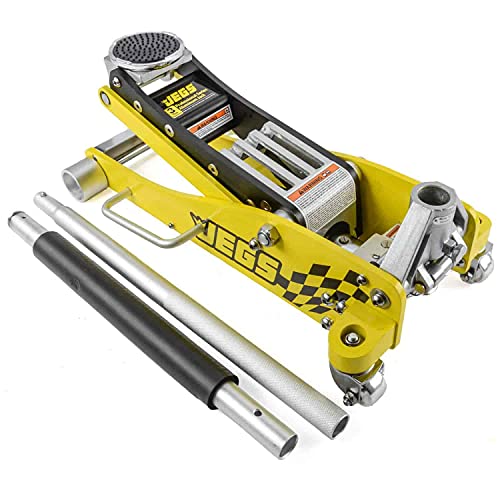


Who Should Buy Which 3 Ton Car Jack?
Sedan and Crossover Owners Doing Their Own Rotations
If your fleet is cars and crossovers, you need a jack that slides under low rocker panels and lifts high enough for a stand to fit with room to work. A standard 3 ton floor jack with a minimum height around 5 inches covers most cars; measure your lowest pinch weld before assuming. This group gets the most from a jack with a rubber saddle pad and smooth casters that do not scar the driveway. Our overview of the best car jack types compares floor, bottle, and scissor designs if you are unsure of the format.
SUV and Truck Owners
Tall vehicles flip the problem: clearance is plentiful, but lift height runs out. You need a jack whose maximum lift approaches or passes 18 to 19 inches so the stand can hold the frame rail with the tire clear of the ground. Capacity still matters at the front of a truck, where the engine concentrates weight. Buyers in this group should also read our guide to the best car jack for suv use, where lift height and saddle reach get full attention.
Owners of Lowered or Sporty Cars
A lowered car defeats a standard jack before the lift begins: the saddle simply will not fit under the sill. Low profile jacks drop the minimum height to around 3 to 3.5 inches and extend the nose to reach central jacking points, at a small cost in maximum lift. Pair one with low profile stands. Our guide to the best low profile car jack models compares minimum heights and nose lengths for exactly this problem.
Key Features to Compare
Capacity and the Corner Weight Rule
A jack never lifts the whole vehicle, only one corner or one end, so the working load is a fraction of the curb weight: roughly a quarter of the car at a corner, and up to about half when you lift a full front end from a central point. Three tons (6,000 pounds) therefore covers the front of a heavy pickup with margin, and any corner of anything short of a loaded heavy duty truck. Stay honest about the exceptions: a diesel crew cab front end is the one common case that eats most of that margin, and lifted trucks add height problems on top.
Lift Range: Minimum and Maximum Height
Both ends of the range matter. Minimum height decides which cars the jack can enter at all; measure from the ground to your jacking point and demand clearance to spare. Maximum height decides whether the wheel clears the ground with a stand placed, which for tall SUVs and trucks means shopping near the top of the range. Long reach models trade a little of both for the ability to slide deep under a car to a subframe point, which is the correct way to lift many modern unibody cars from the center.
Pump Speed and Lifting Effort
Dual piston quick lift designs bring the saddle to the load in a few strokes, then switch to normal effort for the heavy part of the lift. On a jack you use weekly, that feature saves real time and is worth a modest premium. Single piston budget jacks work fine but take a dozen strokes before any lifting happens. Handle length and two piece handles also matter: a longer handle means less force per stroke and better control when lowering, where a quality jack creeps down smoothly instead of dropping when the valve cracks open.
Steel Versus Aluminum Construction
Steel 3 ton jacks typically weigh 60 to 80 pounds: stable, durable, and cheap, but a handful to load into a trunk. Aluminum racing style jacks cut that nearly in half, which matters if the jack travels to a track day or a friend's driveway, and they resist rust in damp garages. The trade offs are price and a slightly less planted feel on rough concrete. For a jack that lives in one garage, steel is the value answer; for a jack that moves, aluminum earns its cost the first time you carry it. Floor jack shoppers can compare builds further in our guide to the best floor car jack.
Saddle Size, Pad, and Stability
The saddle is where 6,000 pounds of trust concentrates into a few square inches. A large, toothed steel saddle grips frame rails securely, while a rubber pad insert protects coated pinch welds and painted surfaces on newer cars. Check that the saddle rotates or at least sits flat as the arm arcs, since a jack lifts in an arc, not straight up, and the contact point shifts during the lift. Wide stance and large rear casters keep the jack tracking straight instead of twisting toward the load on imperfect concrete.
Safety Valve and Build Standards
Every decent floor jack has an overload valve that refuses a lift beyond capacity instead of bending or bursting a seal; never buy one without it. Look for compliance with the ASME PASE standard for portable automotive service equipment, which covers testing and labeling. Inspect welds and hardware on arrival, since build quality varies more in this category than in almost any other tool. And fix the rule in your head now: the jack is a lifting device only. The moment the vehicle is up, stands go under, and the jack becomes the backup, never the support.
Positioning the Jack and Stands Correctly
Work on flat, level concrete, never on gravel, grass, or a slope, where a loaded jack can roll or sink. Chock the wheel diagonally opposite the corner you are lifting, set the parking brake, and place the saddle exactly on the manufacturer's jacking point: a pinch weld notch on most cars, a frame rail or subframe point on trucks, confirmed in the owner's manual rather than guessed. Pump until the tire just clears the ground, slide the stand under the designated support point, and lower the vehicle onto the stand slowly. Give the car a firm shake before going under; a setup that survives the shake test is the only setup worth trusting. If a vehicle ever falls or a crush injury occurs, call emergency services immediately, since internal injuries from even a low fall of a vehicle edge can be severe and not obvious.
Common Mistakes to Avoid
- Working under a car held only by the jack, when a seal failure can lower it without warning.
- Lifting on a driveway slope or gravel, letting casters roll or sink under load.
- Placing the saddle on plastic trim, a floor pan, or an exhaust part instead of the rated jacking point.
- Skipping wheel chocks, so the car rolls off the saddle as the geometry shifts during the lift.
- Using a 2 ton jack on a truck front end because it was cheaper, consuming the entire safety margin.
- Lowering the car with the handle spun quickly, dropping the load instead of easing it onto the stands.
How to Make Your 3 Ton Floor Jack Last Longer
Hydraulics last when the oil is clean and the ram stays protected. Store the jack with the saddle lowered and the release valve closed, which keeps the ram retracted and its polished surface away from dust and moisture. Check the oil level yearly through the filler plug, top up with proper hydraulic jack oil (never brake fluid or motor oil), and bleed the system if the lift turns spongy, a simple pump and valve routine in the manual. Grease the pivot points and caster axles each season, wipe grit off the ram before lowering after dirty work, and investigate any oil weep early, since a jack that creeps down under load is telling you to retire or rebuild it.
FAQ
Is a 3 ton jack enough for a full size pickup truck?
For corner lifts, comfortably yes, and for a front end lift from the center of a half ton truck, yes with normal margin. The watch case is a diesel or heavily loaded heavy duty truck, where the front end alone can approach the jack's rating; there, lift one corner at a time and use stands rated for the load. Remember the rating that matters most day to day is the stand pair's, since they hold the truck while you work.
What is the difference between a floor jack and jack stands?
The jack lifts; the stands hold. A floor jack uses hydraulics that can drift or fail, so it is never a support device, while a stand is a mechanical lock with a ratchet or pin that cannot descend on its own. The correct sequence is always jack up, stand under, lower onto the stand, then work. Skipping the stand step to save two minutes is the single most dangerous habit in home car repair.
How high does a 3 ton jack need to lift for SUV work?
Plan on needing the stand saddle around 16 to 18 inches under a frame rail for most SUVs, with the tire fully clear. That means shopping for a jack with a maximum lift of at least 18 inches, and more if the truck is lifted or on oversized tires. Owners of tall rigs sometimes step up to a long reach or high lift model rather than stacking anything under the jack, which should never be done.
Is an aluminum 3 ton jack as strong as a steel one?
Yes, when both carry the same rating and standard compliance, the rating is the rating regardless of material. The differences are weight, price, and feel: aluminum jacks cost more and can flex slightly on rough surfaces, while steel jacks shrug off abuse and stay put. Choose by how often the jack travels, not by doubts about strength, and inspect either material for cracks around the lift arm pivots during your yearly check.
How long does a 3 ton floor jack last, and when should it be replaced?
A decent jack lasts decades in home use, with seal kits available for better brands when weeping starts. Retire or professionally rebuild a jack that creeps downward under a steady load, shows a bent lift arm or cracked casting, or has a ram scored deeply enough to tear seals. Those are structural warnings, not quirks, and a replacement jack costs far less than the alternative outcomes.
Final Thoughts
Match the lift range to your lowest and tallest vehicles, insist on an overload valve and honest build quality, and pair any jack with rated stands from day one. Compare the candidates in the product table above, and the best 3 ton car jack for your garage will lift everything you own, smoothly and safely, for many years.


