
Best Beam Torque Wrenches in 2026: How to Choose and Read One
Disclosure: We may earn a commission when you buy through links on this page, at no extra cost to you. As an Amazon Associate I earn from qualifying purchases. Learn more

Beam torque wrenches are simple, durable, and hard to knock out of calibration. Learn how to choose one by range, drive size, scale, and handle design.
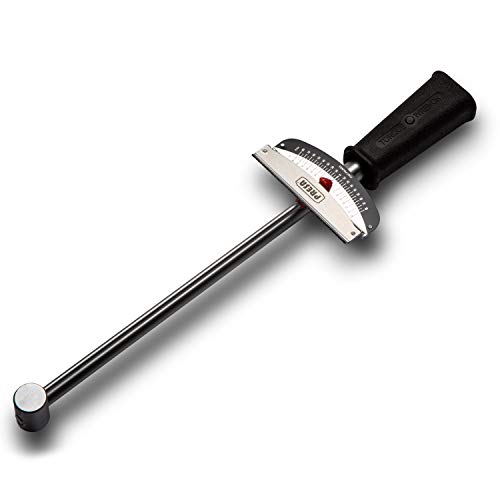
A beam torque wrench is the oldest torque design still on sale, and it survives because it has almost nothing to break. A flexible beam bends as you pull, a pointer reads the bend against a scale, and that is the whole mechanism. No clicks, no batteries, no settings to forget. This guide explains how to choose the best beam torque wrench for your garage or bike stand, and how to read one well.
We will compare torque ranges, drive sizes, scale layouts, and the reading technique that makes beam wrenches accurate in practice. The product table shows the main options side by side, and our general guide to the best torque wrench covers click and digital types too.

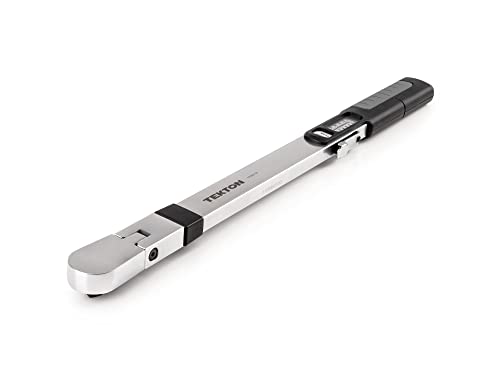


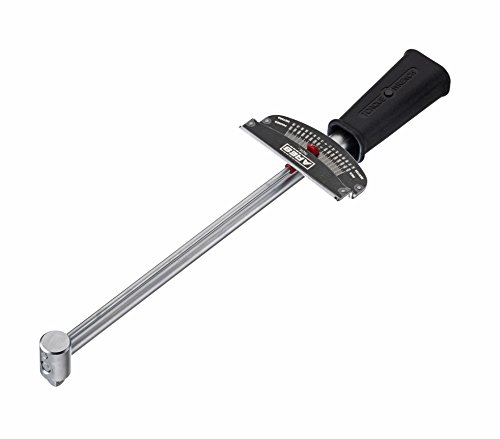
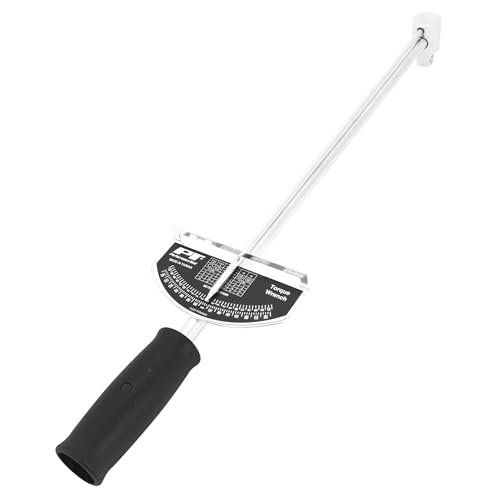
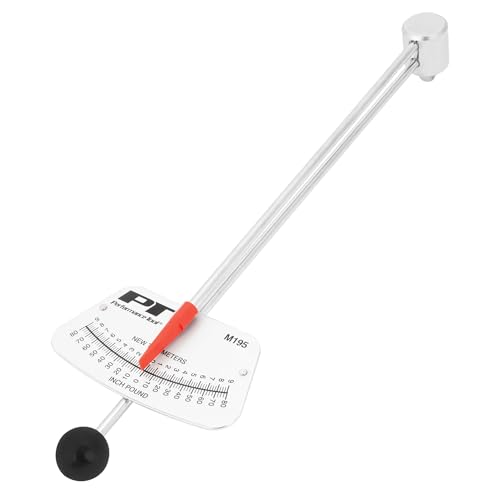


Who Should Buy a Beam Torque Wrench?
Bike Owners and Home Mechanics on a Budget
Cockpit bolts, seatposts, and stem clamps need low torque values that many cheap click wrenches cannot reach accurately. A small beam wrench with a 1/4 inch drive covers those inch pound ranges for about the price of a pizza, and it never needs its setting wound down after use. Riders setting up carbon parts will find more detail in our guide to the best torque wrench for bikes.
Car Owners Torquing Lug Nuts and Spark Plugs
A 1/2 inch drive beam wrench reaching about 150 foot pounds handles wheel lug nuts, the job most home mechanics torque most often. It tolerates being tossed in a trunk toolkit, and it reads the same after years of storage because no spring sits under tension. Our guide to the best torque wrench for lug nuts covers the full wheel routine, including the recheck after your first short drive.
Mechanics Who Want a Reference Wrench
Experienced mechanics often keep a beam wrench as a truth checker for their click wrenches. If the two disagree on the same bolt, the click wrench is the one due for calibration, because the beam design has no internal parts to drift. A beam wrench also tightens left hand threads that many click models cannot measure, which matters on some pedals, fans, and older equipment.
Key Features to Compare
Torque Range and Drive Size
Beam wrenches come in three common pairings: 1/4 inch drive reading in inch pounds for bikes and small fasteners, 3/8 inch drive for mid range engine and chassis work, and 1/2 inch drive reading up to about 150 foot pounds for wheels and suspension bolts. Accuracy is best in the middle of the scale, so pick a wrench whose range puts your usual target near the center, not at the very top or bottom. Motorcycle owners juggling many small steel and aluminum fasteners can compare focused advice in our guide to the best torque wrench for motorcycles.
Scale Layout and Readability
The scale is the whole display, so its layout decides how the wrench feels in use. Dual scales that show foot pounds on one side and Newton meters on the other save conversion math when a manual lists metric values. Fine, well spaced graduations make small readings repeatable, while crowded scales near the low end invite guessing. Some models add a memory pointer that stays at the highest reading reached, which helps when you cannot watch the scale and pull at the same time, such as under a vehicle.
Accuracy That Does Not Drift
A beam wrench measures with the flex of solid steel, so there is no spring to tire and no mechanism to fall out of adjustment with age. If the pointer rests at zero, the wrench reads correctly, and that simple check replaces the calibration schedule other types need. Typical accuracy is a few percent of the reading, which suits lug nuts, bike parts, and general fasteners well. For engine internals with tight factory tolerances, follow the service manual and consider whether a recently calibrated click or digital wrench fits the job better.
Beam Length, Handle, and Working Room
Longer beams give more leverage, so a 1/2 inch drive wrench pulls to 150 foot pounds without heroics, but it also needs swing room around the bolt. Shorter compact beams fit bike stands and cramped engine bays. The handle on a beam wrench pivots or floats on purpose: force must enter at that grip point for the reading to be true. A comfortable, clearly defined grip section helps you pull the same way every time, which is where repeatability really comes from.
Price and What You Give Up
Beam wrenches cost far less than click or digital models of similar range, often under $30 for common sizes. What you give up is speed and convenience: there is no click to signal the target, you must watch the scale as you pull, and reading a pointer under a car in poor light takes patience. For occasional torque jobs and as a calibration reference, those trade offs are easy to accept. For production pace work with dozens of bolts an hour, most people prefer a click type.
How to Read a Beam Torque Wrench Correctly
Grip only the handle section and let it pivot freely in your hand, never choke up onto the beam itself. Pull smoothly and steadily, because jerking overshoots the target before your eyes can react. Watch the pointer from directly in front of the scale: reading at an angle shifts the apparent number, an error called parallax. Stop the instant the pointer touches your target value, since the wrench gives no click to stop you.
Two habits make readings repeatable. First, approach the final value in one continuous pull rather than a series of tugs, because each restart adds force unpredictably. Second, confirm the pointer sits exactly on zero before you start, and give the handle a gentle flex and release to settle it. On critical fasteners such as wheel lugs, work in a star pattern and pass over the full set twice, which evens out clamp load across the flange.
Common Mistakes to Avoid
- Pulling on the beam or shaft instead of the handle grip, which bends the reading because the force enters at the wrong point.
- Reading the scale from an angle, so parallax shifts the value you think you see.
- Working near the very bottom of the range, where a small reading error becomes a large share of the target torque.
- Storing the wrench under heavy tools, which can bend the pointer so it no longer rests at zero.
- Pulling straight past the target mark, since no click or beep will warn you to stop.
How to Make Your Beam Torque Wrench Last Longer
Store the wrench in its case or on a hook where nothing heavy rests on it, and the pointer and beam will keep their shape for decades. Check before each use that the pointer rests at zero; if it sits slightly off after a knock, the thin pointer can usually be eased back to zero with gentle finger pressure. Keep the scale plate clean and dry so the markings stay readable, and wipe the beam after use in damp garages. Never use the wrench as a breaker bar for seized bolts, because one hard overload can bend the beam beyond a simple pointer fix.
FAQ
Are beam torque wrenches accurate enough for most home jobs?
Yes, for lug nuts, bike hardware, spark plugs, and general fasteners, a beam wrench in good condition is accurate enough when you use the middle of its range and read it straight on. Its accuracy depends more on your technique than on the tool, which is why a slow steady pull matters. Jobs with factory torque plus angle specifications follow a different procedure and need the tools the service manual names.
Does a beam torque wrench need calibration?
It needs no scheduled calibration, because there is no spring or mechanism to drift. Your calibration check is simply confirming the pointer rests at zero before use. If the wrench is dropped hard or used to break loose a seized bolt, compare it against a wrench you trust on the same fastener, and retire it if the two disagree by more than a few percent after the pointer is rezeroed.
Can a beam torque wrench tighten left hand threads?
Yes, and this is a quiet strength of the design. The beam bends either way, so the same wrench measures counterclockwise torque for left hand threads found on some bicycle pedals, mower blades, and fan clutches. Just confirm your model prints a scale that reads in both directions, or read the deflection on the same scale as the pointer swings the other way. Many click wrenches, by contrast, only measure in the tightening direction they were built for.
How do you convert inch pounds to foot pounds on a beam wrench?
Divide inch pounds by 12 to get foot pounds, so 96 inch pounds equals 8 foot pounds. Small 1/4 inch drive beam wrenches usually print inch pound scales, while larger drives print foot pounds, and mixing the two up is a classic cause of snapped bike bolts. When a manual gives Newton meters, use the second scale if your wrench has one, rather than converting in your head mid job.
How long does a beam torque wrench last?
Decades is a fair answer, because the tool is a shaped piece of spring steel, a pointer, and a handle. There are no batteries to leak, no ratchet teeth under load, and no springs under constant tension. The usual end of life is physical damage: a bent beam from abuse as a pry bar, or a scale plate rusted unreadable. Kept in a case and used only for torquing, a beam wrench can outlast the vehicles it services.
Final Thoughts
Choose your drive size and range around the fasteners you torque most, then learn the steady pull and straight on reading that make the design shine. Use the product table to compare ranges and scales side by side. For occasional jobs, tight budgets, and anyone who wants a wrench that cannot quietly drift out of calibration, the best beam torque wrench is hard to beat.


