
Best Car Jacks for SUV in 2026: A Buying Guide
Disclosure: We may earn a commission when you buy through links on this page, at no extra cost to you. As an Amazon Associate I earn from qualifying purchases. Learn more

An SUV needs a jack with real capacity and lift height. Compare ratings, saddle fit and stand habits before you buy.
An SUV asks more of a jack than a sedan does, in two ways that matter every time you lift. The vehicle weighs more, often well past two tons at the curb, and it sits higher, so the jack must travel further before the tire leaves the ground. The best car jack for SUV work pairs a true 3 ton capacity with a lift range that starts low enough to slide under the frame and rises high enough to matter.
This guide explains the numbers behind the comparison table below, including how to read capacity ratings and saddle height. It also covers the safety habits that matter most with tall, heavy vehicles, since an SUV on a jack deserves more respect than a compact car does.


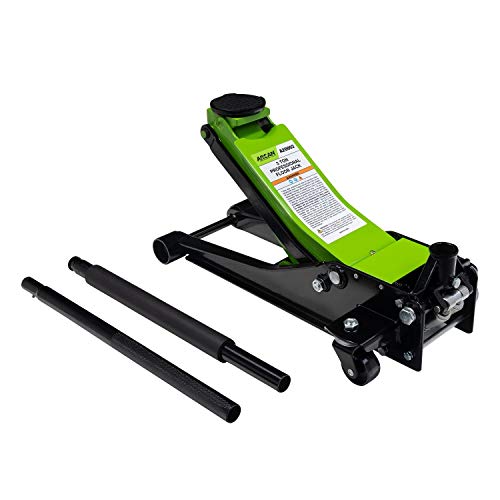


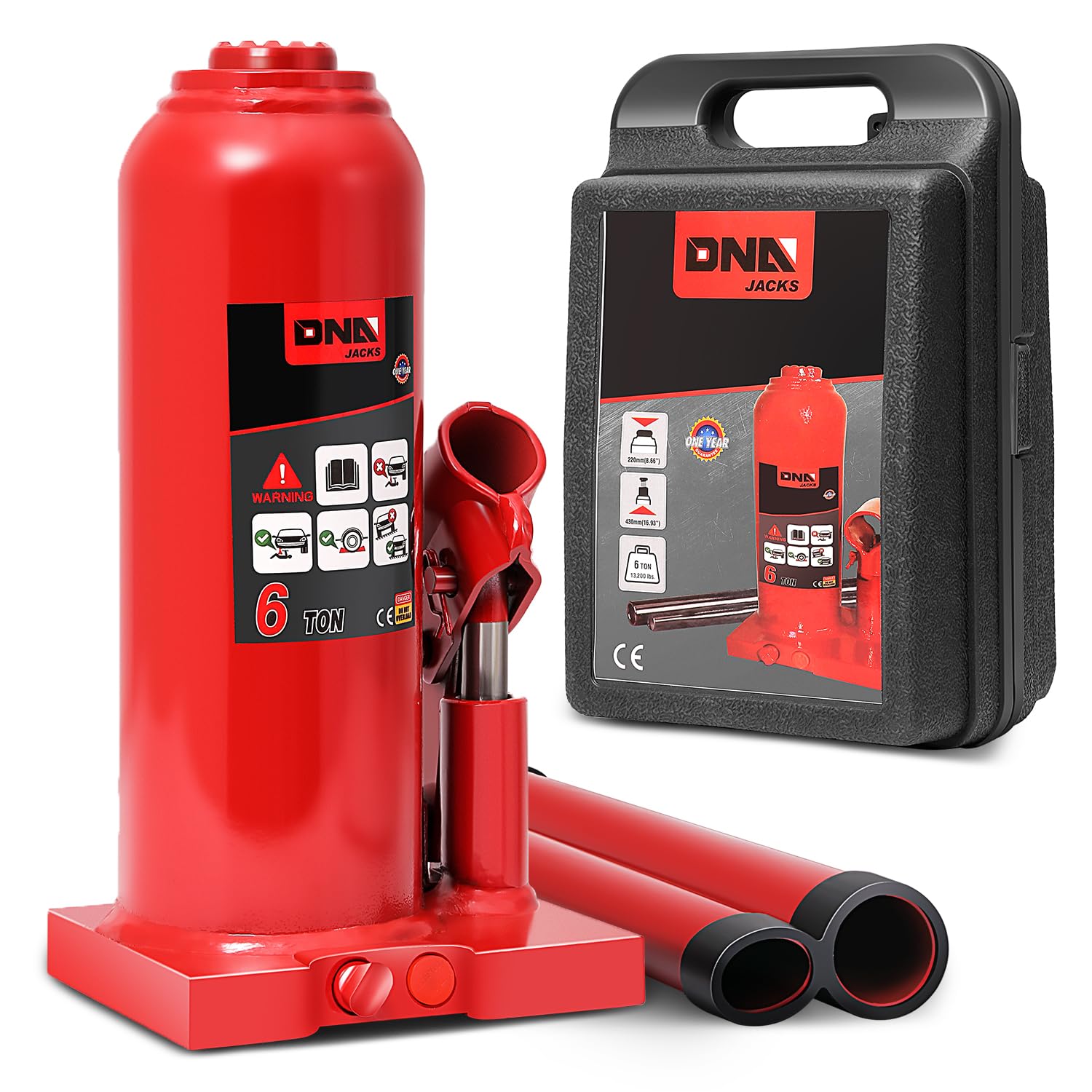
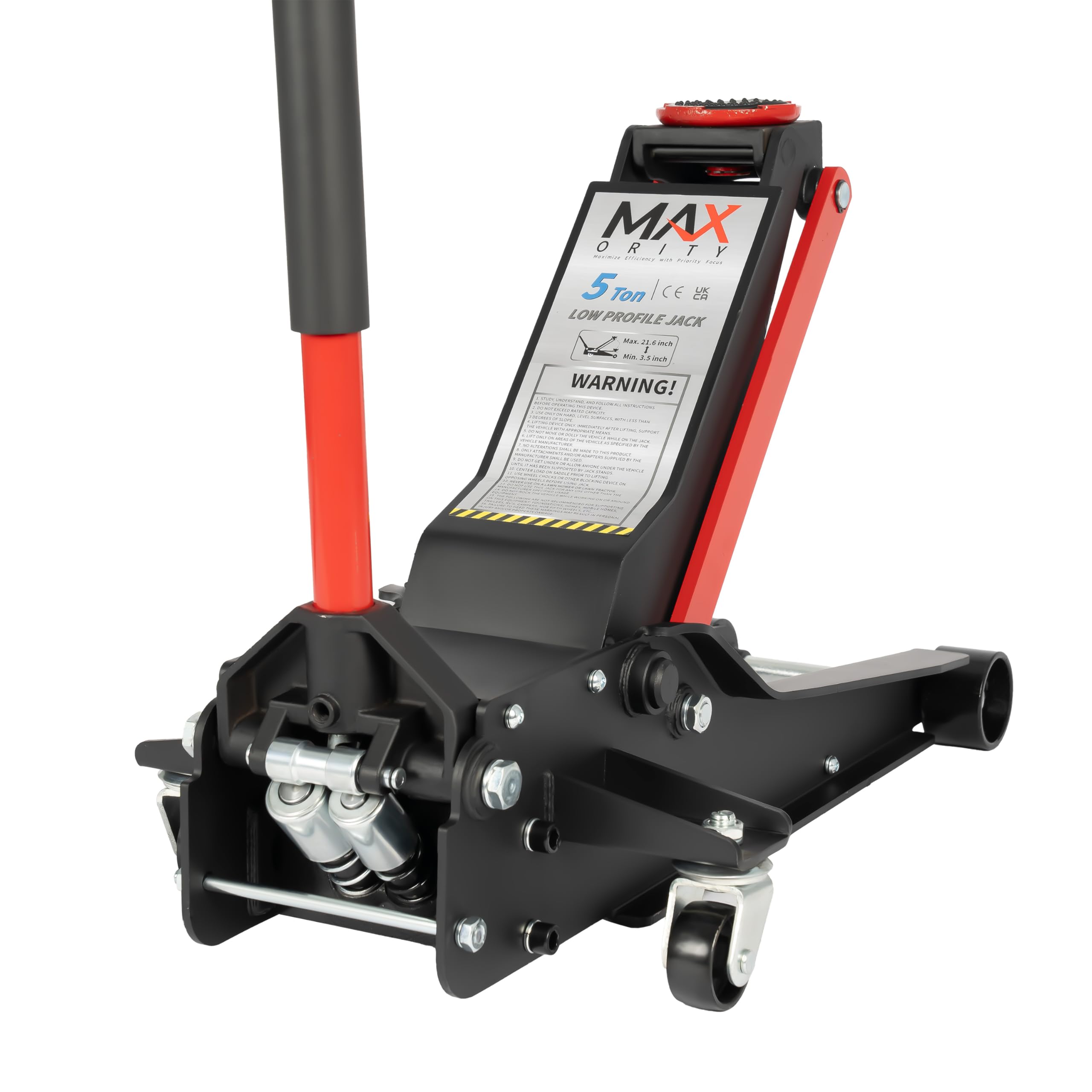
Who Should Buy Which Car Jack for an SUV?
Owners Who Rotate Tires and Swap Seasonal Wheels
If you lift your SUV several times a year for rotations and winter wheels, a hydraulic floor jack with a dual piston quick lift saves real effort, because many pumps are wasted just reaching the frame. Choose a saddle that cradles the pinch weld or frame rail without chewing the coating. The broader best car jack category gives context on the other jack types you will see while shopping.
Drivers Who Want an Emergency Jack That Actually Fits
The factory scissor jack works, barely, and it is slow and tippy on soft shoulders. A compact bottle jack rated at 4 tons or more, paired with a wide base board, is a stronger roadside choice for a heavy SUV. Check the minimum height against your frame clearance with a flat tire, because a sagging SUV sits lower than the brochure height and some bottle jacks will not fit under it.
Home Mechanics Doing Brake and Suspension Work
For work beyond wheel swaps, lift height and stability decide what you can reach. A long reach floor jack lets you place stands at the frame while the suspension hangs free. You will pair it with rated stands on every job, so budget for both together rather than buying the jack alone and improvising support later.
Key Features to Compare
Capacity Rating Matched to SUV Weight
A jack lifts only one corner or one end of the vehicle, never the whole curb weight, but SUVs push the math harder than cars. A 3 ton floor jack is the sensible floor for most midsize and full size SUVs, giving margin above the roughly half of vehicle weight a front lift carries. Our rundown of the best 3 ton car jack options explains how ratings work and why a safety overload valve matters when a lift goes wrong.
Lift Range and Maximum Height
Ground clearance on SUVs runs high, and taller all terrain tires add more, so check the maximum lift height against your frame rail height plus the droop of the suspension. Many standard jacks top out around 18 to 20 inches, which can leave an SUV tire still touching after full travel. High lift models reaching about 24 inches solve this. Minimum height matters too, especially on sport trimmed SUVs that sit lower than their off road siblings.
Saddle Design and Contact Patch
The saddle should meet the lift point flat and stay there under load. Large steel saddles with teeth or a rubber pad grip frame rails well, while small cup saddles can walk on rounded surfaces. Some owners add a pinch weld adapter for unibody SUVs, which spreads the load and protects the seam from folding. Whatever you choose, confirm the saddle diameter suits your lift points, because a saddle that only touches an edge concentrates force exactly where damage starts.
Floor Jack, Bottle Jack, or Scissor Jack?
A best floor car jack rolls under the vehicle, pumps fast, and lowers in a controlled way, making it the home garage favorite for SUVs. Bottle jacks offer high capacity in a small package and suit roadside kits, but their narrow base demands firm, level ground. Scissor jacks are slow and the least stable, fine for a single emergency tire change on pavement and little else. Match the type to where the lift happens most often.
Pump Speed and Lowering Control
Dual piston pumps raise the saddle to the load point in a few strokes, which you appreciate when the jack starts far below a tall frame. Just as important is the release valve feel: a smooth, gradual lowering lets you settle the SUV onto stands without a jolt. Jerky release valves make precise stand placement stressful. Foot pedal pumps keep your hands free to steady the handle and watch the saddle, a small feature that earns its keep on heavy vehicles.
Steel or Aluminum Construction
Steel floor jacks weigh more but shrug off years of garage abuse and usually cost less for the same rating. Aluminum models cut the weight nearly in half, which matters if you carry the jack to the vehicle or store it on a shelf. For a fixed garage corner, steel is the value pick. For a jack that travels in the cargo area as an emergency upgrade, aluminum or a bottle jack keeps the load sensible.
Placing the Jack and Stands Under an SUV
Work on flat concrete whenever possible, because asphalt softens in heat and gravel lets bases shift. Chock the wheel diagonally opposite the lift, set the parking brake, and lift only at the points the owner manual names, usually frame rails or reinforced pinch welds. Raise just high enough to slide the stand in, then lower the vehicle onto the stand and keep the jack in light contact as a backup. Never put any part of your body under an SUV held only by a jack; hydraulics can fail without warning, and stands are the cheap insurance that prevents a fatal mistake. Even the best car jack for SUV lifting is only a lifting device, and this routine is what makes it safe.
Common Mistakes to Avoid
- Buying a 2 ton jack for a full size SUV, leaving almost no safety margin at a front corner lift.
- Discovering at the roadside that the jack maximum height cannot lift a tall tire clear of the ground.
- Lifting on a differential housing or oil pan because it looked solid, bending parts never meant to carry the vehicle.
- Skipping wheel chocks on a slight slope, so the SUV rolls off the saddle as the weight shifts.
- Working under the vehicle while it rests only on the jack, without stands taking the load.
How to Make Your Car Jack Last Longer
Store the jack with the release valve closed and the saddle fully lowered, which relaxes the hydraulic seals and keeps the ram clean. Wipe grit off the ram before lowering after each use, since dirt dragged past the seal is the top cause of slow leaks. Top up with proper jack oil if the lift feels spongy, and bleed air by opening the valve and pumping the handle a few times. Keep the caster wheels rolling freely with an occasional drop of oil, and park the jack indoors rather than in a damp trunk well.
FAQ
What size jack do I need for a full size SUV?
A 3 ton floor jack covers most full size SUVs with a sensible safety margin, since one lift rarely carries more than about half the vehicle weight. Very heavy models with big payloads may justify a 4 ton rating for extra confidence. Check your door jamb sticker for the actual vehicle weight rather than guessing from the model name, and remember the rating must exceed the load at the lifted end, not the whole truck.
Why does my jack run out of lift before the tire clears?
Tall suspension droop is the usual cause: as the body rises, the wheel hangs lower on its suspension, so the tire stays grounded longer than you expect. The fix is a jack with more maximum height, not stacked blocks under the saddle, which create a tipping hazard. Some owners lift at the lower control arm for wheel work, which reduces droop travel, but only where the manual allows that point.
Can I use a low profile jack on an SUV?
You can, but it solves a problem SUVs rarely have. Low profile models trade maximum height for a slim body, which is the wrong trade for a tall vehicle. Our guide to the best low profile car jack range suits lowered cars and sports sedans. For an SUV, spend the same money on lift range and capacity instead of a slim frame you will never need.
Are bottle jacks safe for SUV tire changes?
Yes, on firm level ground with the base fully supported and the load centered on the saddle. Their weakness is the small footprint, so soft soil or gravel calls for a wide rigid board under the base. Lift only to change the wheel, keep hands and feet clear of the load path, and lower the vehicle as soon as the spare is snug. For repeated garage work, a floor jack is simply more stable and faster.
How often should I service a hydraulic floor jack?
Check the oil level and test the lift under load about once a year, or sooner if the saddle drifts down slowly. Drift means air or worn seals, and bleeding the system often restores it. Replace any jack that leaks at the ram seal after service, since a jack that cannot hold pressure has no place under a two ton vehicle. Keep the manual, because bleed steps vary by design.
Final Thoughts
The product table above puts capacity and lift height side by side so you can match a jack to your vehicle weight and clearance. The best car jack for SUV owners is the one rated with margin to spare, tall enough to finish the lift, and always paired with stands before anyone reaches under the vehicle. Buy the rating first and the convenience features second.


