
Best 4 Step Ladders (2026): A Guide for Real Projects
Disclosure: We may earn a commission when you buy through links on this page, at no extra cost to you. As an Amazon Associate I earn from qualifying purchases. Learn more

Choose the best 4 step ladder with clear reach math, duty rating and tread advice, plus setup and care tips that keep every climb steady and safe.
A four step ladder is the size most homes reach for again and again: tall enough for ceiling bulbs, smoke alarms and the top shelf of a closet, short enough to carry through a doorway with one hand. The best 4 step ladder for your home balances that reach against stability, because the fourth step only helps if you trust standing on the ones below it. This guide covers duty ratings, tread design and storage so you buy once and climb with confidence.
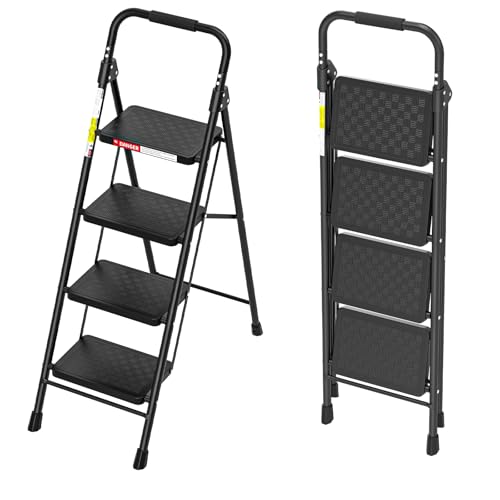
Models that look identical in photos differ in the details that matter on the third step: how wide the treads feel under your shoes, whether the top is a simple cap or a real platform, and how the spreader bars lock. The comparison table below lays out the common styles, and the sections after it explain how to read the labels and match a ladder to your rooms and your body.

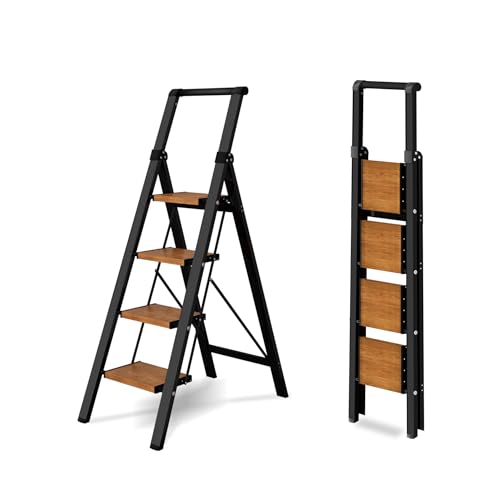
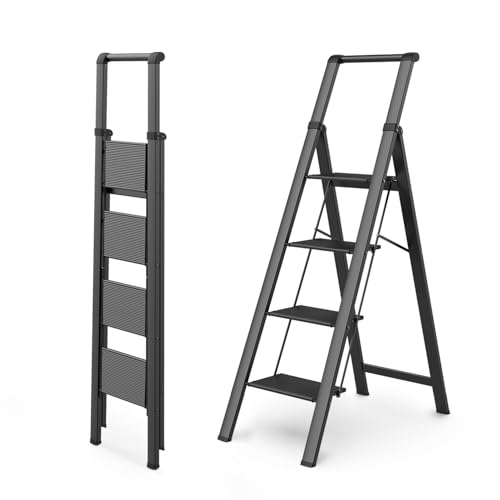

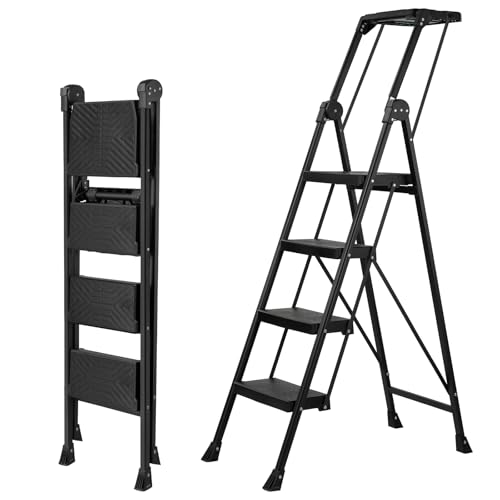
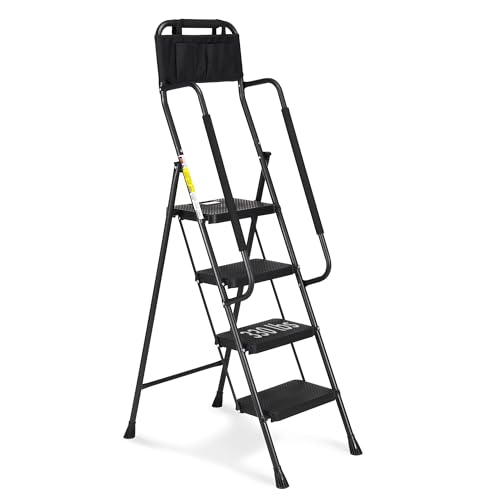


Who Should Buy Which 4 Step Ladder?
Apartment and Condo Owners Short on Storage
Your ladder lives in a narrow closet or behind a door, so folded depth and light weight decide the model more than anything else. A slim aluminum ladder under 15 pounds with a flat fold fits those spaces and still reaches a 9 or 10 foot ceiling. If storage is impossible and your jobs are taller, the collapsing designs in our best telescoping ladder guide shrink further, though they climb with a different feel than a step ladder.
Homeowners Handling Routine Up High Chores
You change bulbs, clean gutters at a single story eave, paint trim and reach the top of kitchen cabinets. A standard four step with a project tray on top and a duty rating that covers you plus a paint can is your everyday match. The broader sizing advice in our best ladder guide helps if you are also weighing a taller ladder for outdoor work, so the two purchases do not overlap.
Older Users and Anyone Who Wants a Platform Top
Standing on a narrow rung for ten minutes while you swap a light fixture is tiring at any age. A platform style four step gives you a deep standing surface and often a taller front rail to hold, which changes the whole feel of the climb. Choose the platform version if balance or foot comfort is a concern, and pair it with the habits in our best ladder for home use guide, where steady setup gets as much attention as the hardware.
Key Features to Compare
Duty Rating and What It Really Covers
Ladders carry a duty rating that states the maximum load, including you, your clothes and anything you hold. Type III models hold 200 pounds, Type II holds 225, Type I holds 250 and Type IA holds 300. Add your weight to the heaviest load you realistically carry up, such as a full paint can or a ceiling fan box, then pick the rating above that total. Ratings assume the ladder stands on a firm, level surface with spreaders locked; a higher rating cannot rescue a ladder set up on a slope or a rug edge.
Material: Aluminum Versus Fiberglass
Aluminum four step ladders are lighter and cheaper, and they shrug off the bumps of home storage. Fiberglass rails weigh more but do not conduct electricity, which matters if you work near a panel, exposed wiring or outdoor service lines. For pure indoor chores away from wiring, aluminum is the sensible default. For garage and exterior work where a metal ladder might contact a live conductor, fiberglass is the safer spend. Either material fails the same way when abused, so check rails for dents and cracks rather than trusting the material alone.
Top Design: Cap, Tray or Standing Platform
The top of the ladder shapes how you work. A simple cap gives you a place to set small parts. A molded project tray adds slots for a drill, a brush and a paint can, which keeps both hands freer on the climb down. A platform top replaces the top step with a wide standing deck, and safety rules treat it differently: you may stand on a platform designed for standing, but never on the top cap of a standard ladder. Match the top to your longest task, because painting a ceiling edge rewards the tray every minute.
Tread Depth and Slip Resistance
Steps on home ladders range from narrow 3 inch treads to deep 5 inch or platform surfaces. Deeper treads spread your weight across the whole foot, which reduces fatigue and the urge to shift around mid task. Look for ribs, grooves or a textured coating that grips shoe soles when dust or paint mist settles on the step. Climb in the shoes you actually work in when you test a ladder; a tread that feels fine in sneakers can feel slick in smooth soled house shoes.
Spreader Bars, Locks and Feet
Spreader bars hold the front and rear sections at the right angle, and they must lock positively on both sides before you climb. Squeeze and shake the ladder after setup; any play at the spreaders telegraphs straight into wobble at the top step. Rubber feet pads grip hard floors and keep the rails from skating on tile, so check that all four pads sit flat and are not worn smooth. On soft ground outdoors, wide feet resist sinking better than narrow caps, which keeps the ladder level as you shift your weight.
Folded Size, Weight and Carry Comfort
A four step ladder typically stands about 4 feet tall open and folds to a slab 5 to 7 inches deep. Weigh the ladder against your real carry: through the house, up basement stairs, out to the driveway. A model you dread fetching is a model you will replace with a chair, and chairs cause the falls ladders exist to prevent. Check for a carry handle or a latch that keeps the ladder closed in transit, since a ladder that swings open against your shins teaches bad habits fast.
Reach Math for a 4 Step Ladder
Manufacturers estimate your maximum reach as the ladder height plus about 4 feet for an average adult standing at the safe level. A typical four step ladder stands roughly 4 feet at the top cap, which puts your working reach near 8 feet and your hands right for 9 to 10 foot ceilings when you stand on the proper step. The highest safe standing level is marked on the rail; on most four step models it is the third step, with the fourth surface being the top cap you should not stand on unless it is a rated platform. Measure your ceiling, not your optimism, before deciding this size is enough.
Common Mistakes to Avoid
- Standing on the top cap of a standard ladder, which removes your handhold and puts your weight past the stable point.
- Setting up with only one spreader bar locked, so the rear section folds the first time you lean.
- Leaning out to the side for one more inch of reach, instead of climbing down and moving the ladder.
- Choosing a duty rating below your weight plus tools, which over stresses rails and step rivets on every climb.
- Using the ladder on grass or gravel without checking that all four feet sit firm, so it rocks as you shift.
- Carrying paint or tools in both hands on the climb, leaving no hand free to hold the rail.
How to Make Your 4 Step Ladder Last Longer
Wipe steps and rails down after dusty or wet jobs, and store the ladder indoors hanging on wall hooks or standing in a dry corner, since long sun exposure fades and weakens fiberglass and ground in grit dulls tread grip. Inspect rivets, spreader locks and foot pads twice a year, and tighten or replace worn pads before they let the rails skate. Never paint a fiberglass ladder, because paint hides the cracks you need to see. If a rail bends or a step cracks, retire the ladder; a repaired step is not a safe step.
FAQ
What is the best 4 step ladder for most homes?
For most homes, an aluminum four step with a Type I or IA rating, a project tray and slip resistant treads covers bulbs, paint and storage access with room to spare. Choose the platform version if you stand for long stretches or want a taller rail to hold. The product table above compares the current styles, so match the duty rating to your weight plus your usual load, then check the folded depth against your storage spot.
How high can you reach with a 4 step ladder?
Standing on the highest marked safe step, most adults reach about 8 to 9 feet with their hands, which suits ceilings up to roughly 10 feet for changing bulbs and fixtures. Your own height shifts that number by several inches either way. If your ceilings are taller, a step ladder this size will tempt you into standing where you should not; our best attic ladder guide covers fixed access for high storage, which is the safer answer for repeated trips up high.
Can you stand on the top step of a 4 step ladder?
On a standard ladder, no: the top cap is a shelf, not a step, and standing there puts your center of gravity above your last handhold. The exception is a platform model, where the top surface is a wide, rated standing deck with a rail in front of you. Read the labels on the rail before your first climb, because they state the highest standing level for that exact model, and that label overrules any general advice.
How long does a 4 step ladder last?
A home ladder used a few times a month and stored indoors can last well over a decade, since the wear points are feet pads, spreader pivots and tread surfaces rather than the rails. Drops and overloads shorten that life sharply. Check the ladder after any fall onto concrete even from standing height; damage that matters, like a hairline crack at a step rivet, hides in exactly the places a quick glance skips.
What should I do if I fall from a step ladder?
Treat any head strike, confusion, vomiting, severe headache or bleeding that will not stop as an emergency and call for medical help right away, because head injuries can worsen over hours. Even a fall that feels minor deserves attention the same day if pain grows, a limb swells, or you feel dizzy standing up. When in doubt, get checked; a clinician can rule out the injuries that do not show symptoms at first, and that caution is worth far more than the ladder.
Final Thoughts
The best 4 step ladder is the one rated for your load, steady on your floors and light enough that you fetch it instead of a chair. Match the top style to your longest task, respect the highest standing level printed on the rail, and store the ladder where it stays dry and straight. Compare the styles in the product table above, measure your ceilings once, and climb carefully; if balance ever feels uncertain, ask a professional or a family member to take the high jobs instead.


