
Best Angle Grinders of 2026: A Complete Buying Guide
Disclosure: We may earn a commission when you buy through links on this page, at no extra cost to you. As an Amazon Associate I earn from qualifying purchases. Learn more

The best angle grinder fits the discs and materials you use. Compare wheel size, switch type, speed control and safety features before you buy.
Few tools cover as much ground as an angle grinder: it slices rebar, grinds welds flat, strips rust and cuts tile. That range is exactly what makes shopping confusing, because wheel size, switch style and speed control all change what the tool does well. Picking the best angle grinder is less about the highest amp rating and more about matching the grinder to the discs and materials you will actually use.
This guide explains the specs that separate a controlled, useful grinder from a tiring one, then covers disc selection and safe setup. Scan the comparison table below for the headline numbers, and use the sections that follow to decide which size and features fit your work.


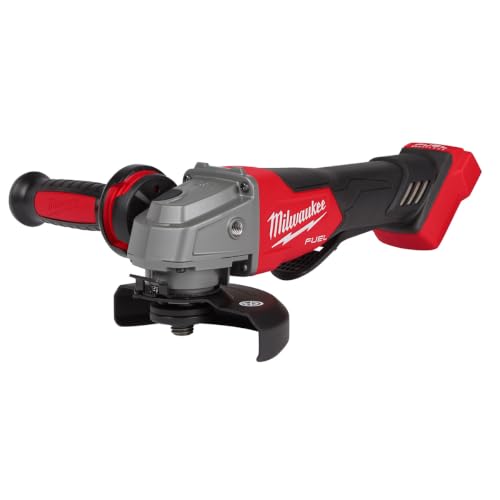


Who Should Buy Which Angle Grinder?
Welders and Metal Fabricators
If you prep joints, knock down weld beads and cut stock to length all week, look for a grinder with strong sustained power and a slim grip you can hold at odd angles. Variable speed helps with stainless steel, which discolors and hardens when a disc runs too hot. Our guide to the best angle grinder for welding focuses on the duty cycle and control this work demands.
Home Renovators Cutting Tile, Stone and Concrete
For bathroom remodels, paver patios and tuck pointing repairs, a 4 1/2 inch grinder with a diamond blade handles nearly everything. Corded models keep full power through long floor cuts without battery swaps, and they cost less for the same output. Dust control matters as much as power here, so plan on a vacuum or working outdoors with a respirator when you cut masonry.
Auto Hobbyists and Farmers
Cutting exhaust pipe, freeing rusted bolts and sharpening mower blades calls for torque at low cost and a tool that tolerates dirty storage. A mid range corded or cordless grinder with a paddle switch is easy to control with gloves on. Keep a wire wheel in the kit for rust and paint removal, and treat the grinder as a cutting tool first and a sander only with the right backing pad.
Key Features to Compare
Wheel Size and Cutting Depth
The 4 1/2 inch size dominates for good reason: it is light, cheap to feed with discs, and deep enough for pipe, rebar and most stock, cutting about an inch deep with a fresh wheel. A 5 inch grinder adds a little depth and disc life for a small weight penalty. Seven and 9 inch grinders are specialty tools for deep concrete cuts and heavy stock removal, and their size and kickback energy make them poor choices for general shop work. Buy the size your discs and guards are built around, because wheels and guards are not interchangeable across sizes.
Motor Power and Speed
Corded grinders rate power in amps, typically 6 to 15, while cordless models lean on brushless motors and battery size to hold speed under load. Most small grinders spin around 11,000 RPM, which suits cutting and grinding discs rated for that speed. What separates good tools is how little they slow when you lean into a cut. A grinder that bogs forces you to push harder, and pushing harder is what glazes discs and overheats motors. For most buyers, a mid range motor with honest speed retention beats a bargain tool with a big number on the box.
Switch Type and Restart Protection
Paddle switches stop the wheel the moment you release your grip, which is why many job sites and safety officers prefer them. Slide switches lock on for long grinding sessions but keep spinning if the tool is dropped. Trigger switches on larger grinders fall between the two. Restart protection, which prevents the tool from spinning up on its own when power returns after an outage or a tripped breaker, is worth having on any switch style. If you work with gloves, try the switch with gloves on before you buy.
Variable Speed for Different Materials
A speed dial that drops the wheel to around 2,800 to 6,600 RPM changes what the tool can do. Slow speeds keep polishing pads from slinging compound, reduce heat on stainless and plastic, and give wire wheels a longer working life. If your projects lean toward finishing and restoration, the best variable speed angle grinder designs add control that a fixed speed tool cannot match. For pure cutting and grinding of mild steel, fixed speed is simpler and cheaper, and you will rarely miss the dial.
Guards, Disc Ratings and Safety Design
The guard is not an accessory, it is the part standing between you and a disc that can shatter at full speed. Look for a guard that adjusts without tools so you actually reposition it as the cut angle changes. Every disc carries a maximum RPM printed on its label, and that number must equal or exceed the grinder speed. Electronic clutches and brakes on premium cordless models cut power when a wheel binds, reducing the twist that sprains wrists. Treat any grinder missing a guard as unusable until the correct guard is fitted.
Matching Discs to the Job
Thin cutting wheels around 0.045 inch slice steel and stainless with little effort but snap if you twist them in the cut, so keep the wheel straight and let it track. Grinding wheels are thicker and built for side pressure at a shallow angle. Flap discs bridge the two, grinding and blending in one step, and they are the friendly choice for shaping metal at home. For tile, stone and concrete, use a continuous rim or segmented diamond blade, and see our guide to the best angle grinder for metal if your work is mostly steel, since disc choice differs by metal type. Wire wheels strip rust and paint but throw bristles, so eye and skin protection are non negotiable. If a disc fragment or grinding debris hits an eye, or a cut needs more than a bandage, stop and get medical care the same day.
Common Mistakes to Avoid
- Removing the guard for a better view, because a bursting disc throws fragments along the wheel plane where the guard was meant to block them.
- Mounting a disc rated below the grinder speed, because overspeed can break the disc apart within seconds of startup.
- Using a thin cutting wheel to grind on its side, because side loads crack wheels that were only built for straight cuts.
- Mounting a disc without checking it first, because a wheel with a hairline crack or chipped edge can come apart at full speed.
- Cutting with the sparks aimed at your body or a fuel container, because the spark stream starts fires and ruins glass and painted surfaces nearby.
- Wearing loose sleeves and no eye protection, because rotating discs grab fabric fast and throw grit at face height.
How to Make Your Angle Grinder Last Longer
Blow dust out of the vents after masonry work, since abrasive grit wears brushes and bearings from the inside. Store discs flat, dry and off concrete floors, because resin bonded wheels absorb moisture and weaken over time, and check the date ring stamped on the metal center of each disc. Keep the spindle lock and flange clean so discs seat flat, and inspect the cord or battery contacts for damage each time you put the tool away. A grinder that starts to vibrate or smell hot is asking for a rest and an inspection, not more pressure.
FAQ
What size angle grinder is best for home use?
A 4 1/2 inch grinder is the right start for nearly every home shop, because discs are cheap everywhere and the tool stays light enough for overhead cuts. It handles rebar, bolts, tile and weld cleanup without drama. Step up to 5 inch only if you cut thick stock often, and remember that maximum cutting depth with a fresh 4 1/2 inch wheel is roughly one inch, which covers most pipe and angle iron you will meet at home.
Can an angle grinder cut through rebar and steel?
Yes, cutting steel is the core job of this tool. Use a thin abrasive cutting wheel made for metal, keep the cut straight, and support the stock so the kerf does not close and pinch the wheel as the piece separates. For repeated cuts in thick bar, a corded model holds speed better than a small cordless one; our overview of the best corded angle grinder explains the power difference in more detail.
Is a paddle switch safer than a slide switch on an angle grinder?
For most people, yes. A paddle switch stops the wheel as soon as your hand leaves the grip, which matters if the tool kicks or you lose balance. Slide switches that lock on are convenient for long grinding passes but demand more discipline. Many professional sites now require paddle switches for exactly this reason. Whichever style you choose, restart protection adds a second layer of safety when power is interrupted mid job.
How long do angle grinder discs last?
It depends on the material and your technique, but a cutting wheel that needs force is already done, no matter how much diameter remains. Discs wear fastest when you push sideways or cut with a glazed, shiny edge. One overlooked limit is shelf life: resin bonded discs carry an expiration date, often three years from manufacture, printed on the center ring. An expired disc can fail at speed even if it looks perfect, so rotate your stock and retire old wheels.
Do I need variable speed to polish with an angle grinder?
Polishing works far better at low speed, because full speed slings compound off the pad, builds heat and can burn through clear coat or scorch stainless. A variable speed grinder with a soft backing pad handles polishing, sanding with fiber discs and delicate rust removal on thin panels. If polishing is a rare task, a random orbit sander is gentler, but for metal finishing a speed controlled grinder earns its place.
Final Thoughts
Start with the 4 1/2 inch size unless your work clearly demands more, choose the switch style you will control with confidence, and never let a disc outrun its speed rating. Power, guard design and disc choice matter more than brand debates. Compare the shortlist in the product table above, stock the four disc types your projects need, and the best angle grinder for your bench will be the one that cuts straight, stops fast and feels balanced in your hand.


