
Best Battery Chargers for Boats in 2026: A Buying Guide
Disclosure: We may earn a commission when you buy through links on this page, at no extra cost to you. As an Amazon Associate I earn from qualifying purchases. Learn more

Choosing the best battery charger for boats? Compare onboard banks, waterproof ratings, ignition protection and charge profiles for marine batteries.
Boat batteries live a hard life: vibration, humidity, deep discharges from trolling motors, and long off seasons in storage. The best battery charger for boats is built for that environment, with sealed waterproof construction, corrosion resistant hardware, and charging profiles that care for starting, house, and trolling batteries at once. A garage charger borrowed from the car will work in a pinch, but it is not made to be mounted, splashed, or left connected all winter.
This guide covers onboard versus portable units, bank counts, and the marine safety ratings that matter, with the product table as a shortcut. For the general technology first, our hub guide to the best battery charger explains charge stages and amp ratings across all vehicle types.
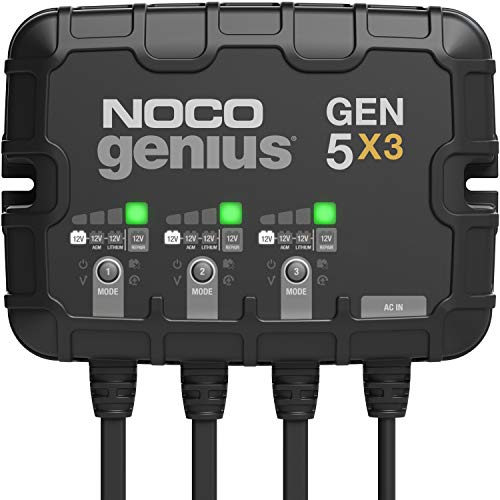
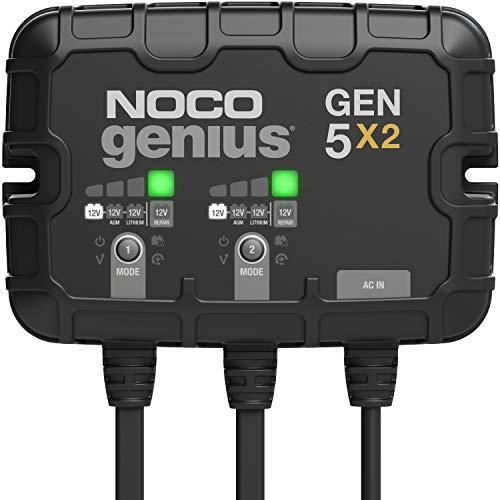


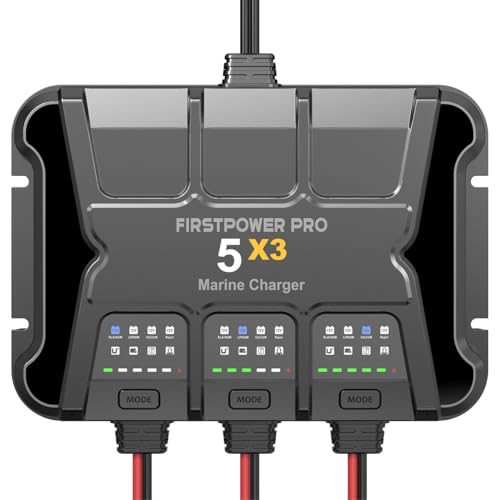

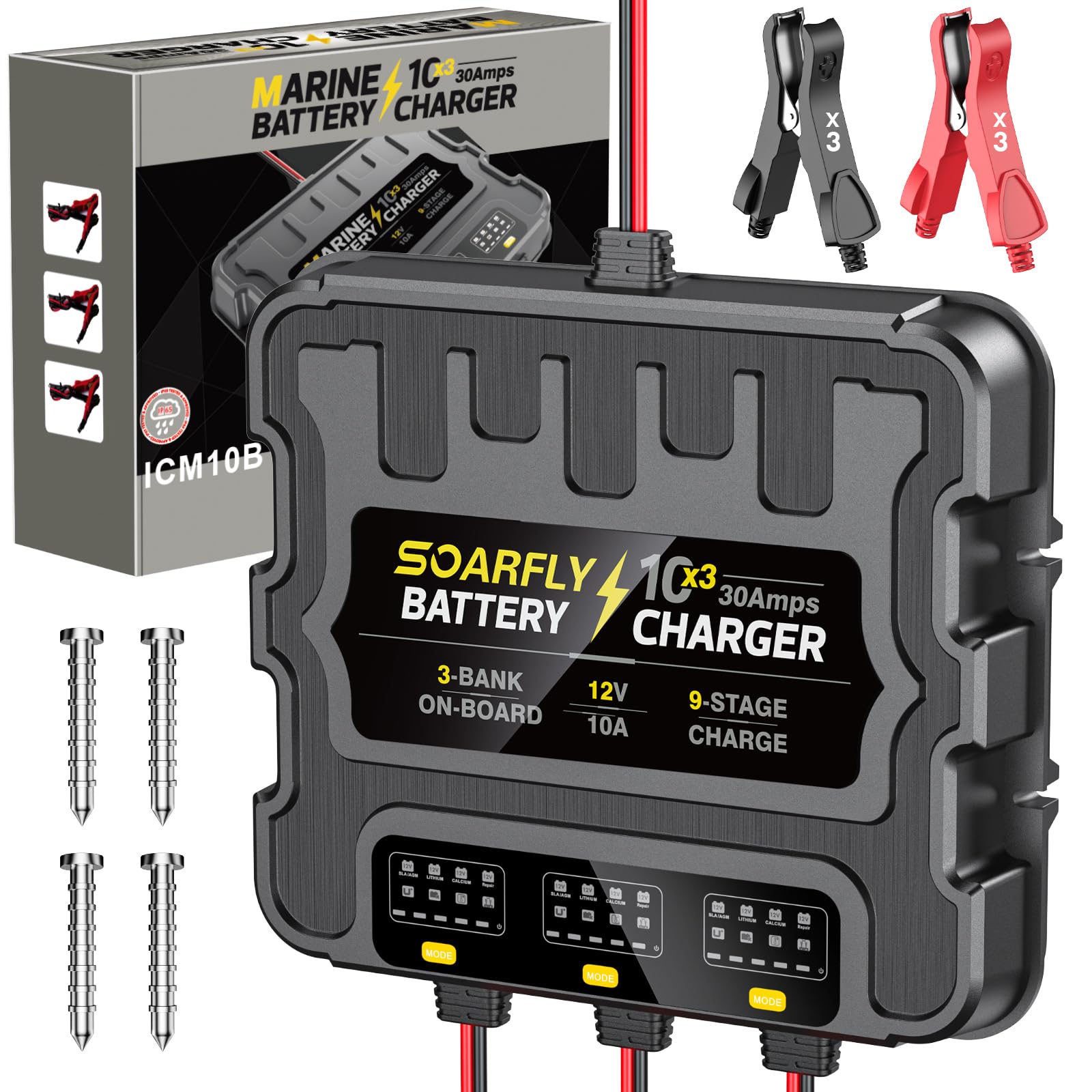

Who Should Buy Which Battery Charger for Boats?
Bass and Walleye Anglers With Trolling Motors
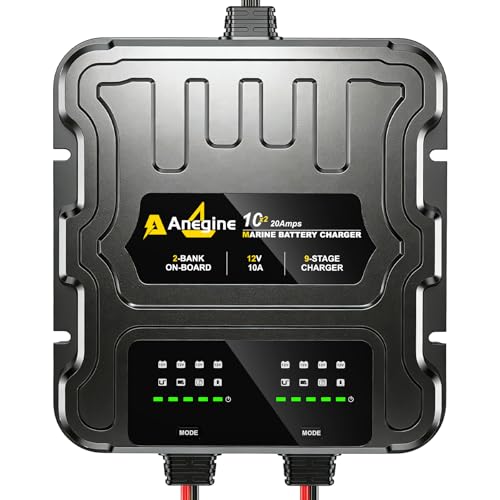
You run two or three deep cycle batteries hard all day and need them full again by morning. An onboard multi bank charger is your tool: plug in one cord at the dock or in the driveway and every battery charges on its own profile. Size the amps per bank to your battery capacity, because a weekend tournament schedule leaves no slack. Waterproof mounting inside a compartment keeps the unit safe from livewell splashes and road spray on the trailer.
Saltwater Center Console Owners
Salt air attacks everything, so your charger needs a fully sealed case, tinned wiring, and stainless mounting hardware that will not streak your gelcoat with rust. You likely run a starting battery plus a house battery for electronics, which points to two banks minimum. Ignition protection matters on gasoline powered boats, since the charger lives near the engine space. Rinse discipline and sealed construction together decide whether your charger lasts two seasons or ten.
Cruisers and Sailors With a House Bank
Your house bank is large, often several hundred amp hours, and it feeds lights, refrigeration, and instruments at anchor. You need higher total output, correct profiles for AGM or lithium banks, and temperature compensation so a hot engine room does not cook the batteries. A smart onboard unit that doubles as a maintainer over winter storage simplifies ownership. If your boat lives on a mooring without shore power, a different charging source enters the picture, covered below.
Key Features to Compare
Onboard Versus Portable Chargers
Onboard chargers bolt into the boat, wire permanently to each battery, and charge everything when you plug in a single shore or extension cord. They are waterproof, vibration resistant, and always ready, which is why most serious fishing boats use them. Portable chargers clamp on when needed and store ashore, suiting a single battery boat or a tender you service in the garage. The portable route costs less and serves several vehicles, but clamps corrode and connections get forgotten. Choose onboard when the boat has two or more batteries you charge weekly.
Bank Count and Amps per Bank
Each bank is an independent charging channel wired to one battery, so a three bank charger services a starting battery and two trolling batteries simultaneously, each at its own stage. Amps per bank drive recovery speed: as a rough rule, target output near ten percent of the battery's amp hour rating, so a 100 amp hour battery pairs well with about 10 amps. Undersized banks leave big trolling batteries short of full after an overnight charge, while oversizing buys little on small batteries. Banks also isolate a failing battery instead of dragging the whole system down.
Waterproof Rating and Sealed Construction
Marine chargers carry an ingress rating such as IP67 or IP68, meaning the case is sealed against dust and immersion, not merely splash resistant. That sealing matters in bilges, rod lockers, and compartments that get hosed out. Check that cable entries are molded and strain relieved, since water wicks along poorly sealed leads. A car charger used on a boat lacks this sealing entirely, which is a key reason our guide to the best battery charger for cars recommends keeping automotive units ashore.
Ignition Protection for Gasoline Boats
Gasoline vapor collects low in engine compartments, and any spark source there is a fire risk. Chargers marked ignition protected, built to marine ignition protection standards, are sealed so internal sparks cannot ignite surrounding fumes, and marine rules require this protection for equipment installed in gasoline engine spaces. Diesel boats face less vapor risk, but the sealed design still pays off in corrosion resistance. When you mount a charger near a gas engine or fuel tank, treat this rating as mandatory, not optional.
Charge Profiles for Your Battery Chemistry
Flooded lead acid, AGM, gel, and lithium iron phosphate batteries each want a distinct voltage profile, and the wrong one quietly shortens service life. Look for selectable or automatic profiles that name your chemistry, including a lithium setting if your trolling setup runs LiFePO4 batteries, which also need a wake up function after their protection circuit sleeps. Multi stage charging with a true float or maintenance mode lets you leave the charger connected without overcharging. Temperature compensation is a plus on boats stored in hot climates.
Mounting, Wiring, and Cable Length
Onboard units need leads long enough to reach each battery without splices, since every splice in a bilge is a corrosion point. Factory leads are often around five to six feet per bank, so measure your layout before buying. Mount the charger where air can circulate a little, on a vertical bulkhead if the maker allows, and route cables away from bilge water and sharp fiberglass edges. Ring terminals should be tinned copper with heat shrink, and an inline fuse near each battery protects the run.
Charging a Boat Without Shore Power
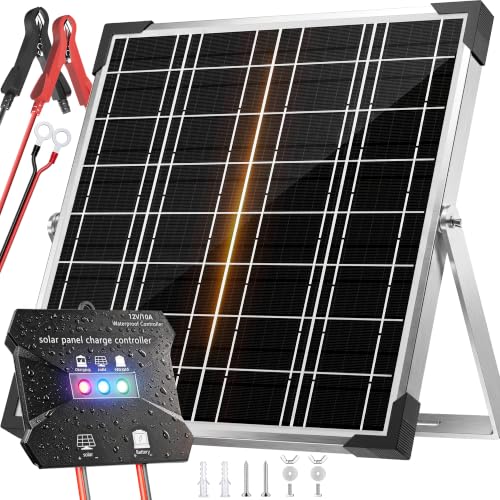
Boats on moorings, lifts, or in storage yards without outlets cannot use a plug in charger at all. A small solar panel with a marine charge controller keeps a starting battery topped against self discharge and bilge pump draws, which is why our guide to the best solar battery charger is the right detour for that situation. For a trailered boat stored at home, a low amp maintenance unit works well too, and the best trickle battery charger options overlap heavily with winter boat storage needs. Neither replaces a full multi bank charger for recharging deep cycled trolling batteries after a day of fishing.
Common Mistakes to Avoid
- Mounting a non ignition protected charger in a gasoline engine compartment, where fuel vapor can collect.
- Buying a single bank charger for a three battery trolling setup, then rotating clamps and forgetting one battery.
- Splicing charger leads to reach a far battery, creating corrosion points that fail mid season.
- Charging lithium trolling batteries on a lead acid only profile, which undercharges them and confuses their protection circuits.
- Leaving a portable garage charger connected in a damp bilge, where its unsealed case corrodes from the inside.
- Choosing amps by price alone, so an overnight charge never quite refills a deeply discharged house bank.
Care and Maintenance for a Marine Battery Charger
Rinse salt spray off the case with fresh water when you wash the boat, and inspect cable insulation each season for chafe where leads pass through bulkheads. Keep ring terminals clean and tight, since a loose connection heats under load and mimics a failing charger. Every few months, confirm each bank reaches float voltage with a handheld meter, which catches a dying bank output early. Store portable units indoors over winter, and leave onboard maintainers plugged in only where the storage facility allows it and the boat is checked regularly.
Frequently Asked Questions
What size battery charger does a boat need?
Match amps per bank to about ten percent of each battery's amp hour capacity. A typical setup of one starting battery and two 100 amp hour trolling batteries does well with banks of about 10 amps each. Boats that fish back to back days benefit from the higher end of that range, while a single battery runabout is fine with about 5 amps. Total charger size is simply the sum of its banks.
Can a marine battery charger stay plugged in all the time?
A modern multi stage onboard charger is designed to stay connected, dropping to a float or maintenance mode once the batteries are full. That habit actually extends battery life compared with letting batteries sit discharged between trips. Two conditions apply: the unit must have a true maintenance mode rather than a constant trickle at full voltage, and stored boats should be checked periodically for shore power faults, leaks, or a tripped breaker.
How is a marine charger different from a car charger?
Marine chargers are sealed against water immersion, built with corrosion resistant and tinned wiring, often carry ignition protection for gasoline engine spaces, and charge several batteries independently through separate banks. Car chargers assume a dry garage, one battery, and clamp on connections. Using a car charger dockside for an occasional top up is workable; mounting or storing one in the boat is where the differences start to matter.
Do you need a special charger for lithium boat batteries?
Yes, lithium iron phosphate batteries need a profile with the correct absorption voltage and no equalization stage, plus a wake function to revive a battery whose protection circuit has disconnected it. Many current marine chargers include a lithium mode, so confirm before buying rather than assuming. Charging lithium on a flooded lead acid profile usually underfills the battery and can leave its management system unable to balance cells properly over time.
How long does a marine battery charger last?
A quality sealed onboard unit commonly serves eight to twelve years, with fans and capacitors in cheaper portable units failing sooner. Saltwater boats shorten that span when cable entries and terminals corrode, which is why rinsing and terminal care show up in longevity more than brand choice. When one bank of a multi bank unit dies, replacement of the whole charger is usually the practical path, since banks share one sealed case.
Final Thoughts
Count your batteries, match a bank and a chemistry profile to each, and insist on sealed, ignition protected construction anywhere near a gasoline engine. The product table makes bank counts and amp ratings easy to compare across models. With those boxes checked, the best battery charger for boats quietly keeps every battery ready from the first spring launch to the last trip before storage.


