
Best Cordless Table Saws in 2026: A Buying Guide
Disclosure: We may earn a commission when you buy through links on this page, at no extra cost to you. As an Amazon Associate I earn from qualifying purchases. Learn more

Blade size, battery runtime and rip capacity decide the best cordless table saws. Compare them and learn the setup and safety checks before you buy.
A cordless table saw sounds like a compromise until you cut trim at a site with no power, or rip boards in a driveway without hunting for an outlet and an extension cord. Modern battery platforms now spin a blade through plywood and framing lumber with real authority. The best cordless table saws for you depend on runtime, rip capacity and how far the saw travels, not on matching a corded cabinet saw. This guide explains where battery saws shine, where they still trail, and which specs decide the difference.
Battery saws live in the jobsite class, so every design trades weight against capacity. Your platform choice matters more than usual, because the batteries are the fuel tank. The comparison table below lists blade sizes and rip capacities side by side, and the sections after it walk through the trade offs in detail.
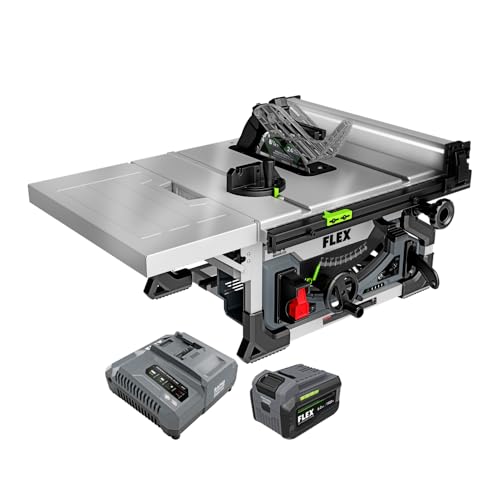

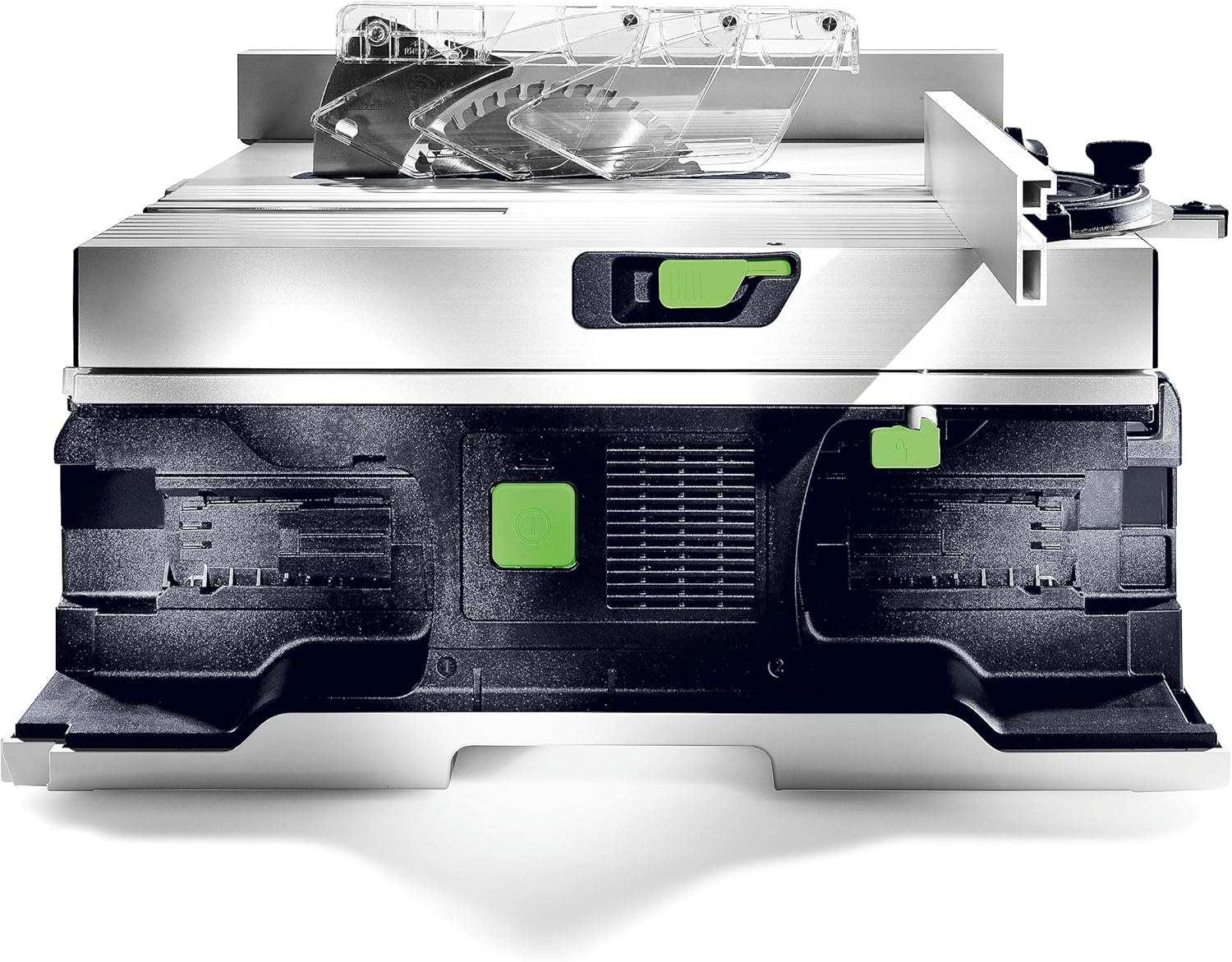


Who Should Buy Which of the Best Cordless Table Saws?
Freedom from the cord helps some users far more than others. The best cordless table saws for a trim carpenter moving room to room differ from those bought for weekend projects in a small garage, so match the saw to your work below.
Trim Carpenters and Remodelers Moving Between Rooms
If the saw rides in a truck and sets up wherever the work is, battery power removes the slowest part of the day: finding power and running cords through a finished home. A compact 8 1/4 inch model with a folding stand covers trim, flooring and cabinet fillers with ease. Shoppers in this group should compare the wider jobsite class in our guide to the best portable table saw models, where cordless and corded options sit side by side.
DIYers With a Small Garage or Driveway Workshop
A battery saw stores on a shelf, rolls out for a project and rolls back without a cord to coil. For furniture and home repairs, the rip capacity handles sheet goods broken down to size, and the runtime covers a full weekend day. First time saw owners should read our guide to the best table saw for beginners as well, because the safety habits matter more than the power source.
Woodworkers Adding a Second, Mobile Saw
Many shops keep a corded saw for heavy ripping and add a cordless model for quick cuts and site work. In that role the battery saw does crosscuts, small parts and sheet breakdown near the lumber rack. If most of your work is furniture grade, our guide to the best table saw for woodworking explains the fence and flatness standards a primary saw should meet, which helps you judge what the mobile saw can skip.
Key Features to Compare
The category overview in our guide to the best table saw types covers all power sources. The checks below are the ones that change when the cord disappears.
Blade Size: 8 1/4 Inch vs 10 Inch
Most cordless saws use an 8 1/4 inch blade, which cuts stock about 2 1/2 inches thick at 90 degrees, enough for framing lumber and most furniture parts. A few larger models run a 10 inch blade and cut near 3 1/2 inches, which matters for beams and thick slabs. The smaller blade also spins up faster and drains the battery slower. Choose by your thickest regular material, because depth of cut is a hard limit you cannot technique your way around.
Battery Platform, Voltage and Runtime
The platform is the purchase. Single pack 18V and 20V saws suit light and medium work, while dual battery and higher voltage flex platforms deliver corded like ripping power at a higher cost. Runtime is best judged in cuts: makers rate saws in linear feet of plywood per charge, and long rip cuts drain packs far faster than crosscuts. If you already own large packs for other tools, a bare saw on that platform is the economical path.
Rip Capacity and Fence Accuracy
Rip capacity around 24 to 25 inches lets you halve a plywood sheet, which is the benchmark most buyers need. The fence decides cut quality more than the motor does: a rack and pinion fence moves both ends together, stays parallel to the blade and repeats settings accurately. A fence that needs a mallet tap and a prayer produces tapered cuts no blade can fix. Test the fence lock for flex, because battery saws get carried by whatever handle is near, and fences take the knocks.
Depth of Cut, Bevel and Arbor Details
Check depth at 45 degrees as well as 90, because bevel cuts on thick stock expose weak saws quickly. A 5/8 inch arbor is standard, and dado capability is limited or absent on many battery models, so confirm before assuming your dado stack fits. Blade changes should be tool free or single wrench, since you will swap between rip and crosscut blades often. A clear scale for blade height and bevel saves setup time on every cut.
Weight, Stand and Dust Collection
Battery saws weigh roughly 45 to 65 pounds with the stand, light enough for one person to load into a truck. Folding and rolling stands speed setup but add bulk in a small garage, so measure your storage space. Dust ports around 2 1/2 inches fit standard shop vacuums, though runtime drops when a vacuum shares your attention, not your battery. On site, a simple dust bag often makes more sense than dragging out a vac for a few cuts.
Safety and Setup Checks for a Battery Table Saw
Set the saw on a stand or bench that cannot rock, then check the fence against the blade with a square before the first cut. Confirm the riving knife sits in line with the blade and the guard moves freely, because these parts prevent kickback, the main table saw hazard. Keep the blade height modest, with the teeth just clearing the top of the stock, and use a push stick for any rip narrower than about 6 inches.
Treat the battery like a power cord for safety habits: remove the pack before blade changes and adjustments, every time. Never reach over a spinning blade, and let the blade stop fully before clearing offcuts. A table saw cut is a serious injury that needs emergency care right away, so if an accident happens, apply pressure and call for help instead of trying to finish the job. No project deadline justifies a shortcut here.
What a Cordless Table Saw Should Cost
Bare saws on common platforms start around $250 to $350, while kits with large batteries and a stand run about $450 to $700. Higher voltage flex platform saws sit at the top of that range. Factor in at least one extra high capacity pack, because a single battery rotation stops work during long ripping sessions. Against a corded jobsite saw, the premium buys mobility, so pay it only when the saw truly travels or your workspace truly lacks outlets.
Common Mistakes to Avoid
- Ripping thick hardwood on a nearly flat battery, which slows the blade, burns the wood and invites kickback.
- Removing the riving knife for a cleaner view, which deletes the main protection against the stock closing on the blade.
- Buying a saw whose rip capacity falls just short of half a plywood sheet, forcing awkward workarounds on every panel.
- Carrying the saw by its fence, which knocks the fence out of parallel and ruins cut accuracy quietly.
- Assuming a dado stack fits because the arbor looks long enough, without checking the manual first.
How to Make Your Cordless Table Saw Last Longer
Keep the blade clean, because pitch buildup makes any saw cut like it is underpowered and drains batteries faster. Brush dust out of the motor vents and the blade housing after each session, and store the saw with the blade lowered and a battery removed. Wipe the table top and protect it from rust with paste wax, which also helps stock slide smoothly during cuts.
Check fence parallelism every few months and after any hard knock in transport. Rotate your battery packs so the same pack is not always the one run to empty, and recharge packs after they cool. A battery saw maintained this way keeps its accuracy and runtime for many years of projects.
FAQ
How long can a cordless table saw run on one battery charge?
Runtime depends on the cut mix. Crosscutting trim and breaking down plywood sips power, and a large pack can deliver a few hundred linear feet of cuts. Long rips in thick hardwood drain the same pack in a fraction of that distance, because the motor works at full load continuously. Treat the maker rating as a best case, plan a second charged pack for ripping days, and your work never stops mid board.
Can a cordless table saw rip a full sheet of plywood?
Yes, if the rip capacity reaches at least 24 inches, which covers half the width of a standard sheet. The harder part is support: a full sheet needs infeed and outfeed help or a helper, because a sagging sheet binds the blade and wanders off the fence. Many owners break sheets down first with a circular saw, then finish the edges on the table saw, which is safer and more accurate for one person.
Is an 8 1/4 inch or 10 inch blade better on a cordless table saw?
The 8 1/4 inch blade wins for most buyers, because it cuts framing lumber and furniture stock, weighs less and stretches battery life. The 10 inch blade earns its keep only when you regularly cut stock thicker than about 2 1/2 inches, such as beams and thick table legs. Blade cost also favors the smaller size, and thin kerf blades in either size reduce the load on the motor noticeably.
Can a cordless table saw cut hardwood and composite decking?
Yes, with the right blade and a steady feed rate. Dense hardwoods like white oak ask for a sharp rip blade and patience, since forcing the feed overheats both blade and battery. Composite decking cuts easily but produces abrasive dust that dulls cheap blades quickly, so use a carbide blade with more teeth for a clean edge. Let the saw recover between long cuts in either material, and the results match corded work.
Why does a cordless table saw slow down during long rip cuts?
The slowdown is usually the battery, not the motor. Under sustained load the pack voltage sags and its protection system reduces output to guard the cells, so blade speed falls and the cut starts to burn. Swapping to a fresh or higher capacity pack restores speed immediately. A dull or dirty blade creates the same symptom, so rule that out before blaming the battery.
Final Thoughts
A battery table saw trades a little endurance for a lot of freedom, and for trim work, small shops and mobile projects that trade is worth making. Match the platform to batteries you own, demand a rack and pinion fence and honest rip capacity, and compare the shortlist in the product table above against your thickest material. Chosen that way, the best cordless table saws for your work will cut true, travel well and stay safe with the pack removed during every adjustment.


