
Best Hot Water Recirculating Pumps: Types Compared and How to Choose
Disclosure: We may earn a commission when you buy through links on this page, at no extra cost to you. As an Amazon Associate I earn from qualifying purchases. Learn more

Comfort systems, timer kits and bare circulators compared, with install and safety notes.
Waiting a minute or more for hot water at a far bathroom sink wastes time and runs gallons of cold water down the drain. A recirculating pump fixes that, but the options are confusing: full line pumps that mount at the water heater, under sink comfort systems, kits with timers and bare circulators meant for professionals. The best hot water recirculating pumps for your home depend on your plumbing layout, your water heater and how much installation you are willing to take on.
This guide compares each type side by side, explains the specs that matter and helps you match a pump to your house. Keep in mind that any pump connected to drinking water plumbing must be rated for potable water, and electrical or gas work should follow local codes.


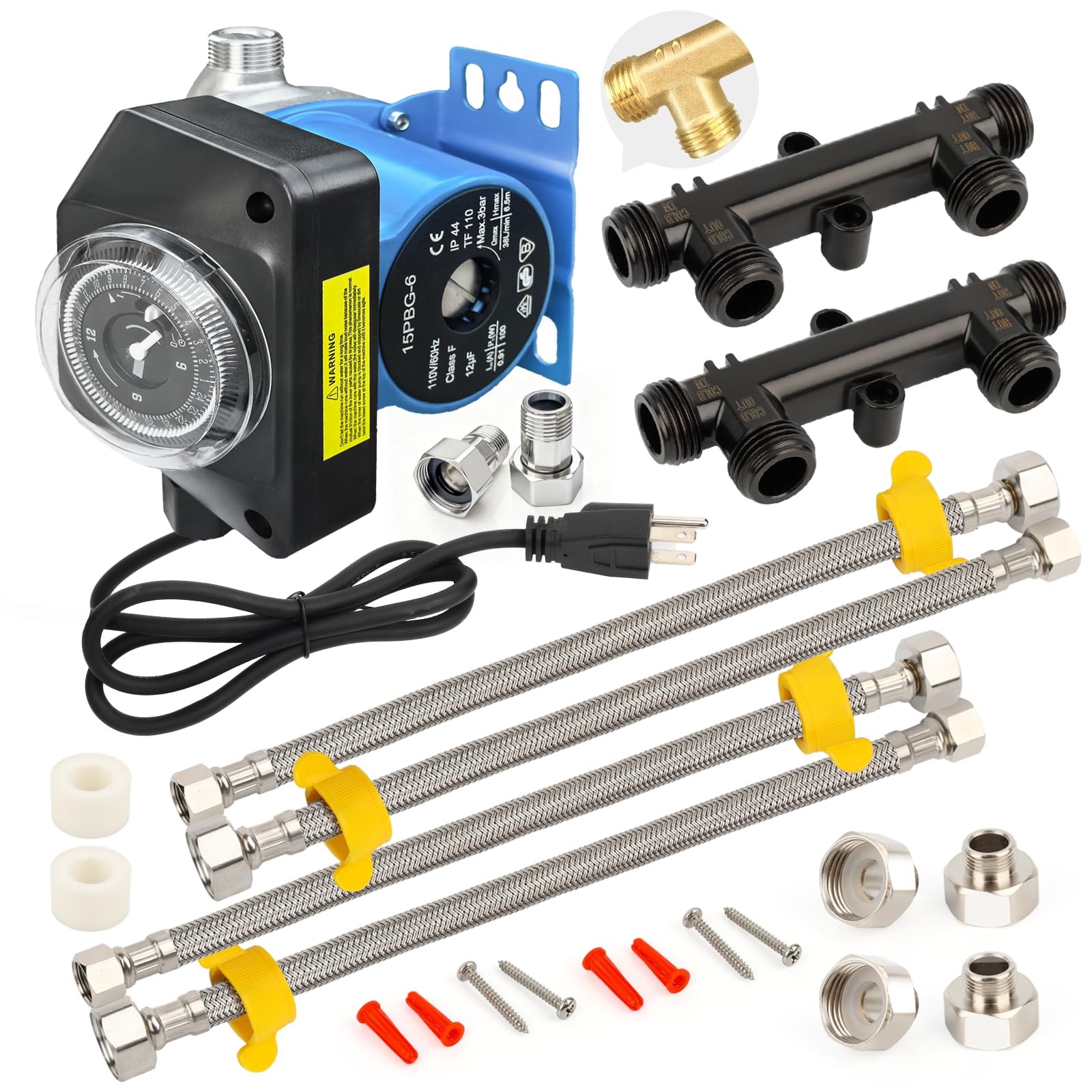


Types of Hot Water Recirculating Pumps Compared
| Type | Best For | Pros | Cons | Typical Price |
|---|---|---|---|---|
| Under sink comfort system | Homes without a return line | No new pipes, uses cold line as return | Cold tap may run lukewarm at first | Around $300 to $380 |
| Water heater mounted kit with timer | Retrofits and replacements | Timer saves energy, includes valves and lines | Still needs a sensor valve at the far fixture | Around $130 to $180 |
| Bare circulator pump | Dedicated return lines, pros | Low cost, flexible | Needs fittings, controls and plumbing skill | Around $60 to $80 |
Premium Options
Premium systems, like the Grundfos Comfort System (GRU-595916), come as a complete kit designed for instant hot water throughout the home. Grundfos lists it at 25 watts with an easy install. These systems typically mount near the water heater and use a thermal bypass valve under the farthest sink, sending cooled water back through the cold line so you do not need a dedicated return pipe.
The APCOM UT1 takes another approach, mounting under the sink and working with tank water heaters. Premium options suit homeowners who want a complete system from a known brand with fewer parts to source. The trade off is price, around $340 to $375.
Budget Options
Budget circulators, such as the 93 watt and 120 watt pumps listed for electric water heater systems or the AB 130 watt, 13 GPM circulator with 1 inch NPT flanges, cost around $60 to $80. They are bare pumps: you supply the fittings, check valves, timer or thermostat and often a dedicated return line.
They suit experienced DIYers and plumbers who already know the system design. Before buying, confirm the pump body is rated for potable domestic water, not only closed heating loops, and that the flange size matches your pipes.
Mid Range Options
Mid range kits sit between the two. The upgraded replacement kit sold for Watts 0955805 and Grundfos 595916 systems includes a programmable timer, two brass sensor valves, four supply lines and four adapters for around $180. Kits like this suit people replacing an older comfort system or wanting a timer without paying for a premium brand. Check reviews for fit and noise before you commit.
Premium Options vs Budget Options: Which Should You Choose?
- Installation: premium kits include valves and lines and target DIY installs; budget pumps need extra parts and plumbing knowledge.
- Return line: comfort systems work without a return pipe; bare circulators often need one.
- Energy use: low wattage pumps with timers or thermostats use less power than pumps running all day.
- Support: established brands usually offer clearer manuals, replacement parts and warranty support.
- Cost: budget pumps cost a fraction of premium systems, but the total with fittings and controls can narrow the gap.
For most homeowners without a return line, a complete comfort system is the simpler choice. For homes with an existing return line, or for plumbers, a budget circulator plus a timer is the value play.
How to Choose the Right Hot Water Recirculating Pump
Size, Weight, and Fit for Your Space
Decide where the pump will live. Water heater mounted pumps need space above or beside the heater and a nearby outlet. Under sink pumps need room in the vanity and an outlet under the sink, which many bathrooms lack. Measure the space and check the pipe connection size, such as 3/4 inch or 1 inch NPT, before ordering.
Key Performance Specs
For home recirculation, flow and head requirements are modest; the goal is a slow, steady loop, not high pressure. Compare wattage for energy use, with the Grundfos system listed at 25 watts versus 93 to 130 watts for many bare pumps. Look for a built in timer or thermostat so the pump runs only when needed, such as mornings and evenings.
Safety and Certifications
Choose pumps rated for potable water and look for safety listings such as UL or ETL on the electrical parts. Plug the pump into a properly grounded outlet, ideally GFCI protected near water. If you are not comfortable cutting into water lines or adding an outlet, hire a licensed plumber or electrician; many areas require permits for this work.
Intended Use and Who It's For
Comfort systems suit single family homes with long pipe runs and no return line. Dedicated return line systems suit new builds or remodels. Tankless water heater owners should check the heater maker's guidance, since some tankless units have built in recirculation or require specific pumps.
Water, Energy and Comfort: What the Best Hot Water Recirculating Pumps Change
The main benefit is time and water. Without a pump, every gallon of cooled water sitting in the hot line goes down the drain before hot water arrives. With a recirculating loop, that water returns to the heater instead, and the faucet runs hot within seconds. The longer the pipe run between the heater and the fixture, the bigger the difference you notice.
The trade off is energy. A pump that runs around the clock keeps the pipes warm and the heater cycling, which raises gas or electric use. That is why the best hot water recirculating pumps pair a low wattage motor with a timer, a thermostat or on demand control, so the loop only runs when people are actually using water. A practical schedule is 30 to 60 minutes before typical morning and evening routines.
Two simple upgrades improve results: insulate accessible hot water pipes with foam sleeves so water stays warm longer, and set the water heater to a safe, moderate temperature, often around 120°F, to reduce scald risk and standby losses.
Choosing Hot Water Recirculating Pumps for Your Situation
Best Instant Hot Water Recirculating Pumps: Which Type Works Best
The best instant hot water recirculating pumps for most homes are complete comfort systems with a sensor or bypass valve at the farthest fixture, like the Grundfos GRU-595916. They deliver hot water in seconds without new plumbing. Add a timer to limit run time and energy use, and insulate exposed hot water pipes to keep the loop warm longer.
For more pump options around the home and yard, see our guides to submersible water pumps and the best water pumps.
Setup and Care Tips
- Read the manual before first use: follow the maker's orientation and valve placement instructions.
- Shut off water and power first: close supply valves and unplug before any installation or service.
- Set a schedule: run the pump only during peak use times to save energy.
- Clean and inspect regularly: check for drips at fittings and listen for unusual noise every few months.
- Flush in hard water areas: mineral buildup can slow the pump; follow the manual's cleaning steps.
- Store spares in a dry place: keep extra valves and washers ready for quick repairs.
Hot Water Recirculating Pumps: Your Questions Answered
Are expensive hot water recirculating pumps worth it?
Often, yes, for homeowners without plumbing experience. Premium systems include the pump, valves and lines needed for a working setup, plus clearer instructions and brand support. A cheaper bare pump can match performance, but only if you add the right controls and install it correctly.
How do I maintain a hot water recirculating pump?
Check fittings for leaks, keep the timer set correctly and listen for grinding or rattling. In hard water areas, follow the maker's descaling or flushing guidance. Replace worn check or bypass valves if the cold tap runs warm for too long.
What features matter most when buying hot water recirculating pumps?
Potable water rating, a built in timer or thermostat, low wattage, the right pipe connections and compatibility with your water heater. Whether you need a dedicated return line or can use a bypass valve also decides which type fits.
How long does a hot water recirculating pump last?
Many pumps last several years, and quality units can run a decade with good water and a timer that limits run hours. Hard water, continuous operation and air in the lines shorten life.
How much should I spend on a hot water recirculating pump?
Expect about $60 to $80 for a bare circulator, $130 to $180 for a kit with a timer and valves, and $300 to $380 for a complete premium comfort system. Add plumber costs if you hire out the install.
Our Verdict
Start with your plumbing: no return line points to a comfort system, while an existing return line opens up budget circulators. Then check potable water rating, wattage and timer controls. For most homes, the Grundfos Comfort System is the simplest route to instant hot water. Compare the best hot water recirculating pumps in the product table above.


