
Best Commercial Leaf Blowers (2026): A Buying Guide for Real Projects
Disclosure: We may earn a commission when you buy through links on this page, at no extra cost to you. As an Amazon Associate I earn from qualifying purchases. Learn more

The best commercial leaf blower balances air volume, runtime and service support for daily crew work. This guide covers gas and battery options for pros.
A homeowner blower that runs twenty minutes a week lives an easy life. A crew blower runs six hours a day, rides in an open trailer and gets handed to whoever is free, so it ages a season in a month. Choosing the best commercial leaf blower is therefore less about headline power and more about air volume that moves wet leaves, parts you can actually get, and a machine your crew will still be running three falls from now.
This guide covers the formats crews use, from backpack gas units to battery fleets, and the specs that predict whether a blower earns or eats money. The comparison table below lines the classes up, and our general best leaf blower guide covers the homeowner side of the category.

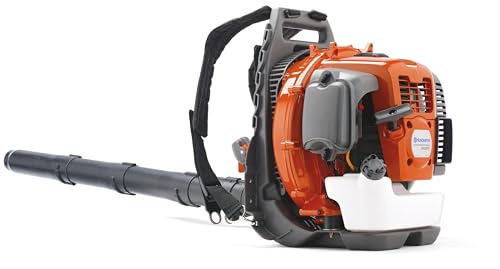

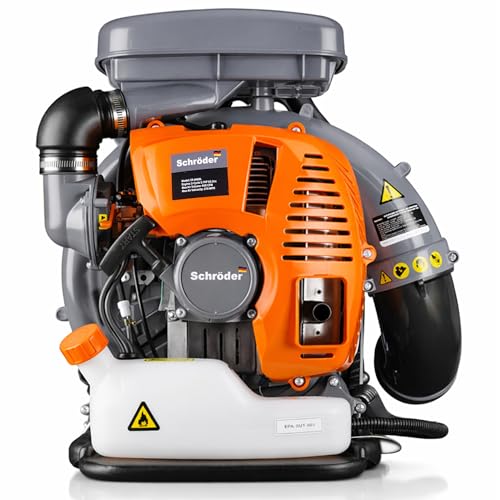

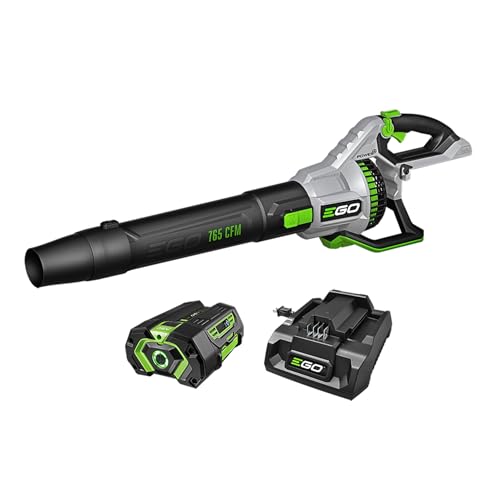


Who Should Buy Which Commercial Leaf Blower?
Lawn Care Crews on Daily Routes
Your blower clears every driveway, walk and curb on the route, so run time and comfort outrank peak specs. A mid to large backpack unit with a padded harness, a big fuel tank or swappable batteries and a cruise control throttle is the route workhorse. Standardize on one model across trucks if you can, because shared parts, shared fuel mix and shared habits save more money than any single purchase.
Large Property and HOA Maintenance Teams
Big shared grounds mean long blowing sessions on paths, courts and parking areas, often near residents who complain about noise. This group should weigh noise ratings and local rules as heavily as power, and consider where battery units quietly handle the morning work while gas units take the heavy fall cleanup. Walk behind blowers earn a look for the largest open areas, where their air volume clears in fewer passes.
Municipal and Parking Lot Cleanup
Your enemy is not leaves alone but wet mats of leaves, grit and litter stuck to asphalt. Maximum air volume matters more than air speed here, because you are pushing a heavy blanket of debris rather than chasing single leaves. Crews in this group should favor the largest backpack or walk behind classes and plan hearing protection as standard issue, since these machines run loud and long.
Key Features to Compare
Air Volume (CFM) vs Air Speed (MPH)
CFM measures how much air the blower moves and MPH measures how fast it leaves the tube, and crews live and die by CFM. High volume, roughly 600 to over 1,000 CFM on the big backpacks, rolls a wet blanket of leaves across pavement, while high speed alone scatters light debris and stalls on the heavy stuff. Judge a blower by its CFM at the nozzle first and treat MPH as the secondary number that helps peel stuck leaves off grass.
Engine and Motor Classes
Professional backpacks typically run two stroke engines around 50 to 80 cc, prized for power to weight and simple service. Four stroke and mixed lubricant designs cut fuel mixing and emissions at some weight cost. Battery flagships now match mid size gas units for route work, provided the fleet math works. Whatever the power source, look for a metal reinforced fan housing and a dealer who stocks wear parts, because commercial downtime in October costs more than the blower did.
Fuel Capacity, Runtime and Refill Logistics
A large tank that runs about an hour or more per fill keeps a crew member blowing instead of walking back to the truck. Two stroke fuel must be mixed correctly every time, and one straight gas mistake kills an engine, so label cans clearly. Battery fleets swap the problem: count your total daily runtime, then buy enough packs and chargers to rotate without a midday gap. Our best battery leaf blower guide works through that runtime math in detail.
Noise Output and Local Rules
Pro blowers typically run about 65 to 75 dBA at 50 feet, and many cities cap blower noise or restrict gas models and operating hours. A crew that cannot legally start before 8 in the morning loses route density every day, so check the rules in every town you serve before standardizing a fleet. Battery units are noticeably quieter at the operator's ear as well, which your crews will appreciate by the second hour.
Comfort, Vibration and Controls
A blower worn for hours is clothing as much as tool. Look for a padded harness with a hip belt, a flexible tube joint that does not fight your arm, and anti vibration mounts between engine and frame. Throttle style matters on long days: a cruise control lever holds speed without a constant grip, and a hip mounted tube handle beats a frame mounted one for control. For small commercial spaces like courtyards, a lighter tool from the best electric leaf blower range can spare shoulders on quick jobs.
Gas vs Battery for Commercial Crews
Gas still wins on raw sustained output and five minute refuels, and it asks for fuel mixing, air filters and seasonal storage care in return. Battery wins on noise, instant starts, zero fuel logistics and far less routine maintenance, and it asks for capital up front in packs and chargers plus discipline about rotation. Many crews now run both: battery for weekly route blowing and early hours, gas for the fall leaf season when runtime demand triples.
One feature that rarely pays at commercial scale is the vacuum and mulching mode. It is slow, the bags are small, and crews clear faster by blowing to a pile and loading it. That is why dedicated tools in the best vacuum leaf blower category stay a homeowner convenience rather than a crew staple.
Common Mistakes to Avoid
- Judging blowers by MPH alone and buying a fast but weak stream that cannot move wet leaves.
- Mixing fuel wrong for two stroke engines, or letting one unmixed can reach the truck and kill a motor.
- Ignoring town noise rules and work hours, then losing route time to complaints and fines.
- Skipping hearing protection because each job is short, while the day adds up to hours of exposure.
- Buying a different model for every truck, so parts, filters and habits never standardize across the fleet.
How to Make Your Commercial Leaf Blower Last Longer
Clean or replace the air filter on a schedule, not when the engine starts to bog, and use fresh fuel with the correct oil ratio and a stabilizer for stored cans. Ethanol fuel left sitting absorbs water and gums carburetors, the single most common cause of spring no starts. Check the fan housing for packed debris, keep cooling fins clear, and store machines dry and off concrete. Battery fleets should store packs indoors at partial charge and rotate stock so the same two packs do not take every cycle.
FAQ
Are commercial leaf blowers worth it for a half acre home?
Usually not. A commercial backpack costs several times a homeowner model, weighs more and is louder than a half acre lot justifies. The exception is a property buried under mature oaks, where the time saved each fall is real. Most owners are better served by a strong homeowner backpack and money left over for other tools.
How much CFM do you need for wet leaves?
Plan on at least about 600 CFM at the nozzle for wet matted leaves on pavement, and more for large areas. Wet leaves stick to each other and to the ground, so volume does the pushing while technique does the peeling: work the edge of the mat and roll it rather than blasting the middle. Below that volume, expect to make many more passes.
How long does a commercial leaf blower last?
A professional gas blower with regular maintenance commonly runs well past a thousand hours of service, which is several seasons of route work. The wear items are filters, fuel lines, spark plugs and eventually the carburetor. Battery packs are the consumable on electric fleets, typically fading after a few hundred full cycles, so price replacements into your comparison.
Are battery blowers ready for full commercial routes?
For weekly maintenance blowing, yes, provided you buy into a platform with enough packs to rotate and chargers that keep up overnight. For peak fall cleanup, when blowers run near nonstop, many crews still keep gas units for the longest days. The honest test is your longest day: count the runtime it needs and price the battery fleet that covers it.
How loud is a commercial backpack leaf blower?
Most large backpacks measure roughly 70 to 75 dBA at 50 feet, with the operator exposed to much more at the ear. That distance rating is the number towns regulate, so compare it against your local limit before buying. Foam plugs or muffs are essential for the operator regardless of the rating, since exposure time is what damages hearing.
Final Thoughts
Standardize on one platform, buy for air volume and service support, and protect your crew's hearing. That combination, more than any single spec, defines the best commercial leaf blower for route work. Compare the classes in the product table above before you equip the next truck.


