
Best Power Saws: Which One Fits the Way You Use It?
Disclosure: We may earn a commission when you buy through links on this page, at no extra cost to you. As an Amazon Associate I earn from qualifying purchases. Learn more

How to choose among the best power saws by project, with saw types, features, blades, safety and price tiers explained.
The phrase "power saw" covers a whole family of tools: circular saws for straight cuts in lumber and plywood, jigsaws for curves, reciprocating saws for demolition, miter saws for precise angles, table saws for ripping and track saws for sheet goods. Buying the right one first saves money and frustration. The best power saws for you depend on the cuts you make most often, the materials you work with and whether you already own a cordless battery platform.
This guide matches power saws to different users, explains the features worth comparing and covers common mistakes and setup tips. Compare current models in the product table above.




Who Should Buy Which Power Saws?
The right power saw depends on your experience, your projects and your budget. Here is how needs differ.
For First Time Buyers
For most first time buyers, a cordless circular saw is the most useful first power saw. It handles straight crosscuts and rips in 2x4s, plywood and decking, which covers the majority of home projects. A jigsaw is a good second saw for curves, cutouts and thinner materials. Choose a battery platform you can grow into, since drills, impact drivers and other tools share the same batteries.
For People Who Want the Best Performance
Serious DIYers and pros should look at brushless saws from major platforms such as DEWALT 20V MAX XR, Makita LXT and Milwaukee M18 FUEL, which deliver corded level power, longer runtime and better durability. For precise woodworking, add a sliding miter saw and a track saw or table saw for accurate repeatable cuts.
For Value Seekers
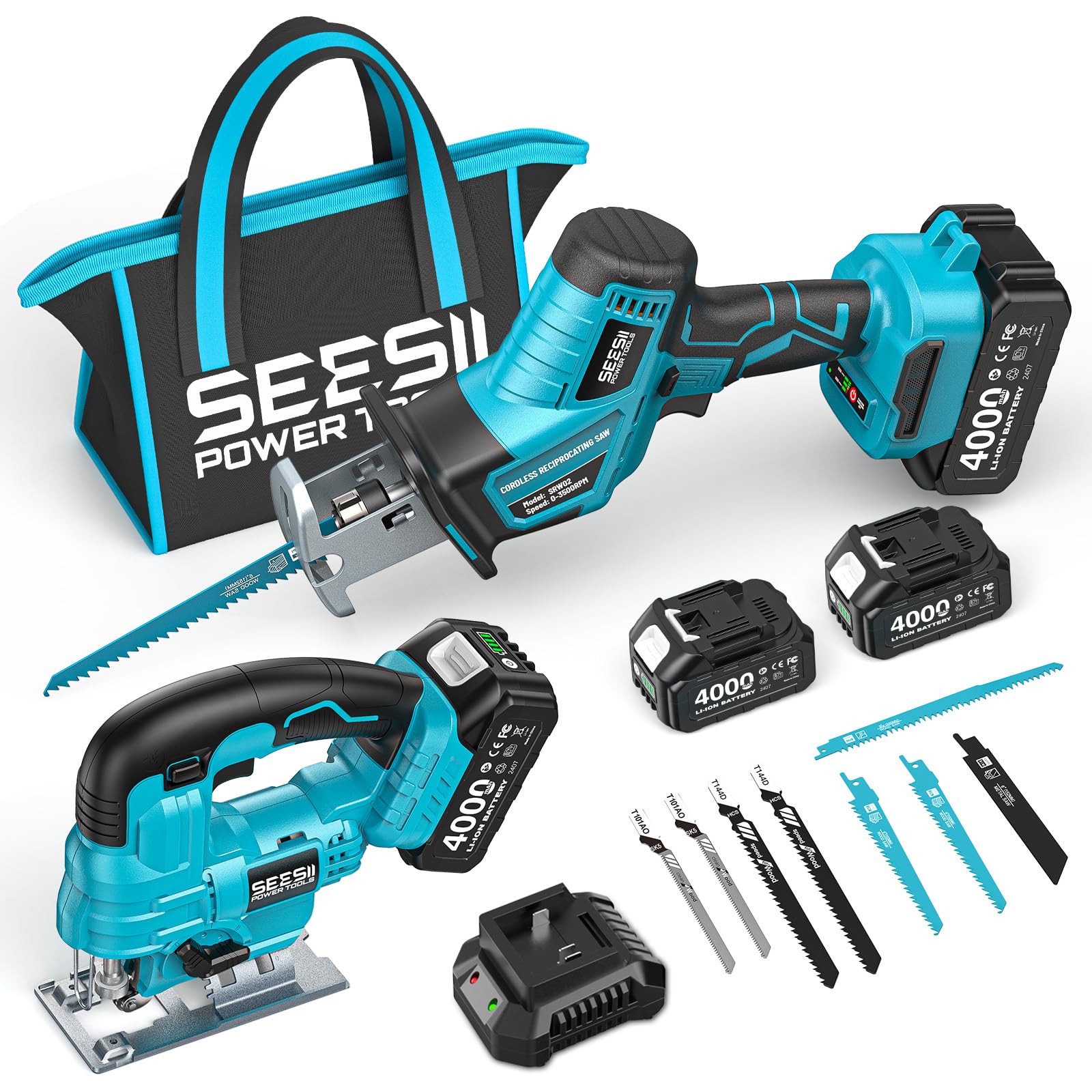
Value seekers get the most for their money with combo kits that bundle a circular saw, reciprocating saw and drill with shared batteries, or with two tool kits like a reciprocating saw and jigsaw combo. Corded saws also offer strong performance for less money if you work near outlets.
For Gift Shoppers
When buying a saw as a gift, check which battery platform the recipient already uses. A bare tool (no battery) is a great value gift for someone with batteries, while a kit with battery and charger suits a new DIYer. Compact 2-in-1 reciprocating saw and jigsaw tools make friendly first gifts.
Types of Power Saws Explained
Each saw type is built for a specific kind of cut. Here is what each does best.
- Circular saw: fast straight cuts in lumber, plywood and decking; the most versatile first saw.
- Jigsaw: curves, circles and cutouts in wood, laminate, plastic and thin metal.
- Reciprocating saw: demolition, pruning and cutting through nails, pipe and studs.
- Miter saw: precise crosscuts and angles for trim, framing and furniture.
- Table saw: accurate rip cuts and repeatable work in a shop.
- Track saw: splinter free straight cuts in full plywood sheets.
- Oscillating multi tool: plunge cuts, flush cuts and detail work in tight spaces.
- Chainsaw: cutting logs and limbs outdoors.
Choosing Power Saws for Your Situation
Different spaces and projects call for different saws.
Best Small Power Saws
Compact power saws, such as 12V mini circular saws, 2-in-1 reciprocating saw and jigsaw tools and small oscillating tools, suit apartments, quick repairs and users who want lightweight tools. They handle thin plywood, trim, PVC and small branches but are not meant for heavy framing.
Best Saws for Deck and Framing Projects
A 7-1/4 inch circular saw and a 10 or 12 inch miter saw cover most deck and framing cuts. Brushless cordless models make outdoor work easier without extension cords.
Best Saws for Remodeling and Demolition
A reciprocating saw with wood and metal blades cuts through walls, nails and pipe, while an oscillating tool handles flush cuts for door jambs and flooring.
Key Features to Compare
These are the features that matter most when choosing power saws.
Durability and Brushless Motors
Brushless motors run cooler, deliver more power and extend battery runtime compared with brushed motors, and they need less maintenance. Metal shoes and bases, solid blade guards and quality switches signal a saw built to last.
Capacity and Working Range
Check cutting depth at 90 and 45 degrees for circular saws (a 7-1/4 inch blade cuts about 2-1/2 inches at 90 degrees), stroke length for reciprocating saws and jigsaws, and crosscut capacity for miter saws. Make sure the saw cuts the thickest material you plan to work with.
Safety Features
Look for electric brakes that stop blades quickly, blade guards, trigger lockouts and anti kickback features. Always wear safety glasses and hearing protection, and keep both hands gripping the saw where it is designed to be held.
Accuracy and Control Features
Laser guides and LED lights help you follow cut lines. Bevel stops, depth adjustments that lock firmly and orbital action settings on jigsaws improve control. Variable speed triggers help start cuts cleanly.
Corded vs Cordless (Battery Platform)
Cordless saws offer freedom on job sites and in yards, and modern brushless models rival corded power. Corded saws cost less and never run out of power, which suits shops and heavy cutting. If you choose cordless, stick to one battery platform to share batteries.
Power Saw Comparison at a Glance
| Saw | Best Cut | Typical Blade or Stroke | Great For |
|---|---|---|---|
| Circular saw | Straight crosscuts and rips | 6-1/2 or 7-1/4 inch blade | Framing, decks, plywood |
| Jigsaw | Curves and cutouts | About 3/4 to 1 inch stroke | Sink cutouts, shapes, laminate |
| Reciprocating saw | Rough and demolition cuts | About 1 to 1-1/8 inch stroke | Remodeling, pruning, pipe |
| Miter saw | Precise angles and crosscuts | 10 or 12 inch blade | Trim, framing, furniture |
| Table saw | Long accurate rips | 10 inch blade | Cabinetry and shop work |
| Track saw | Splinter free straight cuts | 6-1/2 inch blade on a rail | Full plywood sheets |
Building a Power Saw Kit Over Time
Most DIYers do not need every saw at once. A practical path for building a collection of the best power saws for your projects looks like this:
- Start with a circular saw and a drill on one cordless platform.
- Add a jigsaw when projects call for curves, cutouts or trim work.
- Add a reciprocating saw for remodeling, demolition and yard cleanup.
- Add a miter saw once you start trim, flooring or furniture projects that need clean angles.
- Consider a track saw or table saw for cabinetry and frequent sheet goods work.
Bare tool versions save money once you own batteries, and seasonal sales often discount combo kits significantly.
Cutting Different Materials
- Softwood lumber: circular or miter saw with a 24 to 40 tooth blade.
- Plywood and MDF: fine tooth circular saw blade or a track saw, with a dust mask for MDF.
- Laminate and veneer: fine tooth blades and tape along the cut line to reduce chipping.
- PVC and plastic: fine tooth jigsaw or reciprocating blades at moderate speed.
- Metal pipe and nails: bi-metal reciprocating saw blades.
- Branches: pruning blades on a reciprocating saw, or a pole saw for high limbs.
Power Saw Price Tiers
- Under $100: bare tool circular saws, compact jigsaws and 2-in-1 saws for light work.
- $100 to $250: brushless circular saws, jigsaws and reciprocating saws, or kits with a battery.
- $250 to $500: premium brushless saws, multi tool combo kits and entry miter saws.
- Over $500: large combo kits, sliding miter saws, table saws and track saw systems.
Common Mistakes to Avoid When Buying Power Saws
- Buying the wrong saw type: a jigsaw will not make long straight cuts as well as a circular saw.
- Mixing battery platforms: different brands rarely share batteries, raising costs.
- Ignoring blades: the stock blade is often basic; a quality blade improves cuts dramatically.
- Underestimating capacity: check cutting depth before tackling thick lumber or posts.
- Skipping safety gear: eye and hearing protection are essential every time.
- Forgetting dust control: dust ports and a shop vacuum make indoor cutting cleaner.
Setup and Care Tips
Read the manual before first use and check that blades are installed in the right direction. Set circular saw blade depth about 1/4 inch below the material. Support workpieces on sawhorses or foam boards so the cut piece does not pinch the blade. Keep blades sharp and clean pitch buildup with blade cleaner. Store batteries at moderate temperatures and charge them before long storage. Unplug or remove the battery before changing blades or making adjustments.
Power Saw Safety Basics
Most power saw injuries come from kickback, loose clothing or cutting unsupported material. Clamp workpieces securely, stand to the side of the blade line, let the blade reach full speed before cutting and never reach under the material. Keep cords behind the saw, avoid cutting above shoulder height and keep children and pets out of the work area. Use the right blade for the material, such as metal cutting blades for steel.
Blades Make the Difference
A saw is only as good as its blade. For circular saws, 24 tooth blades cut framing lumber quickly, while 40 to 60 tooth blades give smoother cuts in plywood and trim. Jigsaw blades vary by tooth count and material, with fine tooth blades for clean cuts in laminate and metal. Reciprocating saw blades come in wood, metal and demolition versions. Keep a few spare blades for each saw and replace them when cuts slow or burn.
Common Power Saw Problems and Fixes
- Burn marks on wood: the blade is dull or dirty, or you are feeding too slowly; clean or replace the blade and keep a steady pace.
- Blade binding or kickback: support both sides of the cut so the kerf does not close, and use a riving knife where available.
- Splintered edges: use a finer tooth blade, cut with the good face down on circular saws and use painter's tape along the line.
- Wandering cuts: clamp a straightedge guide or use a track, and check that the base plate is square to the blade.
- Short battery runtime: use higher capacity batteries for thick cuts and keep blades sharp to reduce motor load.
- Jigsaw blade bending: slow down on curves, choose a thicker blade and reduce orbital action in hard materials.
Frequently Asked Questions
What specs matter most for home projects?
For home projects, focus on saw type, cutting depth, battery platform compatibility and safety features like electric brakes. A 7-1/4 inch circular saw, a jigsaw and a reciprocating saw handle most DIY cuts between them.
Corded or cordless: which is better for DIY?
Cordless saws are better for most DIYers thanks to convenience and portability, especially with brushless motors. Corded saws are cheaper and suit heavy, continuous cutting in a shop.
Can I use batteries across brands?
Generally no. Batteries are designed for one brand's platform, and adapters may void warranties and bypass safety protections. Choose saws that match batteries you already own.
Is a brushless motor worth it?
Yes, for most users. Brushless saws deliver more power and runtime per charge, run cooler and last longer, which matters for cutting thick lumber and long sessions.
What is the most versatile power saw?
A circular saw is the most versatile single power saw for home use, handling straight cuts in lumber and sheet goods. Pair it with a jigsaw for curves to cover nearly every DIY project.
Which power saw should a beginner buy first?
Most beginners should start with a cordless circular saw, since it covers the widest range of straight cuts in lumber and plywood. Add a jigsaw next for curves. Both are easy to learn with practice cuts on scrap wood.
How long do power saw batteries last?
Lithium ion tool batteries typically last several years and hundreds of charge cycles. Runtime per charge depends on capacity (Ah), the saw and the material, so higher capacity batteries help for long rips in thick lumber.
Do I need a table saw if I have a circular saw?
Not for most home projects. A circular saw with a straightedge guide handles rips and crosscuts well. A table saw becomes worthwhile for frequent, repeatable rips, narrow strips and cabinetry, where speed and accuracy matter.
Our Verdict
Start with a cordless brushless circular saw on a platform you can grow into, add a jigsaw for curves and a reciprocating saw for demolition, and move to miter, table or track saws as your projects become more precise. Pick quality blades and follow safety basics, and the best power saws will make every project faster and cleaner. See our best track saws guide for precise sheet goods cutting.


