Best Pressure Side Pool Cleaners in 2026: Which Type Is Right for You?
Disclosure: We may earn a commission when you buy through links on this page, at no extra cost to you. As an Amazon Associate I earn from qualifying purchases. Learn more

Pressure side pool cleaners compared with robotic, suction and cordless types.
Pressure side pool cleaners are the workhorses of inground pools with lots of leaves, acorns and pebbles. Instead of relying on your filter to catch debris, they use water pressure from a return line, usually boosted by a separate booster pump, to drive the cleaner and collect debris in their own bag. But they are only one of four automatic cleaner types, and each fits different pools and budgets. This guide explains the best pressure side pool cleaners and how they compare with robotic, suction side and cordless cleaners.
We compare each type, explain how to choose, share tips for better results and answer common questions.


Types of Pressure Side Pool Cleaners and Alternatives Compared
Pressure side cleaners excel at large debris, robotic cleaners at fine dirt and wall scrubbing, suction side cleaners at low upfront cost and cordless cleaners at portability.
| Type | Best For | Pros | Cons | Typical Price |
|---|---|---|---|---|
| Pressure side | Inground pools with leaves and large debris | Own debris bag, protects filter, big inlets | Often needs a booster pump | Around $600 to $900 |
| Robotic | Fine debris, walls and waterline | Independent power, best filtration, low energy | Higher upfront cost | Around $500 to $1,500 |
| Suction side | Budget, light debris | Lowest cost, simple | Loads filter, weaker on leaves | Around $200 to $500 |
| Cordless vacuum | Small pools, spot cleaning | Portable, no hoses | Short runtime, manual | Around $110 to $200 |
Pressure Side Cleaners
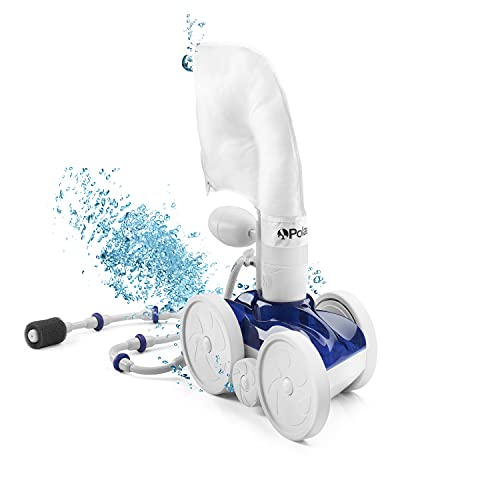
Pressure side cleaners connect to a dedicated return line and use venturi jets to create suction that pulls debris into an attached bag. Models like the Polaris Vac-Sweep 280 use a separate Polaris booster pump and can clean any inground pool in 3 hours or less, according to Polaris. Their large inlets, 2.25 inches on the 280 and 380 and 2.5 inches on the 3900 Sport, swallow leaves, acorns and pebbles.
Because debris goes into the bag rather than the filter, they reduce filter cleaning and pump strain. They suit inground pools under trees. The downside is the cost of running a booster pump and the need for a dedicated cleaner line.
Robotic Pool Cleaners
Robotic cleaners like Dolphin models run on their own low voltage power, scrub floors and walls and filter fine dirt in onboard baskets. They use less energy than booster pump systems and need no plumbing. They cost more upfront and need removing and cleaning after cycles. They suit owners who want the cleanest finish and lower running costs.
Suction Side Cleaners
Suction side cleaners attach to the skimmer or vacuum line and use the main pump's suction, sending debris to the pool filter. They cost the least and are simple to set up. However, they load the filter, reduce skimming while running and struggle with large leaves. They suit budget buyers with light debris.
Cordless Pool Vacuums
Cordless handheld or robotic vacuums run on batteries and need no hoses or plumbing. They are great for spot cleaning, small pools and spas, but runtimes are short and many require manual guiding. They complement rather than replace an automatic cleaner on larger pools.
Cordless Pool Vacuums vs Robotic Pool Cleaners: Which Should You Choose?
Robotic cleaners are better for automatic whole pool cleaning, while cordless vacuums are better for quick spot jobs and small pools.
- Automation: robots clean on their own; most cordless vacuums need guiding.
- Coverage: robots clean floors, walls and waterlines; cordless vacuums focus on floors and steps.
- Runtime: robots run full cycles; cordless vacuums often last about an hour.
- Price: cordless vacuums cost less; robots cost more but save time.
How to Choose the Right Pressure Side Pool Cleaner
Confirm your plumbing, match the cleaner to your debris and pool size and factor in booster pump costs.
Cleaning Cycle and Coverage
Pressure side cleaners typically clean an inground pool in about 3 hours. Wheel drive designs, like the 3900 Sport's all wheel PosiDrive, climb walls and cover the pool evenly. Most run on a timer tied to the booster pump.
Cleaner Type and Plumbing Requirements
Most pressure side cleaners require a dedicated return line and a booster pump. Some booster free models use the main pump's return pressure, but they need enough flow. Check your pool's equipment pad and plumbing before buying; adding a booster pump is a job for a pool professional.
Hose Length and Swivels
Polaris cleaners include about 31 feet of feed hose, which you trim or extend to match your pool. Swivels prevent hose tangling, and tail sweeps scrub behind the cleaner. A tail sweep like the 3900 Sport's TailSweep PRO helps prevent spraying windows and walkways.
Debris Bag and Filtration
Single chamber bags handle everyday debris, while dual chamber bags, like the 3900 Sport's 5 liter superbag, hold more and separate fine and large debris. Larger bags mean fewer empties during leaf season.
Polaris Pressure Side Models Explained
Polaris dominates the best pressure side pool cleaners category, and its models differ mainly in jets, drive and bag size.
- Vac-Sweep 280: dual venturi jets, a 2.25 inch inlet and a single chamber bag; the long running all purpose model for inground pools.
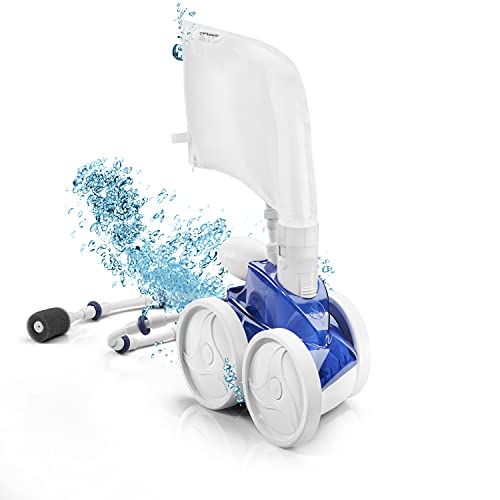
- Vac-Sweep 380: three venturi jets for stronger vacuum, also with a 2.25 inch inlet and single chamber bag.
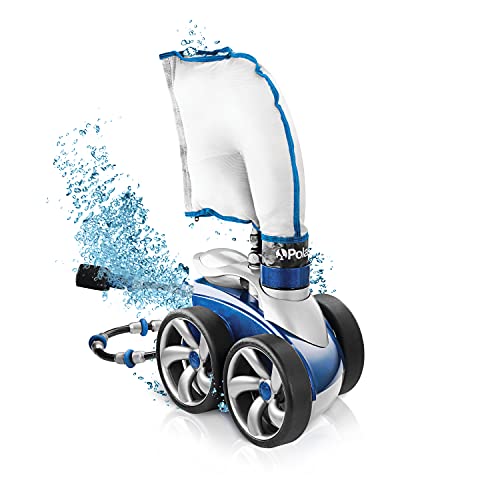
- Vac-Sweep 3900 Sport: triple jets, all wheel PosiDrive, a 2.5 inch inlet and a 5 liter dual chamber superbag for heavy debris, plus a TailSweep PRO.
- Zodiac F5B Black Max: a Vac-Sweep 280 variant in black, popular for dark finish pools.
All three main Polaris models are listed as safe for vinyl, fiberglass, gunite, pebble and tile surfaces.
Running Costs and Maintenance
Pressure side systems add the electricity cost of running a booster pump, typically a 3/4 horsepower motor, for a few hours a day, on top of your main pump. Plan on replacing wear parts such as tires, tail scrubbers, sweep hoses and debris bags every season or two, and budget for occasional booster pump seals. Compared with suction cleaners, pressure cleaners spare your filter and main pump from debris, which can lower filter maintenance. Compared with robots, they usually cost more to run but handle heavy leaf loads with less basket emptying.
Tips to Get the Most From Your Pressure Side Pool Cleaner
- Empty the debris bag after each cycle during heavy leaf seasons.
- Run the cleaner after skimming large floating debris.
- Clean the in line filter screen regularly to maintain flow.
- Replace worn tires, tail scrubbers and bags to keep performance up.
- Run the booster pump only with the main pump on to protect it.
FAQs
Which cleaner is best for leaves?
Pressure side cleaners are best for leaves and large debris. Their large inlets and debris bags handle leaves, acorns and pebbles that clog suction cleaners and fill robotic baskets quickly.
Are robotic pool cleaners worth it?
Yes, if you want the cleanest finish and lower energy use. Robots handle fine debris and walls well, though pools under heavy tree cover may still benefit from a pressure side cleaner.
How long should a pool cleaner run?
Most pressure side cleaners run about 3 hours per day. Polaris says its Vac-Sweep models clean an inground pool in 3 hours or less. Adjust run time for debris load.
Do I need a booster pump for a pressure side cleaner?
Most models, including the Polaris Vac-Sweep 280, 380 and 3900 Sport, need a separate booster pump. Booster free models exist but require strong return flow from the main pump.
Can a pressure side cleaner work in an above ground pool?
Most pressure side cleaners, including the Polaris Vac-Sweep models, are designed for inground pools. Above ground pools usually suit suction side cleaners, cordless vacuums or robots built for above ground pools.
The Bottom Line
Choose a pressure side cleaner for inground pools with heavy leaves and large debris, a robot for fine dirt and walls and a suction or cordless cleaner for tighter budgets. The Polaris Vac-Sweep 280 suits most pressure side setups, the 380 adds a third jet and the 3900 Sport adds all wheel drive and a larger bag. Keep those points in mind and the best pressure side pool cleaners will keep leafy pools clean with little effort. Compare current models in the product table above, and see our guide to the best suction side pool cleaners.