
Best Pull Behind Spreaders: What Actually Matters Before You Buy
Disclosure: We may earn a commission when you buy through links on this page, at no extra cost to you. As an Amazon Associate I earn from qualifying purchases. Learn more

A checklist for tow behind spreaders, with three picks for tractors, ATVs and UTVs.
Pushing a walk behind spreader across an acre of lawn, a hobby farm pasture or a long gravel driveway is slow, tiring work. A pull behind spreader hitches to a lawn tractor, riding mower, ATV or UTV and spreads seed, fertilizer, lime and ice melt in a fraction of the time. To find the best pull behind spreaders, we use a checklist covering capacity, spread control, gearbox and frame durability, tires and hitch, accessories and warranty.
Below, each criterion includes what good and poor look like, followed by three picks that pass, a quick buyer checklist, red flags and answers to common questions.


How We Evaluate Pull Behind Spreaders
We judge tow behind spreaders on seven criteria, weighted toward even spreading and durability, since uneven application wastes product and can burn lawns. Our scoring uses manufacturer specifications, listing details and buyer feedback in aggregate.
Capacity and Coverage
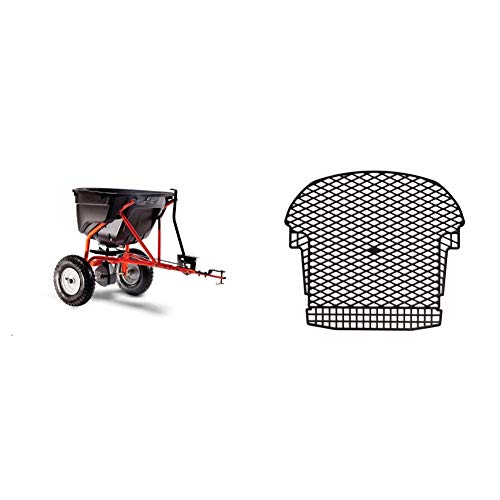
Good: hoppers of 100 to 175 lb that hold a full bag or two of fertilizer, so you refill less on large properties. Agri-Fab's 45-0463 holds 130 lb, and its tow behind drop spreader holds up to 175 lb and covers about 40,000 square feet per fill, according to Agri-Fab. Poor: small hoppers that need constant refilling on acreage.
Accuracy and Control Features
Good: many numbered rate settings that match product bag charts, a rod linked on off control reachable from the seat and spread width adjustment. The VEVOR spreader offers 30 settings and a spread width up to about 10 feet. Poor: vague settings, cable controls that stretch and no way to stop flow at the end of a row.
Gearbox and Durability
Good: enclosed gearboxes that keep out corrosive fertilizer and grit, metal or tapered gears and powder coated or rust resistant frames. Agri-Fab highlights an enclosed gearbox with tapered gears; VEVOR lists a powder coated steel frame and aluminum gears. Poor: open plastic gears that strip and bare steel that rusts after one season of salt.
Tires, Hitch and Stability
Good: large pneumatic tires (around 13 inches) with a wide wheelbase for stability on rough or sloped ground, and a universal pin hitch that fits tractors, ATVs and UTVs. Poor: small hard tires that bounce and spill product and hitches that need adapters.
Accessories Included
Good: hopper grates that break up clumps, rain covers and deflectors that block spread on one side near beds and driveways. Agri-Fab's 45-0463 bundle includes a spreader grate kit. Poor: no grate, which lets clumps jam the gate.
Safety and Ease of Use
Good: controls reachable without twisting dangerously on the seat, simple tool free assembly and guidance on maximum towing speed. Poor: controls that require stopping and leaning back over the hitch. Wear gloves and eye protection when filling with fertilizer or ice melt, and follow product labels.
Warranty and Brand Support
Good: established brands such as Agri-Fab, Brinly and Ohio Steel with replacement parts and clear warranties. Poor: unknown brands with no parts availability for gears and agitators.
3 Picks That Pass Our Checklist
The Agri-Fab 45-0463 130 lb Tow Behind Broadcast Spreader is our best overall pull behind spreader, the VEVOR 130 lb Tow Behind Spreader is the best value and the Agri-Fab 175 lb Tow Behind Drop Spreader is the best for precise placement.
Best Overall: Agri-Fab 45-0463 130 lb Tow Behind Broadcast Spreader
The Agri-Fab 45-0463 suits homeowners and hobby farmers with half an acre or more. At around $250, it pairs a 130 lb hopper with a rod linked on off control, an enclosed gearbox with tapered gears and large diameter tires on a wide wheelbase, according to Agri-Fab.
Its two standout strengths are durability from the enclosed gearbox and stability on rough ground. This bundle adds a spreader grate kit that improves material flow. The limitation is its price relative to budget imports.

Best Value: VEVOR 130 lb Tow Behind Broadcast Spreader
The VEVOR spreader suits budget buyers who want large capacity. At around $150, it holds 130 lb, offers 30 adjustable settings and spreads up to about 10 feet wide on 13 inch pneumatic tires, per the listing.
Its strengths are tool free assembly, a powder coated steel frame with aluminum gears and the option to tow or push. The limitation is a shorter track record than long established brands, so check gear condition and rinse it well after spreading salt or fertilizer.

Best for Precise Placement: Agri-Fab 175 lb Tow Behind Drop Spreader
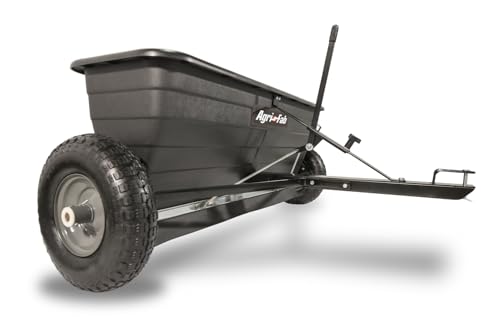
The Agri-Fab drop spreader suits owners who need exact placement near beds, gardens and driveways. At around $329, it holds up to 175 lb in a rustproof poly hopper and drops material in a controlled 42 inch path, covering about 40,000 square feet or up to an acre per fill, according to Agri-Fab.
Its strengths are precise placement with no fling onto pavement or flower beds and a large capacity. The limitation is the narrower path, which means more passes than a broadcast spreader, and careful overlap is needed to avoid stripes.
Broadcast vs Drop Pull Behind Spreaders
| Factor | Broadcast | Drop |
|---|---|---|
| Spread width | About 8 to 12 ft | About 3 to 4 ft |
| Speed on large areas | Fast | Slower |
| Precision near edges | Lower, needs deflector | High |
| Risk of stripes | Low, patterns blend | Higher if passes miss |
| Best for | Large lawns, pastures, ice melt on drives | Lawns with beds and hardscape |
Sizing the Best Pull Behind Spreaders to Your Property
The best pull behind spreaders for you depend on acreage and terrain. For half an acre to one acre of lawn, a 100 to 130 lb broadcast spreader like the VEVOR or Agri-Fab 45-0463 covers the area in one or two fills. For several acres or pasture, look at 175 lb hoppers or larger farm grade units. Rough or hilly ground calls for wide wheelbases and big pneumatic tires, while lawns with many beds benefit from a drop spreader or a broadcast model with a deflector.
Quick Buyer Checklist
- Does the hopper hold at least 100 lb for your property size?
- Can you reach the on off control from your seat?
- Are rate settings numbered and matched to product charts?
- Is the gearbox enclosed?
- Are the tires large and pneumatic for your terrain?
- Does the hitch fit your tractor, ATV or UTV?
- Is a grate or cover included?
- Are replacement parts available?
Red Flags to Watch For
- Open plastic gears: they strip and clog with fertilizer.
- No rate chart or vague settings: leads to over or under application.
- Small solid tires: bounce on rough ground and spill material.
- Very low ratings or few reviews with complaints about gears: signs of weak drivetrains.
- No parts support: agitators and gears wear over time.
How to Make Your Pull Behind Spreader Last Longer
- Empty the hopper after every use; never store fertilizer or salt in it.
- Rinse the hopper, gears and frame with water and let it dry.
- Lubricate moving parts and check tire pressure each season.
- Store indoors or under a cover.
Pull Behind Spreaders: Your Questions Answered
What specs matter most for pull behind spreaders?
Hopper capacity, an enclosed gearbox, accurate rate settings and large tires matter most. A seat reachable on off control and a grate for clumpy fertilizer also make a big difference.
How fast should I tow a spreader?
Tow at a steady walking to moderate pace, typically around 3 to 5 mph. Check your spreader's manual, since speed changes the spread rate and pattern; keep it constant for even coverage.
Can I use a pull behind spreader for ice melt?
Yes, most broadcast pull behind spreaders handle salt and ice melt. Rinse the spreader thoroughly afterward to prevent corrosion.
Broadcast or drop: which is better?
Broadcast is better for large open areas, and drop is better for precise placement. Many owners with mixed properties use a broadcast spreader with a deflector.
Wrapping Up
Choose capacity for your property, insist on an enclosed gearbox and accurate controls and pick broadcast or drop based on how precise you need to be. The Agri-Fab 45-0463 suits most owners, the VEVOR offers big capacity for less and the Agri-Fab drop spreader suits precise work. Keep the checklist in mind and the best pull behind spreaders will make lawn and property care faster and more even. Compare current options in the product table above, and see our guide to the best seed spreaders for walk behind options.


