
Best Sprinkler Hoses: A First Time Buyer's Guide for 2026
Disclosure: We may earn a commission when you buy through links on this page, at no extra cost to you. As an Amazon Associate I earn from qualifying purchases. Learn more

How to choose and set up a sprinkler hose for narrow lawns, rows and new seed.
A sprinkler hose is one of the simplest ways to water a long, narrow lawn strip, a vegetable row or a new seed bed. It looks like a flat garden hose, but tiny holes along one side spray fine streams of water upward when you turn on the tap, covering a rectangle that an oscillating sprinkler would miss or overspray. This beginner friendly guide explains how to choose the best sprinkler hoses, how they differ from soaker hoses and how to set them up for even watering.
We start with the basics, then explain the key specs in plain English, list rookie mistakes and walk through first use, with answers to common questions at the end.

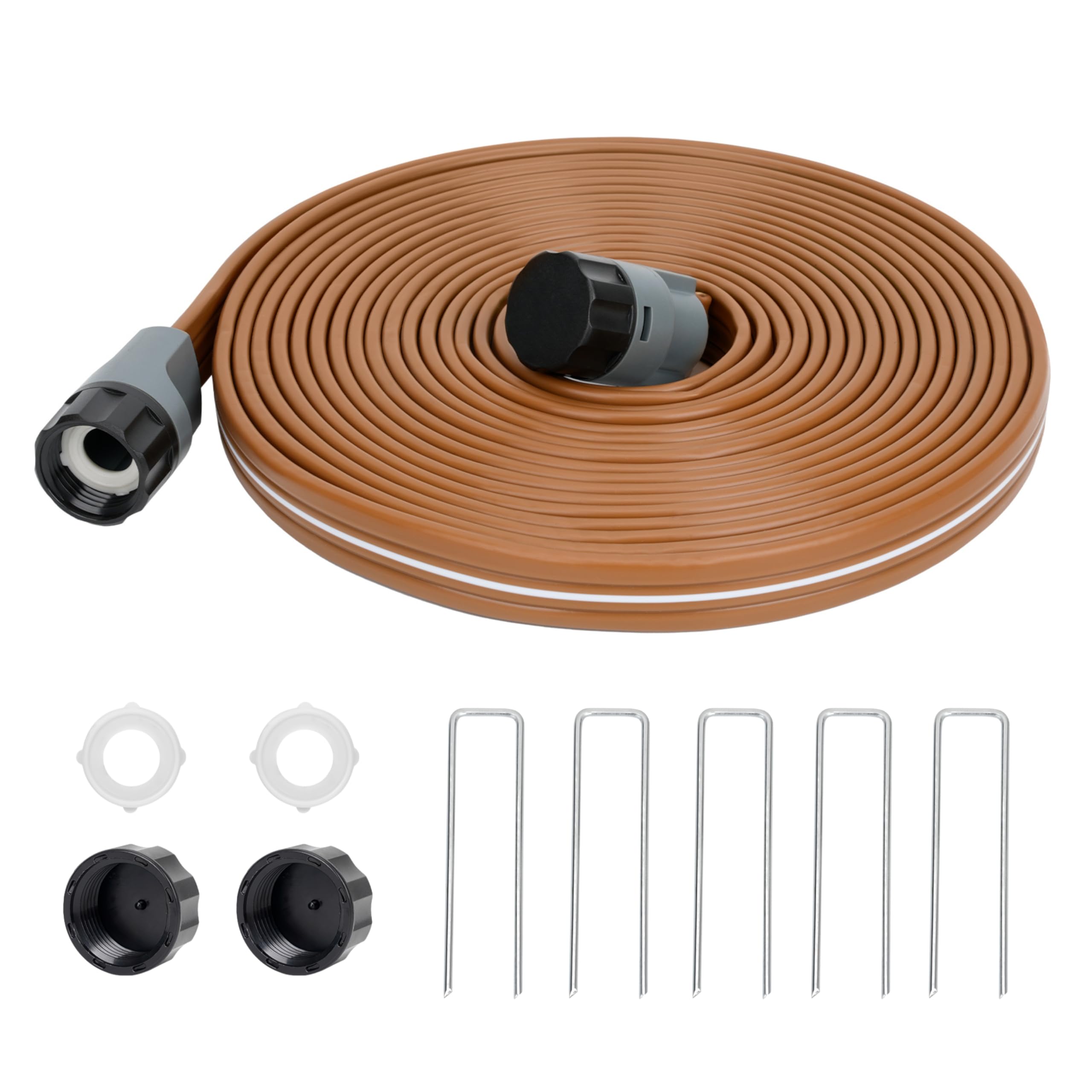


Sprinkler Hoses 101: The Basics
A sprinkler hose is a flat hose with rows of small holes. With the holes facing up, it sprays water into the air like a low, narrow sprinkler, usually reaching a few feet to either side. Flip it with the holes facing down, and many sprinkler hoses act like a soaker hose, dripping water directly into the soil.
Sprinkler hoses are different from soaker hoses. Soaker hoses, made of porous rubber or fabric, weep water slowly along their length and are best for deep watering garden beds under mulch. Sprinkler hoses spray, so they cover lawns and wide rows faster but lose more water to evaporation and wind. Many products, like Watoo's, are sold as combined sprinkler and soaker hoses for both uses.
Sprinkler hoses shine in narrow side yards, strips between sidewalks and curbs, long vegetable rows and newly seeded areas, where they deliver gentle water without washing seed away.
Key Specs Explained in Plain English
Focus on length, coverage, material, couplings and water pressure.
Match the Product to Your Garden Size and Layout
Measure the area you want to water. Sprinkler hoses come in lengths from 25 feet to 150 feet or more, and coverage width depends on water pressure, often a few feet to either side. For a narrow 30 foot strip, a 25 to 50 foot hose works well. For larger lawns or several rows, choose a longer hose or link multiple hoses, but expect weaker spray at the far end of very long runs.
Safety (Drinking Water Safe, Lead Free, Pet Safe)
If you water vegetable gardens, look for hoses labeled lead free or drinking water safe, with lead free couplings. Water sitting in a hot hose can pick up chemicals from low quality plastics, so run the hose briefly before watering edibles. Sprinkler hoses are generally safe for pets and kids, though children may enjoy them as a summer splash toy.
Durability and Weather Resistance
Look for UV resistant materials that do not crack in the sun and reinforced construction that resists bursting. Watoo describes its hoses as reinforced and heavy duty. Drain the hose after use and store it out of direct sun to extend its life, and bring it indoors before freezing weather.
Material and Build Quality
Most sprinkler hoses are PVC or a layered PVC and fabric construction. Thicker walls resist kinks and bursts. Metal or brass couplings last longer and seal better than plastic ones, which can crack if overtightened. End caps or plugs let you control whether water exits at the end or only through the holes.
Performance Specs (Length, Coverage, Water Pressure)
Spray height and width depend on your home's water pressure and the hose length. Higher pressure sprays farther; long hoses lose pressure toward the end. If spray is too strong, partially close the tap to reduce misting and wind drift. Linkable hoses let you extend coverage, but more than about 100 feet in one run often leads to uneven spray.
Sprinkler Hose vs Other Watering Options
| Option | Best For | Pros | Cons |
|---|---|---|---|
| Sprinkler hose | Narrow lawns, rows, new seed | Shapes to the area, gentle spray, cheap | Limited reach, wind drift |
| Soaker hose | Garden beds under mulch | Very efficient, waters roots | Slow, not for lawns |
| Oscillating sprinkler | Rectangular lawns | Large coverage, adjustable | Overspray on paths and walls |
| Drip irrigation | Permanent beds and pots | Most efficient, timer friendly | Higher setup cost |
Where the Best Sprinkler Hoses Work Well
The best sprinkler hoses solve watering problems that round sprinklers handle poorly.
- Side yards and parking strips: long, narrow lawns get even coverage without soaking fences, walls or sidewalks.
- New grass seed: a gentle, low spray keeps seed moist without washing it into puddles.
- Vegetable rows: lay the hose between rows to water several at once.
- Curved beds: flexible hoses bend to follow borders and island beds.
- Kids' summer play: a sprinkler hose on the lawn makes a simple splash zone on hot days.
Seasonal Care and Storage
Sprinkler hoses last longest with a little seasonal care. During the season, drain the hose after each use by lifting one end so water runs out, and avoid driving over it with mowers. Check couplings and washers for leaks each spring and replace worn rubber washers, which cost pennies. In fall, flush out dirt, let the hose dry, coil it loosely without sharp folds and store it in a garage or shed. Freezing water inside a hose can split it, so bring it indoors before the first frost. If holes clog with mineral deposits, soak the hose in a vinegar and water solution and flush it with the end cap removed.
Rookie Mistakes to Avoid
- Turning the tap fully open: high pressure can mist water into the wind or burst cheap hoses.
- Using a run that is too long: the far end may barely spray.
- Watering at midday: evaporation wastes water; water early in the morning instead.
- Leaving the hose in the sun when not in use: UV and heat shorten its life.
- Forgetting the end cap: without it, most water pours out the end instead of the holes.
Getting Started: Setup and First Use
- Unroll the hose in the sun for a few minutes so it flattens and relaxes.
- Lay it along the center of the area to water, holes facing up for spray or down for soaking.
- Secure it with garden stakes so it does not twist.
- Attach it to the spigot or a regular garden hose, with the end cap in place.
- Turn the water on slowly until the spray covers the area without misting.
- Water for 20 to 30 minutes, then check soil moisture a few inches down and adjust.
- Add a hose timer for consistent early morning watering.
FAQs
How long should a garden hose last?
A quality sprinkler or garden hose typically lasts several seasons. UV exposure, freezing and high pressure shorten its life. Draining it, storing it in shade and bringing it indoors for winter can add years.
What is the difference between a sprinkler hose and a soaker hose?
A sprinkler hose sprays water through small holes, while a soaker hose weeps water slowly through its walls. Sprinkler hoses suit lawns and wide rows; soaker hoses suit garden beds under mulch and use less water.
Can a sprinkler hose be used as a soaker hose?
Yes, many sprinkler hoses work as soaker hoses when laid with the holes facing down. Combination products like Watoo's are marketed for both uses.
How much hose do I need for my garden?
Measure the length of the area to water and choose a hose slightly longer. For several rows, snake one longer hose or link shorter ones, keeping single runs under about 100 feet for even spray.
How long should I run a sprinkler hose?
Most lawns and gardens need about 20 to 30 minutes per session, two or three times a week. Aim for about an inch of water per week, adjusting for rain, heat and soil type.
The Bottom Line
Choose a sprinkler hose sized to your area, with reinforced construction, sturdy couplings and an end cap, and run it at moderate pressure early in the day. Use it with holes up for lawns and new seed, or holes down to soak beds. Keep those basics in mind and the best sprinkler hoses will water narrow spaces evenly with almost no setup. Compare current options in the product table above, and see our guide to the best soaker hoses for garden beds.


