Best Pruning Saws: Reviews and Buying Guide for 2026
Disclosure: We may earn a commission when you buy through links on this page, at no extra cost to you. As an Amazon Associate I earn from qualifying purchases. Learn more

Three pruning saw picks plus a guide to blade length, teeth and saw types.
Loppers stall at around 1.5 to 2 inches, and a chainsaw is overkill for shaping a fruit tree or clearing a few overgrown shrubs. That gap is where a pruning saw shines: a sharp, curved blade that cuts live branches cleanly with a few pull strokes. The best pruning saws combine aggressive teeth, a blade length matched to your branches and a handle that stays comfortable over a long session.
This guide covers three top picks, then explains blade length, tooth design, folding versus fixed and pole saws, safety and care, so you can choose the right saw for your yard.


Our Top 3 Picks at a Glance
The Corona RazorTOOTH 10-Inch Folding Saw is our best overall pick, the Fiskars 10-Inch Folding Saw is the best value and the Silky ZUBAT 330mm is the best upgrade for heavy pruning.
Best Overall: Corona Tools 10-Inch RazorTOOTH Folding Pruning Saw
The Corona RazorTOOTH suits homeowners who prune trees, shrubs and hedges several times a year. At around $30, its curved 10 inch blade is made of Japanese SK5 high carbon steel with three sided, impulse hardened teeth that Corona says cut limbs up to 6 inches in diameter.
Its two standout strengths are fast pull stroke cutting (Corona claims up to twice as fast as conventional blades) and a folding design whose centered lock works for right or left hand use. The co molded pistol grip reduces slipping. The limitation is that impulse hardened teeth cannot be resharpened, so the blade is replaced when it dulls.

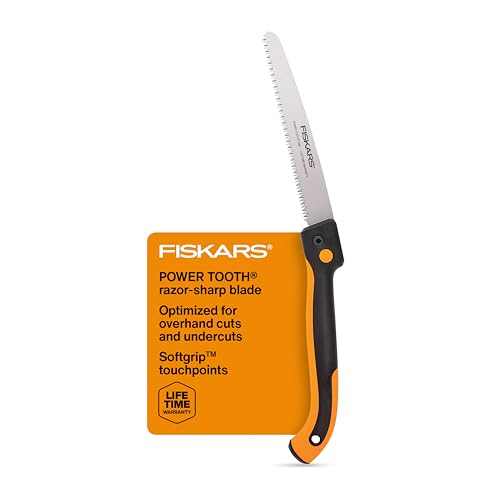
Best Value: Fiskars 10-Inch Folding Pruning Saw
The Fiskars 10-Inch Folding Saw suits budget buyers and occasional pruners. At around $18, it uses a triple ground Power Tooth blade that locks in two positions, one optimized for overhand cuts and one for undercuts.
Its strengths are the dual locking positions, which make awkward cuts easier, and a lifetime warranty from Fiskars. It also folds into the handle for safe storage and carrying. The limitation is that the straight blade pulls less aggressively than curved Japanese style blades on thick live wood.
Best Upgrade Pick: Silky ZUBAT Professional Curved Hand Saw 330mm
The Silky ZUBAT suits arborists, orchard owners and anyone who prunes large branches often. At around $116, it has a 13 inch (330mm) curved blade with large teeth at 6.4 teeth per inch and a cut capacity of 6.5 inches, according to Silky.
Its strengths are electroless nickel plating for wear and rust resistance and a light 0.65 lb operating weight, with a sheath included for belt carry. Silky calls it its most popular curved pruning saw. The limitation is the price and the fixed blade, which needs its sheath rather than folding away.

How to Choose the Best Pruning Saws: Buying Guide
Match blade length to branch size, choose curved pull stroke teeth for live wood and pick folding or fixed based on how you carry the saw. The factors below explain each choice.
Manual vs Powered (Battery Platform)
Manual pruning saws are quiet, light and precise, and they cost $15 to $120. For a handful of trees, a hand saw is faster to grab than any power tool. Battery pruning saws and mini chainsaws on 18V, 20V or 40V platforms suit large properties with many branches, especially if you already own batteries from the same brand. They cost more and add weight but reduce fatigue on big jobs.
Capacity and Working Range
Blade length decides cutting capacity. A 7 inch blade handles branches up to about 3 to 4 inches, a 10 inch blade handles up to about 6 inches and a 13 inch blade handles 6 inches or more. Pole saws extend reach to 10 to 27 feet for high limbs without a ladder. A rule of thumb: choose a blade at least twice the diameter of your typical branch.
Tooth Design and Blade Shape
Japanese style pull stroke saws cut on the pull, which keeps the thin blade from buckling and gives cleaner cuts. Curved blades bite into the branch with less effort and help on overhead cuts. Large teeth (around 6 teeth per inch) cut green wood fast; fine teeth suit dry wood and small, precise cuts. Impulse hardened teeth stay sharp longer but cannot be resharpened.
Safety Features
Folding saws should have a positive blade lock in the open position and a lock that holds the blade closed. Fixed blade saws need a sheath with a secure retention clip. A non slip handle and a hand guard or hook at the end of the grip help prevent your hand sliding onto the blade. Wear gloves and eye protection when pruning.
Warranty and Brand Ecosystem
Fiskars offers a lifetime warranty on many hand saws, Corona backs its tools with its own warranty and Silky and FELCO sell replacement blades for their saws, which extends their life. Replaceable blades matter more than warranty length on premium saws, since the handle can last decades.
Weight, Ergonomics, and Vibration
Most hand pruning saws weigh under 1 lb, so balance and grip matter more than weight. Pistol grips reduce wrist strain on repeated strokes, and rubber overmolding improves control with wet gloves. For overhead work, a lighter saw such as the 0.65 lb ZUBAT reduces arm fatigue.
Blade Steel and Coatings
High carbon steel such as Japanese SK5 holds an edge well. Chrome or nickel plating reduces friction and resists rust and sap buildup. Thinner blades (around 1.5mm) cut faster but bend if pushed, so let the pull stroke do the work.
Types of Pruning Saws
Each type suits a different job and user.
Pro Grade Fixed Blade Saws
Fixed blade saws with 12 to 15 inch blades, like the Silky ZUBAT or FELCO models, cut large branches fastest and are carried in a belt sheath. They suit arborists, orchard owners and serious gardeners. The downside is higher cost and less convenient storage.
DIY Folding Saws
Folding saws with 7 to 10 inch blades fold into the handle for safe storage in a pocket, pack or truck. They suit homeowners, campers and occasional pruning. They cost $15 to $40 and handle most yard branches.
Pole Saws and Cordless Battery Tools
Manual pole saws, like the VEVOR models that extend up to 27 feet, reach high limbs from the ground. Battery pole saws and pruning saws add power for many cuts. They suit large properties and overhead work, but are heavier and harder to control precisely.
Picking the Right Pruning Saws for Different Uses
Choose folding 7 to 10 inch saws for shrubs and small trees, 13 inch fixed blades for thick limbs and pole saws for branches overhead.
Best Tree Pruning Saws
The best tree pruning saws use curved blades of 10 to 13 inches with large teeth for green wood, plus a sheath or lock for safe carrying. For high limbs, add a pole saw rather than climbing a ladder with a hand saw. The Silky ZUBAT is a strong choice for large trees.
Setup and Care Tips
A little care keeps a pruning saw cutting cleanly for years.
- Wear eye protection and gloves: sawdust and springing branches can injure eyes and hands.
- Let the saw do the work: use long, smooth pull strokes rather than forcing the blade, which can bend it.
- Clean sap after use: wipe the blade with a cloth and a little oil or resin cleaner to prevent sticking and rust.
- Disinfect between diseased plants: wipe the blade with rubbing alcohol to avoid spreading disease.
- Replace dull blades: impulse hardened blades cannot be sharpened, so buy a replacement blade when cutting slows.
- Store dry: keep the saw folded or sheathed in a dry place.
FAQs
Can I use batteries across brands?
No, batteries generally only work within one brand's platform. If you buy a battery pruning saw or pole saw, choose the brand whose batteries you already own. Third party adapters exist but may void warranties and are not recommended.
Is a brushless motor worth it?
Yes, for battery pruning saws used often. Brushless motors run cooler, last longer and get more cuts per charge. For occasional pruning, a manual hand saw is cheaper and often faster to use than any powered tool.
What specs matter most for home projects?
Blade length, tooth size and blade lock matter most. A 10 inch curved blade with large teeth and a secure lock handles most yard pruning. Add a pole saw for limbs above head height.
Corded or cordless: which is better for DIY?
Cordless or manual is better for pruning. Pruning happens around trees and shrubs where cords tangle and limit reach. A hand saw covers most homeowner needs, and a battery pole saw helps on large properties.
How do I make a proper pruning cut?
Cut just outside the branch collar, the slightly swollen ring where a branch meets the trunk. For heavy limbs, use a three cut method: an undercut, a top cut farther out to remove the weight and a final cut at the collar to prevent bark tearing.
Wrapping Up
Choose blade length based on your branches, prefer curved pull stroke teeth for live wood and pick folding for convenience or fixed for heavy use. Budget buyers will be happy with the Fiskars, most homeowners with the Corona RazorTOOTH and heavy pruners with the Silky ZUBAT. Keep those points in mind and the best pruning saws will keep your trees healthy and tidy. Compare current options in the product table above.