
Best Sliding Compound Miter Saws: Budget, Midrange, and Premium Picks
Disclosure: We may earn a commission when you buy through links on this page, at no extra cost to you. As an Amazon Associate I earn from qualifying purchases. Learn more

Budget, midrange and premium picks for the best sliding compound miter saws, with price tiers, features and blade size advice.
A sliding compound miter saw is the tool that makes trim, framing and furniture projects look professional. It cuts precise angles for crown molding, baseboards and picture frames, bevels for compound cuts, and its sliding rails let a 10 or 12 inch blade crosscut boards up to about 12 inches wide or more. The best sliding compound miter saws hold their settings accurately, slide smoothly, cut cleanly and fit the space you have in your garage or shop.
Below are our picks at three budgets, followed by what each price tier gets you, the features worth paying for and long term costs.
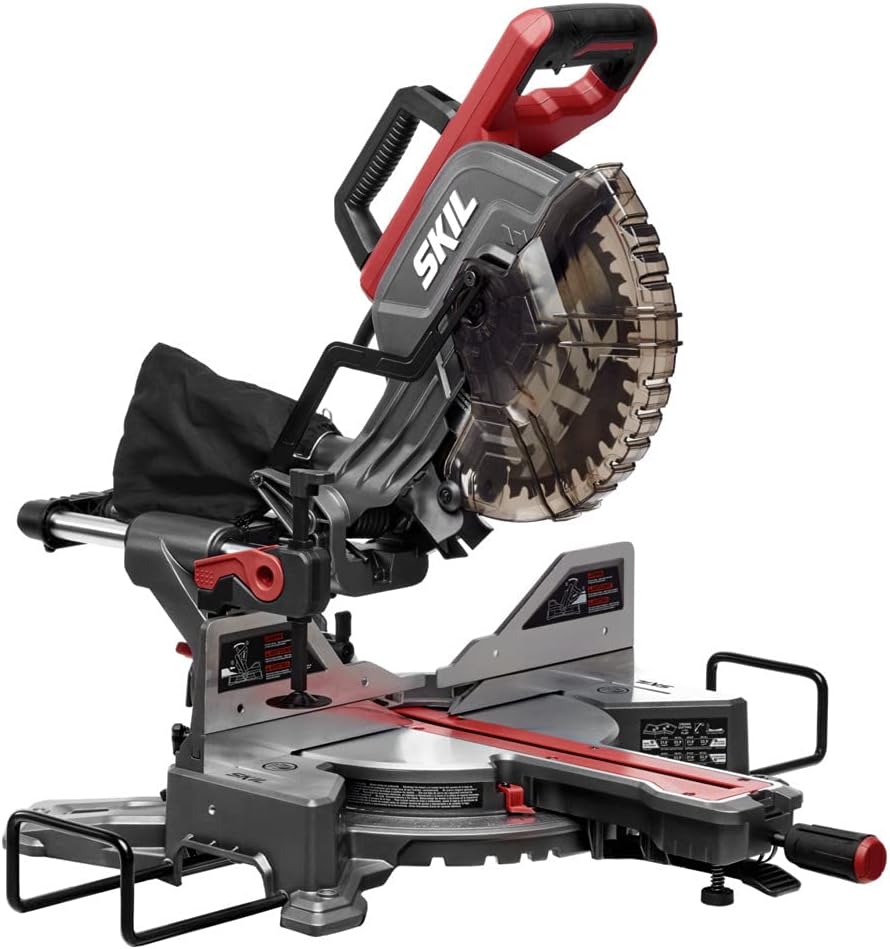
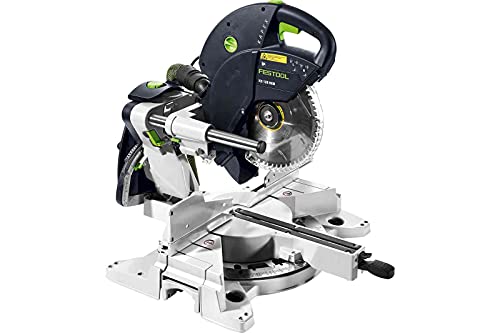

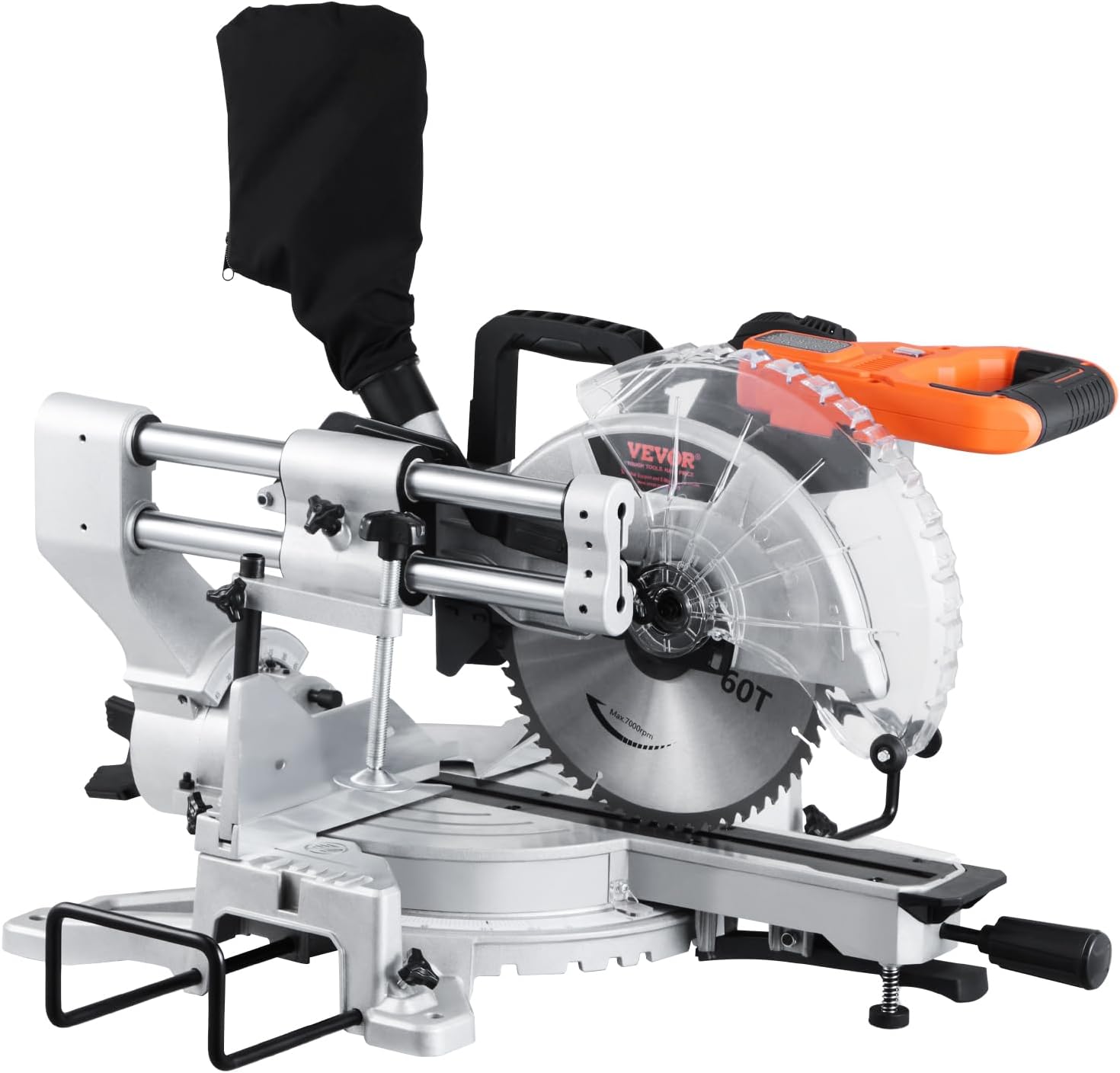


Top 3 Picks by Budget
The SKIL MS6305 10 inch dual bevel sliding miter saw is the best budget pick, the Makita LS1019L 10 inch dual bevel slide miter saw is the best midrange choice for accuracy and compact footprint, and the Festool KAPEX KS 120 REB is the best premium saw for fine woodworking. Check the product table above for current prices.
| Budget | Product | Key Spec | Best For |
|---|---|---|---|
| Best Budget Pick | SKIL MS6305 10 inch | 15 amp, dual bevel, LED shadow line, cuts 2x12 at 90 degrees | DIY trim and framing |
| Best Midrange Pick | Makita LS1019L 10 inch | Dual rail slide, 6-5/8 inch nested crown, operates flush to wall | Serious DIYers and finish carpenters |
| Best Premium Pick | Festool KAPEX KS 120 REB | Rail forward design, dual lasers, up to 91% dust extraction | Fine woodworking and cabinetry |
Best Budget Pick: SKIL MS6305 10 Inch Dual Bevel Sliding Compound Miter Saw
The SKIL MS6305 is the best budget sliding compound miter saw, at around $249. It offers dual bevel cutting and generous capacity at an entry level price.
- Why it stands out: a 15 amp motor spins at 4,800 RPM, and it crosscuts lumber up to 2x12 at 90 degrees and 2x8 at 45 degrees.
- Accuracy aids: an LED shadow line shows exactly where the blade will cut, and miter cuts reach 50 degrees left and right with 11 positive stops at common angles. Bevel stops sit at 48 and 45 degrees left, 0 and 45 degrees right.
- Trade off: it needs more depth behind it than rail forward designs, and fine tuning out of the box may be needed for precise trim work.
Best for: homeowners doing trim, decks and framing projects.

Best Midrange Pick: Makita LS1019L 10 Inch Dual Bevel Sliding Compound Miter Saw
The Makita LS1019L is the best midrange sliding compound miter saw, at around $730. It combines accuracy with a space saving design.
- Why it stands out: Makita says it delivers the crown molding capacity of a 12 inch saw (6-5/8 inch nested) and 5-1/4 inch vertical capacity from a 10 inch blade, with a linear ball bearing slide for accurate cuts.
- Space saving: a dual steel rail sliding system allows operation flush against a wall, and at about 57.9 pounds it is compact and portable for its class, with a built in laser.
- Trade off: it costs significantly more than budget saws, and 10 inch blades limit thick stock compared with 12 inch saws.
Best for: finish carpenters and DIYers with tight garage space.

Best Premium Pick: Festool KAPEX KS 120 REB
The Festool KAPEX KS 120 REB is the best premium sliding compound miter saw, at around $1,799. It is built for precision woodworking.
- Why it stands out: a rail forward design improves precision, prevents head play and creates a compact footprint, while dual lasers mark both sides of the kerf.
- Refined controls: a micro adjustable bevel with an up front rotary knob and large scale, plus dust extraction up to 91% with a behind the cut hood when connected to an extractor.
- Support: Festool includes a 3 year wear and tear warranty and fast repair service, per the listing.
- Trade off: the price is very high for occasional DIY use.
Best for: cabinetmakers, furniture builders and professional finish carpenters.

What Your Money Gets You at Each Price Tier
Sliding compound miter saws fall into three practical tiers.
Budget Tier: What to Expect
Under about $350, expect 10 or 12 inch sliding saws with 15 amp motors, dual or single bevel, lasers or LED shadow lines and decent capacity. Accuracy is good for DIY projects, but detents and fences may need adjusting, and dust collection is often weak. These saws suit decks, framing and occasional trim.
Midrange Tier: The Sweet Spot for Most Buyers
Between about $400 and $900, saws from DeWalt, Makita, Bosch and Milwaukee add smoother slides, better detents, more accurate bevel scales, improved dust collection and space saving rail designs. Cordless models also appear here. This tier suits regular woodworkers and finish carpenters.
Premium Tier: When Spending More Pays Off
Above about $1,000, premium saws offer exceptional accuracy, rigid slides with minimal deflection, micro adjustments, excellent dust extraction and long warranties. They pay off for professional cabinetry, furniture and high end trim where small errors show.
Features Worth Paying For (and Ones to Skip)
Some features improve accuracy and convenience, while others matter less.
Accuracy and Control Features
Positive stops at common angles, easy to read miter and bevel scales, detent overrides for fine adjustments and a rigid fence are worth paying for. An LED shadow line is often more accurate than a laser because it shows the blade's actual shadow. Dual bevel saves flipping workpieces for opposing bevels.
Weight, Ergonomics and Vibration
Sliding miter saws often weigh 45 to 65 pounds. Lighter saws are easier to move to a job site, while heavier ones may feel more stable. Horizontal handles, front mounted bevel controls and smooth slides reduce fatigue.
Corded vs Cordless (Battery Platform)
Corded saws offer unlimited runtime and more power for the price. Cordless sliding miter saws are convenient for job sites and decks, especially if you already own the battery platform, but they cost more and use high capacity batteries.
Safety Features
Electric brakes stop the blade quickly, blade guards retract smoothly and trigger lockouts prevent accidental starts. Use clamps instead of hands near the blade, and wear eye and hearing protection.
Accessories Included
Check for an included blade (often a basic one), a dust bag, a work clamp and extension wings. Upgrading to a quality fine tooth blade often improves cut quality more than any other change. A dedicated miter saw stand adds support for long boards.
10 Inch vs 12 Inch Sliding Miter Saws
Ten inch saws are lighter, cheaper to buy blades for and often more precise, since smaller blades deflect less. They handle most trim and boards up to 2x12 with a slide. Twelve inch saws cut wider and thicker stock, such as 4x6 posts and tall baseboards in one pass, making them better for framing and decks. For most DIYers focused on trim and furniture, a quality 10 inch slider is enough.
Common Projects for Sliding Compound Miter Saws
The best sliding compound miter saws handle a wide range of home projects.
- Baseboards and casing: clean 45 degree miters and coped joint prep for trim around doors and windows.
- Crown molding: compound angles cut either nested against the fence or flat using miter and bevel together.
- Decking and framing: square, repeatable cuts on joists, deck boards and studs.
- Shelving and built ins: accurate crosscuts on wide boards and plywood strips.
- Picture frames and boxes: precise miters for tight corners.
- Flooring: crosscuts on hardwood, laminate and vinyl plank.
Tips for Accurate Miter Cuts
- Check the saw for square with a reliable square before your first project, and recheck after moving it.
- Let the blade reach full speed before cutting, and pull the slide toward you, then push down and back through the board.
- Support long boards level with the table using extension wings or a stand.
- Clamp small pieces rather than holding them near the blade.
- Cut slightly long first, then trim to your mark for a perfect fit.
- Use a stop block for repeat cuts of the same length.
Long Term Costs to Factor In
Budget for at least one quality blade for fine crosscuts, typically $40 to $100, and a general purpose blade for framing. A miter saw stand or bench with extensions costs $100 to $300. Dust collection, such as a shop vacuum with a hose adapter, keeps the area cleaner. Occasional calibration, belt or brush replacement on older designs and blade sharpening add minor costs.
Sliding Compound Miter Saws: Your Questions Answered
What specs matter most for home projects?
For home projects, the most important specs are crosscut capacity, accuracy of miter and bevel stops, dual bevel capability and the saw's depth or footprint. A 10 inch dual bevel slider handles most trim, shelving and deck projects.
Is a brushless motor worth it?
For cordless miter saws, yes: brushless motors extend battery runtime and power. For corded saws, accuracy, slide quality and fence design matter more than brushless labeling.
Can I use batteries across brands?
Generally no. Cordless miter saws run only on their own brand's batteries. Choose a saw that matches your existing battery platform to save money.
Corded or cordless: which is better for DIY?
Corded saws are better for most DIYers working in a garage or shop because they cost less and never run out of power. Cordless saws make sense for job sites, decks and anyone already invested in a large battery platform.
Our Verdict
The SKIL MS6305 is the budget pick for DIY trim and framing, the Makita LS1019L is the midrange choice for accuracy in tight spaces and the Festool KAPEX KS 120 REB is the premium saw for fine woodworking. Choose blade size for your projects, add a quality blade and stand, and the best sliding compound miter saws will deliver clean, accurate cuts for years. See our best miter saws under 200 guide for simpler options.


