
Best Tile Saws: Everything to Know Before Your First Purchase
Disclosure: We may earn a commission when you buy through links on this page, at no extra cost to you. As an Amazon Associate I earn from qualifying purchases. Learn more

Everything to know before buying the best tile saws, from compact wet saws to sliding cart saws.
Cutting tile by hand with a snap cutter works for straight cuts on ceramic, but porcelain, stone, notches and bevels call for a wet tile saw. A diamond blade cooled by water slices cleanly through hard tile, keeps dust down and extends blade life. Tile saws range from compact 7 inch tabletop models for bathroom backsplashes to 10 inch saws with stands that handle large format porcelain. The best tile saws match the tile size and material you cut, make accurate straight and bevel cuts and contain water spray well.
This guide explains how tile saws work, the key specs in plain English, rookie mistakes and how to set up a saw for your first tile project.


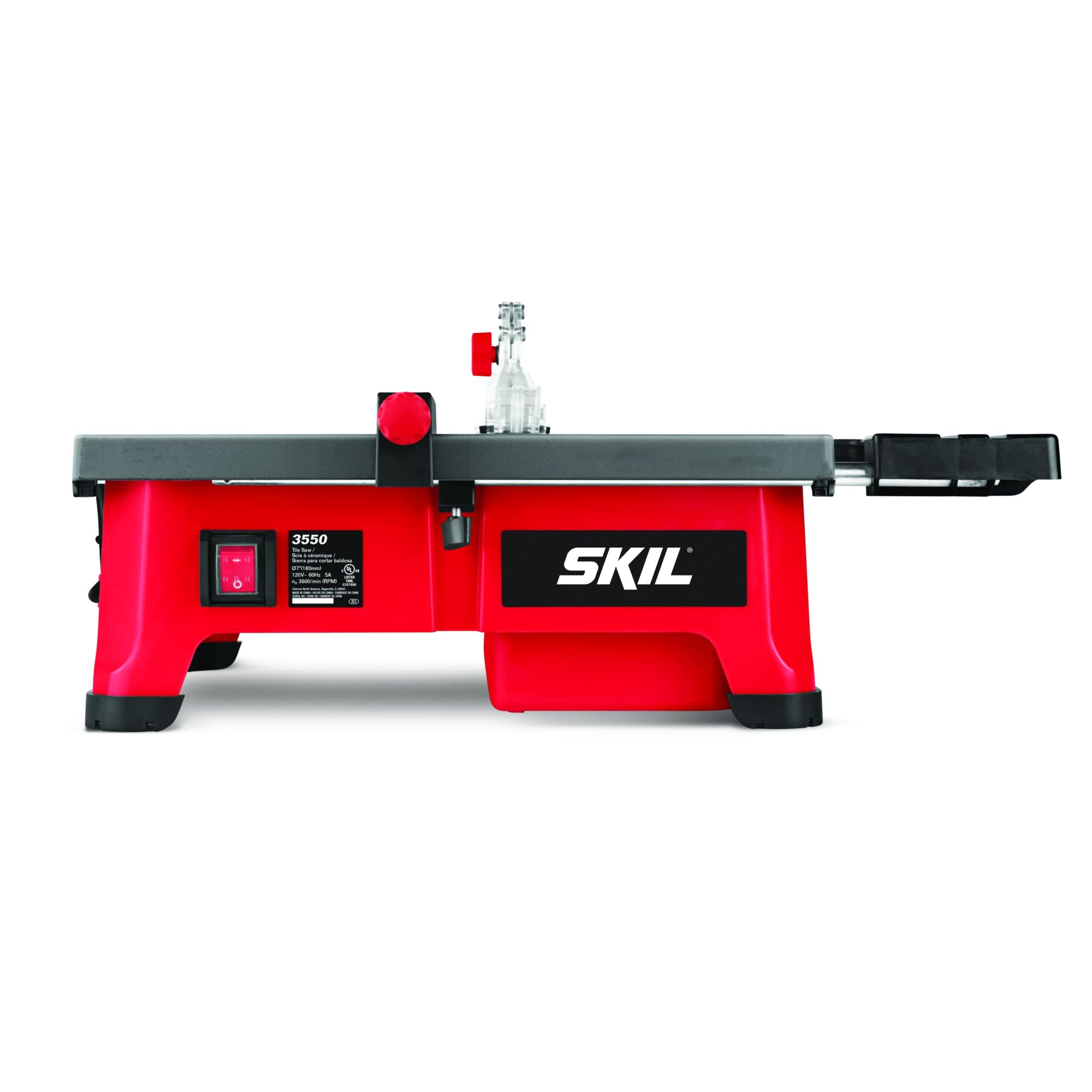


Tile Saws 101: The Basics
A tile saw is a power saw with a diamond edged blade that cuts ceramic, porcelain, glass and stone tile, usually with a water system that cools the blade, flushes debris and reduces dust.
There are three common types. Tabletop wet saws have a fixed blade and a sliding or fixed table; you push the tile into the blade. They are compact and affordable, like the SKIL 3540-02 and PORTER-CABLE PCE980. Sliding table or cart saws move the tile on a rolling cart under a fixed blade for long, accurate cuts, like the DEWALT D24000S. Handheld wet saws cut tile already installed or large slabs.
Key terms: rip capacity is the longest straight cut, diagonal capacity is the largest tile you can cut corner to corner, bevel means cutting at an angle, and plunge cutting lets you cut notches and openings.
Key Specs Explained in Plain English
Corded vs Cordless
Most tile saws are corded for continuous power with water. Cordless tile saws, like the CRAFTSMAN V20 7 inch model, offer portability for small jobs and quick cuts on site, but battery runtime limits large projects.
Power and Blade Size
7 inch blade saws with around 1 horsepower handle ceramic and porcelain up to about 1 inch thick. 10 inch saws with about 1.5 horsepower cut thicker tile and stone faster and deeper; the DEWALT D24000S lists a 3 1/8 inch maximum depth of cut.
Cutting Capacity
Match capacity to your tiles. Compact 7 inch saws typically handle tiles up to about 12 by 12 inches diagonally; the SKIL 3540-02 lists a 7.75 inch crosscut and 7.25 inch diagonal capacity. 10 inch cart saws like the D24000S cut 18 by 18 inch tiles diagonally and rip up to 28 inches with a plunge.
Accuracy and Control Features
Look for a sturdy rip fence, a miter gauge, a bevel up to 45 degrees and a cutline indicator. The DEWALT D24000S uses stainless steel rollers and claims accuracy within 1/32 inch over 18 inch cuts.
Water Containment
Splash guards, side and rear water trays and submersible pumps keep water where it belongs. Better containment means less cleanup and safer footing.
Weight, Ergonomics and Portability
Tabletop saws weigh around 20 to 40 pounds and fit on a workbench or floor. Cart saws with stands can weigh 70 pounds or more but offer comfortable working height. Roll cages and handles help with transport.
Warranty and Brand Ecosystem
DEWALT, SKIL, PORTER-CABLE, QEP and FLEX offer tile saws with varying warranties. Check blade availability and parts support.
Best Tile Saws for Specific Needs
Best Small Tile Saws
The best small tile saws are 7 inch tabletop wet saws like the SKIL 3540-02 and PORTER-CABLE PCE980. They suit backsplashes, bathroom floors with 12 by 12 inch tile and DIY repairs, and they store easily.
Best Tile Saws for Large Format Porcelain
For 24 inch tiles and larger, choose a 10 inch sliding cart saw with long rip capacity and a stand, such as the DEWALT D24000S or D36000S.
Best Tile Saws for Stone
Natural stone needs more power and depth. Choose a 10 inch saw with a quality diamond blade rated for stone.
Tile Saw vs Snap Cutter vs Angle Grinder
A wet tile saw is best for accurate cuts in porcelain, stone and glass, bevels and notches. A manual snap cutter is fast, quiet and clean for straight cuts in ceramic and some porcelain but cannot cut thin strips, curves or bevels. An angle grinder with a diamond blade cuts curves and holes in installed tile but is dusty and harder to control. Many tilers use a snap cutter for most straight cuts and a wet saw for everything else.
Choosing the Right Diamond Blade
- Continuous rim blades: the smoothest, chip free cuts in porcelain, ceramic and glass; standard on wet tile saws.
- Porcelain specific blades: thinner, harder rims cut dense porcelain with less chipping.
- Segmented or turbo blades: faster, rougher cuts for stone and masonry.
- Glass tile blades: very fine rims to prevent chipping on glass mosaics.
Match the blade diameter and arbor size to your saw, and replace the blade when cutting slows or edges chip more than usual.
Common Tile Cuts and How to Make Them
Straight and Rip Cuts
Set the fence to your mark, hold the tile firmly against it and feed slowly through the blade, easing off as you finish to avoid chipping the edge.
L Cuts and Notches
Cut both legs of the notch up to the corner, then nibble away the waste with several passes or snap it out carefully. A plunge capable saw makes interior cuts easier.
Bevel and Miter Cuts
Tilt the blade or table to 45 degrees for outside corners and edges. Make practice cuts on scrap first, since bevel cuts expose the tile body and need clean edges.
Small Pieces and Strips
Narrow strips can break or fly. Use a push stick, slow down and support the tile with your hands well away from the blade, or cut a wider piece first and trim it down.
Planning a Tile Project
Good planning reduces waste and makes cutting easier. Measure the room and buy about 10 to 15 percent extra tile for cuts and breakage, more for diagonal layouts. Dry lay a row of tiles to plan where cuts will fall, aiming for cut pieces at least half a tile wide along walls. Mark tiles in pencil or grease marker, number them in order and cut a few at a time so you can fine tune the fit as you go.
Tile Saw Safety Tips
- Always plug into a GFCI protected outlet, with the cord kept off wet floors.
- Wear safety glasses and hearing protection; consider a dust mask for dry cutting.
- Keep fingers well away from the blade and use push sticks for small pieces.
- Never reach under the blade while it spins.
- Let the blade stop completely before removing cut pieces.
Tile Saw Maintenance
- Drain and rinse the water tray after each day of cutting to remove slurry.
- Clean the pump and hoses so water flows freely.
- Wipe and dry the table, rails and rollers to prevent rust and sticking.
- Dress the blade with a dressing stone if it starts to glaze and cut slowly.
- Store the saw dry and covered.
How Much to Spend on the Best Tile Saws
- Under $200: 7 inch tabletop wet saws for occasional DIY projects.
- Around $250 to $400: sturdier 7 inch saws and cordless options with better fences and water control.
- Around $800 to $1,400: 10 inch sliding cart saws with stands for large format tile and frequent use.
Rookie Mistakes to Avoid
- Running the blade dry: it overheats and ruins the diamond edge.
- Forcing the tile: feed slowly and let the blade cut.
- Using the wrong blade: porcelain, glass and stone need appropriate diamond blades.
- Undersizing the saw: large tiles will not fit small saws.
- Skipping safety gear: wear eye protection and keep cords away from water.
Getting Started: Setup and First Use
- Set up on a level surface outdoors or in a garage with drainage.
- Plug into a GFCI outlet for electrical safety around water.
- Fill the water reservoir to the indicated level and check the pump.
- Install the correct blade with the rotation arrow facing the right way.
- Square the fence and practice on scrap tile.
- Mark tiles clearly with a grease pencil or marker.
- Feed slowly and steadily, slowing near the end to prevent chipping.
Frequently Asked Questions
Is a brushless motor worth it for a tile saw?
Brushless motors are mainly found on cordless saws, where they improve runtime and efficiency. For corded wet saws, motor power and build quality matter more than brushless design.
What specs matter most for home projects?
Cutting capacity for your tile size, a stable fence, bevel capability, good water containment and a quality diamond blade matter most for DIY tiling.
Corded or cordless: which is better for DIY?
Corded wet saws are better for full rooms and thick porcelain. Cordless tile saws are convenient for small jobs, quick touch ups and places without outlets.
Can I cut porcelain with a cheap tile saw?
Yes, with a porcelain rated diamond blade and slow feeding. Thick or large porcelain tiles are easier on a more powerful 10 inch saw.
Do I need a stand for my tile saw?
A stand is helpful for large projects, raising the saw to a comfortable working height and keeping water off the floor. For small jobs, a sturdy workbench or a spot on the ground works fine.
Should I rent or buy a tile saw?
Renting makes sense for a single large project that needs a 10 inch saw. Buying a compact 7 inch saw is often cheaper than rental for small or repeated DIY projects.
How do I stop tile from chipping?
Use a sharp continuous rim blade suited to the tile, keep the water flowing, feed slowly and slow down at the end of the cut. Placing painter's tape over the cut line can also reduce chipping on glazed tile.
Our Verdict
Choose a tile saw by tile size, material and how often you tile. Compact 7 inch saws like the SKIL 3540-02 suit DIY backsplashes and bathrooms, mid range models like the PORTER-CABLE PCE980 add durability and 10 inch cart saws like the DEWALT D24000S handle large format porcelain and stone. Keep the blade wet and feed slowly, and the best tile saws will give you clean, professional cuts. Check the product table above for current models and prices.


