
Best Wood Band Saws: Matching the Right Model to Your Routine
Disclosure: We may earn a commission when you buy through links on this page, at no extra cost to you. As an Amazon Associate I earn from qualifying purchases. Learn more
How to choose the best wood band saws by projects, capacity and space.
A band saw is one of the most versatile tools in a woodshop. Its thin, continuous blade cuts tight curves, resaws thick boards into thinner ones, rips small stock safely and handles shapes no table saw can. Wood band saws range from compact 8 and 9 inch benchtop models to floor standing 14 inch saws for serious furniture making. The best wood band saws match your projects, track blades accurately, adjust easily and give enough cutting height for the stock you work with.
This guide explains which band saw suits which kind of woodworker, the features to compare, mistakes to avoid and how to keep a band saw cutting cleanly.



Who Should Buy Which Wood Band Saws?
Hobbyists and crafters do well with 8 to 9 inch benchtop band saws, serious hobbyists and furniture makers should look at 10 inch benchtop or 14 inch floor models, and gift shoppers should stick with reputable benchtop saws from known brands.
For Value Seekers
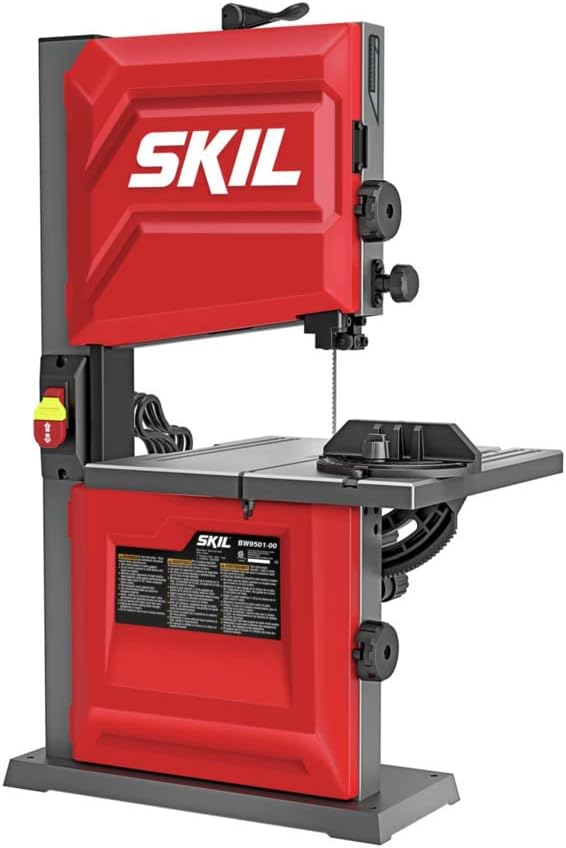
Value focused woodworkers can start with a 9 inch benchtop saw such as the SKIL BW9501-00 or a WEN 9 inch saw. These cut curves in boards up to about 3 inches thick, fit on a workbench and cost around $150 to $230. They suit toys, signs, scroll style shapes and small craft projects.
For People Who Want the Best Performance
For resawing thick hardwood and cutting large pieces, choose a 14 inch floor standing band saw with a strong motor of 1 horsepower or more and 6 inches or more of resaw capacity, or a riser block. These saws cost more and need floor space but deliver smoother, straighter cuts.
For Gift Shoppers
Benchtop band saws from established brands like SKIL and WEN make thoughtful gifts for budding woodworkers. Include extra blades in different widths so the recipient can cut curves and straight lines right away.
For First Time Buyers
First time buyers should prioritize easy blade changes, tool free tension and tracking adjustments, a tilting table and a dust port. A benchtop saw with ball bearing blade guides is a good place to learn before upgrading.
Key Features to Compare
Throat Size and Resaw Capacity
Band saws are named by throat size, the distance from the blade to the frame, which limits how wide a piece you can cut. A 9 inch saw cuts about 9 inches wide. Resaw capacity, or cutting height, limits how thick a board you can cut; benchtop saws often offer about 3 to 3.5 inches, while 14 inch saws offer 6 inches or more.
Motor Power and Speed
Benchtop saws use motors around 2.5 to 3 amps, enough for thin hardwoods and softwoods. Larger saws use 1/2 to 1.5 horsepower or more. Two speed models, like the SKIL BW9501-00, let you use a slower speed for denser materials.
Accuracy and Control Features
Ball bearing upper and lower blade guides keep the blade tracking straight. A rack and pinion table tilt makes angle adjustments easy, and a miter gauge and fence help with crosscuts and rips. Quick blade tension settings, like SKIL's, save time when changing blades.
Corded vs Cordless
Wood band saws for shops are corded for continuous power. Cordless portable band saws exist but are mainly designed for cutting metal pipe and conduit, not woodworking curves.
Dust Collection
A 2.5 inch dust port, like the one on the SKIL BW9501-00, connects to a shop vacuum to reduce fine dust. Dust collection improves visibility of your cut line and air quality.
Warranty and Brand Ecosystem
Check warranty length and availability of blades, tires and guides. Common blade lengths for your saw size are easier to find in a variety of widths and teeth counts.
Choosing the Right Band Saw Blade
- Narrow blades (1/8 to 1/4 inch): tight curves and scroll work.
- Medium blades (3/8 inch): general purpose cutting and gentle curves.
- Wide blades (1/2 inch and up): straight rips and resawing on larger saws.
- Tooth count: more teeth per inch give smoother cuts in thin stock; fewer teeth cut thick wood faster.
How Much to Spend on the Best Wood Band Saws
- Under $160: 8 to 9 inch benchtop saws for crafts and light curves.
- Around $160 to $250: quality 9 to 10 inch benchtop saws with better guides and two speeds.
- Over $500: 12 to 14 inch saws with stands for resawing and furniture work.
Band Saw vs Scroll Saw vs Jigsaw
A band saw cuts thicker stock and resaws boards, making it the most versatile curve cutting tool. A scroll saw cuts the finest, tightest curves and interior cutouts in thin wood. A jigsaw is portable and cuts curves in large panels or installed materials but is less precise. Many woodworkers start with a jigsaw and add a band saw as projects grow.
What You Can Make With a Band Saw
- Curved furniture parts: cabriole legs, chair backs and curved aprons.
- Toys and puzzles: wooden cars, animals and shapes from thick stock.
- Bowl blanks: round off turning blanks before mounting them on a lathe.
- Bookmatched panels: resaw a board and open it like a book for symmetrical grain.
- Veneers and thin stock: slice boards into thin pieces for boxes and inlays.
- Signs and decorations: cut letters, ornaments and holiday decorations.
Fixing Common Band Saw Problems
- Blade drifts off the line: check tension and tracking, use a sharper blade and adjust the fence angle to match the drift.
- Burn marks: the blade is dull or the feed rate is too slow; replace the blade and feed steadily.
- Blade wanders on curves: use a narrower blade for tighter radii and make relief cuts.
- Vibration: check wheel tires, tighten bolts and make sure the saw sits on a stable surface.
- Blade keeps coming off: re track the blade and check that guides are not pushing it off center.
Resawing Tips for Better Results
Resawing slices a board along its thickness to create thinner boards. Use the widest blade your saw accepts with fewer teeth per inch, set a tall fence or resaw guide, joint one face and edge flat first and feed slowly with steady pressure against the fence. Expect to plane or sand the resawn faces afterward. Benchtop saws can resaw narrow boards up to their cutting height, but wide hardwood resawing is best on larger saws.
Common Mistakes to Avoid When Buying Wood Band Saws
- Ignoring cutting height: small saws cannot resaw thick boards.
- Using the wrong blade: wide blades cannot cut tight curves.
- Skipping setup: poor tension and tracking cause wandering cuts.
- Buying too large for your space: floor saws need room around them.
- Forgetting dust collection: fine dust builds up quickly.
How to Set Up a Band Saw
- Install the blade with teeth pointing down toward the table.
- Set blade tension using the gauge or tension guide.
- Adjust tracking so the blade runs centered on the wheels.
- Set the guides close to the blade without touching it.
- Square the table to the blade.
- Lower the upper guide to about 1/4 inch above the workpiece before cutting.
Band Saw Safety Tips
- Keep fingers away from the blade path and use push sticks for small pieces.
- Lower the blade guard close to the workpiece.
- Do not back out of long curved cuts with the saw running; make relief cuts first.
- Wear eye protection and keep the area clear of offcuts.
Care and Maintenance Tips
- Release blade tension when the saw will sit unused for long periods.
- Clean sawdust from wheels, tires and guides.
- Replace dull blades, which cause burning and drifting cuts.
- Wax the table so wood slides smoothly.
- Check tires for wear and replace them when cracked.
FAQs
What specs matter most for home projects?
Throat size, cutting height, blade guides, easy tension and tracking adjustments and a tilting table matter most for home woodworking.
Corded or cordless: which is better for woodworking?
Corded band saws are better for woodworking. Cordless portable band saws are designed mainly for cutting metal on job sites.
Is a brushless motor worth it on a band saw?
Most stationary band saws use induction motors, which are quiet and durable. Brushless motors appear mainly on cordless tools and are less important here.
Can a benchtop band saw resaw wood?
Benchtop saws can resaw thin boards up to their cutting height, often about 3 inches. For wider resawing, a 14 inch saw is better.
What size band saw do I need?
A 9 inch benchtop saw covers crafts, toys and curves in boards up to about 3 inches thick. Choose a 10 to 12 inch saw for larger pieces, and a 14 inch saw for resawing wide boards and furniture making.
Can I cut metal with a wood band saw?
Only if the saw offers slow speeds and you use a metal cutting blade. Most woodworking benchtop saws run too fast for metal, which dulls blades and creates heat. Check the manual before trying.
How often should I change band saw blades?
Change blades when cuts slow down, burn or drift, or when switching between curve and straight cutting tasks. Hobbyists may go months on one blade; heavy users change more often.
Do I need a stand for a benchtop band saw?
Not necessarily. A sturdy workbench works, but a stand at the right height improves comfort and control and frees bench space. Bolt the saw down to reduce vibration.
Our Verdict
Choose a wood band saw by the size of the stock you cut and your available space. A 9 inch benchtop saw like the SKIL BW9501-00 suits crafts and curves, 10 inch benchtop saws add capacity and 14 inch floor saws handle resawing and furniture work. Set it up carefully and match blades to the job, and the best wood band saws will open up new woodworking possibilities. Check the product table above for current models and prices.


