
Best 2 Gallon Air Compressors in 2026: The Lightweight Step Up
Disclosure: We may earn a commission when you buy through links on this page, at no extra cost to you. As an Amazon Associate I earn from qualifying purchases. Learn more

A 2 gallon air compressor adds reserve for flooring and framing nailers. Compare tank shapes, recovery time, CFM and noise before you buy this class.
The 2 gallon class exists for buyers who found the smallest compressors almost right. The pumps are similar, but the doubled tank gives you a real reserve: more nails between refill cycles, steadier pressure for flooring nailers, and enough stored air to seat a few framing nails or top up a truck tire without the motor running the whole time. Shoppers weighing the best 2 gallon air compressor are usually choosing between tank shapes and recovery speeds rather than raw power.
This guide explains what the extra gallon actually changes in daily use, how tank shape affects storage and stability, and how to judge recovery time, the spec this class lives and dies by. The comparison table below shows where this class sits, and the sections after it will tell you whether 2 gallons covers your tool list or whether you should jump a class.



Who Should Buy Which 2 Gallon Air Compressor?
Buyers in this class split by the work rhythm of their main tool: steady nailing, mixed household jobs, or travel duty.
Flooring Installers and Trim Crews
Flooring nailers and staplers strike in a steady rhythm, and a 2 gallon tank smooths that rhythm by holding enough reserve that pressure stays even from the first board to the last. Twin stack models, with two small cylinders side by side, keep a low profile that slides under a bench or into a van shelf. If flooring and trim are your living, the recovery time spec matters more to you than any other number on the box, a point our guide to the best air compressor makes across all classes.
Homeowners with a Mixed Project List
A homeowner who installs trim one weekend, inflates pool toys and tires the next, and blows out sprinkler lines in the fall gets more from 2 gallons than from 1, because the reserve handles short bursts from slightly bigger tools. A framing nailer driven at DIY pace, a few nails at a time with pauses to measure and cut, stays within reach of this class. That flexibility at a still portable weight is exactly why this size sells so well for garages, as our guide to the best air compressor for home garage notes.
RV Owners and Road Trip Drivers
A compact 2 gallon unit rides in an RV bay or truck bed and handles tire top ups, air mattress inflation with the right nozzle, and blowing out water lines during winterizing. The tank holds enough air to be useful even before the pump starts, which matters at a quiet campsite. Choose a model with a sturdy cage and feet that will not vibrate across a storage bay, and keep a tire chuck and a blow gun in the same bin.
Key Features to Compare
Five specs separate the strong models in this class from the forgettable ones.
Tank Shape: Hot Dog, Twin Stack, and Compact
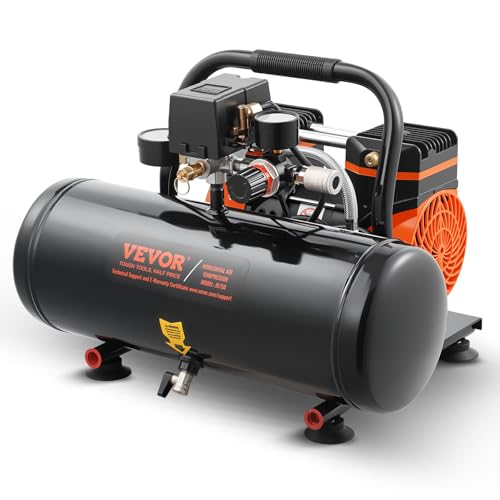
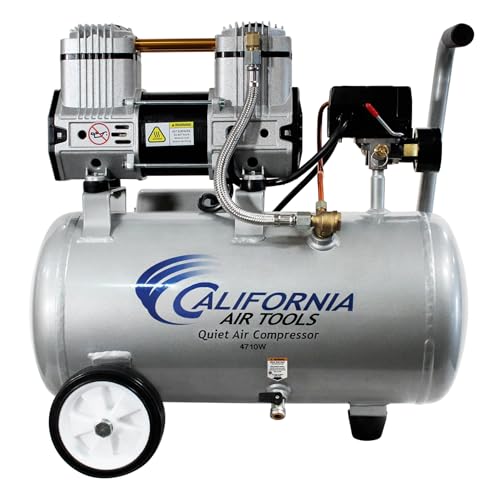
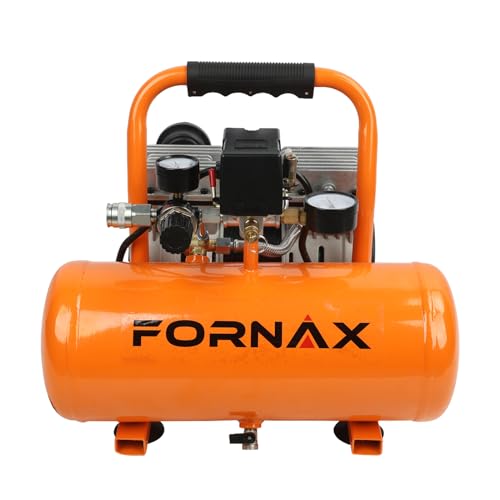
Hot dog tanks are one long horizontal cylinder, stable on the ground and easy to carry by a center handle, but long in storage. Twin stack designs split the volume into two cylinders, giving a shorter, lower unit that fits shelves and van racks. A few compact models stand the tank upright to shrink the footprint for closets and RV bays. Shape does not change performance, so choose by where the unit will live and how you will carry it, not by looks.
Recovery Time and Duty Cycle
Recovery time is how fast the pump refills the tank from a working pressure back to full, and on a 2 gallon unit a good pump does it in well under a minute. Duty cycle describes how much of each ten minutes the pump can run without overheating, often around 50 to 75 percent on better models. A fast recovery with a modest duty cycle suits nailing, where the pump rests between shots. Long continuous runs are what overheat these pumps, so match the duty rating to your longest planned task.
CFM at 90 PSI and Maximum Pressure
Expect about 1.5 to 2.5 CFM at 90 PSI from this class, roughly double the smallest models, with maximum pressures of 125 to 150 PSI. That output runs two trim nailers on a small crew or one flooring nailer all day, and it inflates a car tire from low to full in a reasonable pause rather than a long wait. It still falls short of spray guns and sanders that want 4 CFM or more. Read the CFM at 90 PSI figure, since that is the pressure your tools actually work at.
Oil Free Versus Oil Lubricated at This Size
Most 2 gallon models are oil free for easy carrying at any angle and zero oil chores, which suits installers and homeowners. A smaller number of twin stack jobsite models use oil lubricated pumps that run quieter and last longer under daily trade use, at the cost of oil checks and keeping the unit level. If the compressor will live in a work van and run every day, the oil lubricated design repays its small upkeep. Occasional users should take the oil free convenience without a second thought.
Gauges, Couplers, and Hose Management
You will read tank and regulated pressure gauges constantly, so large faces angled toward you beat small ones buried behind the handle. Better models include two couplers, letting a nailer and a blow gun stay connected, and a regulator that locks. Consider how the hose wraps for storage, because a 25 foot hose with nowhere to go turns a tidy unit into a tangled one. Pancake models solve storage their own way, and our guide to the best pancake air compressor covers that shape in detail.
Knowing When 2 Gallons Is Not Enough
This class has a clear ceiling. HVLP spray guns, dual action sanders, air ratchets used for more than a bolt or two, and framing at crew pace all consume air faster than a 2 gallon pump replaces it, and the symptom is always the same: pressure sags, the tool weakens, and you wait on the motor. If that list describes your main work, skip straight to a 6 gallon or larger compressor and save the return trip.
For cord free versions of this size class, battery powered tank models now exist for trim work away from outlets, and our guide to the best cordless air compressor explains their runtime limits. Everyone else in this class should buy on recovery time, tank shape, and noise, in that order, and the right model will feel obvious once those three are ranked.
Common Mistakes to Avoid
- Assuming double the tank means double the tool capacity, when pump CFM, not tank size, limits continuous tools.
- Choosing a tank shape that does not fit the shelf, van rack, or bay where the compressor must live.
- Ignoring duty cycle, then running a die grinder for ten straight minutes and cooking the pump.
- Leaving the tank pressurized and full of moisture for weeks, which rusts the tank and fouls the regulator.
- Using a thin bargain hose that kinks at the fittings and starves the nailer at the far end.
How to Make Your 2 Gallon Compressor Last Longer
Drain the tank at the end of every work day, and store the unit with the drain open so the inside dries fully between jobs. Keep the cooling fins and intake filter free of the dust that shop and site work generate, because a small pump that cannot breathe runs hot on every cycle. During long flooring or trim sessions, pause when the pump has cycled several times in a row, and let it cool for a few minutes rather than pushing into the thermal cutoff.
Check hose fittings and the tank drain for slow leaks with soapy water twice a year, and replace a tired hose before it bursts at a crimp. Oil lubricated models need their oil checked monthly under trade use and changed on the maker schedule, with the unit kept level so the pump stays fed. Treated this way, a 2 gallon compressor handles years of installs without complaint.
FAQ
What is the best 2 gallon air compressor shape for a work van?
For a work van, the best 2 gallon air compressor shape is usually the twin stack, because its low, rectangular profile slides onto shelves and stays put in transit. Hot dog models roll unless they are wedged or strapped, and upright models waste vertical shelf space. Whichever shape you pick, a full roll cage and rubber feet matter as much as the outline, since van floors vibrate for hours.
What size air compressor do I need for a framing nailer?
A framing nailer used at homeowner pace, with pauses to measure and position boards, can run on a 2 gallon compressor with about 2 CFM at 90 PSI. Crew pace framing, where nails fire one after another for minutes, needs 4 to 6 gallons and a stronger pump to hold pressure. The deciding factor is your firing rhythm, not the nailer itself, since each nail uses the same small puff of air.
How long does an air compressor in this class last?
An oil free 2 gallon compressor in regular homeowner or light trade service typically lasts seven to twelve years, while oil lubricated twin stack models under daily use often run longer with basic oil care. Tank rust from skipped draining is the most common early end, followed by worn pump seals. Keeping the tank dry matters more than the brand badge at this size.
Is a 2 gallon air compressor worth it over a 1 gallon model?
It is worth the small price step if you run flooring tools, fire framing nails at a measured pace, or hate waiting through refill cycles on inflation jobs, because the reserve smooths all of them. If your tools are only a brad nailer and a tire chuck, the 1 gallon class does the same work for less money and weight. The extra gallon buys rhythm, not new tool categories.
How do you clean an air compressor tank and pump?
Start by draining the tank fully, then wipe the pump fins and housing and clean or replace the intake filter so airflow stays strong. Inspect the drain valve for rust scale, and work it open and closed a few times to keep it sealing. If water from the tank comes out rusty brown every time, shorten your drain interval, since that color is the tank asking for attention.
Final Thoughts
The best 2 gallon air compressor for you is the one whose tank shape fits your storage, whose pump recovers fast enough for your nailing rhythm, and whose noise level fits your work hours. Compare the class in the product table above, be honest about continuous tools, and this size will feel like the sweet spot it is: portable like the smallest class, but with the reserve to work without waiting.


