
Best 2 Stroke String Trimmers in 2026: Power, Fuel Mix and Upkeep Explained
Disclosure: We may earn a commission when you buy through links on this page, at no extra cost to you. As an Amazon Associate I earn from qualifying purchases. Learn more

The best 2 stroke string trimmer for big or rough properties: engine size, shaft style, line capacity, fuel mix and upkeep in plain terms.
Battery trimmers get the headlines, yet a gas 2 stroke machine still wins when the work involves long runs of fence line, thick weeds or property far from an outlet. The trade is simple: you get strong power for the weight and unlimited runtime, and in return you mix fuel and maintain a small engine. Picking the best 2 stroke string trimmer means matching engine size and shaft style to your land, then checking that the details you live with every week, starting, line feeding and balance, suit you. The comparison table below shows the leading options.
This guide walks through the specs that separate an eager workhorse from a frustrating one, the fuel habits that keep a 2 stroke engine healthy, and the mistakes that send these machines to the repair bench.
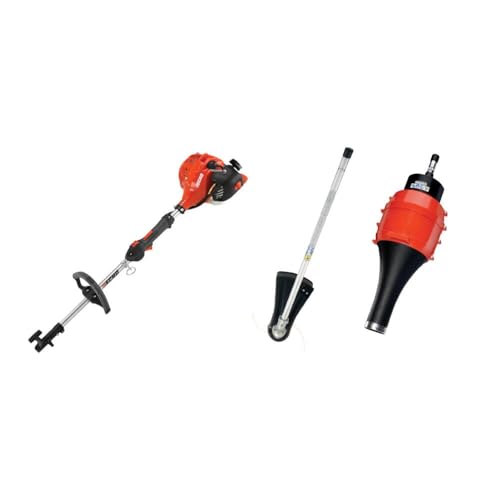


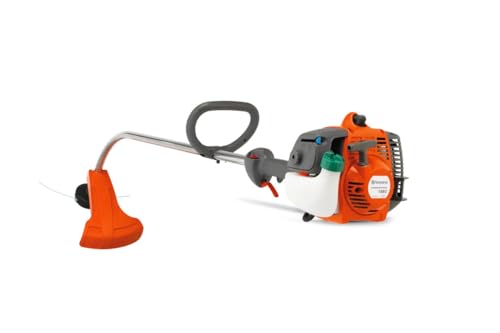
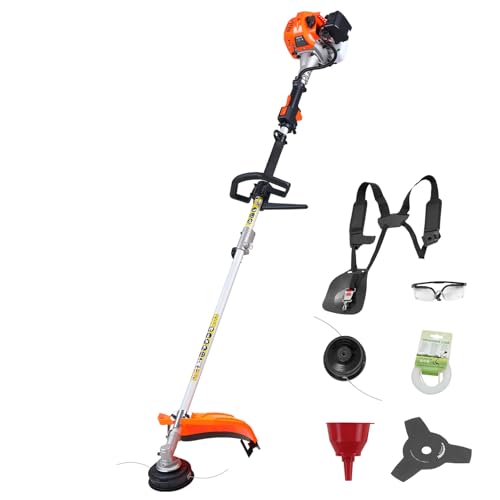


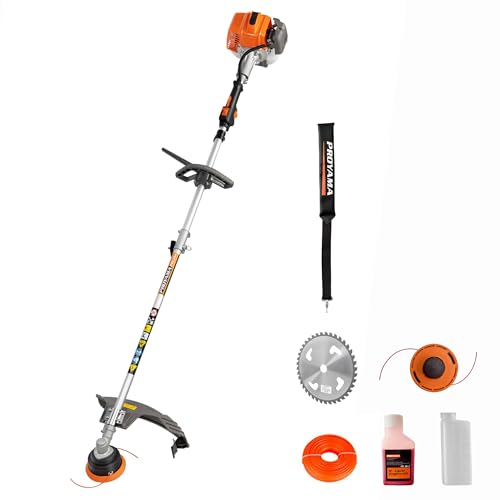

Who Should Buy Which 2 Stroke String Trimmer?
Rural owners with long fence lines and ditch banks
If your trimming runs for an hour or more across rough ground, a midsize engine around 25 to 28 cc with a straight shaft gives you reach under fences and enough torque for stemmy weeds. Runtime is limited only by the fuel in the tank, which is exactly why this group still chooses gas. Look for a harness point and a bike style handle if your sessions run long, because balance matters more than brochure power out here.
Homeowners clearing one overgrown corner at a time
For a suburban yard with a stubborn back fence and some brush at the edges, a lighter model around 21 to 25 cc is easier to swing and still strong enough for grass and moderate weeds. You do not need commercial displacement, and the smaller engine sips fuel and starts with less pull. A curved shaft can feel natural for edging around beds, as long as you are not tall enough to stoop over it.
Landscapers and serious acreage owners who cut weekly
Frequent heavy use justifies the top of this class, around 28 to 30 cc, with a solid drive shaft and a head that accepts thicker line. These machines shrug off daily work that would cook a light duty engine. Buyers in this group should browse the wider guide to the best gas string trimmer models too, since it covers the 4 stroke and larger commercial options that sit next to 2 stroke machines in most lineups.
Key Features to Compare
Engine displacement and real cutting power
Displacement, measured in cubic centimeters, is the honest shorthand for strength in this class. Around 21 to 25 cc suits grass and light weeds, 25 to 28 cc covers most mixed residential work, and engines near 30 cc pull thicker line through heavy brush without bogging. More displacement also means more weight and thirstier running, so buy for the thickest growth you cut regularly, not the worst patch you cleared once. A well tuned smaller engine beats a neglected big one every time.
Fuel mix ratio and oil quality
A 2 stroke engine burns oil mixed into the gasoline, most often at 50:1, though some models specify 40:1, so always follow the ratio printed for your machine. Quality synthetic 2 stroke oil burns cleaner and leaves fewer deposits than cheap oil, which protects the carburetor and spark arrestor screen. Ethanol free fuel, or fuel treated with stabilizer, prevents the gumming that causes most hard starting complaints. Mixing a fresh gallon at a time keeps the blend accurate and the fuel from going stale.
Shaft style and drive construction
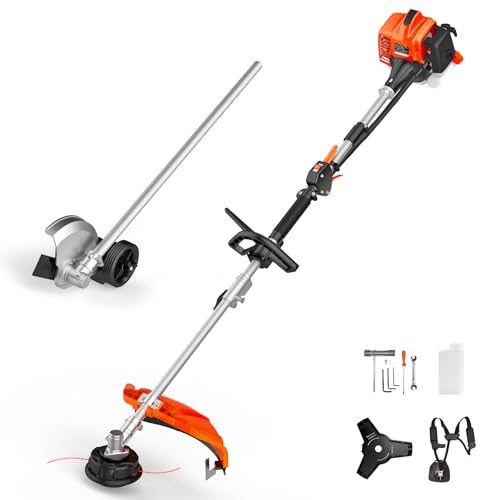
A straight shaft reaches under fences, decks and shrubs, and it suits taller users because the head lands farther from your feet. A curved shaft is lighter and cheaper, and fine for small flat yards, but it can force a hunched posture. Inside, a solid steel drive shaft handles heavy work and brush blades where allowed, while a flexible cable drive keeps cost and weight down for grass duty. Split shaft designs accept edger, blower and hedge attachments, which can turn one engine into a whole tool system.
Cutting swath and line capacity
Swath width runs from about 15 to 18 inches on these machines. A wider swath clears open ground faster, while a narrower one gives better control around trees and garden edges. Line diameter matters just as much: 0.080 inch line slices lawn grass cleanly, 0.095 inch is the all around choice, and 0.105 inch survives woody stems and chain link fences. Check that the head is rated for the line size you plan to run, because overloading line size strains the clutch and engine.
Head type and line loading
A bump feed head advances line when you tap it on the ground, which is fast and simple, and modern easy load designs let you thread fresh line through without opening the spool. Fixed line heads use precut pieces and suit users who hate winding spools. Whatever the style, confirm that replacement heads and spools are easy to find, because a trimmer with an orphaned head design becomes a chore to keep running. The broader guide to the best string trimmer category shows how head styles compare across gas and battery machines.
Weight, balance and vibration
Two trimmers with the same engine size can feel completely different after twenty minutes. Weight near 10 to 13 pounds is typical, but balance decides fatigue, since a head heavy machine drags your arms down. Anti vibration mounts in the shaft and handle reduce the buzz that leaves hands tingling. If you can, hold the machine at working angle before buying, and check that the trigger and controls fall naturally under your fingers with gloves on.
2 Stroke Ownership: Starting, Noise and Rules
These engines start with a routine: prime the bulb, set the choke, pull, then ease the choke off as it fires. Machines with spring assisted or reduced effort starters genuinely help, especially in cold weather. Expect more noise than a battery trimmer, around the level where hearing protection is a must rather than a suggestion. Wear eye protection as well, since a gas head spins line fast enough to throw gravel.
Some towns and states restrict gas powered garden tools or set hours when they can run, and a few areas are phasing in rules that favor electric models. Check your local rules before buying if you live in a dense neighborhood or a managed community. If noise limits or storage rules make gas a poor fit, the guide to the best cordless string trimmer options covers the battery side of the fence in detail.
Common Mistakes to Avoid
- Mixing fuel by guesswork: the wrong oil ratio either starves the engine of lubrication or fouls the plug, and both end in a repair bill.
- Leaving mixed fuel in the tank all winter: stale fuel gums the carburetor, so the trimmer refuses to start exactly when spring growth explodes.
- Running line that is too thick for the head: heavy line on a light engine lugs it down and overheats the clutch.
- Buying the biggest engine for a small yard: extra displacement just adds weight and noise to trimming around flower beds.
- Skipping hearing and eye protection: a 2 stroke at full throttle plus flying debris is a poor match for bare ears and eyes.
How to Make Your 2 Stroke String Trimmer Last Longer
Small engines reward small habits. Shake the fuel can before filling so the oil stays evenly mixed, and use fuel within a month or two of mixing. Clean the air filter regularly, since a choked filter richens the mixture and coats the plug. Check the spark plug each season and clear the spark arrestor screen in the muffler if power fades, because a clogged screen strangles the exhaust.
Before winter, either run the carburetor dry or fill the tank with stabilized fuel, following the maker directions, and store the trimmer hanging or flat in a dry place. Keep spare line soaking in a sealed bag with a damp paper towel if it turns brittle, a trick that restores flexibility to nylon line. Wipe down the shaft and head after muddy work so grit does not grind into the gear head.
FAQ
Are 2 stroke string trimmers worth it compared with battery models?
They are worth it when runtime and raw cutting strength matter more than quiet and convenience. A 2 stroke refuels in a minute and pulls thick line through heavy weeds without fading, which suits big or rural properties. For a small suburban yard, a battery trimmer is usually less hassle. The honest answer depends on your longest trimming session: under half an hour favors battery, well over that favors gas.
What fuel mix does a 2 stroke string trimmer need?
Most current models use a 50:1 ratio of gasoline to 2 stroke oil, but some specify 40:1, so the manual for your machine is the final word. Use the oil type the maker recommends, ideally a quality synthetic rated for air cooled engines. Never run straight gasoline, even once, because the engine gets its lubrication from the oil in the mix and can seize within minutes without it.
How long does a 2 stroke string trimmer last?
A homeowner grade machine often lasts about 5 to 10 years with fresh fuel and basic care, while commercial grade engines can run far longer in hours. Fuel neglect is the top killer, followed by clogged filters and screens. If the engine still has good compression, most failures are carburetor or fuel line problems that a shop can fix for less than a replacement machine.
Should you choose a straight shaft or curved shaft 2 stroke trimmer?
Choose a straight shaft for reach under fences and shrubs, for taller users, and for any brush work, since it usually carries a stronger drive. A curved shaft suits smaller yards and shorter users who mostly trim open lawn edges. One point many buyers miss: straight shaft heads spin the opposite direction, which changes which way debris flies, so plan your walking direction with that in mind.
Why does a 2 stroke string trimmer lose power over time?
The usual causes are a clogged spark arrestor screen, a dirty air filter, old fuel or a worn spark plug, roughly in that order. Check them in that sequence before suspecting the engine itself. A less obvious cause is line that is too long: if the guard knife fails to trim it, the extra drag bogs the engine. Keeping line at the length the guard sets restores speed and saves the clutch.
Final Thoughts
A 2 stroke trimmer asks a little more of you than a battery model, and pays you back with stamina and strength on big, rough properties. Match the displacement to your thickest regular growth, pick the shaft that fits your height and terrain, and respect the fuel mix. Compare the leading machines in the product table above, and once you settle on the best 2 stroke string trimmer for your land, fresh fuel and a clean filter will keep it eager for years.


