
8 Best 3 Point Boom Sprayers for 2026 - Detailed Buyer Guide and System Reviews
Disclosure: We may earn a commission when you buy through links on this page, at no extra cost to you. As an Amazon Associate I earn from qualifying purchases. Learn more

Managing large properties, agricultural plots, pastures, and estate grounds requires efficient, reliable equipment that can deliver fertilizers, herbicides, and pesticides with pinpoint accuracy. Finding the Best 3 Point Boom Sprayers is essential for property owners and commercial operators who want to eliminate tedious spot spraying and cover broad acreage in minimal time. Whether you operate a sub-compact utility tractor with a standard Category 1 three-point hitch or navigate rough fence lines with an ATV or UTV, selecting the right tank capacity, boom width, and pump performance directly determines the success of your seasonal chemical applications.
In our comprehensive evaluation for October 2026, we analyzed 8 top options across Fimco, AgSpray, and Chapin to determine which systems offer the best balance of structural durability, spray swath consistency, pump longevity, and drift management. From heavy-duty PTO-driven roller pump setups designed for multi-acre field work to versatile 12-volt diaphragm systems engineered for fast hookup and maneuverability, our detailed analysis examines the engineering specifications and real-world performance metrics that matter most when outfitting your tractor or utility vehicle.




Best 3 Point Boom Sprayers Buying Guide: Key Engineering Factors to Evaluate
Selecting the optimal tractor or vehicle-mounted sprayer requires an understanding of how hydraulic flow, structural frame design, nozzle atomization, and tank materials interact under heavy field conditions. Applying liquid chemicals across rough acreage subjects equipment to severe vibrations, chemical corrosion, and hydraulic stress. To ensure your investment delivers consistent application rates across multiple seasons, consider these vital buying criteria before selecting a model.
1. Pump Mechanism and Fluid Delivery Performance
The heart of any agricultural spraying rig is its pump mechanism. Sprayers generally rely on either tractor PTO-driven roller pumps or 12-volt electric diaphragm pumps. PTO-driven cast iron or Silvercast roller pumps, such as the Hypro 6500 series found on heavy-duty units like the FIMCO 5303763 110 Gallon 3 Point Tractor Sprayer, deliver immense volume, reaching flow rates from 8.2 GPM up to 18.2 GPM or more at 540 to 1000 RPM, with operating pressures climbing up to 300 PSI. This high volumetric flow is essential for wide multi-nozzle spray booms, robust tank agitation, and long-range high-pressure handguns.
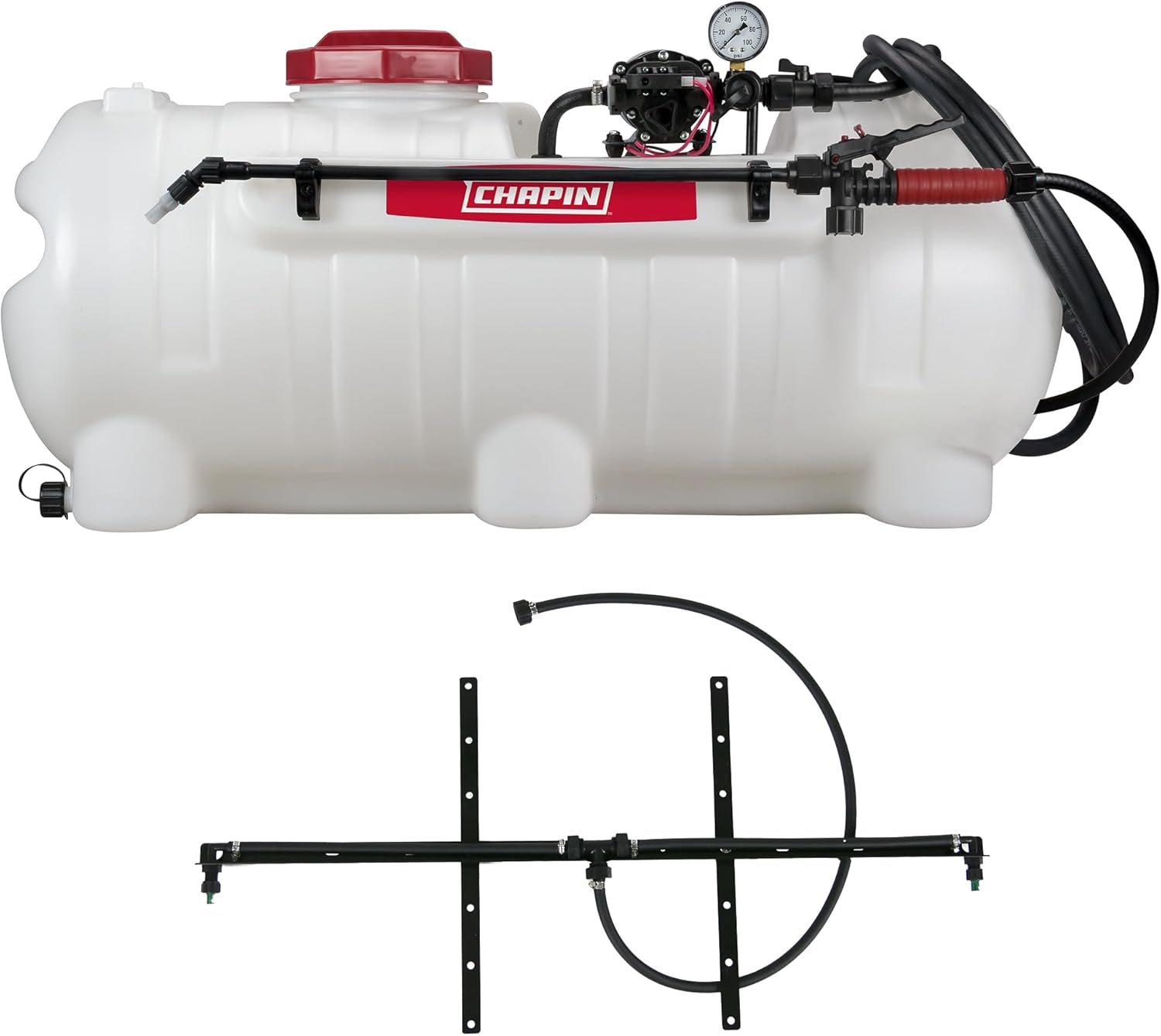
On the other hand, 12-volt electric diaphragm pumps, like the 5.0 GPM unit on the CHAPIN 98004 ATV 40G Water Tank with 10ft Boom or the 2.2 to 4.0 GPM pumps on smaller rigs, operate directly from your tractor or utility vehicle battery. Electric diaphragm pumps are self-priming, can safely run dry without immediate catastrophic seal failure, and do not require PTO driveline alignment. However, they operate at lower maximum pressures (typically 45 to 60 PSI), making them ideal for compact 2-nozzle to 7-nozzle folding booms and moderate spot-spraying tasks rather than ultra-wide agricultural broadcast applications.
2. Tank Capacity, Geometry, and Chemical-Resistant Construction
Tank volume directly dictates your operational range before requiring a refill, but it also significantly alters tractor axle weight and ballast distribution. A full 110-gallon liquid tank adds over 900 pounds of rear payload, demanding a compatible Category 1, 2, or 3 tractor three-point hitch with adequate hydraulic lift capacity. For smaller sub-compact tractors or utility vehicles, 25-gallon to 45-gallon tanks provide a balanced payload that reduces ground compaction and maintains steering stability on steep inclines.
Look for heavy-duty, roto-molded polyethylene tanks featuring ultraviolet (UV) inhibitors to prevent polymer degradation and embrittlement from continuous sun exposure. Translucent tank walls with molded volume markers allow operators to monitor chemical levels at a glance. Furthermore, wide-mouth fill openings (such as 6-inch ports) equipped with deep basket strainers minimize splashing during chemical mixing and prevent foreign debris from entering the reservoir, while dedicated low-point drain ports simplify tank cleanout and winterization.
| Sprayer Class | Typical Tank Volume | Pump Technology | Spray Width | Best Application Scenario |
|---|---|---|---|---|
| Compact Electric 3-Point / Utility | 25 to 45 Gallons | 12V Diaphragm (2.2 - 5.0 GPM) | 7 to 10 Feet | Small pastures, food plots, estate lawns, and perimeter weed control |
| Heavy-Duty Tractor PTO 3-Point | 65 to 110 Gallons | 6-Roller PTO (9.0 - 18.2+ GPM) | 16.7 to 30 Feet | Large agricultural fields, expansive pastures, commercial turf, and brush |
| Boomless Broadcast Systems | 25 to 60 Gallons | High-Flow 12V or PTO | 24 to 30 Feet Swath | Rough pastures, wooded trails, ditch lines, and obstacle-heavy terrain |
3. Boom Design: Traditional Folding Booms vs. Boomless Nozzle Systems
Choosing between a physical folding spray boom and a boomless nozzle configuration depends largely on your terrain layout and vegetation density. Traditional folding booms, such as the 10-nozzle 16.7-foot steel boom on large Fimco units or the 7-nozzle 10-foot spring-loaded boom on Chapin models, deliver precise, uniform droplet distribution with minimal drift. Spring-loaded breakaway boom hinges are crucial, as they allow individual boom wings to deflect backward if they encounter fence posts, trees, or grade changes, automatically snapping back into position without bending the structural frame.
Conversely, boomless broadcast systems utilize specialized high-output nozzle tips, such as Hypro Boom X-Tender nozzles, to throw a wide spray pattern spanning up to 30 feet from a central manifold. Standalone upgrades like the 3-Nozzle Boomless Spray Boom or integrated units like the Boomless Spot Sprayer with 4.0 GPM Diaphragm Pump eliminate protruding physical boom arms entirely. This compact footprint allows operators to navigate thick brush, narrow gates, heavily wooded food plots, and rocky fence lines without snagging or destroying hardware.
4. Hitch Class Compatibility and Structural Rigidity
A sprayer must mount securely to your prime mover to prevent excessive swaying, frame fatigue, and dangerous weight transfer. Standard tractor three-point hitches are categorized by pin diameter and lift arm spacing. Category 1 hitches are standard on sub-compact and compact tractors up to 45 horsepower, while Category 2 and 3 linkages accommodate larger utility and row-crop tractors. Premium models engineered with multi-hitch pin configurations provide universal adaptability across different tractor sizes in a commercial fleet.
For landowners using ATVs, UTVs, or compact lawn tractors alongside smaller utility equipment, hybrid mounting systems like the 2-inch receiver mount on the Fimco - 45-3N-UTV-GS - Fimco 45-Gallon ATV/UTV provide a secure, wobble-free connection. Ensure that all structural steel frames feature powder-coated finishes or corrosion-resistant plating to withstand acidic chemical solutions, harsh fertilizers, and moisture exposure.
5. Filtration Stages, Pressure Regulation, and Nozzle Technology
Unfiltered spray solution is the primary cause of clogged nozzle tips, erratic spray patterns, and premature pump failure. Multi-stage filtration is a non-negotiable feature for dependable operation. Top-tier sprayers incorporate a three-stage filtering architecture: a tank fill basket to catch large particulates, a low-pressure in-line suction strainer before fluid enters the pump, and individual mesh screens seated directly behind each nozzle tip.
Furthermore, look for precision components like TeeJet air induction tips, which combine air with liquid droplets to generate larger, more uniform droplet sizes. These specialized tips dramatically reduce spray drift during gusty conditions, ensuring that expensive herbicides land on target weeds rather than non-target crops or neighboring gardens. Adjustable pressure regulators with glycerine-filled pressure gauges allow you to dial in specific operating PSI to match chemical label application rates precisely.
6. Spot Spraying Versatility and Handgun Reach
While broadcast booms handle broad acreage coverage, targeted spot spraying is essential for treating isolated invasive weed patches, ditch banks, fencerows, and fruit trees. A professional spray rig should include a dedicated auxiliary circuit with a heavy-duty spray wand. Models like the FIMCO 5303252 65 Gallon 3 Point Sprayer with 6 feature deluxe pistol grip or aluminum handguns capable of projecting high-pressure streams up to 45 feet horizontally and 30 feet vertically.
Generous reinforced chemical-resistant PVC hose lengths (typically 15 to 25 feet) give you the freedom to step down from the tractor seat and reach awkward corners, culverts, and garden borders. Integrated hose wraps and wand storage clips prevent lines from dragging beneath tractor tires or getting tangled in rotating PTO shafts during transit.
Our Research Methodology & Why You Can Trust Us
Our agricultural equipment evaluation team brings decades of combined experience in land management, agronomic chemical application, mechanical engineering, and turf maintenance. To curate this guide on the Best 3 Point Boom Sprayers for 2026, we evaluated 8 leading products from Fimco, AgSpray, and Chapin spanning $254–$3,210. Our objective evaluation methodology isolates marketing claims from mechanical reality by analyzing factory engineering tolerances, pump flow curves, structural frame load calculations, and chemical compatibility ratings.
We systematically cross-referenced manufacturer technical documentation with aggregated field performance patterns, long-term user durability reports, and component breakdown data. Our team closely examined pump thermal dissipation limits, corrosion resistance in common fertilizer blends (including nitrogen-based solutions and wettable powders), boom deflection under vibration, and the availability of replacement wear items like check valves, diaphragms, and nozzle tips. We do not accept sponsored placements, ensuring our analysis remains fully independent and data-focused.
Because sprayer technology, component sourcing, and tractor attachment standards evolve, our equipment database is continuously audited. We update our recommendations on a regular schedule every October to account for newly released pump designs, updated nozzle standards, and ongoing reliability feedback from agricultural property owners.
Frequently Asked Questions
What is the difference between a PTO roller pump and a 12-volt electric diaphragm pump?
PTO roller pumps connect directly to your tractor rear power take-off shaft, harnessing engine horsepower to deliver high volumetric flow rates (typically 8 to 20+ GPM) and higher working pressures up to 300 PSI. They are designed for large broadcast booms and aggressive tank agitation. In contrast, 12-volt electric diaphragm pumps run off the vehicle battery, producing between 2.0 and 5.0 GPM at 45 to 60 PSI. Electric pumps are quieter, simpler to install, and ideal for compact booms or spot spraying, though they cannot support ultra-wide multi-nozzle spray swaths.
How do I choose between a folding boom and a boomless spray system?
Folding booms feature evenly spaced nozzles positioned close to the ground, providing uniform spray deposition and significantly lower chemical drift in windy conditions, making them ideal for open pastures and uniform fields. Boomless systems use specialized high-output nozzle tips mounted centrally to project spray outwards up to 30 feet. Boomless systems are superior for rough terrain, wooded trails, orchard rows, and fence lines where physical boom arms could strike trees, posts, or banks.
How do I calibrate my Best 3 Point Boom Sprayers for accurate chemical application?
To calibrate your sprayer, determine your application volume in gallons per acre (GPA) based on your chemical label. Measure your effective spray width in feet and determine your tractor ground speed in miles per hour using a constant throttle and gear setting. Fill the tank with clean water, set your operating pressure on the regulator gauge, catch fluid from a single nozzle for a set time period to determine ounces per minute, and apply standard agricultural calibration formulas to ensure you are applying the precise volume required.
Can I run liquid fertilizers and aggressive herbicides through these poly tanks?
Yes, modern agricultural sprayers utilize chemical-resistant, high-density roto-molded polyethylene tanks paired with synthetic elastomers like Viton or EPDM seals. These materials tolerate standard herbicides, insecticides, fungicides, and liquid fertilizers. However, always thoroughly flush the system with clean water and a dedicated tank cleaner after applying corrosive fertilizers or wettable powders to prevent chemical buildup and seal degradation.
What steps are necessary to winterize a 3-point tractor sprayer?
To prevent catastrophic freeze damage to pumps, valves, and manifold lines during winter months, drain the tank completely via the bottom drain port. Flush clean water through the boom and handgun, clean all inline and tip filter screens, and circulate non-toxic RV/marine propylene glycol antifreeze through the pump, pressure regulator, boom lines, and spray wand until colored fluid discharges. Store the unit out of direct sunlight to prevent UV wear on hoses and plastic fittings.


