
Best 3 Step Ladder Buying Guide for 2026
Disclosure: We may earn a commission when you buy through links on this page, at no extra cost to you. As an Amazon Associate I earn from qualifying purchases. Learn more
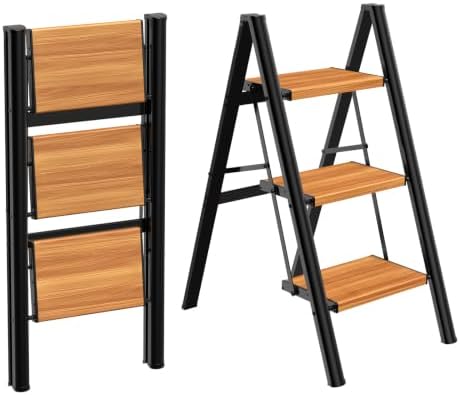
The best 3 step ladder for kitchens, closets and ceilings: duty rating, step depth, platform size, folded storage and safe setup.
Most household reaching happens in a narrow band: the top kitchen shelf, the closet rod, the ceiling light fixture, the smoke alarm. A full extension ladder is overkill for all of it, and a chair is a fall waiting to happen. The best 3 step ladder covers that band with wide steps, a frame that locks open, and a size that folds flat behind a door or in a pantry gap.
Step ladders look simple, but duty ratings, step depth, platform design and hinge quality separate the steady ones from the wobbly ones. This guide explains each factor, and the comparison table below lines up the specs that matter. For taller or more varied reaching jobs, the best ladder guide covers the full range of home ladder types.
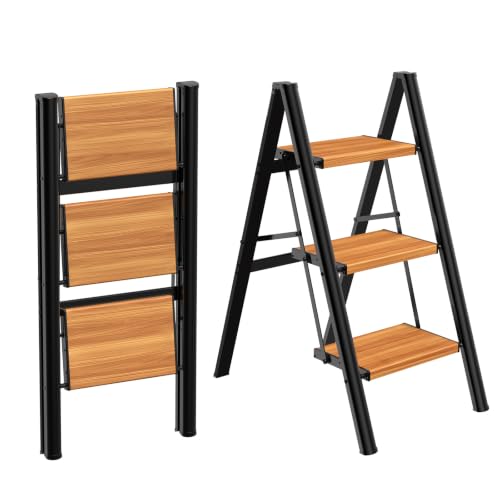


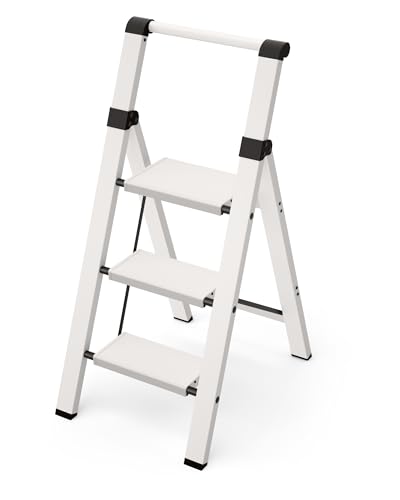
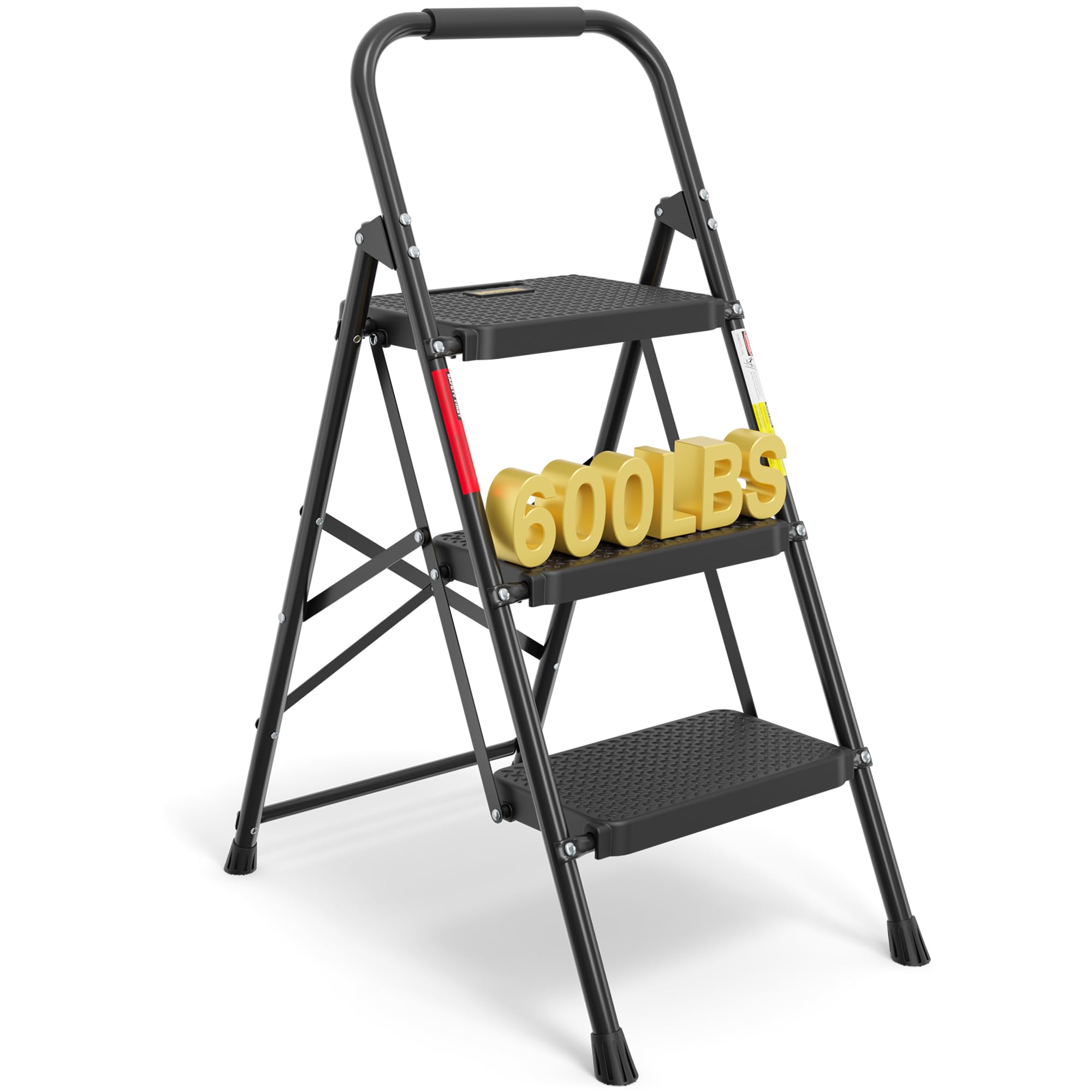
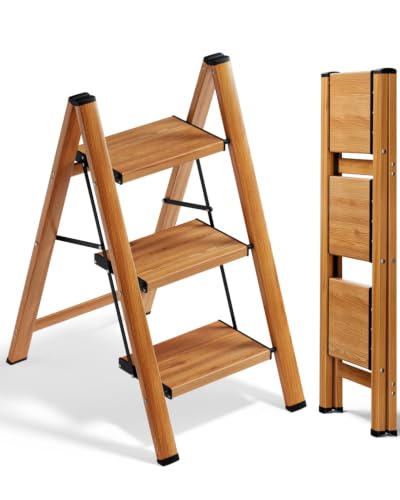
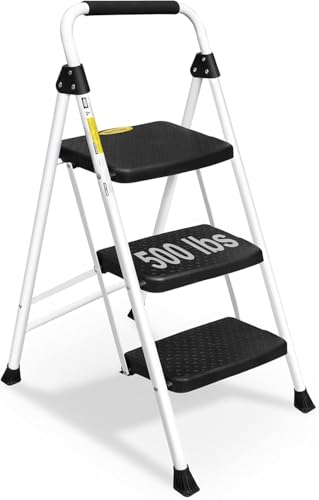


Who Should Buy Which 3 Step Ladder?
Homeowners Reaching Cabinets and Closets
Your jobs are short and frequent, so the ladder lives where the reaching happens. A light aluminum model you can carry one handed from kitchen to closet gets used instead of avoided. You need about 3 steps of climb to put most adults at top shelf height, plus a top cap with slots for a screwdriver or a small parts tray. Weight under about 15 pounds keeps the ladder from becoming the chore itself.
Painters and DIYers Working From the Steps
You stand on the ladder for minutes at a time with a brush or a drill in hand, so step depth and a real platform matter more than packed weight. A model whose top step is a wide platform lets you stand with both feet flat and your balance centered, which reduces calf fatigue and the urge to lean. Look for a paint can holder or a project tray on the top cap, and steps with deep anti slip tread.
Older Adults and Anyone With Balance Concerns
Stability features are your whole buying decision: wide steps, a high handrail you can grip while climbing, and a frame that feels planted rather than springy. Foam padded rails give your hands and knees something kind to lean on. Choose a slightly heavier steel frame if it buys steadiness, and be honest about reach. If the job needs the top step and a stretch, the job needs a taller ladder or a helper, not courage. Stop and get help if you feel dizzy or unsteady on any ladder.
Key Features to Compare
Duty Rating and Load Capacity
Ladders carry ANSI duty ratings that cap the total load of user plus tools and materials. Type III household ladders hold 200 pounds, Type II holds 225, Type I holds 250 and Type IA holds 300. Add your weight, your clothes, and whatever you carry up, such as a gallon of paint at about 11 pounds, and keep the total inside the rating. Ratings assume a sound ladder used as directed, so a bent or cracked frame retires the ladder regardless of its label. For shared household use, Type I is a sensible floor.
Step Depth and Top Platform Design
Standard steps run about 3 inches deep, enough for the ball of your foot but tiring on longer jobs. Deep steps around 5 inches and wide platform tops let your whole foot rest flat, which changes standing from balancing to simply standing. Some 3 step models make the third step a large platform with a raised knee rail, which is the most secure home design. Check whether the top cap itself is rated as a step. On most ladders it is not, and standing on it is a common cause of falls.
Material: Aluminum, Steel, or Fiberglass
Aluminum frames are light, rust free and easy to carry, which suits frequent short jobs around the home. Steel frames weigh more but feel rigid underfoot and cost less, though they can rust if stored damp. Fiberglass is the choice near electrical work because it does not conduct, and it appears on some step ladders for that reason. For indoor home use, aluminum's weight advantage usually wins. If the ladder will live in a damp garage or serve a heavier user, steel or fiberglass earns its extra pounds.
Handrails, Treads and Feet
A padded handrail or an extended top rail gives you a grip on the way up and a brace for your legs while working, and it matters most for the users who feel least steady. Steps should carry real anti slip tread, not smooth painted metal, and the tread should still grip when your shoes are dusty. Rubber feet keep the ladder from skating on tile, wood and laminate floors, and they should be replaceable because they wear first. Test the open ladder with a gentle side push in the store if you can. Flex and twist at the hinge show up immediately.
Folded Size, Weight and Locking Hinges
A 3 step ladder earns its keep by disappearing between jobs, so folded thickness and weight decide where it lives. Most fold to about 4 to 6 inches thick and hang on a wall hook or slide beside a refrigerator. The spreader bars or hinges must lock open with a positive action you can see and feel, because a ladder that is almost locked is a collapse risk. One handed opening is a plus for carrying paint or tools in the other hand, but never at the cost of a sloppy lock.
Top Cap Trays and Small Extras
The top cap is prime real estate on a small ladder. Slots for screwdrivers, a magnet strip for screws, a paint can holder and a small tray for fasteners all reduce trips up and down, and fewer trips means fewer chances to misstep. These extras cost little and weigh nothing, so prefer them when two ladders otherwise tie. Just keep the load honest: a gallon can on the holder still counts against the duty rating, and loose screws on the top cap become projectiles if the ladder gets bumped.
Check Your Reach Before You Buy
Estimate your reach as your height plus about 12 inches when standing on the highest step you are allowed to use, which on most 3 step ladders is the second step or a rated platform. A typical adult reaches around 7 to 8 feet this way, enough for 8 foot ceilings, top cabinets and most light fixtures. If your ceilings are 9 or 10 feet, a 3 step ladder leaves you stretching, and stretching is where balance goes. Step up to a taller model for those rooms.
Measure your tallest real job before ordering: the smoke alarm, the top of the tall cabinet, the curtain rod. Then confirm the ladder's published maximum reach covers it with your feet on a rated step and your body able to stay within the rails. If a job needs a lean outside the frame, the honest answer is a different ladder or a professional, not a longer stretch.
What 3 Step Ladders Cost
Basic steel and aluminum models run about $35 to $60 and cover light household duty. Mid range ladders with wide platforms, padded rails and better trays cost about $60 to $110. Premium and fiberglass models reach $120 and up. The middle tier usually buys the features that matter for safety and comfort, like step depth and hinge quality, while the top tier mostly adds electrical ratings and pro duty cycles.
Common Mistakes to Avoid
- Standing on the top cap: it is not a rated step on most models, so your feet sit high with nothing to hold and the fall risk spikes.
- Exceeding the duty rating with paint and tools: the frame flexes and wears at the hinges, and an overloaded ladder can buckle without warning.
- Leaning out past the rails: your center of gravity leaves the footprint, so the ladder tips sideways even though it felt solid a moment before.
- Setting up on soft or sloped surfaces: one foot sinks or slides, the frame twists, and steps stop being level under your feet.
- Climbing with hands full: you cannot grip the rail during the climb, which is when most household ladder falls happen.
How to Make Your 3 Step Ladder Last Longer
Inspect the ladder before big jobs: check that hinges lock fully, spreader bars are straight, feet are intact and steps are clean and dry. Wash off paint drips and drywall dust, since grit on the treads defeats the anti slip surface. Tighten loose rivets or bolts only to snug, and retire the ladder if the frame is bent, cracked or wobbles after a check, because a damaged frame cannot be trusted back into service.
Store the ladder folded, dry and out of long direct sun, ideally hung on a wall hook where it cannot be knocked over or used as a shelf. Keep it away from damp corners that rust steel frames and degrade rubber feet. Never lend it out for jobs it is not rated for, like roofing or commercial painting, since one overloaded afternoon quietly uses up its safety margin.
FAQ
What size ladder do I need for 8 foot ceilings?
A 3 step ladder suits most adults working at 8 foot ceilings, putting light fixtures, smoke alarms and vents within a comfortable reach of about 7 to 8 feet. Taller ceilings or shorter users change the math, so check the published maximum reach on the listing against your tallest fixture. If you must stand on the top step and stretch, choose a taller ladder instead. The best ladder for home use guide sizes other types the same way.
Is it safe to stand on the top platform of a 3 step ladder?
It is safe only when the manufacturer rates that platform as a step, which many platform style models do and standard top caps do not. The label on the side rail states the highest standing level. Standing above that line puts your balance outside the design. If you often need that last bit of height, a platform model or a taller ladder is the right purchase, not a habit of standing where the label forbids.
How much weight can a 3 step ladder hold safely?
Follow the ANSI duty rating on the label: 200 pounds for Type III, 225 for Type II, 250 for Type I and 300 for Type IA, counting you plus everything you carry. A gallon of paint, a drill and a tool belt can add 20 pounds quickly. Ratings assume a ladder in good condition on level ground, so damage or soft footing lowers the real limit. When in doubt, move up a duty class.
Aluminum or steel: which 3 step ladder material is better?
Aluminum is better for most homes because it is light enough to carry often and never rusts in a damp garage. Steel feels stiffer and costs less but adds pounds you notice on every trip up the stairs. Fiberglass is the pick near electrical panels and fixtures because it does not conduct. Your storage spot and your carrying distance decide more than strength does, since all three meet their ratings when new.
What is the best 3 step ladder for a small apartment?
Choose a slim folding aluminum model around 12 to 15 pounds with a positive hinge lock, since it can live behind a door or in a closet gap. A top cap tray saves trips, which matters when the ladder comes out for every bulb and battery. For bigger homes with mixed jobs, compare against the best attic ladder options for fixed access and the best telescoping ladder designs where storage is tight but reach needs grow.
Final Thoughts
For anyone buying with balance in mind, let the duty rating, step depth and handrail lead the decision and let price follow. And if a fall ever causes head pain, confusion, repeated vomiting or unusual sleepiness, seek medical care promptly rather than waiting it out. The best 3 step ladder is the one that locks open solidly, keeps your feet flat, and folds small enough to live within reach. Compare the finalists in the product table above, check the highest standing level on the label, and retire the kitchen chair from ladder duty for good.


